
Lean AI: Building a Scalable Data Platform for Enterprise AI ROI
87% of AI projects never make it to production. Navigate how enterprise leaders use Lean AI to slash data platform waste and unlock real ROI.

Across industries, AI adoption has made building easier, while scaling models into reliable, cost-efficient systems is far more complex. As deployments expand, organisations are realising that the real challenge lies in operationalising AI sustainably.
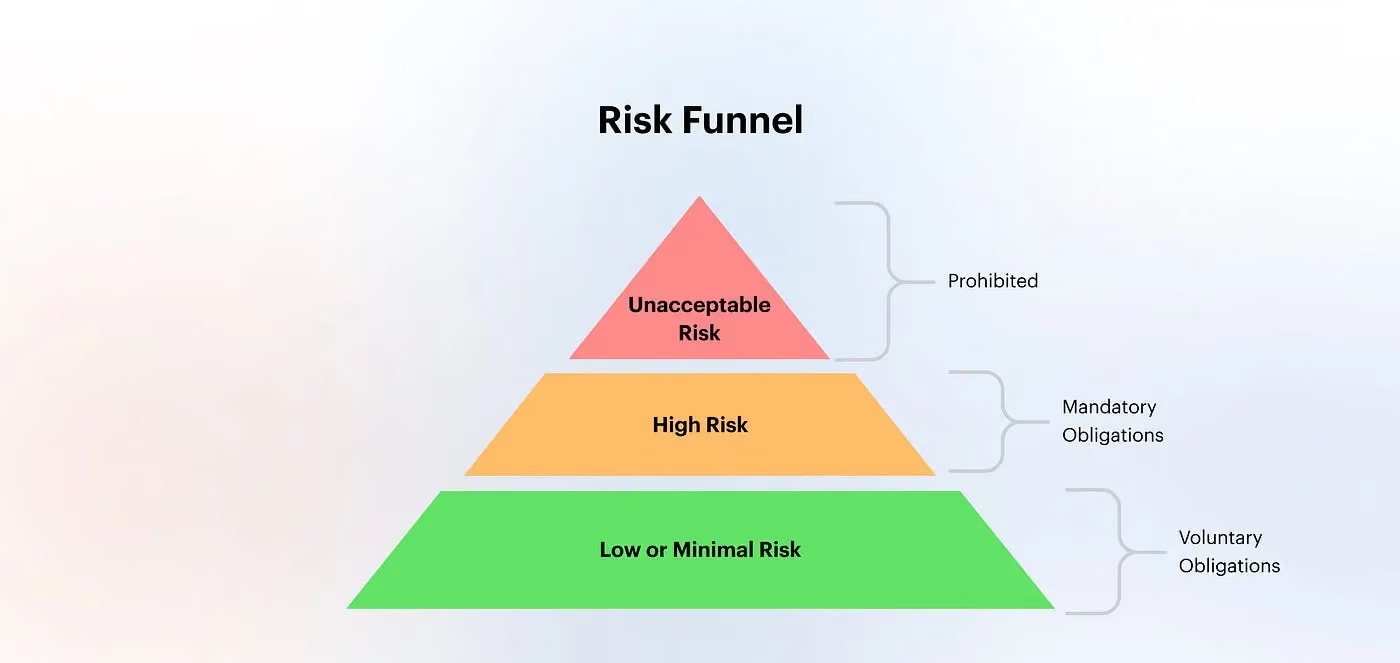
At its simplest, an AI system is meant to do one thing well: turn data into useful decisions. So many times, discovering this insightful data is the challenge. Further industry surveys convey how 89% say finding data is a top-3 time drain, with 34% ranking it as their #1 time-consuming activity. Meanwhile,62% rank actual analysis as their last priority.
For that to happen consistently, the system needs reliable data pipelines, efficient models, and infrastructure that can operate without high cost or complexity. When these pieces work together smoothly, AI becomes a practical capability rather than a technical experiment.
This is where Lean AI begins to change the conversation. Lean thinking did not begin in a boardroom or a research lab. A significant story in the past that began on a factory floor in post-war Japan, where Toyota's engineers were trying to solve a problem that sounds familiar today, is where the concept of going lean often finds its place.
How do you produce more value from AI with fewer resources, without sacrificing quality or speed?
.avif)
The answer Taiichi Ohno arrived at was deceptively simple. Stop optimising individual steps. Look at the entire system. Find what creates value for the customer and ruthlessly eliminate everything else. That philosophy, later formalised as the Toyota Production System, went on to reshape manufacturing, healthcare, software development, and supply chain management across the world.
Today, enterprise AI faces the same fundamental problem Toyota faced in 1950. Organisations often think they might be short of capability. But in reality, they are drowning in complexity, cost, and experiments that never reach production.
[related-1]
What is Lean AI? A Shift from Experimental Models to Operational Discipline
Lean AI is an approach to designing and operating artificial intelligence systems that prioritises efficiency, operational discipline, and measurable business value across the full AI lifecycle.
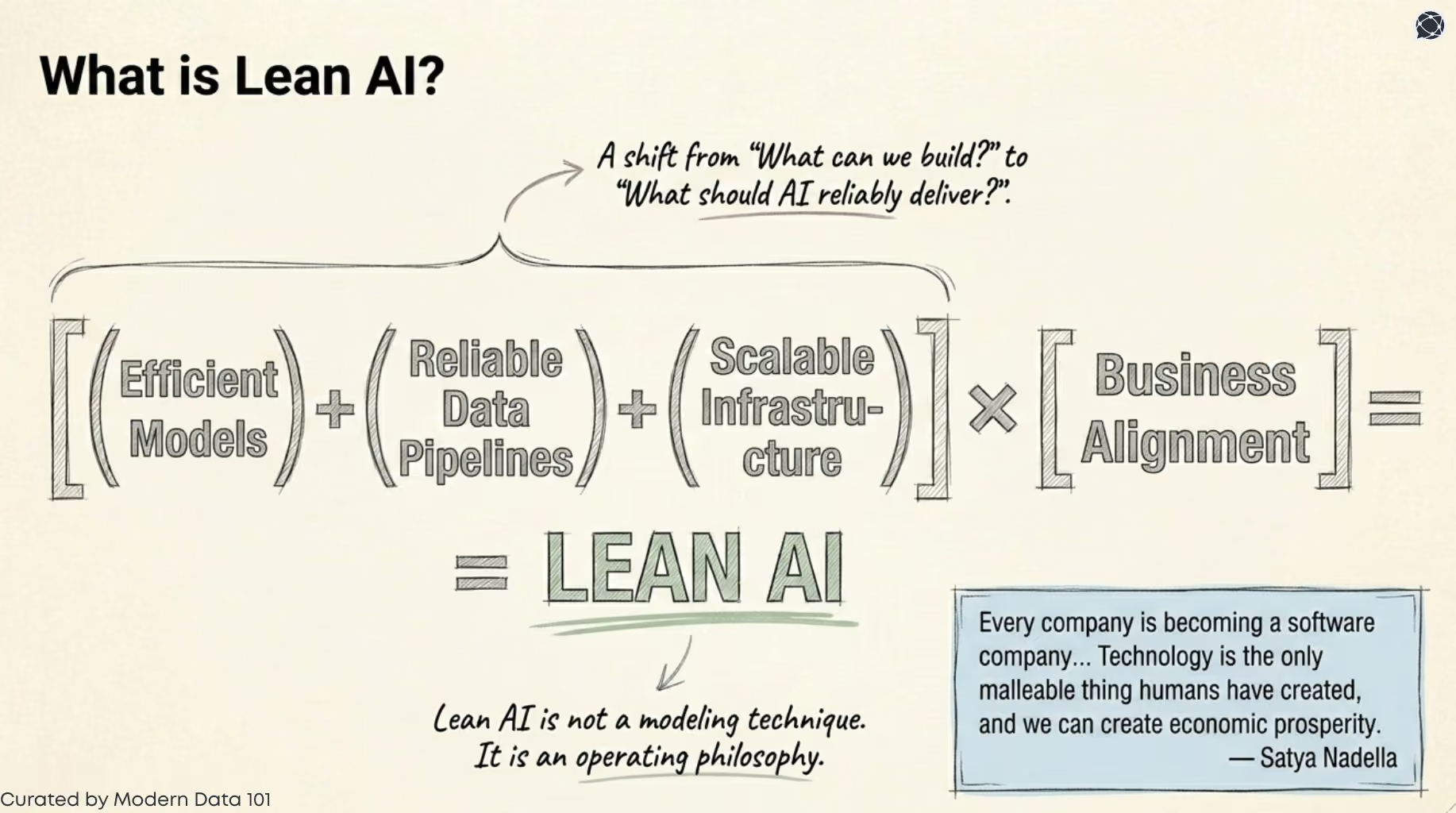
Lean AI is not simply another modelling technique but an operating philosophy that prioritises efficiency, scalability, and measurable business value. Instead of chasing larger systems, it focuses on building AI architectures that remain sustainable as adoption grows.
[state-of-data-products]
💡 Lean AI applies the same corrective logic: stop optimising models in isolation and start building AI systems that deliver value reliably, efficiently, and at scale.
The above also comes into the picture because it is important to realise how AI is leading to minimal economic returns from the initiatives and investments of modern enterprises. And how AI systems are traditionally built: difficult and expensive to operate due to their large models and complex product experimentation.
But as organisations and from a leadership perspective, we can’t really operate like that. Can we? Let’s break down our thought process to make better decisions, utilising lean AI to its full potential.
How to Apply Lean Thinking to Artificial Intelligence
When applied to artificial intelligence, lean thinking encourages organisations to evaluate the entire AI system rather than focusing only on model development. Many AI projects invest heavily in optimising models while overlooking inefficiencies in data preparation, deployment pipelines, and operational monitoring, which often become the largest sources of delay and cost.
The concept of Lean AI draws inspiration from lean thinking, a management philosophy that focuses on eliminating waste and maximising value creation within operational systems.
Lean thinking was originally developed in manufacturing environments where efficiency, process optimisation, and continuous improvement were critical for competitiveness. Over time, these principles expanded into software development, product management, and digital operations.
As Taiichi Ohno, the father of the Toyota Production System, explained:
“All we are doing is looking at the timeline from the moment the customer gives us an order to the point when we collect the cash… and reducing that timeline by removing the non-value-added wastes.”
Lean AI addresses this by improving the efficiency of these supporting processes so that AI systems can deliver value faster while remaining stable in production.
Big AI vs. Narrow AI
The distinction between these two approaches must be framed around resource efficiency and operational scale:
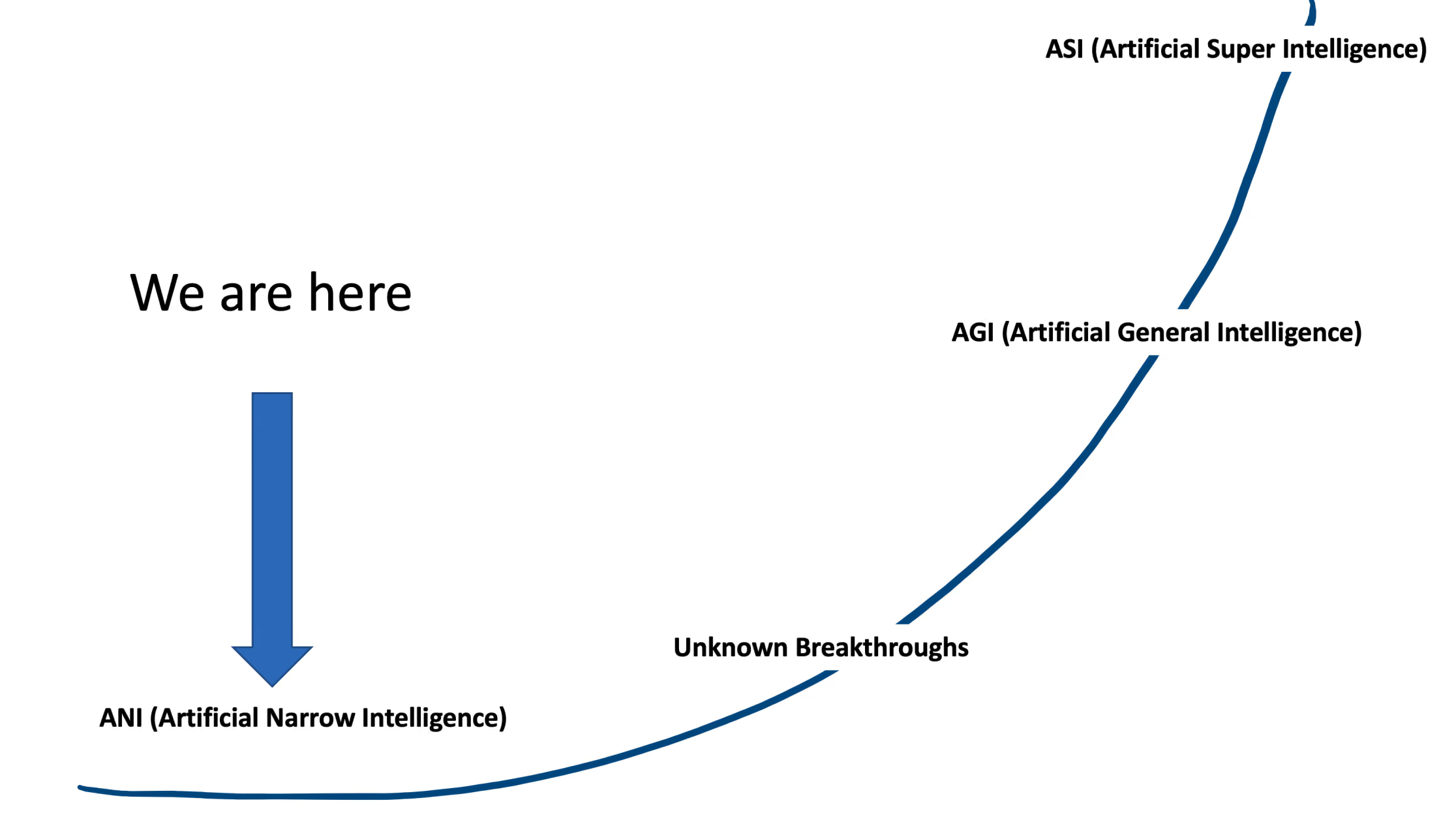
Narrow AI builds highly focused, task-specific systems. When integrated into a disciplined data platform, it drives targeted automation, like data pipeline cleaning or predictable compliance routing, at minimal compute cost.
Conversely, Big AI relies on massive, general-purpose frontier models. While brilliant at open-ended creative tasks, Big AI injects immense structural complexity and volatile infrastructure costs that are incredibly difficult for enterprises to scale sustainably.
Choosing a Lean AI strategy means prioritising predictable, narrow architectures over expensive, over-engineered experiments.
How Lean AI Restructures the Modern Data Platform for AI
Instead of starting with model experimentation, it begins with real business problems and environments and builds AI systems using efficient models, reliable data pipelines, and scalable infrastructure.
“Every company is becoming a software company. Developers should think of how they want to reinvent the wheel. Technology is the only malleable thing humans have created, and we can create economic prosperity.”
This shift toward integration ops reinforces the same principle behind Lean AI: AI systems must be designed to operate efficiently and at scale within real business environments.
Lean AI solves two major challenges, i.e. rising infrastructure costs and inconsistent business outcomes from AI initiatives, and prioritisation of model size or experimentation alone. A positive result of this is achieved through:
- Applying efficiency-driven principles across the entire AI lifecycle.
- Building AI systems that are efficient, scalable, and closely aligned with real and consistent business outcomes.
Ultimately, lean AI presents a perspective that allows enterprises to scale AI systems responsibly while ensuring they remain economically and operationally sustainable.
Trends of Lean AI in 2026
How reliably can we make AI models deliver? That shift is precisely where Lean AI becomes most relevant, and several trends this year are converging to accelerate its adoption.
- From giant models to efficient, domain-specific ones. Instead of one giant model for everything, smaller, more efficient models that are equally accurate, or more so, when tuned for the right use case are becoming central to enterprise AI strategy. This is Lean AI's efficient model selection principle playing out at industry scale. The efficiency, cost-effectiveness, and adaptability of small language models make them ideal for tailored applications where precision is paramount, which is exactly what enterprise operational use cases demand.
- ROI accountability is replacing experimentation tolerance. Each dollar spent should fuel measurable outcomes that accelerate business value. Leadership teams are now evaluating AI systems the same way they evaluate any operational investment, on cost efficiency, reliability, and return. This directly reinforces Lean AI's foundational principle: value is the only acceptable destination.
- Agentic AI is making infrastructure efficiency non-negotiable. Organisations in 2026 are harnessing multiple agents acting together to handle task complexity that was difficult to imagine just a year ago. But multi-agent systems amplify inefficiencies as readily as they amplify capability. Without efficient pipelines, reliable data foundations, and disciplined governance underneath them, agentic deployments become expensive and unstable at scale. Lean AI infrastructure is the prerequisite.
- Governance is moving from principle to practice. 60% of executives say Responsible AI boosts ROI and efficiency, yet nearly half report that turning those principles into operational processes has been the primary challenge. 2026 could be the year companies overcome this gap and roll out repeatable, rigorous governance practices. Lean AI's emphasis on building governance into system design, rather than layering it on afterwards, positions it as the operating model best suited to this moment.
- Focus on Value Instead of Model Size. Lean AI focuses on value instead of model size because the goal of enterprise AI is not to build the largest possible models, but to solve business problems effectively. In many cases, organisations find that increasing model size does not necessarily lead to better outcomes for real operational tasks. Large models often require expensive infrastructure, complex training environments, and continuous maintenance. While these systems can demonstrate impressive technical capabilities, the additional product complexity does not always translate into meaningful improvements for everyday enterprise use cases. Lean AI, therefore, challenges the assumption that bigger models automatically produce better results.
Instead, it emphasises well-optimised models supported by reliable data pipelines and efficient deployment processes. This allows organisations to deliver strong performance while keeping infrastructure costs and operational complexity under control.
What Problems Does Lean AI Solve in Enterprise AI Systems?
As organisations scale artificial intelligence initiatives, they often discover that building models is only a small part of the challenge. One of the most sensitive scenarios of this complexity emerges when those models mandatorily need to operate reliably within enterprise environments.
AI systems depend on data flows, infrastructure resources, deployment workflows, and governance processes. When these components evolve without clear architectural discipline and governance, organisations begin to experience operational inefficiencies that limit the effectiveness of AI programs.
Over-Engineered AI Systems
AI systems frequently becoming more complex than necessary is due to data science teams:
- experimenting with multiple modeling approaches,
- incorporating advanced architectures,
- and introducing layers of technical sophistication.
While this experimentation is valuable during research phases, it can lead to overengineered production systems.
Models become difficult to maintain, deployment pipelines grow complicated, and infrastructure requirements expand unnecessarily. Over time, these systems require large engineering teams simply to remain operational.
Lean AI addresses this issue by encouraging teams to select efficient AI models that meet business requirements without introducing unnecessary complexity. Also, the goal is to design systems that remain maintainable and scalable over long operational lifecycles.
Operational Complexity of Data Pipelines
Inconsistent data definitions, fragmented data sources, unreliable data ingestion processes, and poorly documented transformations are some of the issues that create operational friction.
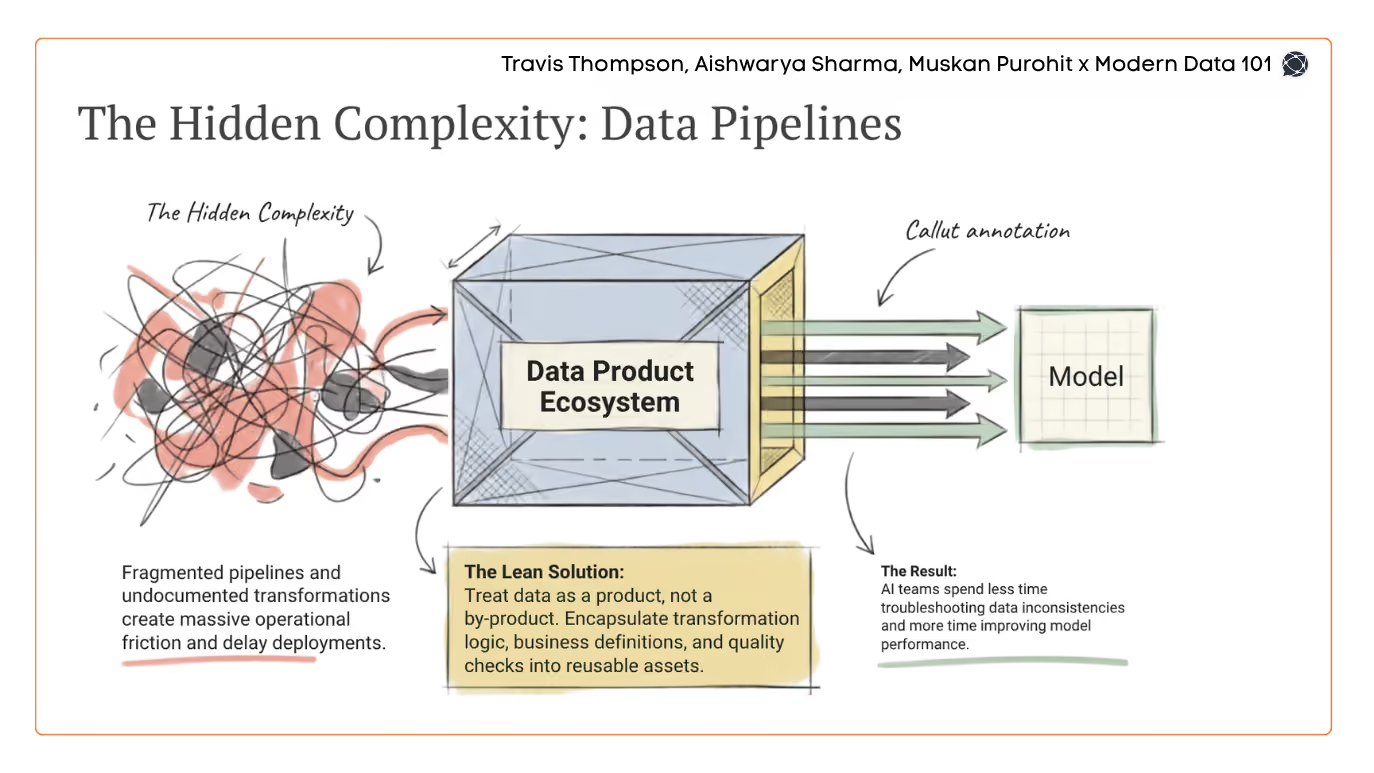
Additionally, one of the most overlooked sources of complexity in enterprise AI systems is introduced by poorly designed data pipelines, presenting instability across the entire system. These also delay the model deployment and increase maintenance costs
Lean AI addresses this challenge by treating AI data pipelines and domain data products as foundational components of the system architecture. Well-structured data systems enable reliable model training, faster deployment, and improved system scalability.
Increase in AI Infrastructure Costs without Governance
Without governance frameworks, resources like cloud compute resources, storage environments, distributed computing and training systems, and monitoring infrastructure are rarely optimised. Instead, it accumulates and leads to an increase in AI infrastructure costs.
Lean AI introduces governance mechanisms that enforce AI infrastructure efficiency and AI system cost control.
Resource utilisation becomes measurable, infrastructure usage is monitored, and architectural decisions are evaluated based on cost impact as well as technical performance.
This governance layer ensures that AI systems remain economically sustainable as adoption expands.
Failure of AI Experiments to Reach Production
The pilot-to-production journey falters for many organisations even today, and that’s a major concern.
Many AI initiatives begin as experimentation projects. Data scientists explore datasets, test modelling techniques, and evaluate potential use cases. However, a large percentage of these experiments never transition into production systems.
The reasons are often operational. Models may lack reliable data pipelines, deployment infrastructure, or monitoring systems required for production environments.
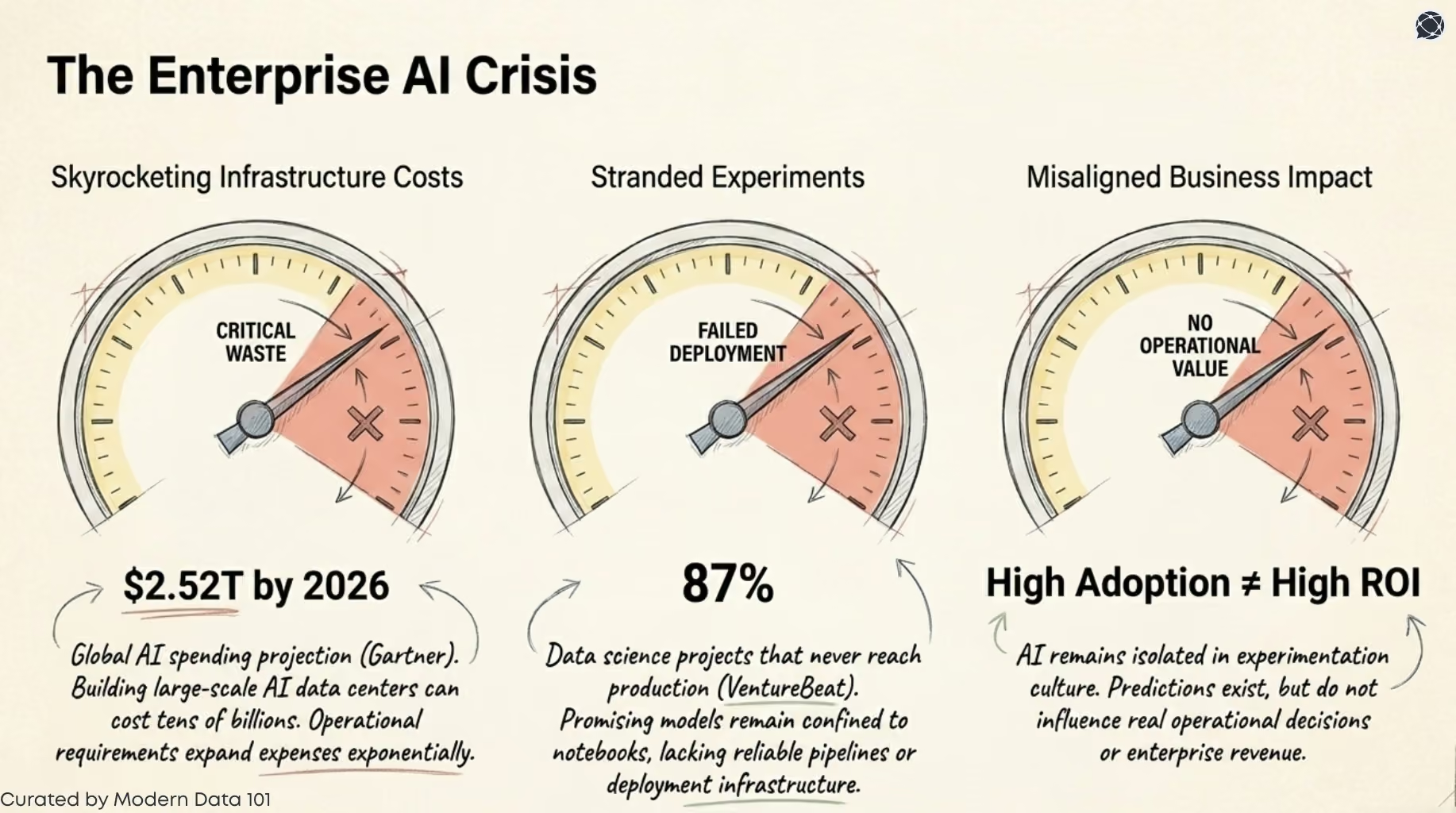
Even a report by VentureBeat found that approximately 87% of data science projects never make it into production. As a result, promising AI experiments remain confined to notebooks or research environments without influencing real business operations.
Lean AI emphasises on production-ready architectures from the beginning of development, increasing the probability of experimental work evolving into operational AI systems.
[related-5]
The Lean AI Case: Why AI Adoption Outpaces Business Value
What went wrong with a maximalist playbook?
The first wave of enterprise AI adoption followed a familiar expansion logic: identify every possible use case, deploy broadly, and let value emerge from the volume. It worked, somewhat, in the early days, when the bar for "impressive AI" was lower, and any automation felt transformative.
There's a pattern we've been watching play out across industries over the past eighteen months. A large enterprise, be it financial services, healthcare, or manufacturing, takes your pick, stands up an AI program. They license a suite of tools, spin up pilots across a dozen functions, and declare themselves AI-forward. Twelve months later, they're doing a quiet reckoning. The spend is real. The results are scattered. And somewhere in the noise, two or three things are actually working.
That reckoning has a name now. We call it the Lean AI shift, and it may be the most important strategic inflexion in enterprise technology. So, if reconsideration of AI-related decisions is the destination, the following are the 4 drivers:
1. AI Adoption Is Growing Faster Than AI Value
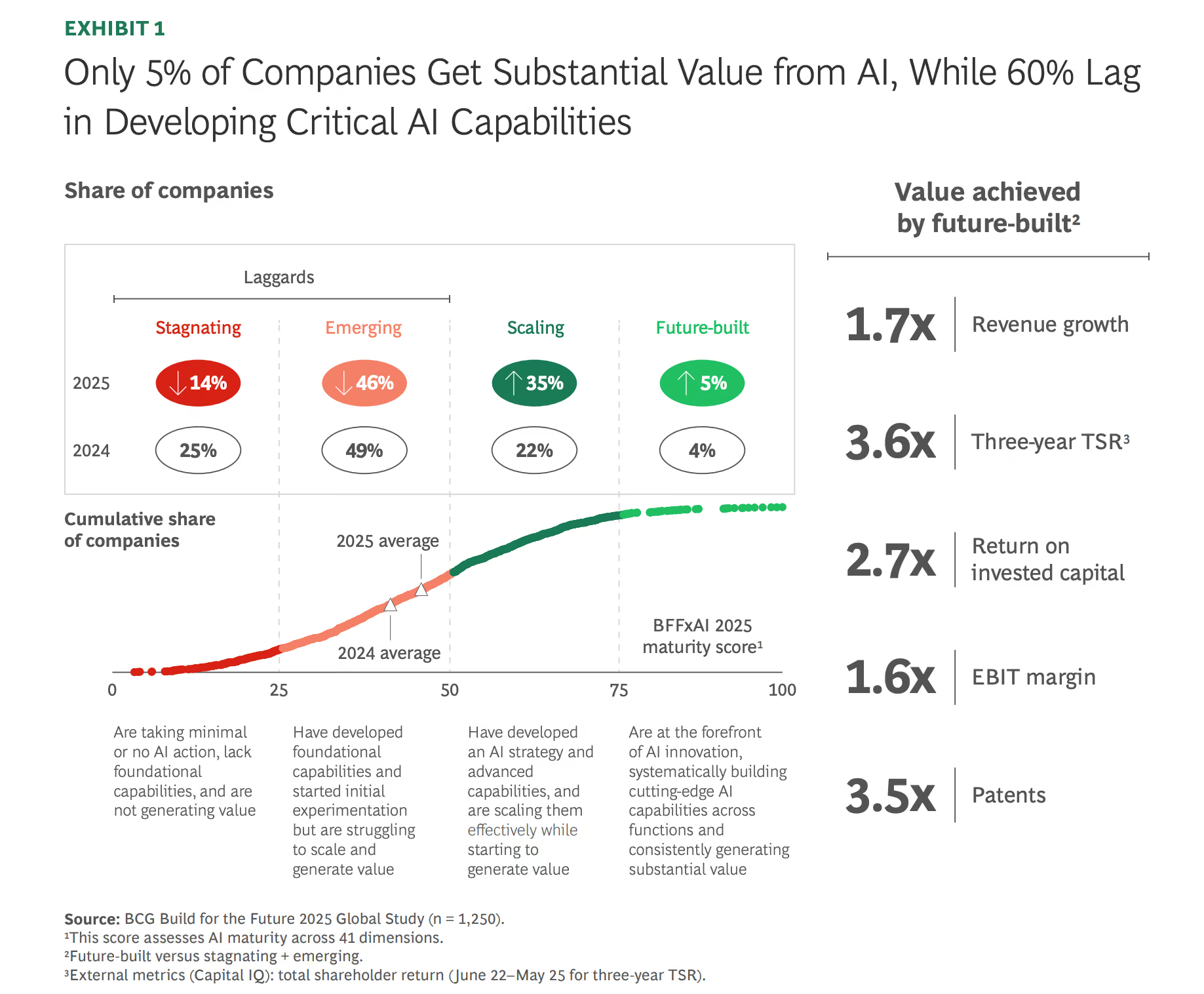
Because organisations are aiming for automation and data-driven decision-making, this is making the pace of AI adoption faster. Organisations across finance, healthcare, manufacturing, retail, and technology have launched large AI initiatives. But the economic ROI from these initiatives has been uneven. Many organisations successfully build models, yet struggle to operationalise them at scale. AI capabilities exist, but their influence on core business decisions remains limited.
💡 Research from McKinsey’s State of AI surveys shows that while a large share of organisations report adopting AI in some form, only a small group achieve significant financial impact from these deployments.
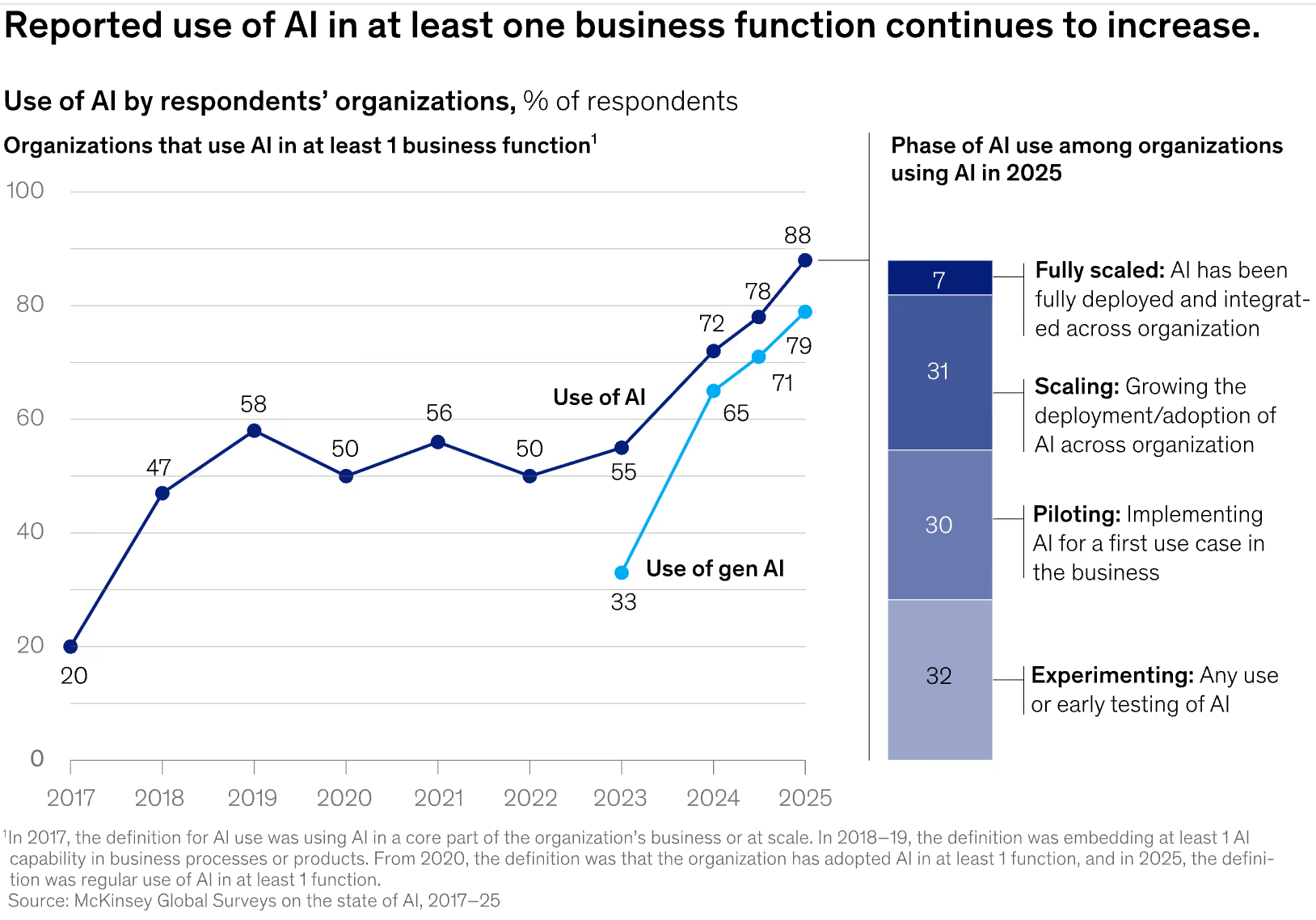
In many cases, the difference lies less in technical capability and more in how effectively AI is integrated into business workflows and operating models.
When AI remains isolated within an experimentation culture, its ability to influence revenue growth, cost reduction, or risk management* becomes limited.
2. The Impact of Scaling AI: Hidden Cost That Most Budget Conversations Miss
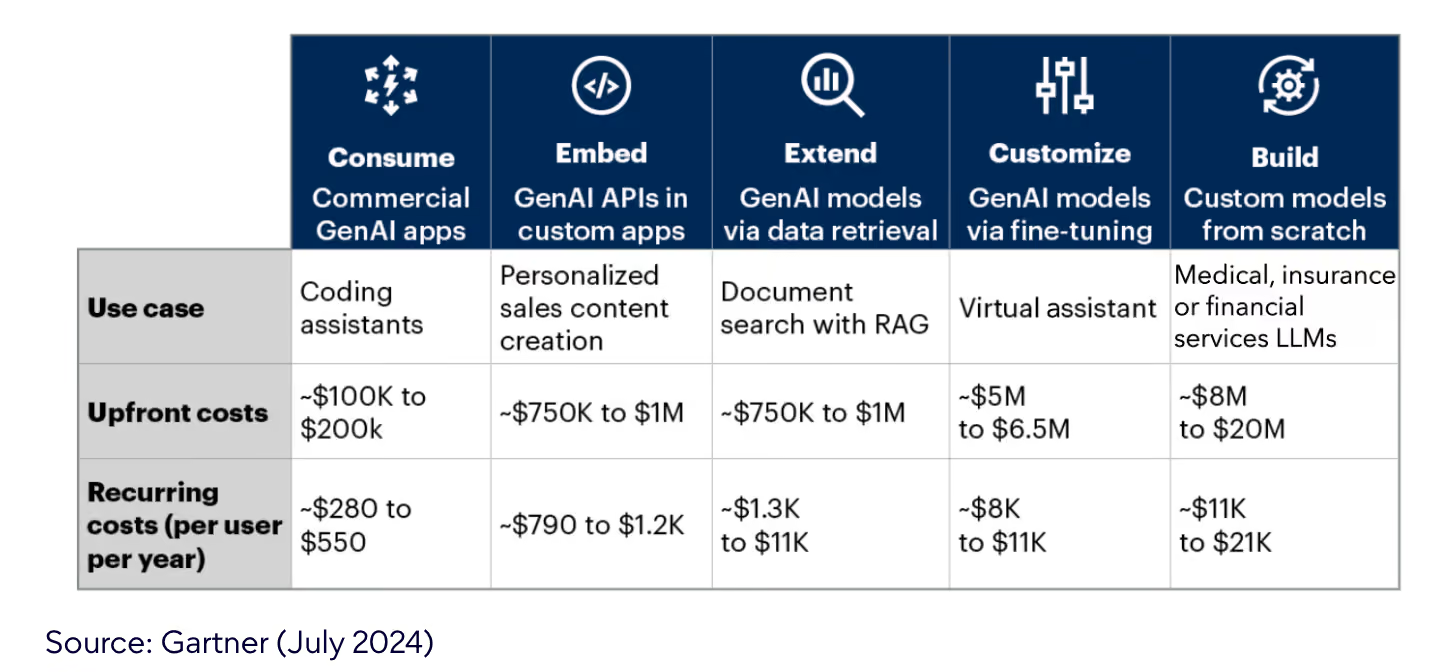
Another factor driving reconsideration is the rising cost of AI infrastructure. It takes a lot to train and deploy machine learning models, as it requires extensive computational resources, specialised hardware, large-scale data storage, and complex engineering environments.
And with time, AI systems mature and require support with continuous retraining pipelines, model monitoring systems, and production deployment environments. These operational requirements significantly expand infrastructure expenses over time.
Gartner forecasts that global AI spending will reach $2.52 trillion by 2026, driven largely by enterprise infrastructure expansion and large-scale deployments. At the same time, industry leaders have begun highlighting the scale of infrastructure required. IBM CEO Arvind Krishna has noted that building a large-scale AI data center can cost tens of billions of dollars, underscoring the financial intensity of advanced AI systems.
In addition to this, training advanced architectures can require massive computational capacity, often distributed across cloud environments or specialised data centres. Once deployed, these models also require ongoing maintenance, versioning, and monitoring to ensure data reliability.
For leadership teams managing enterprise budgets, AI infrastructure costs are quickly becoming a major strategic consideration. Without disciplined architecture and data governance, these costs can grow faster than the value the systems produce.
3. Gap in Delivering Measurable Business Impact
Nowhere is this gap more bluntly described than by those who have worked at the intersection of AI strategy and enterprise decision-making:
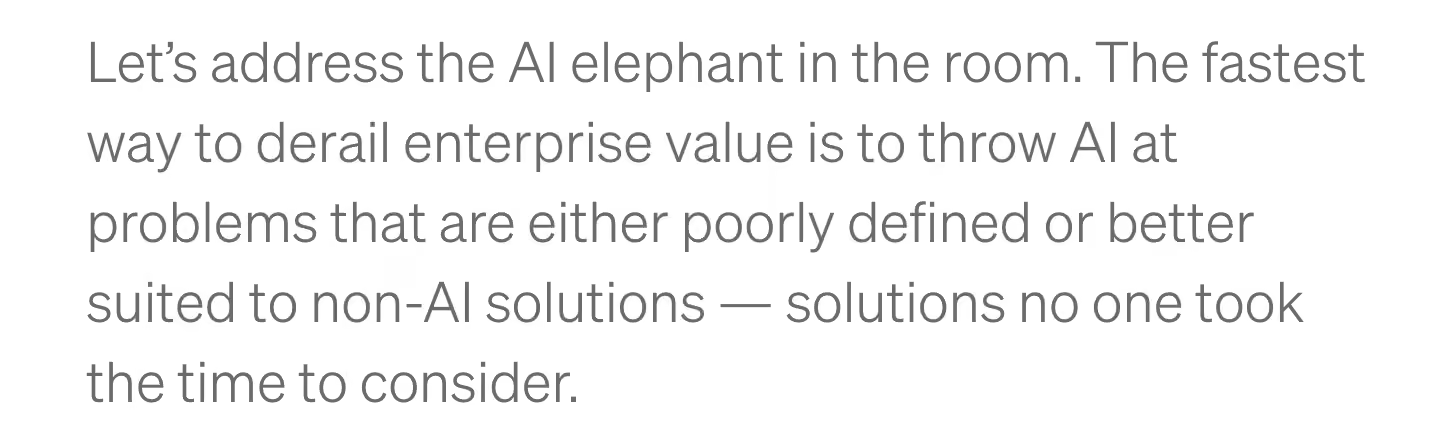
Source: Cassie Kozyrkov: Founder of Decision Intelligence; Former Chief Decision Scientist, Google (2018–2023); CEO, Kozyr.
One of the most common reasons AI initiatives struggle to produce measurable results is misalignment between technical development and business outcomes.
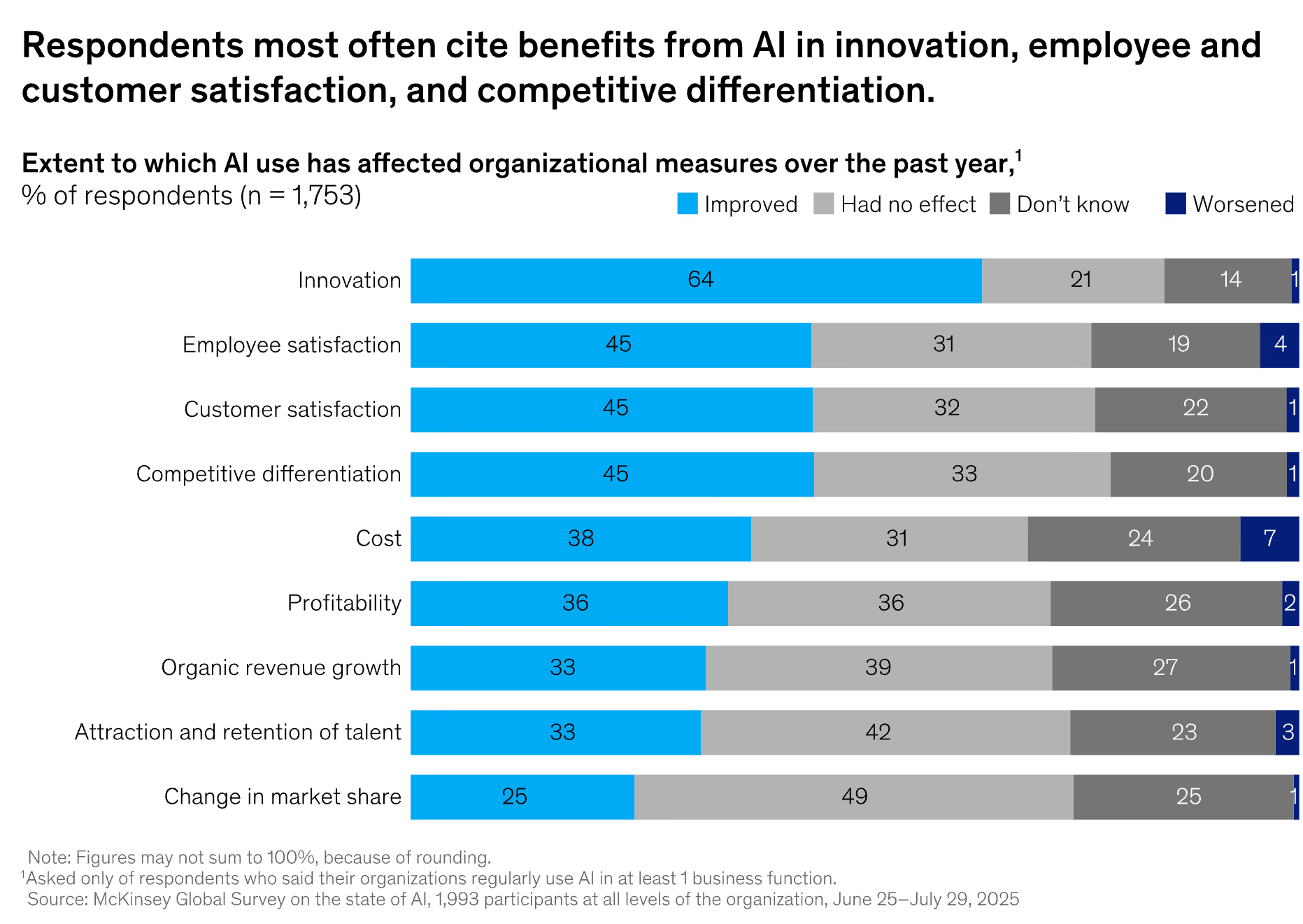
Data science teams frequently begin with available datasets or modelling opportunities rather than clearly defined business problems. As a result, organisations often produce technically sophisticated models that lack direct integration with operational processes.
Predictions may exist, but they do not influence real decisions. Models generate insights, yet those insights remain disconnected from workflows that affect revenue, cost structures, or risk exposure.
Collaboration is equally important. AI initiatives shouldn’t operate in isolation; they should be aligned with business goals across departments ~ Harvard Business School
This disconnect is one of the primary reasons organisations are rethinking their AI development approaches.
4. Increased Demand for More AI Efficiency
With greater investments, executives expect performance and accountability. The reason is that: AI programs are evaluated based on cost efficiency, operational reliability, and measurable return, just like any other enterprise investment.
This shift is also reflected in industry research. Gartner reports that 54% of infrastructure and operations leaders are adopting AI primarily to reduce costs, highlighting how efficiency has become a central objective rather than pure experimentation.
Leadership teams now expect AI systems to deliver tangible outcomes in terms of reduced operational costs, improved forecasting accuracy, faster decision cycles, and new revenue opportunities. This shift is forcing organisations to move beyond experimental AI initiatives toward production-ready systems that operate at scale, through a disciplined approach.
This is one of the primary reasons why, along with a demand for efficiency, reliability, and value delivery, presents an opportunity to utilise operating models such as Lean AI.
Core Principles That Define Lean AI
The following are several core principles that distinguish Lean AI from traditional approaches to AI development: AI efficiency, AI development efficiency, operational discipline, and alignment with business value.
Define Value From the Customer's Perspective
The first principle of lean AI prioritises efficient AI models and streamlined data pipelines rather than unnecessarily complex architectures. Models should be as simple as possible while still delivering the required business outcomes.
Map the Value Stream and Eliminate Waste
The AI value stream runs from raw data to business decisions. Every step in between data ingestion, preparation, feature engineering, model training, deployment, and monitoring must be evaluated honestly against the value it delivers. Steps that do not contribute to the final business outcome are waste.
In most enterprise AI programs, the majority of engineering effort is spent on steps that are necessary but not value-adding. Lean AI makes this visible so organisations can systematically reduce it.
[related-2]
AI development efficiency
This principle emphasises how development workflows, experimentation processes, and deployment pipelines are designed to minimise wasted effort and accelerate production deployment.
Create a Flow for Operational discipline
Most AI initiatives are characterised by stop-start development. Models built in isolation, pipelines reconstructed for every project, deployment bottlenecks that delay production by months. Lean AI creates flow by standardising pipelines, building reusable data assets, and designing deployment processes that allow models to move from development to production without unnecessary friction. When flow exists, AI teams spend less time on infrastructure and more time on solving the problems that matter.
Alignment with business value
Lean AI requires this alignment to operate. Every AI system should support a measurable objective such as improving operational efficiency, increasing revenue, or reducing risk. Systems that cannot demonstrate value are redesigned or discontinued.
Together, these principles create a framework for building AI systems that are both technically effective and economically endurable.
Architectural Blueprints of a High-Efficiency Lean AI Data Platform
A Lean AI architecture is not defined by a single tool or framework. Instead, it is built from a set of foundational building blocks that work together to keep AI systems efficient, reliable, and manageable as they scale. '
Each component addresses a specific layer of the AI lifecycle, ensuring that models, data, and infrastructure evolve in a coordinated way rather than becoming fragmented over time:
Reusable and Modular Data Products
Data products provide reliable and well-structured datasets that models use for training and inference. When data is organised as reusable assets with consistent definitions, teams spend less time preparing data and more time improving models.
Machine Learning Pipelines
Machine learning pipelines automate stages such as data preparation, model training, evaluation, and deployment. These pipelines create repeatable workflows that reduce manual effort and help organisations deploy models more consistently.
Efficient Models
Lean AI prioritises models that deliver strong performance without unnecessary computational overhead. Efficient models train faster, require fewer infrastructure resources, and are easier to maintain in production environments.
Monitoring Systems
Monitoring systems track model accuracy, prediction behaviour, data drift, and infrastructure usage after deployment. These signals help teams identify performance changes early and maintain system reliability over time.
[related-3]
Embedded Governance Frameworks
Governance frameworks establish standards for model validation, infrastructure usage, and lifecycle management. They ensure that AI systems remain controlled, cost-efficient, and aligned with organisational objectives as adoption grows.
Rather than relying on isolated experimentation, organisations gain an AI environment that can support long-term development, continuous improvement, and reliable deployment across the enterprise.
Together, these building blocks create an architecture where data, models, and infrastructure operate as a coordinated system.
How Does Lean AI Support Sustainable and Responsible AI Development
For a long time, the conversation around AI was dominated by capability. How powerful can models become? How much more can they do? But a quieter, more urgent question is now emerging alongside it: at what cost?
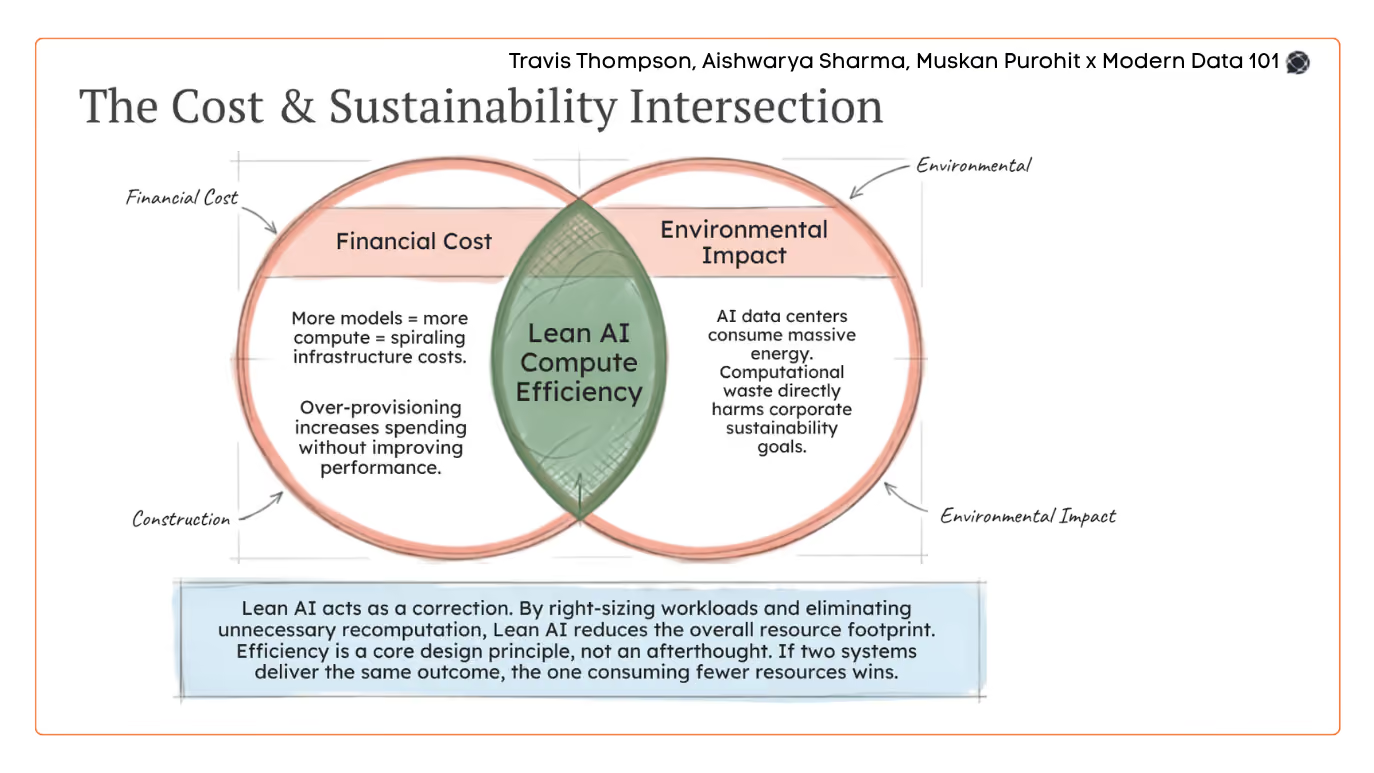
As organisations scale AI, they are beginning to confront a reality that is hard to ignore. More models mean more compute. More compute means more energy. And more energy brings both financial pressure and environmental impact. What once felt like a technical choice is now a strategic one.
Lean AI enters this conversation not as a limitation, but as a correction. It reframes efficiency as a core design principle, not an afterthought.
Also, it asks a simple but powerful question: if two systems deliver the same outcome, why should one consume significantly more resources than the other? This is where sustainability, responsibility, and operational discipline begin to converge.
Why AI Energy Consumption Is Becoming a Strategic Concern
Enterprises are increasingly recognising that AI infrastructure is not just a technical layer; it is a cost and sustainability driver.
According to McKinsey & Company, AI adoption is accelerating rapidly across organisations, with increasing investment and widespread experimentation, though many companies still face challenges in strategy, talent, and risk management.
Gartner highlights that as generative AI systems scale into production, total cost of ownership can increase significantly, with factors like token usage, model hosting, and inference costs quickly compounding without proper cost management.
This is where energy and cost intersect. The more inefficient the system, the more compute it consumes. And the more compute it consumes, the harder it becomes to scale AI sustainably across the organisation.
How Lean AI Reduces Computational Waste
Lean AI tackles this problem by focusing on how AI systems are actually used in production, not just how they perform in isolated experiments.
Instead of running repeated large-scale training jobs or maintaining oversized models, teams optimise for fit. They select models that are sufficient for the task and design pipelines that avoid unnecessary recomputation.
Google Cloud highlights that right-sizing workloads based on actual usage can reduce unnecessary compute costs, as over-provisioning increases spending without improving application performance.
This is exactly where Lean AI operates. It removes excess, not capability.
How Lean AI Aligns With Responsible AI Governance
Responsible AI in enterprises is not just about principles. It is about whether systems can actually be monitored, controlled, and improved over time.
Lean AI supports this by making systems easier to manage. When pipelines are structured and environments are standardised, it becomes easier to track how models behave, how data flows, and where risks may emerge.
Deloitte emphasises that trustworthy AI requires governance structures that extend across the entire organisation and AI lifecycle, noting that operationalising these processes is often more challenging than defining them.
Lean AI closes that gap by bringing governance into the system design itself, not leaving it as a separate layer.
How Efficient AI Models Support Environmental Sustainability
Sustainability in enterprise AI is less about one breakthrough and more about consistent efficiency across systems.
Every improvement in model size, training efficiency, or inference optimisation reduces the overall resource footprint. And when these improvements are applied across multiple teams and use cases, the impact compounds quickly.
Accenture highlights that optimising AI workloads and infrastructure can enable organisations to scale AI while reducing both operational costs and environmental impact.
Lean AI builds directly on this principle. It ensures that as AI adoption grows, resource consumption does not grow at the same rate.
The Mistake Organisations Miss in Lean Approach
Trailing back to the Toyota Story!
Every one of Toyota's lean principles rested on a foundation that rarely appears in AI implementation guides: respect for people. Ohno was explicit that the Toyota Production System was not a cost-cutting exercise. It was a system designed to make workers more capable, more creative, and more effective, by removing the frustrating, wasteful work that prevented them from contributing their best thinking.
Lean AI carries the same obligation. An AI system designed primarily to reduce headcount is not Lean, but is simply automated. Lean AI should make data scientists better at solving problems, business leaders better at making decisions, and frontline workers better at their jobs. When this principle is present, AI adoption accelerates. When it is absent, resistance follows.
Operational Benefits of Lean Methods in AI Development
Instead of treating AI as a collection of independent experiments, Lean AI approaches it as a structured system with defined processes, governance mechanisms, and model performance metrics. This results in:
- Development workflows become more organised,
- deployment pipelines become standardised,
- and AI lifecycle management becomes a continuous process rather than an occasional activity.
This operational discipline allows organisations to build scalable AI systems that remain reliable over long periods of production use.
And this is why Lean AI’s one of the major contributions is: the introduction of operational discipline into AI development processes.
For enterprises seeking to expand artificial intelligence across critical business operations, this discipline is essential.
Without it, AI initiatives often struggle to move beyond isolated experiments. With it, AI systems can evolve into stable platforms that support long-term business value.
What Is A Lean AI Operating Framework
The Lean AI operating framework addresses this challenge by defining how AI systems should be designed, deployed, and governed across the entire lifecycle.
It focuses on aligning model development, data infrastructure, and operational governance around one central objective: delivering measurable business value with minimal operational waste.
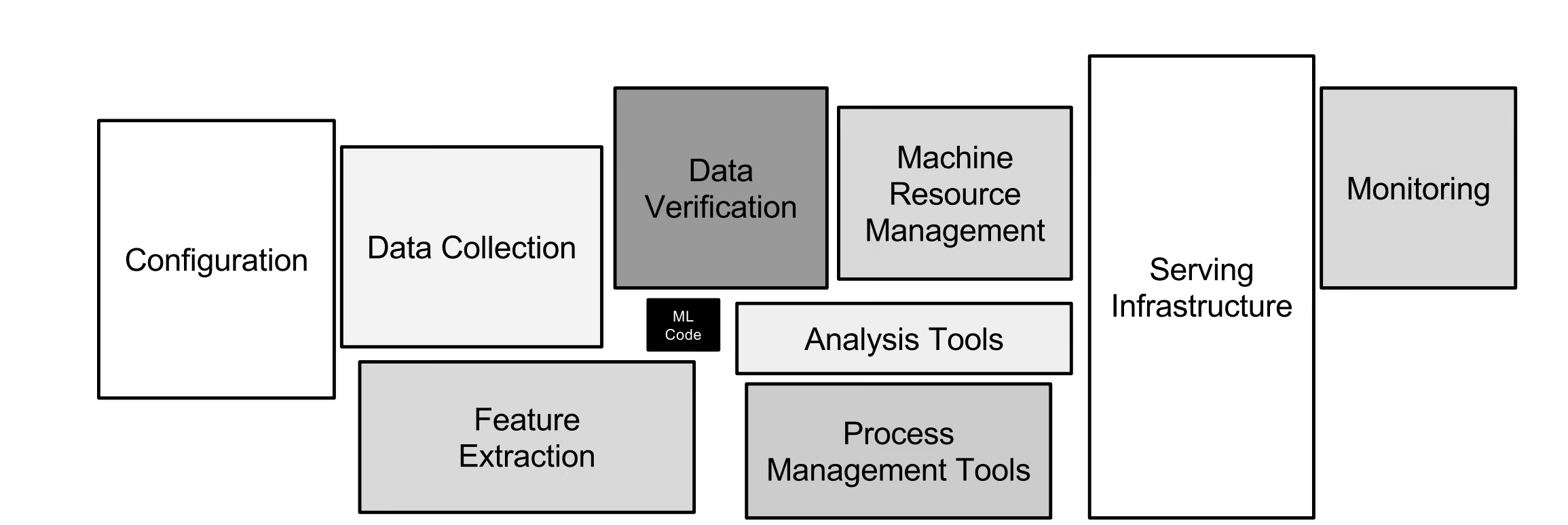
Research in machine learning systems design supports this perspective and reinforces the need for structured operating frameworks that coordinate models, data pipelines, and infrastructure across the full AI lifecycle:
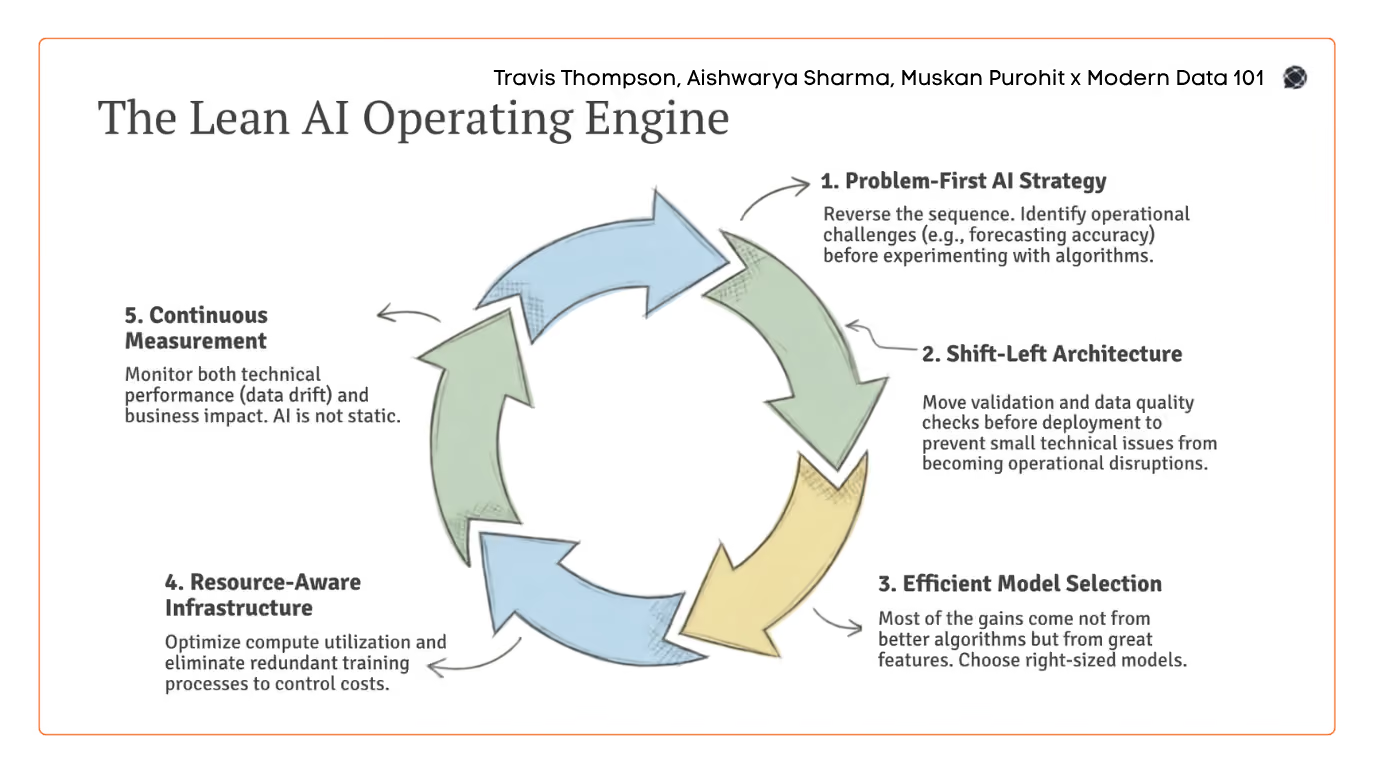
Problem-First AI Strategy
The value of lean principles, such as customer focus, waste elimination, and continuous improvement, is unchanged. What changes is the starting point: business need must pull AI development, not technology push it.
A problem-first AI strategy begins by identifying operational challenges or decision points where AI can create a measurable impact.
Examples include demand forecasting accuracy, fraud detection precision, or supply chain optimisation. This principle is not new. One of the most widely cited voices in applied AI has been making this exact argument for years:
Once the business problem is clearly defined, teams design AI systems that address that specific outcome. This approach ensures that model development remains aligned with enterprise priorities.
Shift-Left Architecture for AI Development
Another defining element of the Lean AI framework is the adoption of shift-left architecture in AI development.
Validation, quality checks, and governance move earlier in the AI lifecycle. As the Lean Six Sigma vs AI analysis from Mello puts it, without strong process foundations, automation accelerates inefficiency rather than eliminating it. Shift-left architecture ensures the processes underneath AI systems are sound before models are built on top of them, identifying problems before deployment rather than discovering them in production, where the cost of fixing them compounds.
Efficient Model Selection and Architecture
Lean AI emphasises selecting models that provide the best balance between predictive performance and operational efficiency.
In many enterprise use cases, smaller and well-optimised models can deliver comparable results while requiring significantly less computational infrastructure.
Most of the problems you will face are, in fact, engineering problems. Even with all the resources of a great machine learning expert, most of the gains come from great features, not great machine learning algorithms ~ Source.
This observation highlights why efficient model selection and strong data foundations often deliver greater impact than increasingly complex model architectures. Efficient model selection also reduces maintenance overhead. Simpler models are easier to retrain, easier to deploy, and easier to monitor in production environments.
For organisations scaling AI across multiple departments, this architectural discipline becomes essential for maintaining long-term operational efficiency.
Resource-Aware AI Infrastructure
Lean AI introduces resource-aware infrastructure practices that prioritise efficient compute utilisation, optimised training pipelines, and scalable deployment environments. This is because infrastructure decisions play a major role in determining whether AI systems remain sustainable at scale.
Organisations focus on optimising how models use available resources. This includes improving training efficiency, optimising inference workloads, and eliminating redundant computational processes.
These practices help organisations control infrastructure costs while supporting scalable AI systems.
Continuous Measurement of AI Value
AI systems cannot be treated as static deployments. Their performance changes over time as data evolves, business conditions shift, and operational requirements change. Lean AI, therefore, requires ongoing monitoring of both technical performance and business impact. This emphasis on continuous evaluation reflects broader industry guidance:
According to McKinsey's State of AI in 2025, the practices most strongly correlated with achieving AI value include embedding AI into business processes and tracking KPIs for AI solutions, precisely the discipline that continuous measurement and the Lean AI operating framework are designed to support.
Organisations track metrics such as prediction accuracy, infrastructure utilisation, deployment reliability, and financial outcomes. This measurement process ensures that AI systems remain aligned with business objectives and continue delivering measurable value.
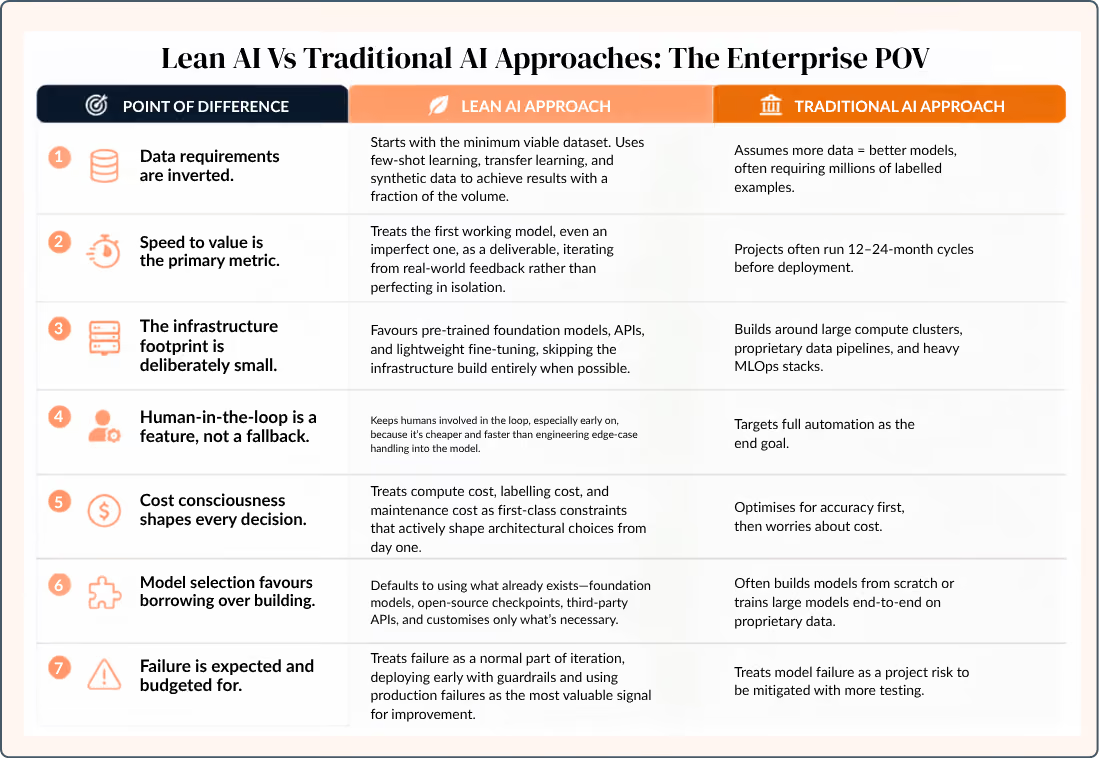
Lean AI Vs Traditional AI Approaches: The Enterprise POV
The lean approaches are not new, but for enterprises, it is important to understand where these apply best and why. Understanding them through the approach for AI is an optimised one.
What a Lean AI-based Architecture Looks Like
Your Lean AI approach-based infra will be a system design choice.
1. A self-serve platform layer
Between data and AI sits the infrastructure that makes intelligence operational. This is where teams can discover data products, compose workflows, provision resources, and deploy AI capabilities without depending on central platform teams for every step. The platform acts as the delivery mechanism that turns data readiness into AI readiness.
2. A contextual intelligence layer
This is where models, agents, and reasoning systems interact with enterprise context. Instead of relying only on prompts or static training, Lean AI architectures enrich model behaviour through metadata, semantics, policies, and domain knowledge, ensuring responses are grounded, explainable, and aligned with how the business actually works.
Lean AI architecture focuses on designing AI systems that deliver strong performance without introducing unnecessary operational complexity.
Every layer is designed to eliminate unnecessary complexity:
- reduced handoffs between data and AI teams
- fewer hidden dependencies in data pipelines
- less duplicated datasets and fragmented logic
- eliminating manual interventions to operationalise models
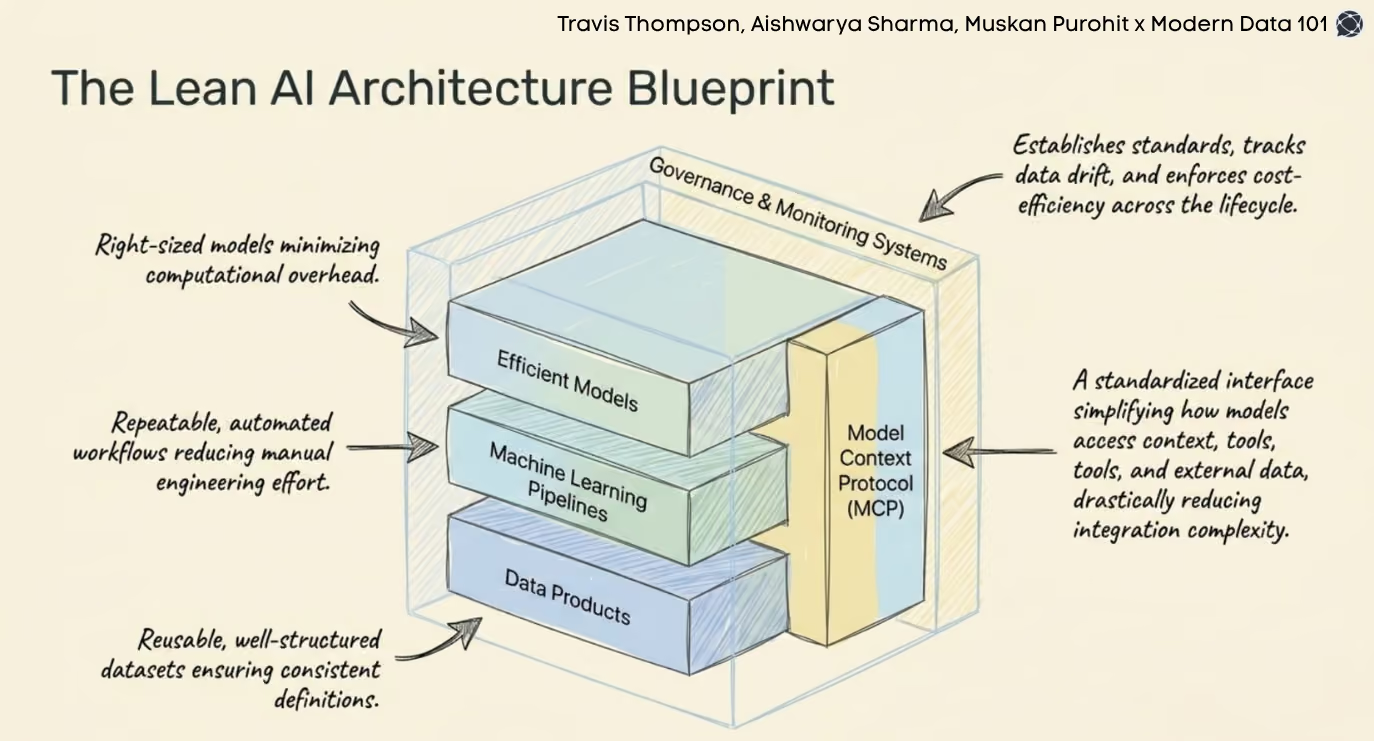
Research from the Stanford DAWN project highlights that building machine learning applications involves far more than model training, with many of the biggest challenges arising from data preparation, feature engineering, and production deployment across the MLOps lifecycle.
This architectural perspective allows organisations to expand AI capabilities without introducing unnecessary technical debt or operational overhead.
What Are the Real-World Use Cases of Lean AI
Lean AI becomes most visible when its principles move beyond theory and into operational systems. For many enterprises, the challenge with AI is no longer technical feasibility. Models can be built. Data can be processed.
The real challenge is scaling these systems without creating unsustainable infrastructure costs or operational complexity. Lean AI addresses this problem by focusing on efficiency across the entire AI lifecycle. Rather than appearing as a single product or tool, Lean AI influences how a wide range of AI systems are designed and deployed.
Lean AI can be applied across a wide range of enterprise functions where organisations need AI systems that operate reliably, efficiently, and at scale. Some common examples include:
Fraud Detection in Financial Services:
Banks process millions of transactions every day. Lean AI enables fraud detection systems to run efficient models that can analyse transactions in real time, flag suspicious activity instantly, and operate at high scale without requiring excessive computational infrastructure.
Demand Forecasting in Supply Chains:
Retailers and manufacturers use forecasting models to predict product demand across regions and time periods. Lean AI helps keep these systems efficient by combining reliable data pipelines with optimised models, allowing organisations to update forecasts frequently without running expensive, large-scale training processes.
Predictive Maintenance in Industrial Operations:
Manufacturing equipment continuously generates sensor data that can indicate early signs of failure. Lean AI enables predictive maintenance systems to analyse this data efficiently, helping organisations detect issues earlier while keeping monitoring infrastructure lightweight and cost-effective.
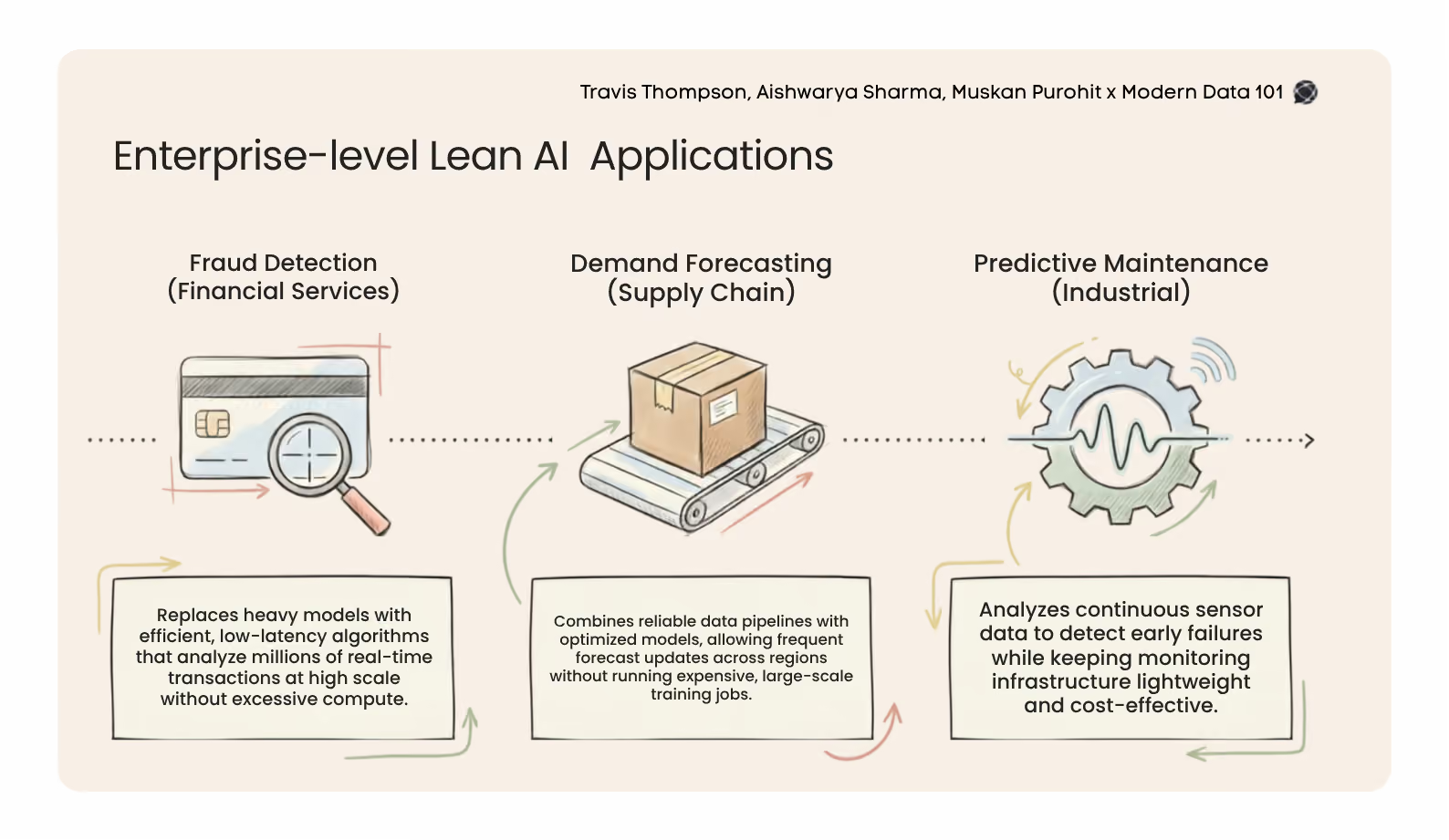
In each case, the value of Lean AI lies not in building the most complex model but in building a system that operates efficiently and consistently delivers business impact.
How Do Data Products Enable Lean AI Systems
Lean AI systems depend on more than efficient models and disciplined infrastructure: They depend on reliable data that must operate consistently across environments.
In many organisations, the largest barrier to scalable AI is not the modelling layer but the data layer. The following issues introduce operational instability that directly affects AI performance: Data pipelines are fragmented across departments, transformations are undocumented, and datasets change without clear governance.
The answer to how data products help here is in their capabilities to naturally introduce the properties Lean AI needs.
Starting with a bounded business problem
Lean AI requires building an ecosystem of data products that are reusable, standardised technological bricks on which a sustainable AI strategy is built. The AI model relies on a foundation of common denominators (generic data products) essential to its functioning, with specialised data products built on top for specific requirements.
Data Products are Structurally Problem or use-case-Driven
Data Product is a "fundamental and independent unit of your data stack that encompasses all the resources, instructions, metadata and data to serve a specific business purpose." It is outcome-first by definition.
Moving from conventional two-dimensional tables to dynamic Data Products represents a harmonious fusion of purpose and execution. The data stack is tied directly to business value, not assembled ad hoc around infrastructure.
As a prominent explanation of Lean AI says : you cannot ask "where are we failing to deliver value?” and then hand an AI a raw, undiscoverable, ungoverned data lake. Data Products are the structural enforcement of value-first thinking on the data infrastructure side.
Enabling democratised access
The core philosophy of platforms like a data developer platform is that data professionals, including engineers, business users, and domain teams, should all be able to self-serve from the same platform. This enables a larger team of data developers to focus their time and effort on building data applications instead of worrying about plumbing issues. Applications across a broad range, including AI/ML, data sharing, and analytics, are all enabled at scale.
The structural approach of these data platforms that help create data products drives the amplification goal of Lean AI. Democratised data access, through discoverable, natively accessible Data Products, is the infrastructure prerequisite for democratising AI-assisted decision-making on the shop floor, in maintenance, in CI teams.
Provides trustworthy, AI-ready data
Rethinking the data developer platform’s architecture, it leverages AI agents to enhance user experience with heuristic assistance, and data product marketplaces like the Data Product Hub directly support AI/ML activation alongside BI tools, meaning the same governed, quality-checked data product can feed an analyst's dashboard or a data scientist's model.
The eight mandatory attributes of a Data Product: Discoverable, Addressable, Understandable, Natively Accessible, Trustworthy, Interoperable, Independent, and Secure.
One of Lean AI's principles is using AI to amplify human observation and problem-solving. This fundamental is worthless if the AI is reasoning over stale, undocumented, or untrusted data. Data Products encode SLOs (quality, freshness, completeness) as part of the product itself, not as an afterthought.
[related-4]
Data Products Enable Embedded Governance
Governance plays a crucial role in controlling operational costs and maintaining efficiency.
It also ensures that datasets remain accurate, documented, and versioned across the organisation. Measures like quality checks, lineage tracking and access controls prevent teams from duplicating pipelines or creating redundant data assets.
This data governance discipline also reduces infrastructure waste and ensures that AI systems operate on reliable data sources.
💡When data products are developed consistently across domains, they form an interconnected ecosystem of reusable data assets. Here, the data products provide the structural foundation that Lean AI systems rely on for scalability and reliability.
This ecosystem allows AI teams to compose new machine learning pipelines quickly by combining existing data products rather than building new pipelines from scratch.
How Organisations Implement Lean AI Successfully
Implementing Lean AI requires more than technical changes. It involves rethinking how organisations identify opportunities for AI, build supporting infrastructure, and manage systems once they are deployed.
Successful implementation begins with aligning AI systems with clear business objectives and building the infrastructure required to support long-term operational efficiency.
The following steps outline how organisations can begin introducing Lean AI principles into their existing AI programs.
Identifying High-Impact AI Opportunities
The first step in implementing Lean AI is identifying business problems where artificial intelligence can create a measurable impact. Rather than starting with available datasets or modelling techniques, organisations begin by examining operational processes where better predictions or automated decisions could improve outcomes.
These opportunities often appear in areas that generate large volumes of data and involve repeated decision-making. Examples include demand forecasting in supply chains, fraud detection in financial services, pricing optimisation in retail, and predictive maintenance in manufacturing environments.
By prioritising problems with clear operational value, organisations ensure that AI development remains closely aligned with business objectives. This focus reduces the risk of building technically sophisticated models that ultimately have little influence on real decision-making.
Establishing Data Foundations for Lean AI
Establishing these foundations typically involves building structured data pipelines that can ingest, transform, and deliver data reliably across different AI workflows.
Organisations must also define governance policies that standardise data definitions and ensure that datasets remain consistent across teams. The urgency of this data foundation problem isn't just felt inside organisations, it's been a central argument from the most prominent voices in applied AI:
💡What we're missing is a more systematic engineering discipline of treating good data that feeds AI systems. I think this is the key to democratizing access to AI ~ Andrew Ng, speaking at Fortune's Brainstorm AI Conference, Boston, November 2021.
Another important step is developing reusable data products. These structured data assets allow multiple AI systems to access trusted datasets without repeatedly rebuilding preparation pipelines.
As a result, AI teams spend less time resolving data inconsistencies and more time improving model performance.
Identifying Efficient AI Models
Efficient model selection is central to Lean AI. It encourages organisations to evaluate models not only on predictive accuracy but also on their operational efficiency. This approach balances predictive performance with operational sustainability.
Moreover, in many enterprise use cases, the most complex model is not necessarily the most practical choice. Larger architectures may deliver marginal performance improvements while significantly increasing infrastructure requirements and deployment complexity.
By carefully evaluating the trade-off between accuracy and computational cost, organisations can select models that provide strong predictive performance while remaining efficient to train, deploy, and maintain over time.
Introducing AI Cost Monitoring and Governance
As AI systems expand across an organisation, infrastructure costs can increase quickly.
Introducing cost monitoring frameworks allows leadership teams to track infrastructure utilisation and identify areas where resources may be underused or inefficiently allocated.
Metrics such as compute consumption, storage usage, and model deployment costs provide visibility into how AI systems consume infrastructure resources.
Governance mechanisms complement this monitoring by establishing policies that guide model development, deployment practices, and infrastructure usage. Together, monitoring and governance help organisations scale AI capabilities while maintaining financial discipline.
Focusing on Continuous Improvement
AI systems rarely remain optimal after their initial deployment. As new data becomes available and operational environments evolve, models must adapt in order to maintain performance. Lean AI supports this adaptability by encouraging iterative improvement through continuous monitoring, retraining pipelines, and periodic system optimisation.
Monitoring systems detect changes in model behaviour, while retraining pipelines allow organisations to update models as new data accumulates.
Over time, this cycle of data observability, improvement, and redeployment allows AI systems to evolve alongside business operations. Rather than remaining static technical assets, they become continuously improving capabilities that deliver sustained value.
Why AI Maturity Models Help Organisations Scale AI
AI maturity models help organisations evaluate how effectively they are developing and operating AI systems. These models provide a structured framework for understanding how AI capabilities evolve from experimentation to large-scale operational deployment.
By identifying their current maturity stage, organisations can prioritise the investments required to achieve scalable and efficient AI operations.
Data Products for Future-Proofing Lean AI Systems
As AI systems grow, the way data is managed becomes a critical factor in determining their success.
Data product ecosystems allow organisations to move away from fragmented pipelines toward reusable, well-defined data assets. This gives AI teams faster access to reliable data and reduces the need to rebuild pipelines for every new use case. The impact is both immediate and long-term. Development becomes faster, systems become more stable, and models remain aligned with consistent data definitions.
Over time, these ecosystems create a strong foundation that allows Lean AI systems to scale without introducing unnecessary complexity.
FAQs
Q1. What is Lean AI?
Lean AI is an approach to building artificial intelligence systems that prioritises efficiency, operational discipline, and measurable business value. Instead of focusing only on model complexity, Lean AI optimises the entire AI lifecycle, including data pipelines, infrastructure, deployment processes, and monitoring systems.
Q2. How does Lean AI reduce AI infrastructure costs?
Lean AI reduces infrastructure costs by prioritising efficient models, optimising training pipelines, and improving resource utilisation. By eliminating unnecessary computational processes and reducing redundant infrastructure workloads, organisations can scale AI capabilities while controlling operational expenses.
Q3. How is Lean AI different from traditional machine learning approaches?
Traditional machine learning approaches often focus on improving model accuracy through larger architectures and extensive experimentation. Lean AI shifts the focus toward operational efficiency, system reliability, and business impact, ensuring that AI systems remain scalable and economically sustainable.
Q4. How do data products support Lean AI systems?
Data products provide structured and reusable datasets that AI systems rely on for training and inference. By standardising data pipelines and ensuring reliable data access, data products reduce development overhead and improve the stability of machine learning pipelines.
Q5. Can Lean AI work with large language models?
Yes. Lean AI does not eliminate the use of large language models but focuses on deploying them efficiently. Organisations can apply Lean AI principles to optimise inference workloads, manage infrastructure costs, and integrate large models into scalable AI systems.
Connect with a community data expert
A no-cost session with a practitioner who's been where you are.
About Modern Data 101
Modern Data 101 is a movement redefining how the world thinks about data. A community built by the same team behind the world’s first data operating system, Modern Data 101 sits at the intersection of data, product thinking, and AI. Spread across 150+ countries, the community brings together a global network of practitioners, architects, and leaders who are actively building the next generation of data systems.
At its core, Modern Data 101 exists to simplify the journey from raw data to tangible and observable impact. It advocates high-potential data systems and next-gen architectures to unify and activate insights and automation across analytics, applications, and operational workflows at the edge.
In a world shifting from data stacks to AI ecosystems, Modern Data 101 helps teams not just navigate the change but lead it.


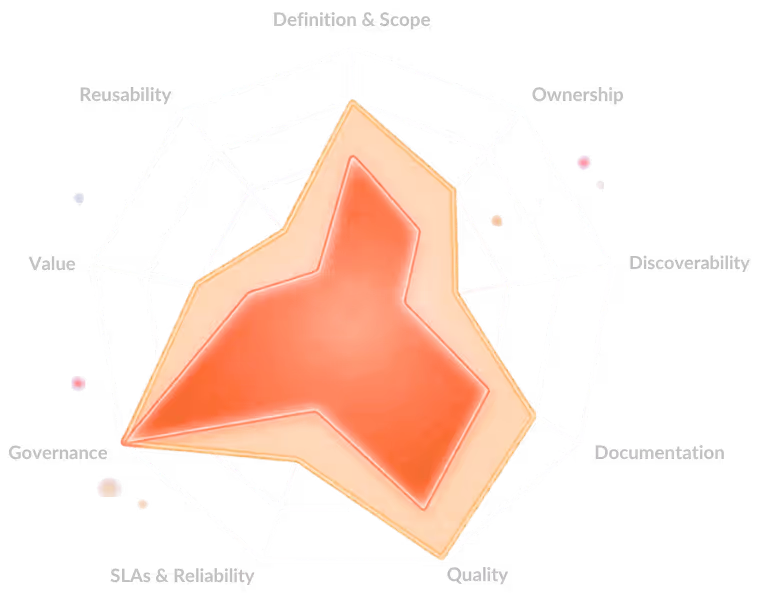
Where does your org stand on data product maturity?
A 9-dimension self-assessment used by 100+ data teams to benchmark strategy, ownership, and platform readiness.



Travis Thompson
Travis is the Chief Architect of DataOS, building full-stack Data Product solutions, and a founding contributor to the Data Developer Platform Standard that enables flexible implementation of disparate data design architectures such as data products, meshes, or fabrics. Over 30 years in all things data engineering, Travis has designed state-of-the-art architectures and solutions for top organisations, including GAP, Iterative, MuleSoft, HP, and many more. He is also an active advocate for polymorphic data architectures and contributes extensively to community archives.

Aishwarya Sharma
Aishwarya is a Senior Analytics Engineer at The Modern Data Company, focused on building end-to-end data solutions that bridge engineering and analytics. He works across data pipelines, modelling, and visualisation to deliver reliable, business-ready insights, combining strong technical expertise with a practical, problem-solving approach to modern data systems.

Muskan Purohit
Muskan Purohit is a Technical Writer contributing to community projects and tech journalism initiatives on Modern Data 101. She focuses on articulating modern data systems, platforms, and AI-driven architectures. Formerly, she worked with Amazon, training AI models and LLMs in collaboration with data developers. In addition, she has also led projects as a Content Manager @Lead with Tech, driving advocacy across data and technology domains.
Read the ideas here. Build them with The Modern Data Company.
Modern Data 101 is where the data community thinks out loud. When you're ready to move from articles to architecture, data products, governed AI pipelines, or a full Data Operating System; the team behind this community can help you build it.
Continue reading

.jpg)

.png)
