How Enterprise Ontologies Fail, And How to Stop It
The journey of organisations from failed ontologies to practical approaches for authentic leverage of ontology in the AI-driven space.

“Ontology is having its moment.”
The Knowledge Graph Guy, Tony Seale, said this in one of his posts, mentioning how for years, it was the "O word," guaranteed to kill a room. Today, it's shaping up to be the defining infrastructure term of 2026. Even a report by Gartner calls for enterprises to reuse industry-standard ontologies and adopt agile, minimum viable approaches to ontology development as a path to AI readiness.
But there’s a problem hiding inside the hype: most enterprise ontologies are already dying, quietly and invisibly, from the inside out.
Understanding why they decay and how to stop them may be the most important data architecture conversation your organisation isn’t having.
[state-of-data-products]
Why is Ontology Back (And Why It is Crucial Today?
The timing of ontology's comeback isn't accidental. MIT's NANDA initiative found that 95% of enterprise GenAI pilots deliver no measurable P&L impact. By now, we know that one big culprit is the absence of structured, contextual grounding for the AI to reason against.
This is the gap ontologies fill. A well-maintained enterprise ontology provides what agentic AI systems need: semantic harmonisation, consistent entity definitions, knowledge grounding, and guardrails that prevent hallucination.
Gartner has noted that without knowledge graphs and semantic enrichment, your data fabric will not provide the rich, contextual, integrated data necessary to avoid hallucinations in GenAI. That’s not a nice-to-have. That’s table stakes.
The idea traces back to Aristotle’s attempt to formalise how we perceive reality. Tim Berners-Lee operationalised it for the web. Tech leaders scaled it with standardised, structured data formats. Now the frontier has moved inside the enterprise, and companies are realising they can’t outsource their ontology. Your internal semantic layer is part of your competitive moat.
The Six Ways Enterprise Ontologies Decay
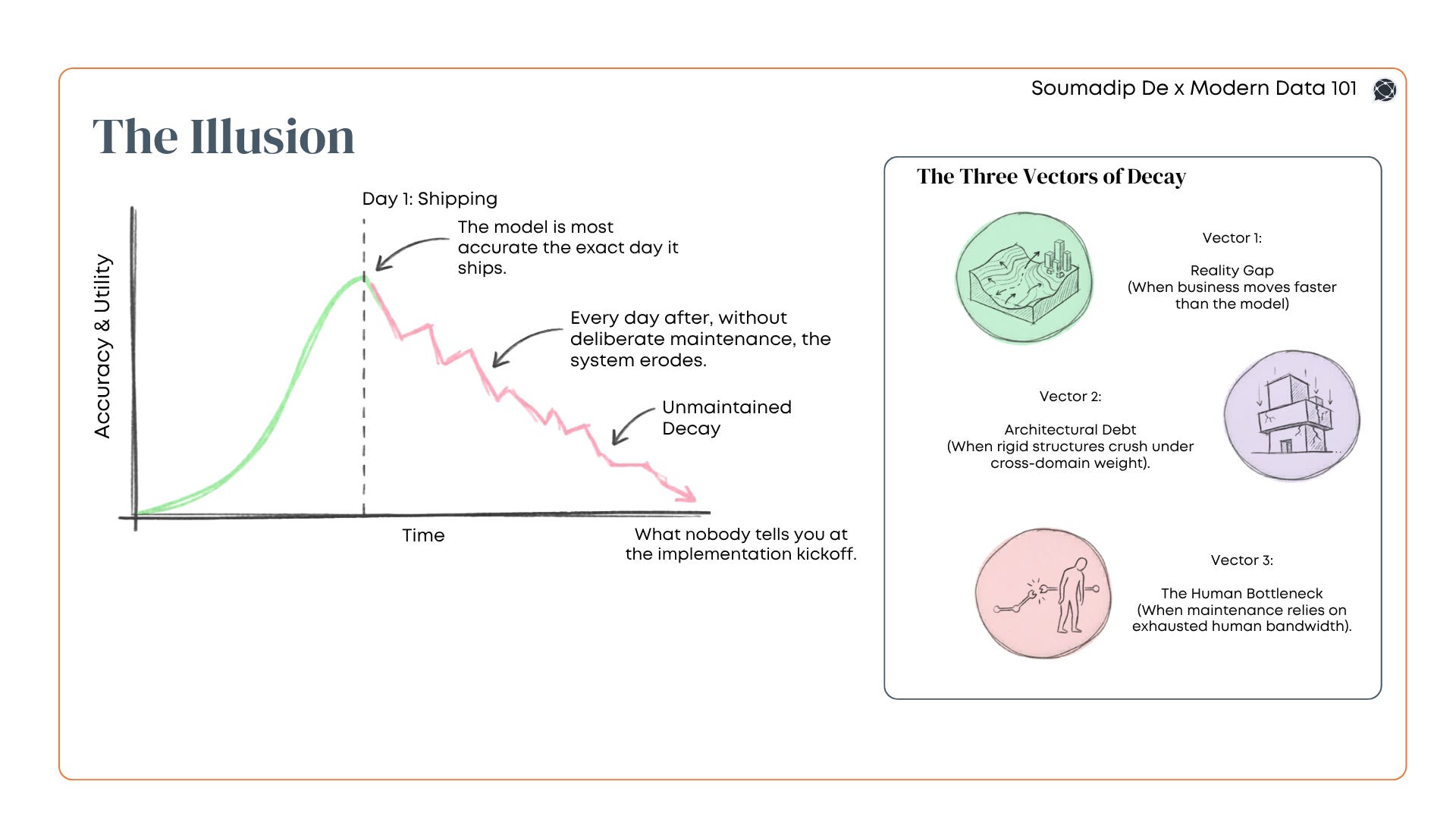
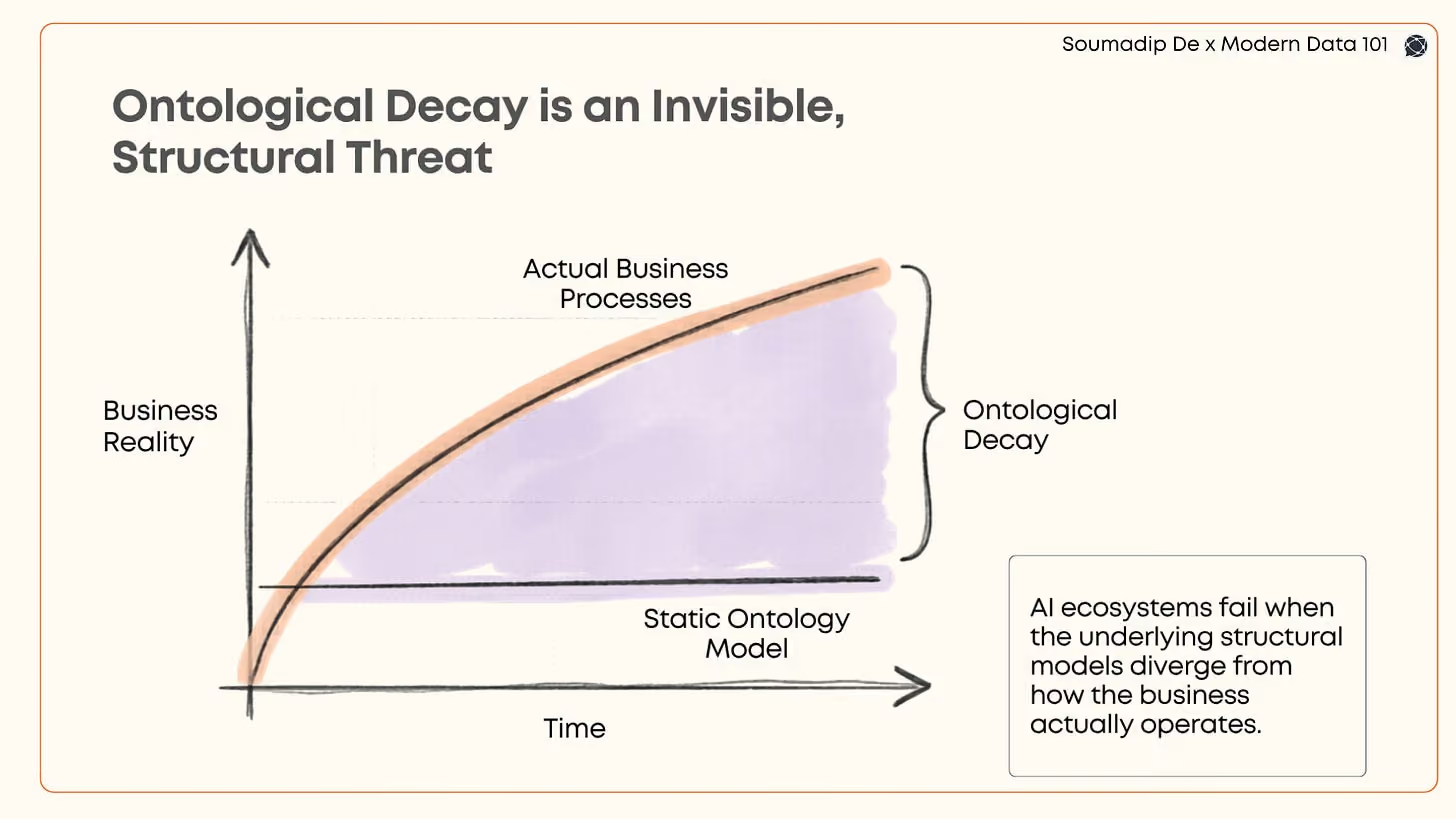
Here’s what nobody tells you at the implementation kickoff: an ontology is most accurate the day it ships. Every day after that, without deliberate maintenance, it decays.
1. The Business Moves, the Model Doesn’t
Enterprises operate in dynamic systems. Customer behaviours shift, pricing structures change, supply chains reorganise, and new product lines emerge. An ontology built to represent these realities at a single point in time becomes a map of a city that no longer exists. Concept definitions that were precise last year are misleading today.
2. Partial Understanding Is Baked In
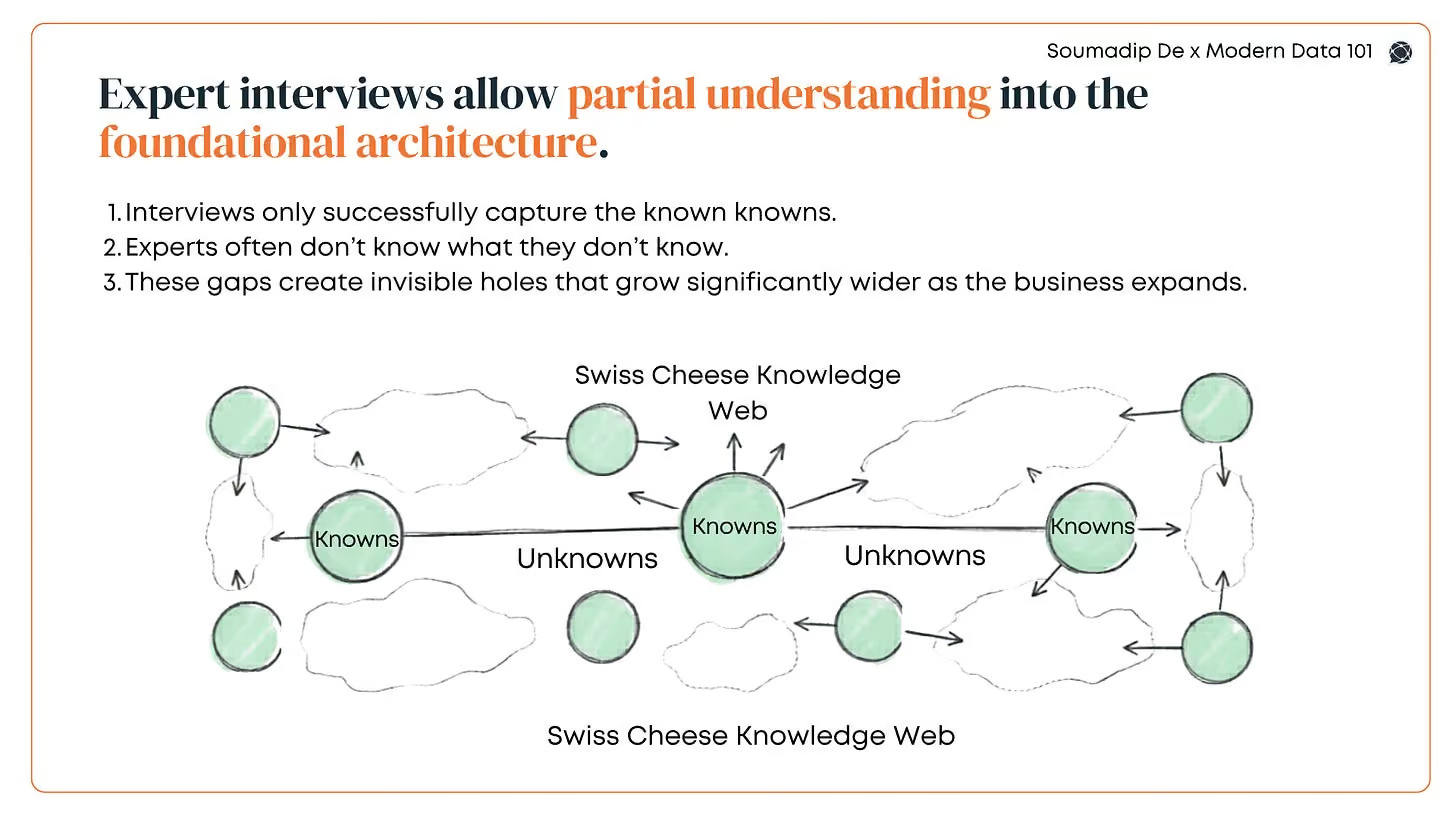
Even the most seasoned domain experts have knowledge gaps, and crucially, they often don’t know what they don’t know. Ontologies built from expert interviews capture the known knowns. They leave the unknown unknowns as invisible holes that grow wider as the business evolves. Structures must flex as new knowledge enters the organisation.
3. The Human Cost Kills Momentum
Domain experts have finite patience. Sitting through repeated ontology refinement workshops to distil tacit knowledge into formal structures eventually produces the same outcome: calendar declines. Without largely automating the development and continuous improvement of ontologies, the human cost becomes prohibitive and maintenance stops.
[related-1]
4. Cross-Domain Integration Breaks Everything
Most enterprise ontologies are built one domain at a time, like finance here, supply chain there, customer data somewhere else. When these domains need to be reconciled, the seams show. Adding a top-level unifying ontology creates massive overhead, or the abstraction layers become so generic that they lose all practical utility. The result is an internal Tower of Babel that AI systems cannot navigate reliably.
[playbook]
5. Data-Centricity Creates Computational Debt
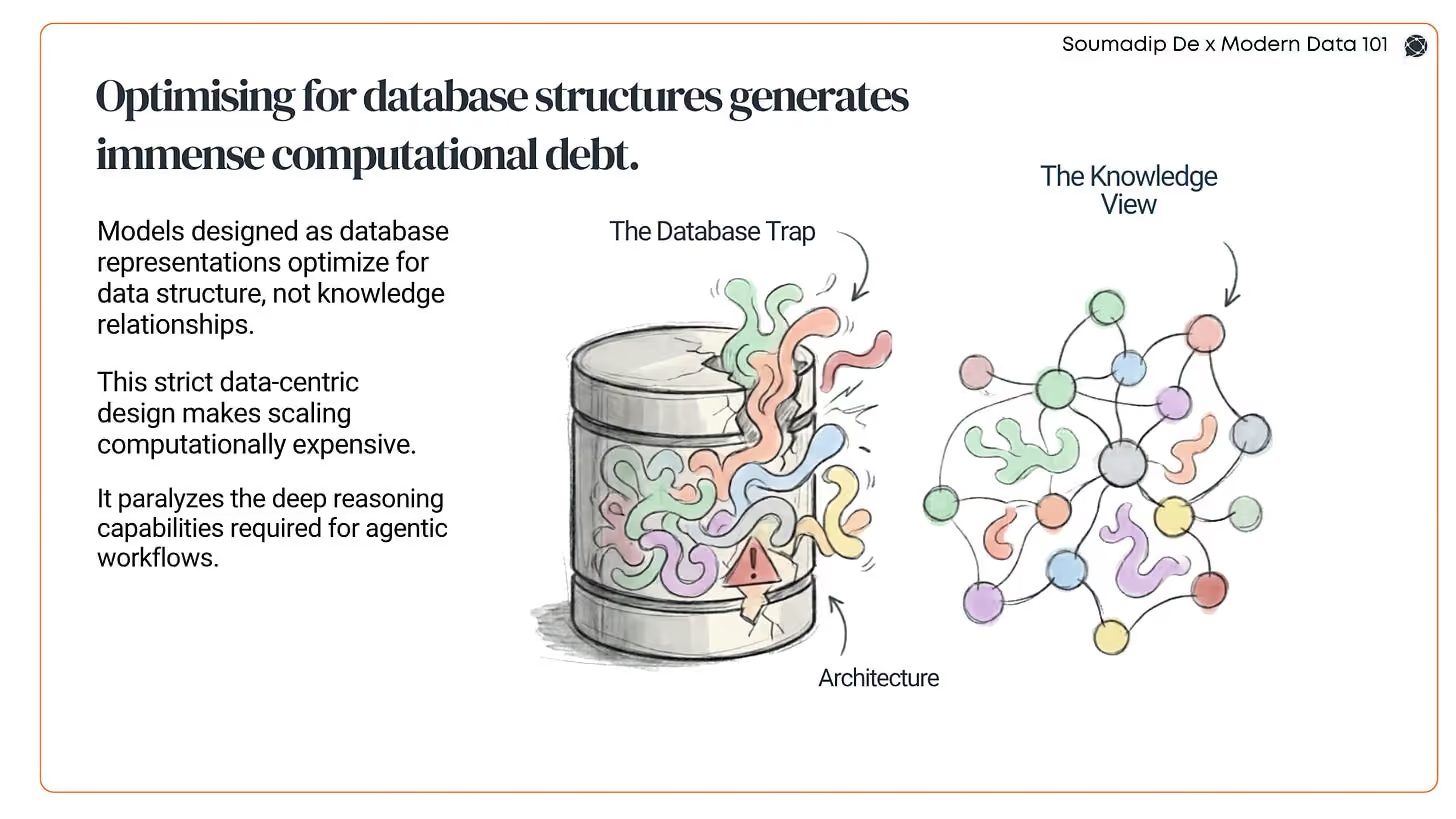
Many enterprise ontologies are designed as database representations, optimised to manage data structures rather than to represent information systems and knowledge relationships. This data-centric design makes scaling computationally expensive and limits the ontology’s ability to support the kind of reasoning that agentic workflows require.
6. The Governance Gap
Perhaps the most insidious form of decay is the absence of ownership. Ontologies built under a data governance initiative get orphaned when the project closes. No owner, no feedback loop, no mechanism for the business to flag when the model diverges from reality. Static ontologies, instead of showing symptoms of failing, actually drift, eroding the quality of every AI output they touch.
How Data Platforms Impact Ontologies (and Stop Them From Decaying)
Over the past year, and the last quarter of 2026, we've observed a consistent pattern: organisations invest heavily in ontology creation and almost nothing in ontology operations.
Operations gets a wiki page and good intentions. This imbalance is where ontologies deteriorate.
The fix isn't a bigger ontology or a better taxonomy tool. It's a fundamental rethink of ontology as infrastructure that evolves, receives feedback, and is governed continuously.
[related-2]
How Consistent Ontologies Look Like?
Feedback loops from production systems.
Usage signals, like what queries fail, where agents hallucinate, and which entity resolutions break, feed back into the ontology as continuous refinement signals, not as periodic review triggers.
This is the same principle behind the Data Developer Platform’s control plane: a central orchestration layer that has full visibility across the data ecosystem and continuously logs metadata from every operation. Applied to ontology, that instrumentation becomes your early warning system for semantic drift.
Automated knowledge acquisition.
Requiring domain experts to manually encode every concept change is not scalable. The development and maintenance pipeline must be largely automated, with humans validating rather than generating structure. The DDP achieves something analogous through Dynamic Configuration Management, such as declarative, automatically provisioned definitions that don’t require engineering intervention for every change. Ontology maintenance needs the same shift: from manual encoding to declared, automated propagation.
Universal semantics through data contracts.
The Data Developer Platform defines a data contract as “strongly typed metadata plus enforcement.” Once established, it acts as a guarantee of specifications and makes change management seamless. This is exactly what an ontology requires to align with the data-business needs: not a static schema, but an enforced, versioned semantic contract that the whole data ecosystem is bound to honour.
DDP goes further, establishing universal semantics across heterogeneous sources through a central metadata plane, which means ontological definitions propagate consistently, rather than fracturing domain by domain.
Minimum Viable Ontology (MVO) thinking.
Rather than attempting a comprehensive upfront model, leading organisations start with the smallest ontology that delivers measurable value and expand it incrementally. Gartner’s guidance on building knowledge graphs for AI-driven enterprise applications explicitly recommends this agile approach: reuse industry-standard ontologies where possible, adapt with minimum viable structures, and iterate. DDP’s own composable building-block architecture mirrors this: start with first-order primitives, build upward only as needed, and avoid the overhead of premature abstraction
The Agentic AI Stakes
The urgency here is not theoretical. Every agentic AI system, whether it’s a customer-facing assistant, a supply chain optimiser, or an internal knowledge worker, reasons against a semantic model. If that model is stale, the agent’s outputs will be confidently wrong in ways that are hard to detect and hard to explain.
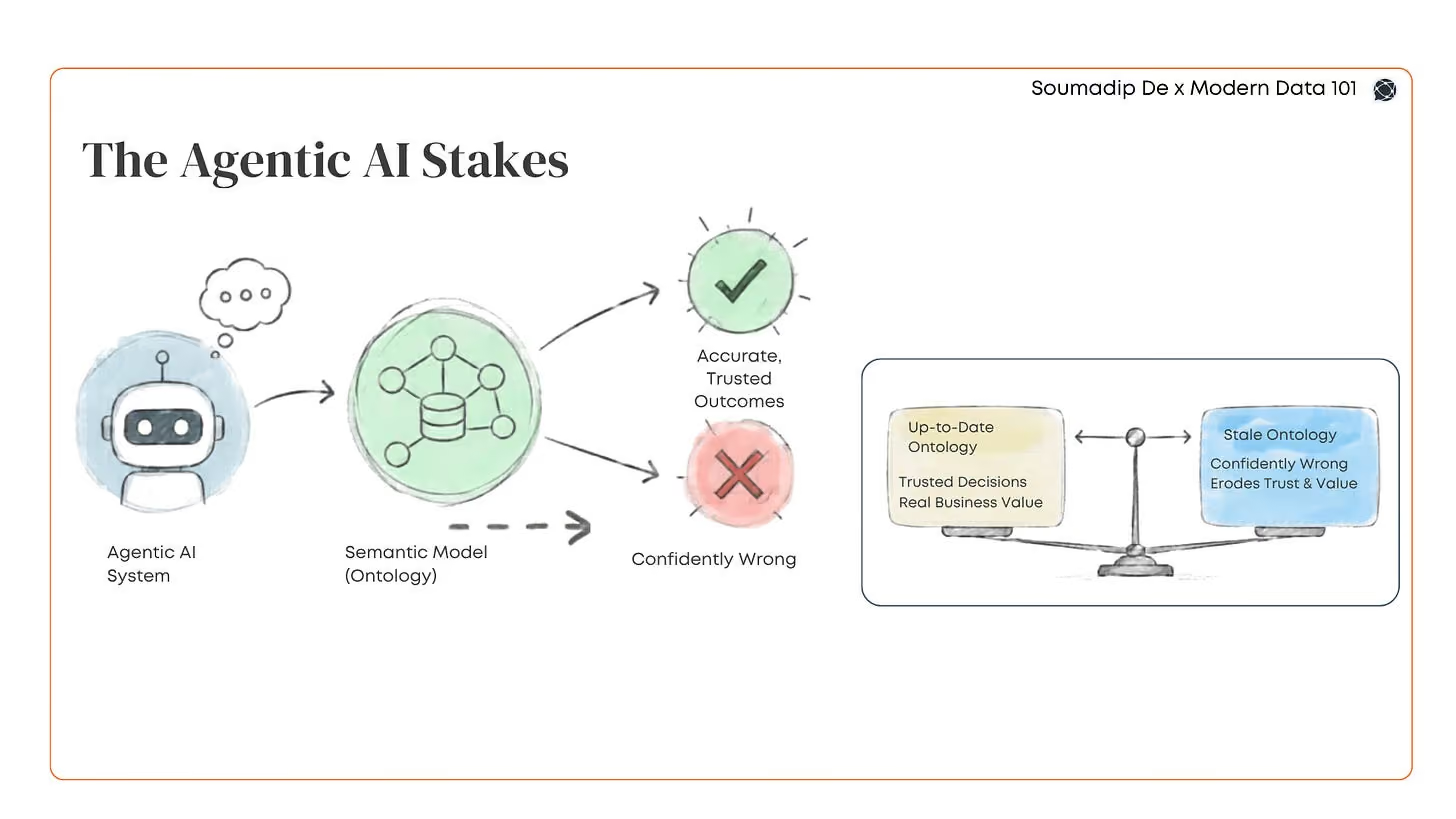
The seven things that depend on ontology quality: hallucination prevention, explainability and compliance, deterministic workflow guardrails, 360-degree entity views, consistent KPIs, document usability for agents, and long and short-term memory management for agentic workflows. Every one of these breaks when the ontology underneath them has decayed.
This is why the organisations winning with agentic AI are investing in what we call ontology operations, the continuous practice of keeping the semantic layer synchronised with business reality. This separates the 5% of AI deployments that deliver measurable value from the 95% that don’t, a divide MIT’s research team documented directly.
Three Practical Moves: How Data Developer Platforms Will Help Secure Ontologies
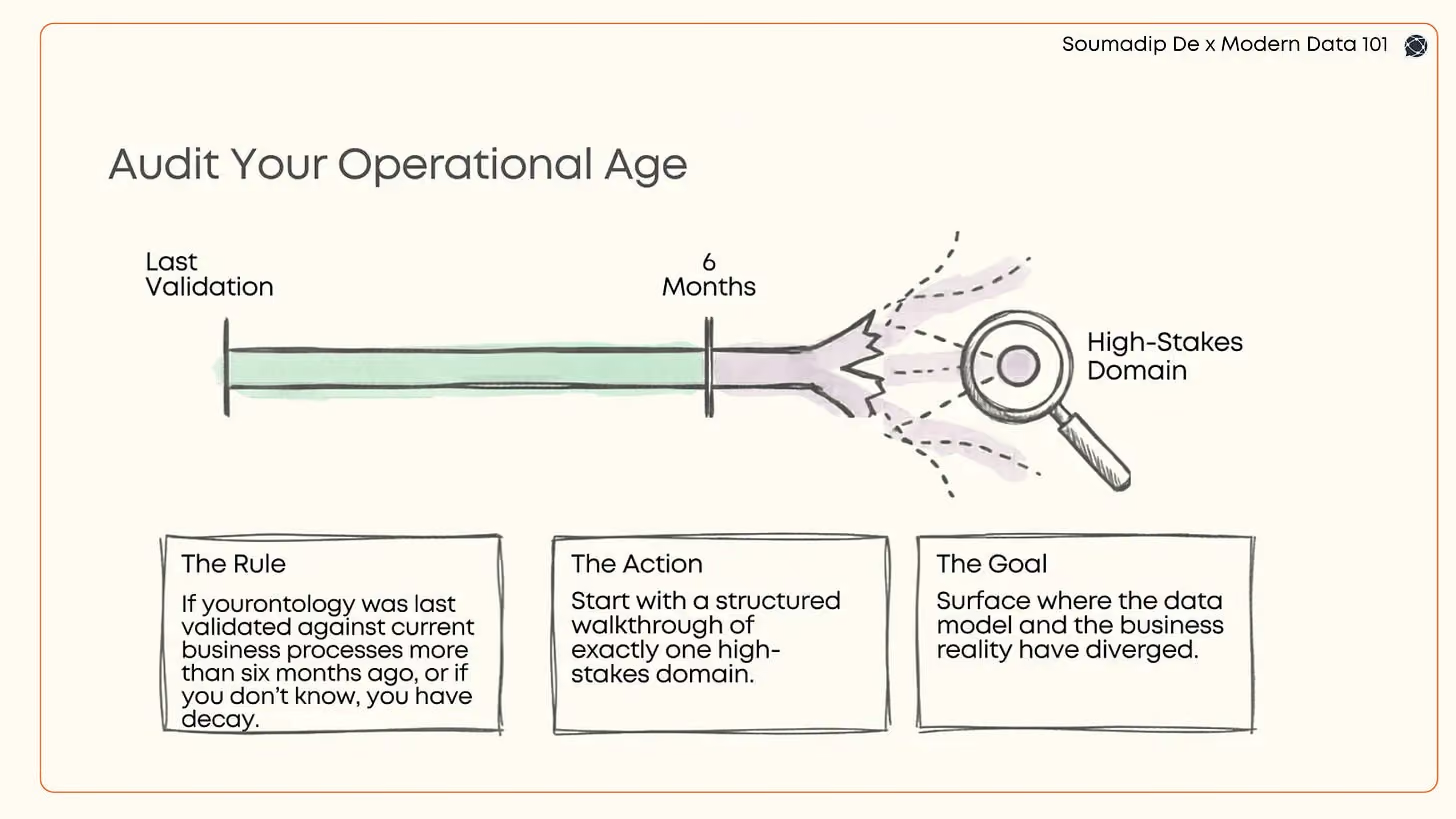
Audit your ontology’s operational age. When was it last validated against current business processes? If the answer is more than six months ago, or if you don’t know, you have decay. Start with a structured walkthrough of one high-stakes domain and surface where the model and the business have diverged.
Build the feedback loop before expanding the model.
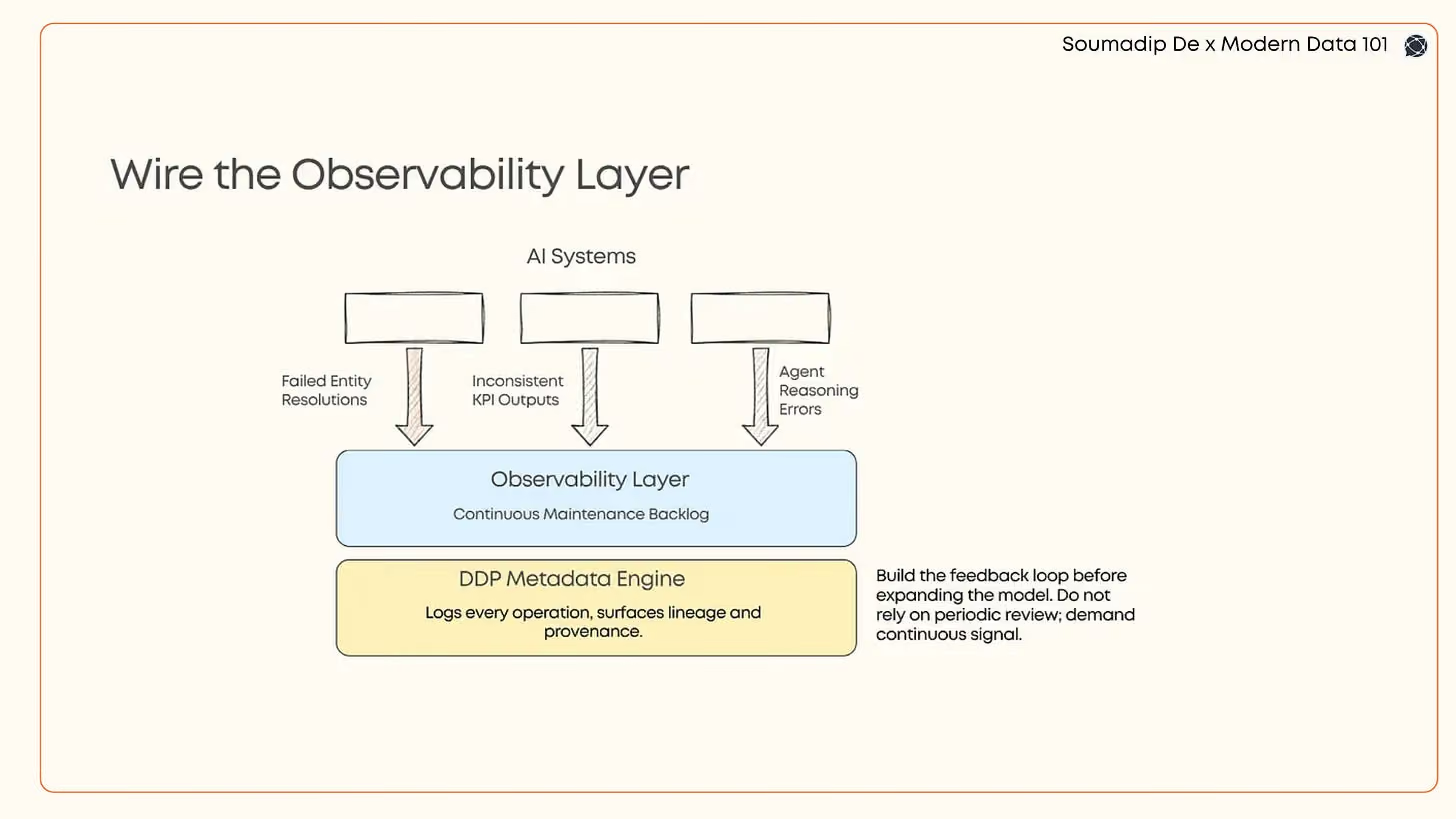
Instrument your AI systems to surface ontological failures: failed entity resolutions, inconsistent KPI outputs, and agent reasoning errors. These signals are your maintenance backlog. The Data Developer Platform’s control plane architecture offers a direct model here, a centralised metadata engine that logs every operation and surfaces lineage, provenance, and quality signals across the ecosystem. An ontology operations practice needs the same kind of observability layer: continuous signal, not periodic review.
A product-thinking approach for ontology.
This is the hardest yet most necessary shift. Assign a named steward for each ontological domain. Establish versioning so definitions can be updated, rolled back, and change-managed like code. Build refinement cycles into your data platform roadmap rather than treating them as ad hoc maintenance.
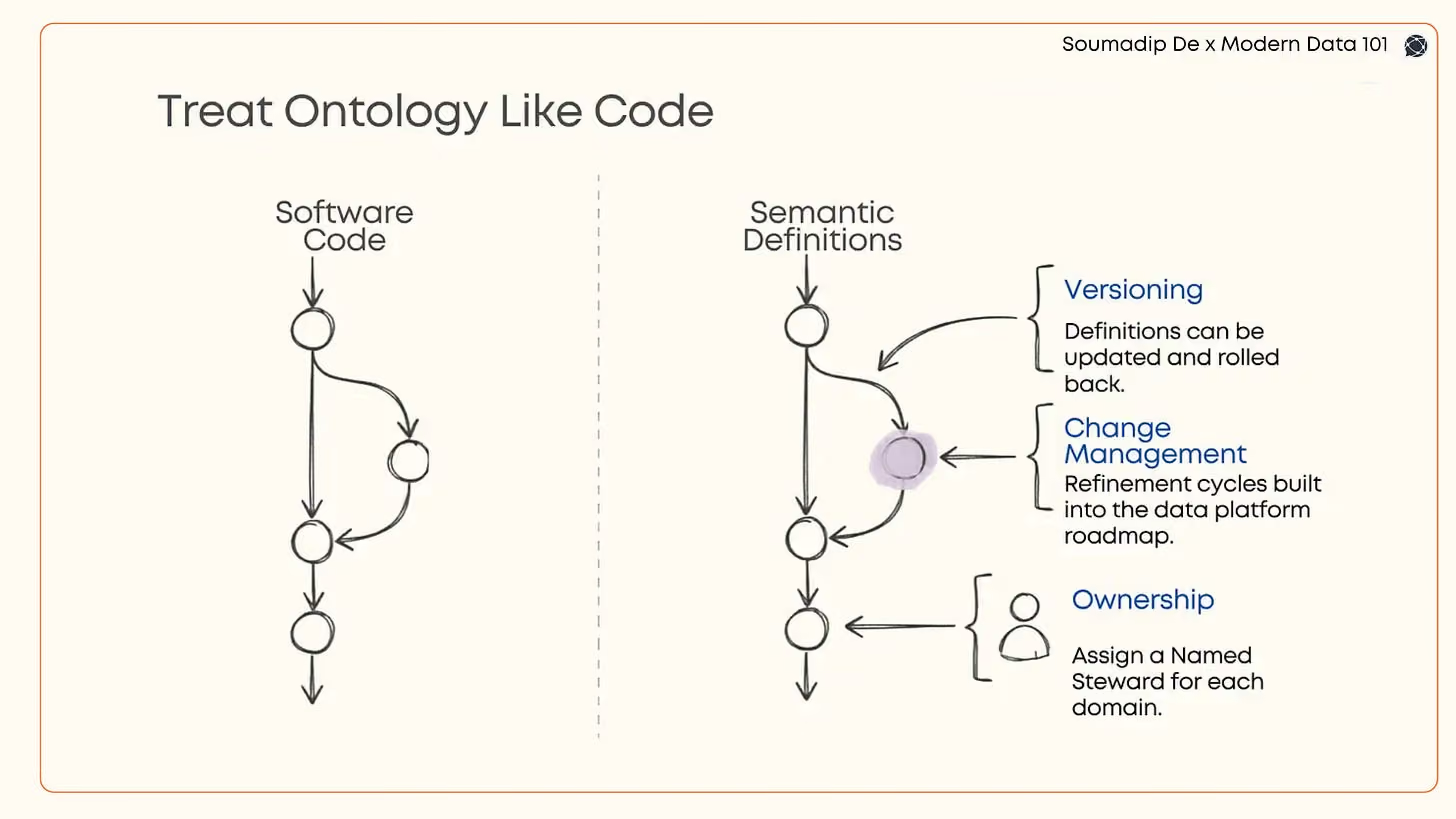
The DDP’s principle is that governance and observability must be embedded in the architecture. When semantic definitions are structural, contractual, and change-managed, they stop drifting. When they live in a separate governance tool that nobody owns, they decay.
The Bottom Line
Ontology is back, and this time it’s infrastructure. But infrastructure decays when it isn’t maintained.
Hence, organisations require highly sophisticated ontologies at launch to win the agentic AI game at launch, while having built the operational discipline to keep those ontologies aligned with the changing reality of their business.
The question isn’t whether your enterprise ontology is decaying. It almost certainly is. The question is whether you’re building the systems to notice, and the practices to respond.
FAQs
Q1. What is AI Data debt?
The hidden cost is created when AI systems rely on fragmented, low-quality, poorly governed, or context-poor data. It accumulates through weak metadata, inconsistent semantics, duplicate pipelines, and missing lineage, leading to unreliable AI outputs, higher costs, and slower scaling.
Q2. What is Context Engineering Framework for Enterprise AI in 2026?
A system for continuously supplying AI with trusted business context through metadata, ontologies, lineage, memory, governance, and data products, enabling accurate, explainable, and scalable enterprise AI.
Q3. What are the biggest challenges of using ontologies for enterprises?
Keeping ontologies aligned with constantly changing business definitions, systems, and workflows is difficult. Enterprises also struggle with cross-team ownership, semantic consistency, tooling complexity, integration with legacy stacks, and maintaining real-time context. Without governance and adoption, ontologies quickly become outdated and disconnected from operational reality.
Connect with a community data expert
A no-cost session with a practitioner who's been where you are.
About Modern Data 101
Modern Data 101 is a movement redefining how the world thinks about data. A community built by the same team behind the world’s first data operating system, Modern Data 101 sits at the intersection of data, product thinking, and AI. Spread across 150+ countries, the community brings together a global network of practitioners, architects, and leaders who are actively building the next generation of data systems.
At its core, Modern Data 101 exists to simplify the journey from raw data to tangible and observable impact. It advocates high-potential data systems and next-gen architectures to unify and activate insights and automation across analytics, applications, and operational workflows at the edge.
In a world shifting from data stacks to AI ecosystems, Modern Data 101 helps teams not just navigate the change but lead it.


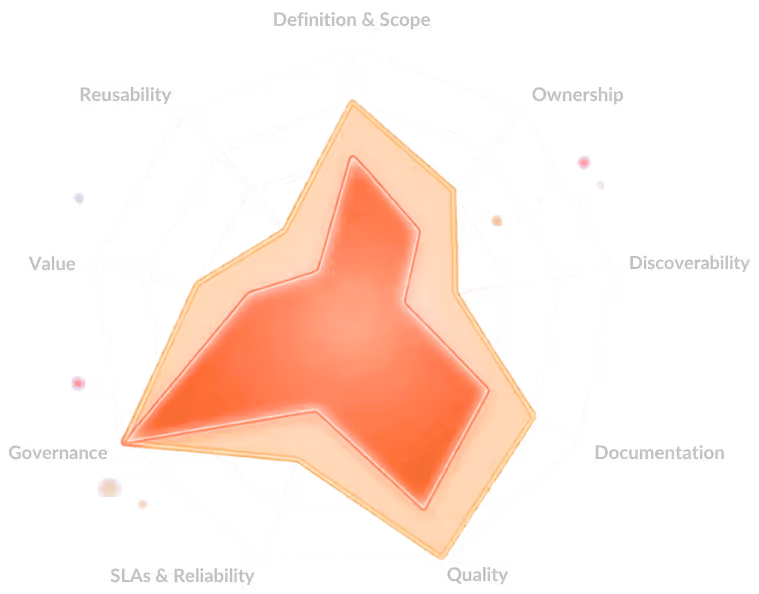
A 9-dimension self-assessment used by 100+ data teams to benchmark strategy, ownership, and platform readiness.


Soumadip De
Soumadip De is an AI Product Manager at The Modern Data Company, working on ontology, context management, and knowledge systems for enterprise AI agents. His work spans data-productisation, context mining, and agentic workflow enablement that help teams move from raw enterprise data to reliable answers and governed action.
Read the ideas here. Build them with The Modern Data Company.
Modern Data 101 is where the data community thinks out loud. When you're ready to move from articles to architecture, data products, governed AI pipelines, or a full Data Operating System; the team behind this community can help you build it.
Continue reading