5 Data Management Best Practices to Improve AI ROI
Five architectural shifts required to turn raw enterprise data into highly actionable, hallucination-free AI reasoning layers.

TL;DR
Major AI projects still fail: 60% of AI projects fail due to data readiness issues
Three shifts make this unavoidable:
1. First, data volume and complexity have outgrown human interpretation. Modern systems generate structured, semi-structured, and unstructured data continuously. Without AI-assisted management, understanding, classifying, and governing this at scale becomes impractical.
2. Second, AI systems (especially LLMs and agents) are now primary consumers of data, not just analysts. They depend on consistent semantics, quality signals, and lineage to produce reliable outputs. If the data layer is ambiguous, AI amplifies that ambiguity into automation errors.
3. Third, organisations are moving from static reporting to autonomous decision loops. This requires data that is continuously validated, contextualised, and governed, instead of just stored and queried.
This article covers five AI data management best practices that data leaders can begin applying immediately, and for each one, how a modern data platform is the foundational layer that makes it scalable and sustainable.
[state-of-data-products]
Best Practices for AI in Data Management
1. Consolidate Your Data Foundation Before Scaling AI
AI is seen to increase the impact of fragmented platforms, duplicated pipelines, inconsistent definitions, and isolated datasets spread across cloud, on-premises, SaaS, and operational systems.
Traditional automation was built for stable environments with predictable inputs. Modern data environments are neither. Data structures change continuously, new sources appear constantly, and business context shifts faster than static rules can keep up. Maintaining thousands of brittle transformations and integrations becomes operational drag rather than enablement.
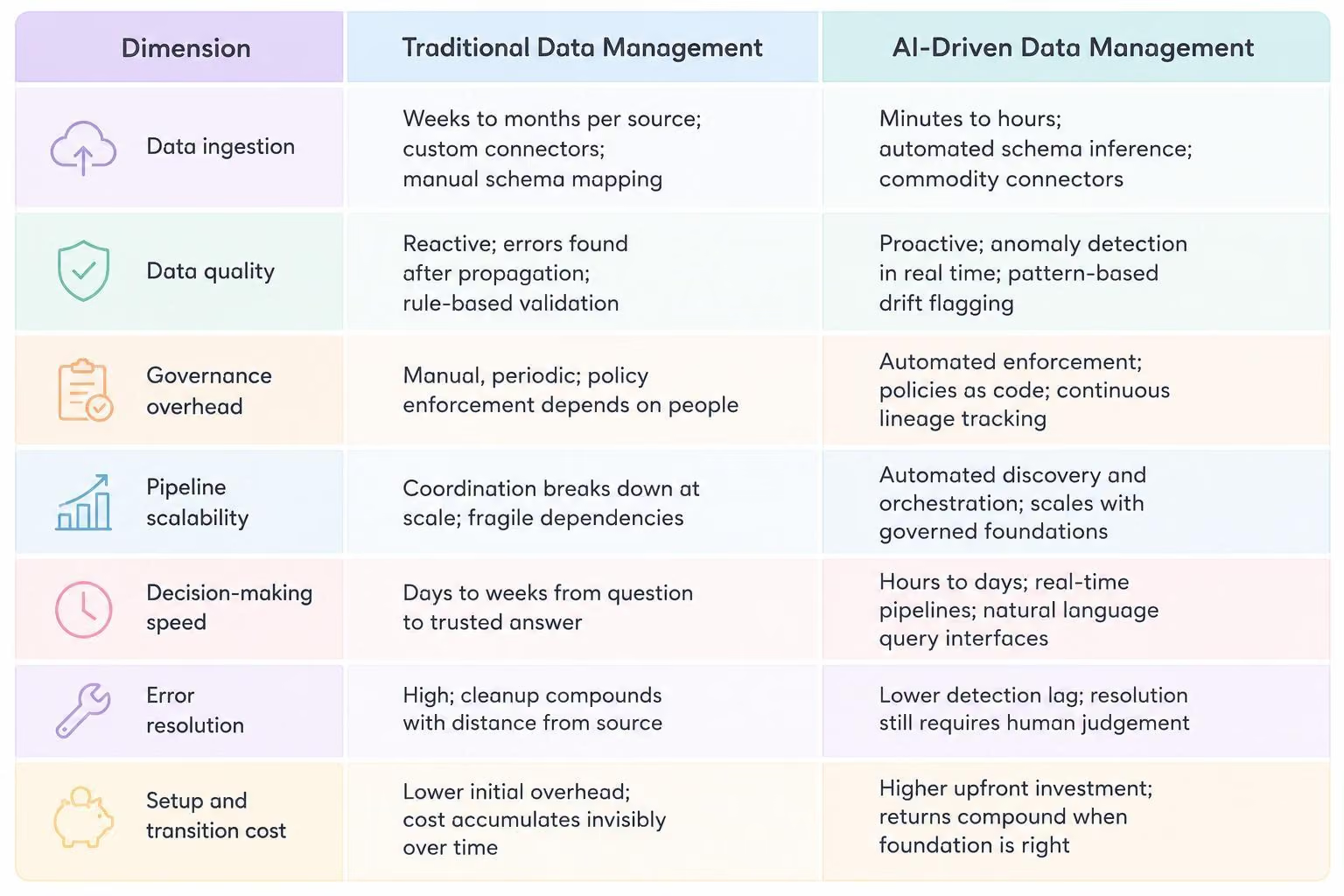
AI changes data management by shifting systems from rule execution to adaptive interpretation. Instead of manually defining every exception, AI systems can detect anomalies, infer relationships, classify unstructured content, and identify quality issues dynamically as the ecosystem evolves.
But none of this works in fragmented architectures. Research across 500+ data practitioners shows the same pattern repeatedly: excessive tooling, integration sprawl, and disconnected platforms limit how effectively organisations can operationalise AI. Consolidation onto a modern, interoperable data platform is no longer an optimisation layer. It is the operational foundation for AI readiness.
[related-1]
2. Shift from Datasets to Data Products to Make AI a First-Class Consumer
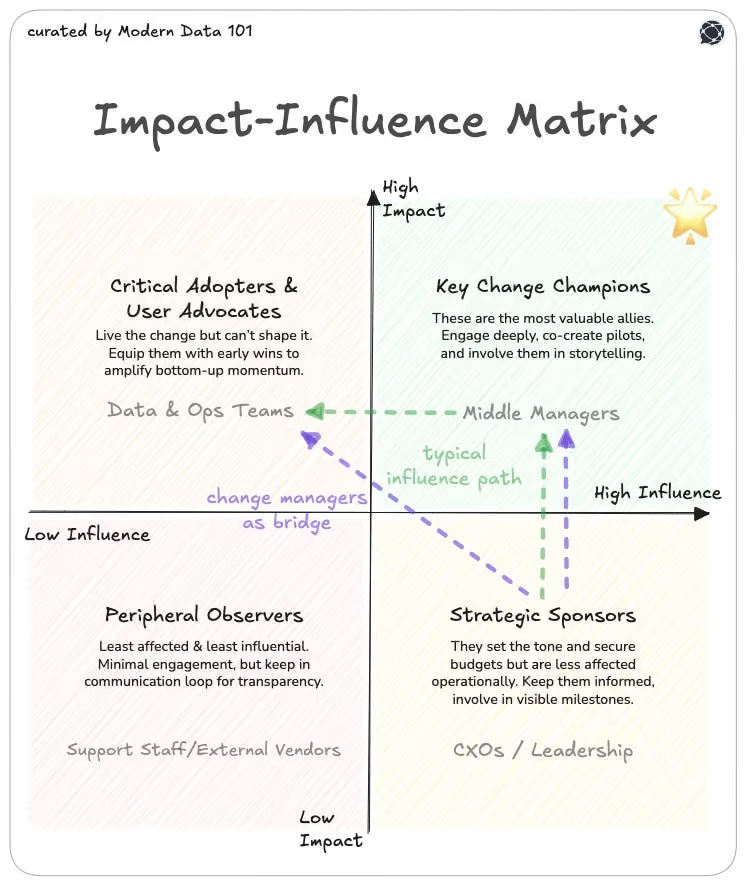
At scale, AI only works when data is structured as products.
A data product is a managed unit with an owner, contract, defined consumers, and lifecycle; versioning, deprecation, and controlled evolution are included. It carries what AI systems otherwise reconstruct: schema, semantics, quality, freshness, and lineage.
This shifts the context from documentation to the architectural layer. This is managed, versioned, discoverable, and can be connected to, queried by, and relied on by anything that needs to reason about the company’s data.
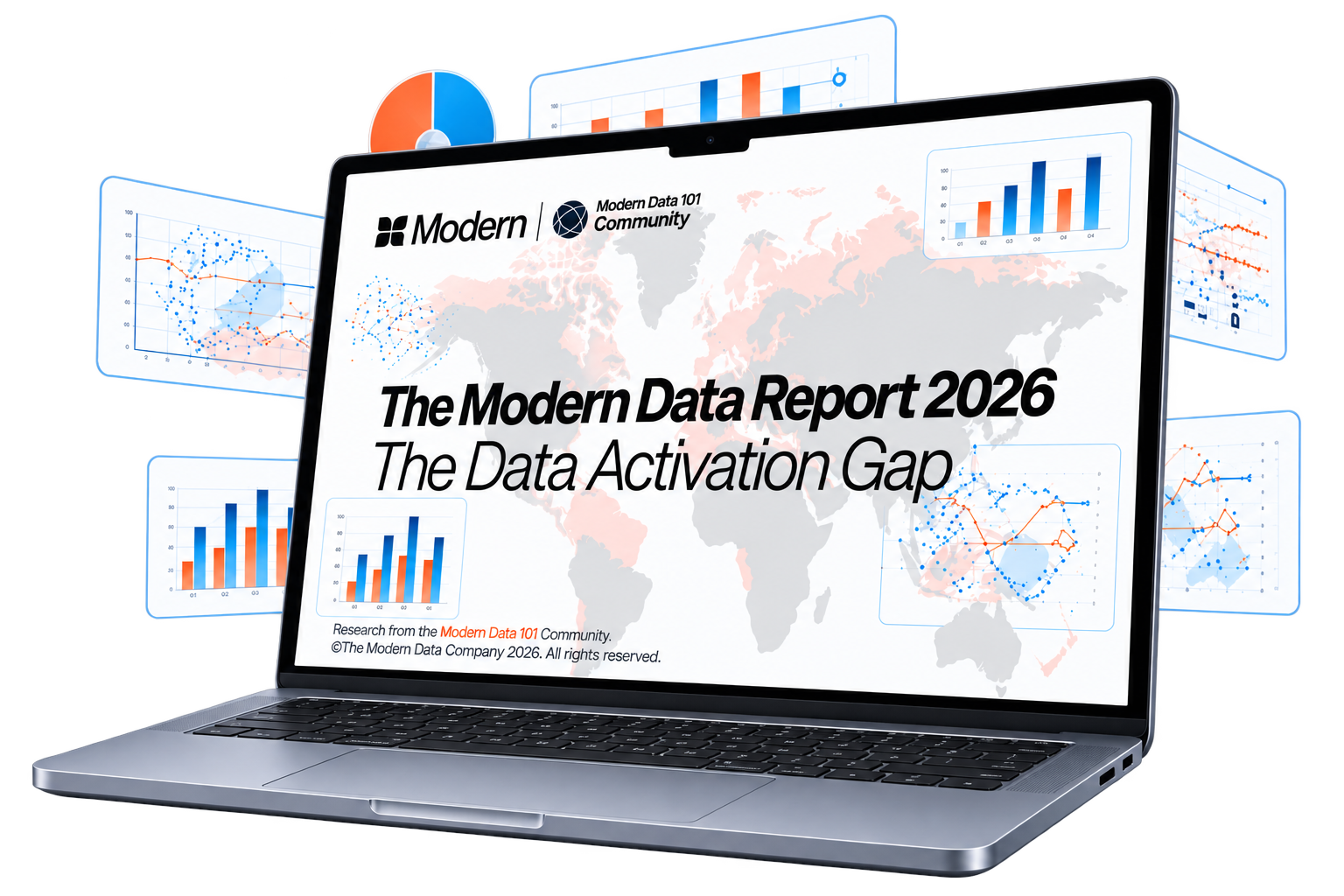
The Modern Data Report 2026 is unambiguous: semantic layer beats shiny tools every time. Machines do not inherit tribal knowledge. If definitions, context, and trust are not encoded in the data layer, automation cannot scale.
AI agents intensify this. Each additional agent on poorly defined data increases the inconsistency cost. Their autonomy depends on embedded governance, quality contracts, and clear action boundaries.
Start small: pick one domain, define a reliability problem, add monitoring and governance boundaries, separate autonomous vs human-approved actions, then scale once stable.
[related-2]
3. Embed a Semantic Layer to Make Data AI-Actionable
What is a semantic layer in data management, and why do AI systems depend on it?
A semantic layer is the business context layer between raw data and consumption systems. It standardises definitions, metrics, relationships, and meaning across the organisation.
AI systems depend on it because AI needs business context, not just raw data. The semantic layer helps AI interpret data consistently, reduce hallucinations, and generate reliable, trustworthy outputs.
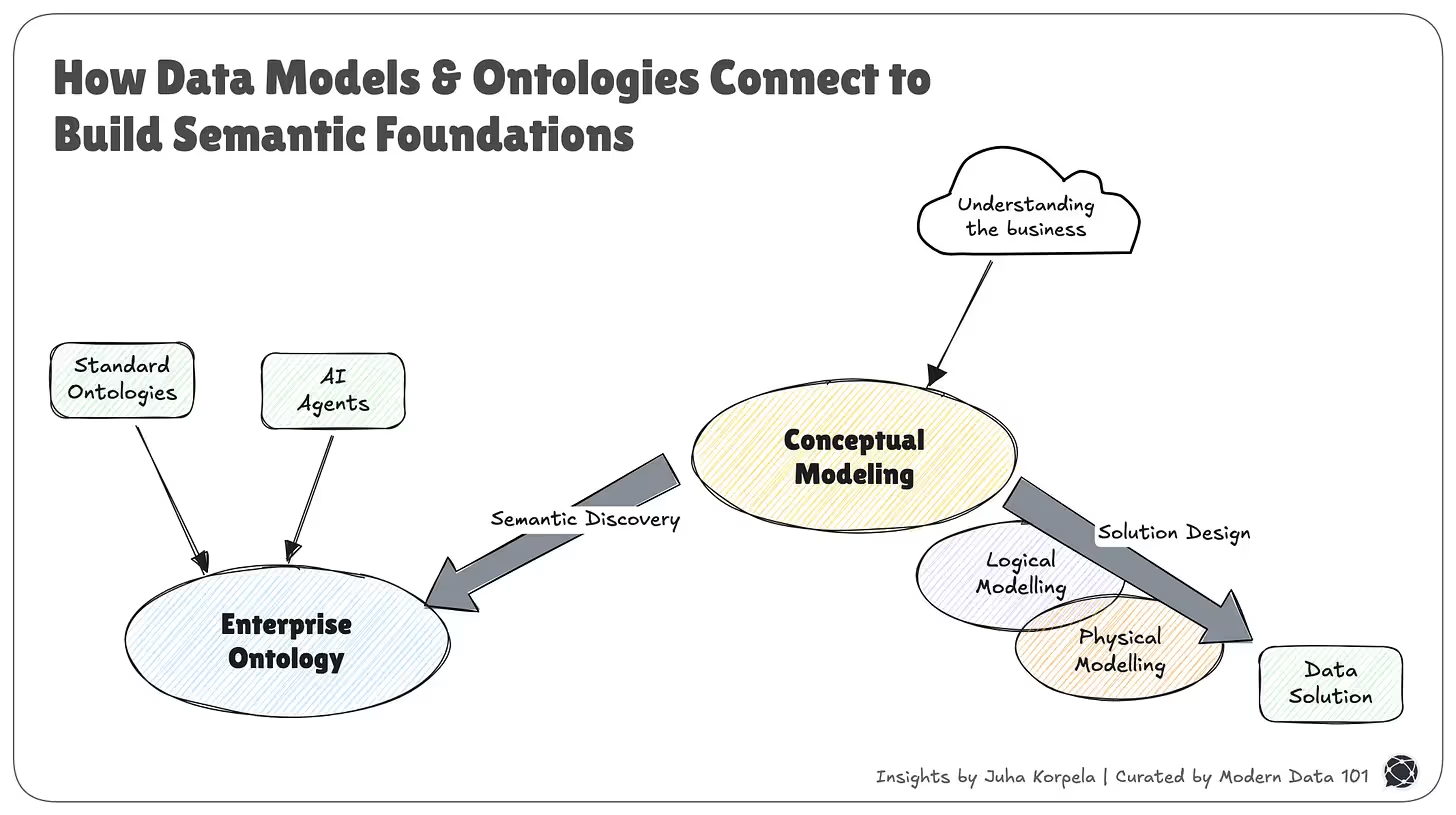
Poor contextual understanding of data renders technically accurate outputs that are operationally misleading.
For AI systems specifically, a semantic layer changes the nature of interaction entirely. Models operate on business-aware representations of customers, products, transactions, risks, policies, and operational events. That context is what makes AI outputs usable, explainable, and adaptable to evolving business questions.
However, the underlying data might remain inconsistent, delayed, or poorly governed. This is why semantic consistency must be paired with trustworthy data products that enforce quality, ownership, versioning, and governance upstream.
This is also where a model-first approach becomes important. The business meaning, relationships, and intended AI consumption patterns are designed into the data product itself from the beginning. The focus shifts from merely moving data to shaping data that can reliably support reasoning systems, automation, analytics, and AI agents at scale.

4. Adopting a Data Lakehouse Architecture
Traditional data warehouses delivered reliability but struggled with scale, flexibility, and unstructured data. Data lakes solved storage flexibility, but often lacked governance and trust.
Data lakehouses are accelerating AI readiness for 85% of firms that have adopted them.
[related-3]
The lakehouse combines the scalability of a data lake with the reliability and transactional control of a warehouse in a single architecture. For AI, this matters because structured and unstructured data must coexist to support analytics, machine learning, and AI agents. Customer records, logs, documents, images, and real-time events can all live within the same environment.
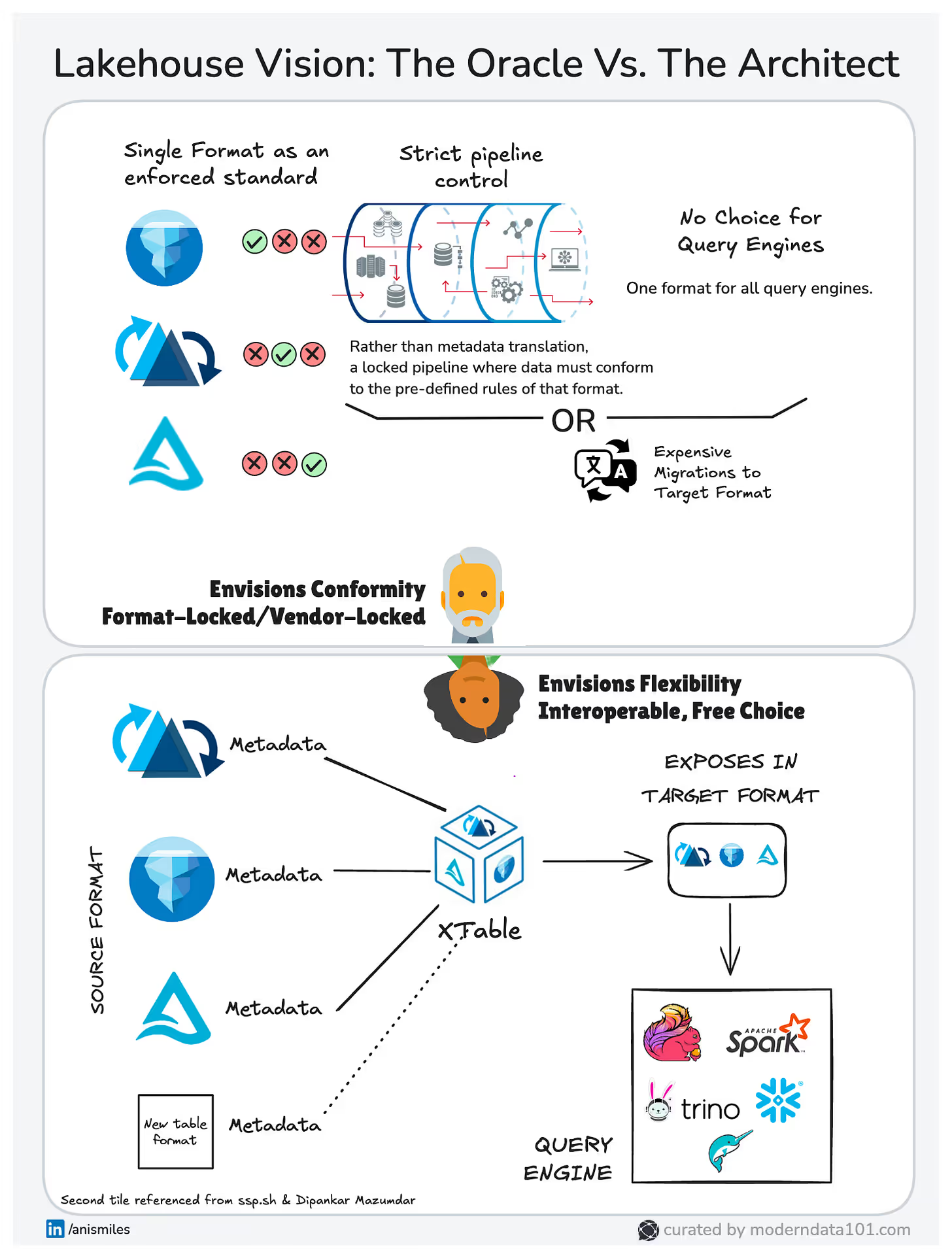
But the architecture has evolved. Early lakehouses often recreated lock-in by tightly coupling compute, storage, metadata, and governance. The next-generation lakehouse shifts toward openness: open table formats, decoupled compute and storage, interoperable governance, and portable data products.
The lakehouse is the foundation, but modern data platforms sit above it, enabling semantic consistency, governance, and reusable data products that remain portable across tools, engines, and evolving AI ecosystems.
5. Implement AI-Augmented Data Governance
Traditional data governance frameworks were built for compliance. They answered: "Can we prove our data was handled correctly?" Modern AI-augmented governance answers a more demanding question: "Can we guarantee that every AI system operating on our data will produce trustworthy outputs?" These are fundamentally different problems.
Without a comprehensive data strategy with executive support, AI ambitions will struggle and have a high probability of failing. Many organisations share the struggle of having too many tools, resulting in overly complex solutions that fundamentally limit which AI use cases can be pursued.
AI-augmented governance makes governance continuous, automated, and embedded rather than periodic, manual, and bolted on:
- Automated lineage tracking: AI traces data from source to consumption across complex multi-system environments, surfacing dependencies that manual documentation misses.
- Policy enforcement at ingestion: Governance rules apply at the point of data entry, rejecting non-conforming records before they enter the pipeline.
- Access control and privacy: ML models classify data sensitivity automatically, applying RBAC and PII controls without requiring manual tagging of every asset.
- Regulatory readiness: For GDPR, CCPA, and HIPAA environments, AI governance layers maintain audit trails and demonstrate compliance continuously.
The Common Thread: A Modern Data Platform as the Foundation
Each of these five AI data management best practices points to the same architectural conclusion. The data layer itself must evolve. AI models are only as capable as the data they operate on, and data is only as capable as the infrastructure it runs within.
The organisations succeeding with AI in data management share a common foundation: a modern data platform that consolidates data across environments, enforces quality continuously, makes data discoverable through semantic contracts, governs access proactively, and serves data as products to both human and AI consumers.
FAQs
Q1. What are 5 best practices for synthetic data use
Define a clear use case + metric. Anchor synthetic data to real distributions. Preserve schema, semantics, and business constraints. Govern generation with versioning and lineage. Continuously validate against real data drift and update generators accordingly.
Q2. What is AI for data management?
AI for data management is the use of machine learning and automation to discover, classify, clean, govern, and optimise data across systems, making data more reliable, contextual, and usable for analytics, applications, and AI agents at scale.
Q3. What are the 5 C's of data management?
The “5 C’s of data management” commonly refer to:
- Collect – capture relevant data from systems and sources
- Cleanse – remove errors, duplicates, and inconsistencies
- Consolidate – integrate data into a unified view
- Contextualise – add meaning, metadata, and business definitions
- Consume – make data accessible for analytics, AI, and decision-making
Connect with a community data expert
A no-cost session with a practitioner who's been where you are.
About Modern Data 101
Modern Data 101 is a movement redefining how the world thinks about data. A community built by the same team behind the world’s first data operating system, Modern Data 101 sits at the intersection of data, product thinking, and AI. Spread across 150+ countries, the community brings together a global network of practitioners, architects, and leaders who are actively building the next generation of data systems.
At its core, Modern Data 101 exists to simplify the journey from raw data to tangible and observable impact. It advocates high-potential data systems and next-gen architectures to unify and activate insights and automation across analytics, applications, and operational workflows at the edge.
In a world shifting from data stacks to AI ecosystems, Modern Data 101 helps teams not just navigate the change but lead it.


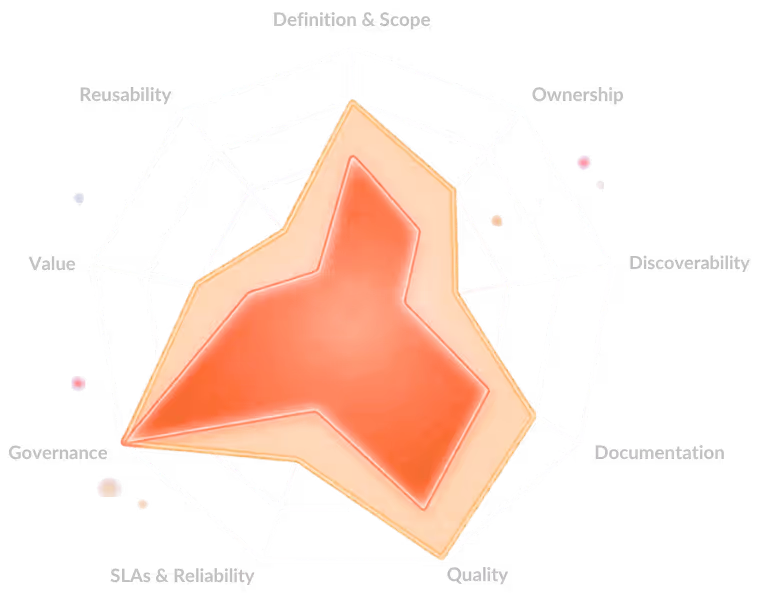
A 9-dimension self-assessment used by 100+ data teams to benchmark strategy, ownership, and platform readiness.


Rakesh Vishvakarma
Rakesh is a data engineer who transforms raw data into fine wine. When he's not using AI to tag tables or make spot-on recommendations, he's deep into philosophical books or ones with more twists than his latest ETL pipeline, pondering existence and data governance.
Read the ideas here. Build them with The Modern Data Company.
Modern Data 101 is where the data community thinks out loud. When you're ready to move from articles to architecture, data products, governed AI pipelines, or a full Data Operating System; the team behind this community can help you build it.
Continue reading