Building Robust Data Products: 5 Pillars Every Data Engineer Should Apply
Clean Architecture Principles for Robust and Evolvable Data Products

For years, data was merely a technical component of applications, a simple support mechanism for maintenance. Today, it has taken on a new dimension: it has become a product with its own uses, requirements, and lifecycle.
However, most data systems still act like fragile pipelines:
- They break as soon as business rules change
- Every update is costly
- They fail quietly without proper monitoring
- They constantly need someone to fix them.
These situations have shaped a clear conviction: The real challenge today is to design systems that adapt, preserve trust, and remain coherent as the business evolves.
A robust data product is therefore much more than a workflow. It is a long-lived digital asset that encodes business meaning, enforces data quality, traces change, and supports continuous evolution without friction.
In this article, I’m laying out five engineering pillars that I’ve seen consistently turn data products from “some scripts that work for now” into components you can trust long-term.
1. Separate Business Logic from Infrastructure Using Clean Architecture
Clean Architecture, based on the classic onion model, gives you a practical way to create a demarcation between what should stay stable and what will inevitably change. In real world scenarios, infrastructure shifts all the time, but the business logic usually doesn’t. The onion just makes that separation obvious.
At the center is the code that should barely move: the rules, the definitions, the meaning of the business itself. As you move outward, the layers get more volatile and more technical. And that’s the whole point.
The core stays calm while the edges take the churn. The further outward you go, the more technical and replaceable the components become.
What this means in practice
Business logic sits at the core. A dedicated domain layer encapsulates the true semantics of the business:
- Versionned
- Testable
- Technology-agnostic
- Isolated from external concerns
The infrastructure forms the outer layers that can change without affecting the domain logic. We include in infrastructure:
- Orchestrator
- Cloud Resources
- Ingestion Systems
- Storage Formats
- Compute engines
- ...
Each domain carries its own:
- Responsibilities
- Business Code
- Tests
- Data Contract reinforcing autonomy and clarity
How does the onion model apply to data products?
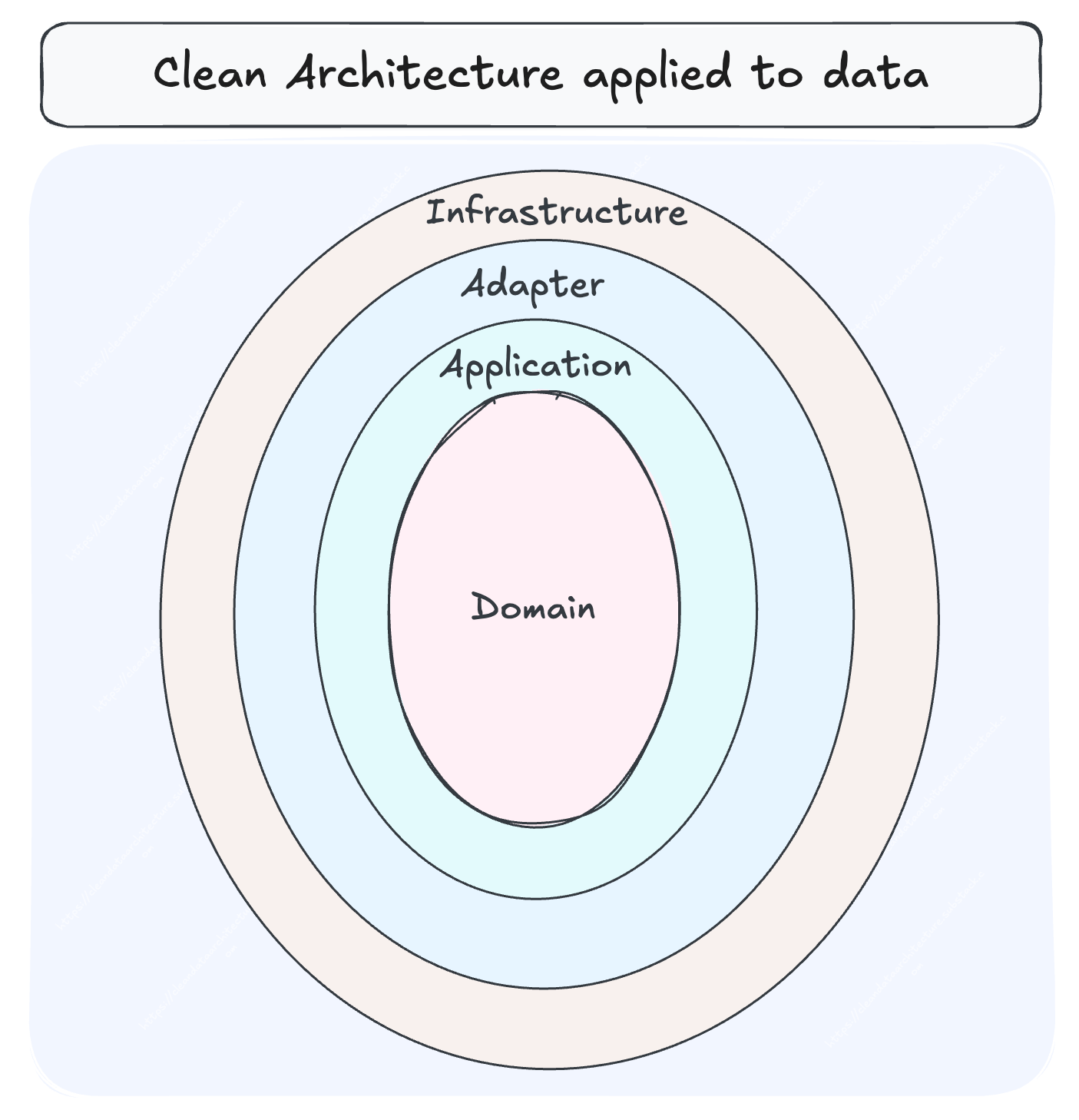
From the center outward:
- Domain (core business rules) - stable, semantic, versioned
- Application layer - orchestrates the domain logic, defines workflows
- Adapters - readers, writers, format converters, I/O logic
- Infrastructure - compute engines, cloud services, orchestrators, storage systems
Business rules depend on nothing. Outer layers depend on the components inward, never the other way.
[playbook]
Benefits
- Maximum portability: switching orchestrators or compute engines requires zero business logic changes.
- Massively reduced technical debt: Clear boundaries make it easier to upgrade tools, refactor pipelines, and evolve models.
- Stronger alignment with business domains: Each domain becomes a cohesive, understandable unit for data engineers and business stakeholders alike.
2. Add Automated Tests: From Unit Tests to Functional Validation
Most data products are still tested primarily at the unit level, and even this coverage can vary significantly depending on team maturity. Many data engineers are early in their careers, and pipelines are often treated as “scripts that work” rather than full software products.
A helpful framework to think about test coverage is the testing pyramid:
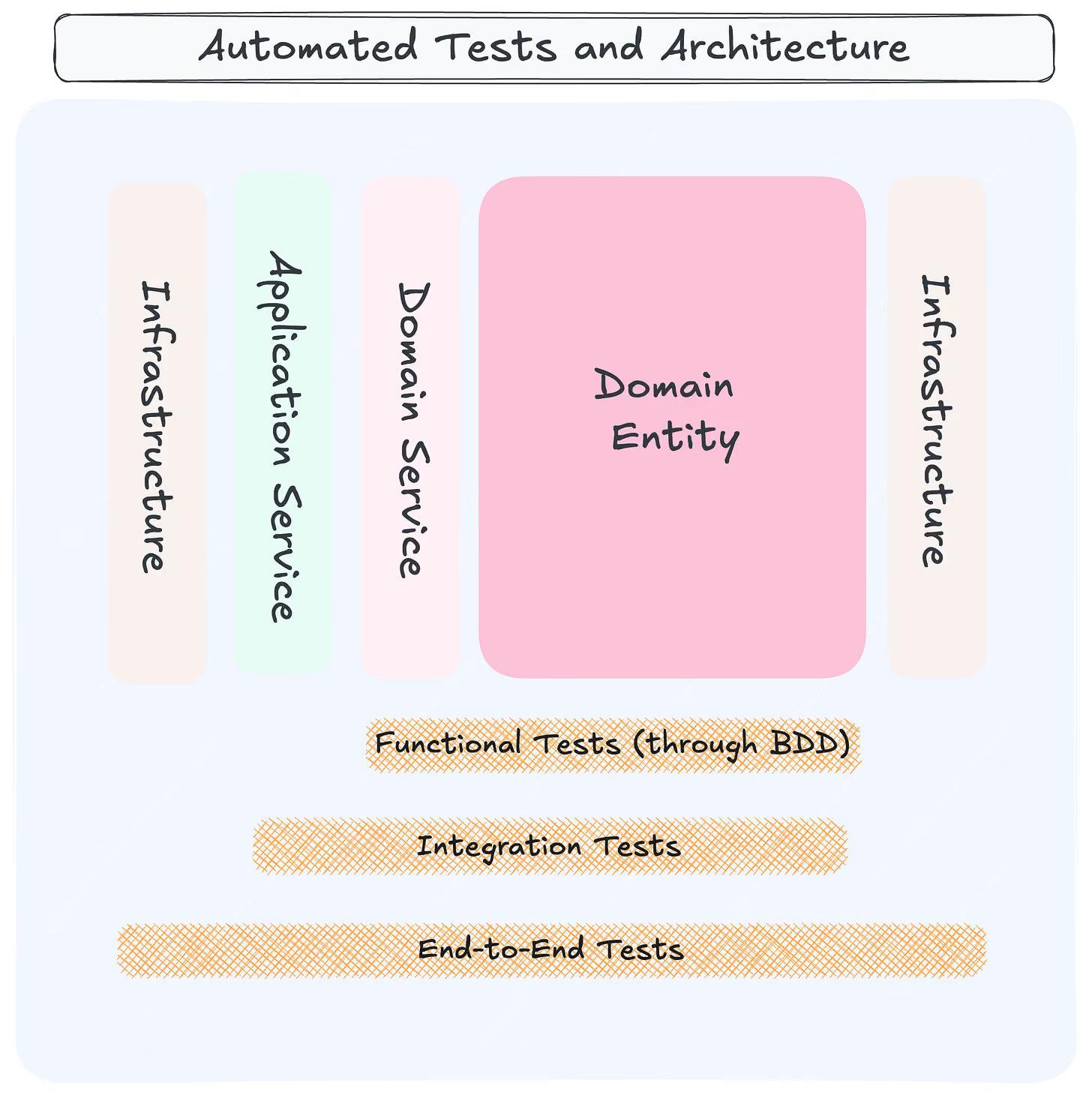
- Foundation: Unit tests
These validate individual functions or transformations. They are fast, low-level checks. - Middle Layer: Integration tests
Verifying if different components, modules, or pipelines are working together as expected. - Top: Functional tests
Validating if the actual behavior is aligned with business requirements or goals. - Bonus: End-to-end tests
Validating the overall system behavior in a prod-like environment.
Let’s focus on the functional tests.
It should represent the business rules independently of the infrastructure.
Beyond this foundational testing, Behavior-Driven Development (BDD) is gaining traction in data engineering. BDD allows teams to capture complex business rules in executable, human-readable scenarios using the Gherkin language.
Why integrate BDD in data products?
- Living documentation, understandable by business teams, analysts, and engineers
- Clear, unambiguous business expectations
- Automatically testable scenarios
- Strong alignment during schema changes or updates in logic
Example of Functional Scenarios
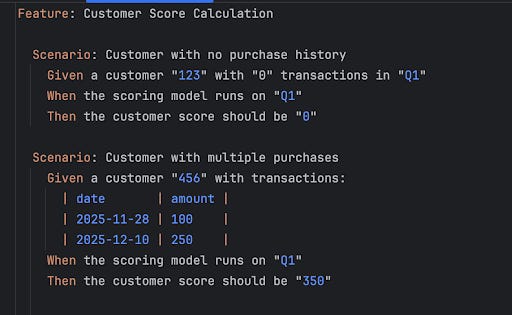
Business rules are expressed in natural language, versioned in Git, and validated before deployment.
Integrating BDD Into a Modern CI/CD Workflow
A robust workflow looks like this:
- Data Product Manager writes Gherkin scenarios and validates them by the business and the Data Engineers team
- Data Engineers integrate the feature file and implement the BDD steps
- Set the data context
- Implement & Call the business logic
- Check the assertion is valid between the expected and the actual behavior
- CI executes the Gherkin scenarios to validate any change in:
- schema
- contracts
- business logic
- transformations
By combining a solid base of unit and integration tests with functional BDD scenarios, data products can evolve safely, maintain trust, and make business rules explicit.
[data-expert]
3. Design for Reprocessing from Day One (Backfill-as-a-Service)
Modern pipelines must be replayable on demand. A change in business logic should propagate to historical data safely and automatically.
Core practices
- Idempotent pipelines by design
- Automated backfilling via a dedicated service (ie, GitOps + API-driven orchestrations + on-demand compute)
- Use of time travel/snapshots (Iceberg, Delta Lake…)
- Versioned transformations (Spark, DBT…)
How it works
A dedicated service handles everything that traditionally makes backfills painful:
- partition/date/table level scheduling
- parallelization and autoscaling
- monitoring, retries, and error isolation
- automatic compute allocation
- DAG dependency management
A modern workflow
- You update your dbt/Spark code and push to Git.
- A GitOps event detects the change.
- The service identifies impacted partitions.
- It allocates compute and triggers the backfill through APIs.
- Historical data is updated seamlessly.
No more clicking through 500 dates in an orchestrator UI. The system does the heavy lifting.
4. Manage Data Model Evolution and Breaking Changes
A data model is a living system - it grows, mutates, and sometimes breaks. A mature data product must support:
- adding new fields
- modifying existing structures
- deprecating fields
- backward compatibility or fully versioned schemas
What I recommend doing
- Version schemas (v1, v2, v3…).
- Document all changes clearly.
- Allow coexistence during breaking migrations.
- Use contract-first schemas (Avro, JSON Schema …).
- Include a schema registry for streaming pipelines.
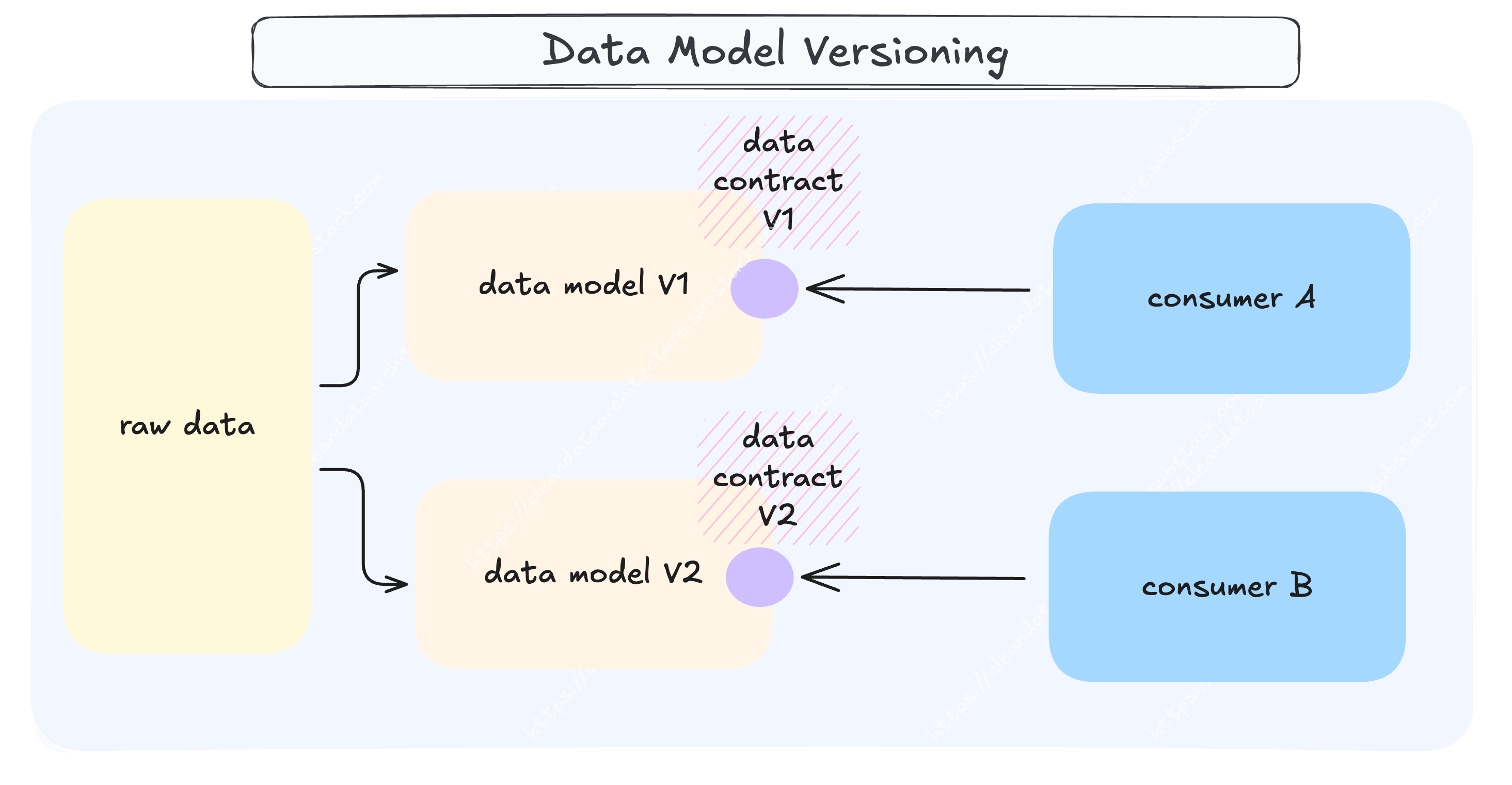
Your data model should evolve without stopping production and impact our consumers.
5. Monitor Data Quality and Detect Anomalies Proactively
Data quality is often treated as a low priority and mainly for reporting purposes.
However, this approach can lead to incidents that have a significant business impact.
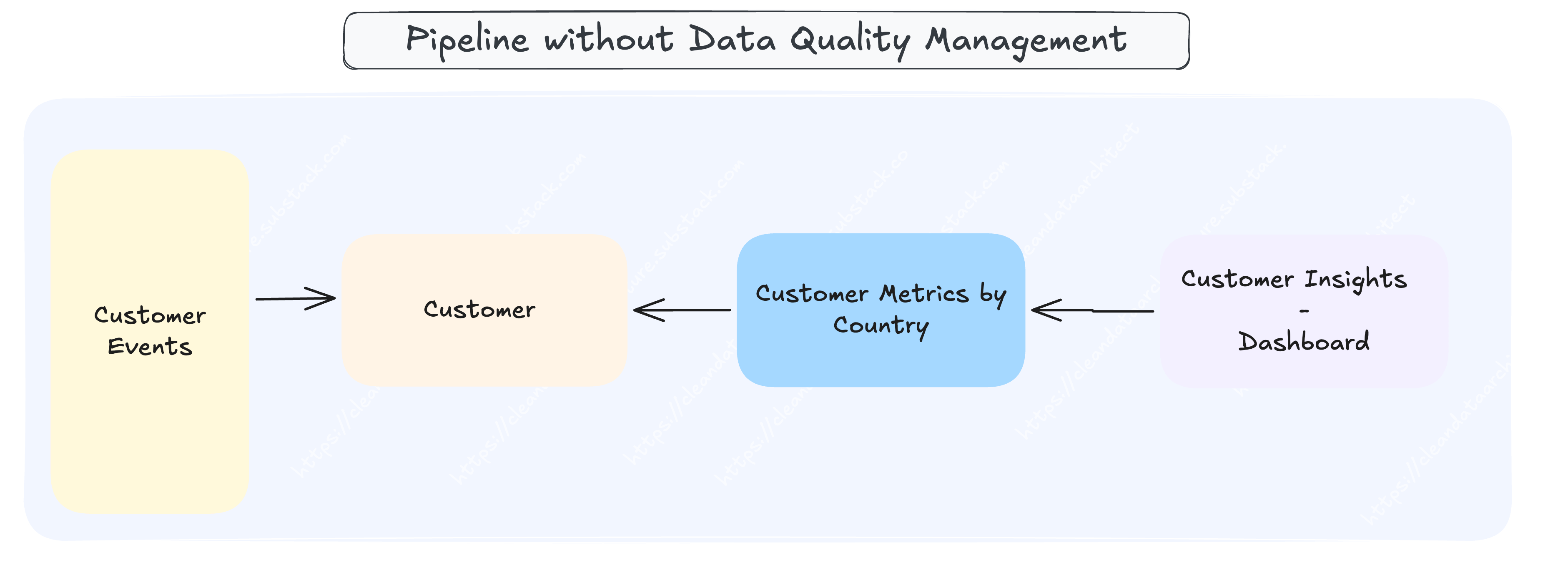
Integrating data quality checks directly into data pipelines enables data producers to proactively detect anomalies. By exposing data quality metadata, data consumers can determine whether the data meets the required standards for their use cases and better control potential business risks.
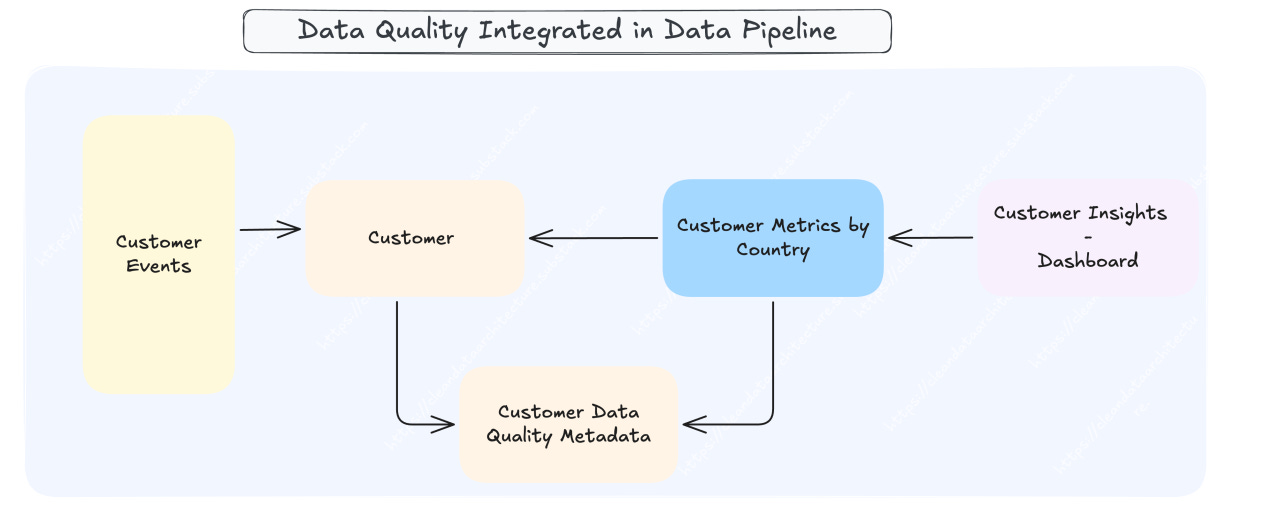
Coverage should include:
- Completeness: Are some fields missing?
- Freshness: How long does it take between the business gesture and the data ingestion?
- Business-rule consistency: Do the data correctly comply with the defined business rules?
- Statistical drift: Is the data distribution changing abnormally over time?
- Duplicates: Do we have duplicate data?
- Expected volumes: Does the volume deviate from our usual expectations?
Silent anomalies are extremely expensive and too often detected by end users, not by the Data Product team.
To include in the solution
- Automated checks (Great Expectations, Soda…)
- Alerting on drifts or anomalies
- Monitoring dashboards for data and business teams
A Coherent Mindset, Not Just Best Practices
When you look at each pillar on its own, it solves a specific challenge. But when we bring them together, they become consistent and create a unified approach. Downstream, users are able to trust and consume the data confidently. Even as business logic, schemas, or infrastructure evolves, downstream requirements are not compromised.
Clean architecture, automated tests, reprocessing capabilities, controlled schema evolution, and proactive monitoring create a foundation that lets teams move from reactive firefighting to predictable, stable operations.
This is what turns a simple pipeline into a robust data product, and a Data Engineer into someone who builds software-quality systems rather than fragile workflows.
Connect with a community data expert
A no-cost session with a practitioner who's been where you are.
About Modern Data 101
Modern Data 101 is a movement redefining how the world thinks about data. A community built by the same team behind the world’s first data operating system, Modern Data 101 sits at the intersection of data, product thinking, and AI. Spread across 150+ countries, the community brings together a global network of practitioners, architects, and leaders who are actively building the next generation of data systems.
At its core, Modern Data 101 exists to simplify the journey from raw data to tangible and observable impact. It advocates high-potential data systems and next-gen architectures to unify and activate insights and automation across analytics, applications, and operational workflows at the edge.
In a world shifting from data stacks to AI ecosystems, Modern Data 101 helps teams not just navigate the change but lead it.


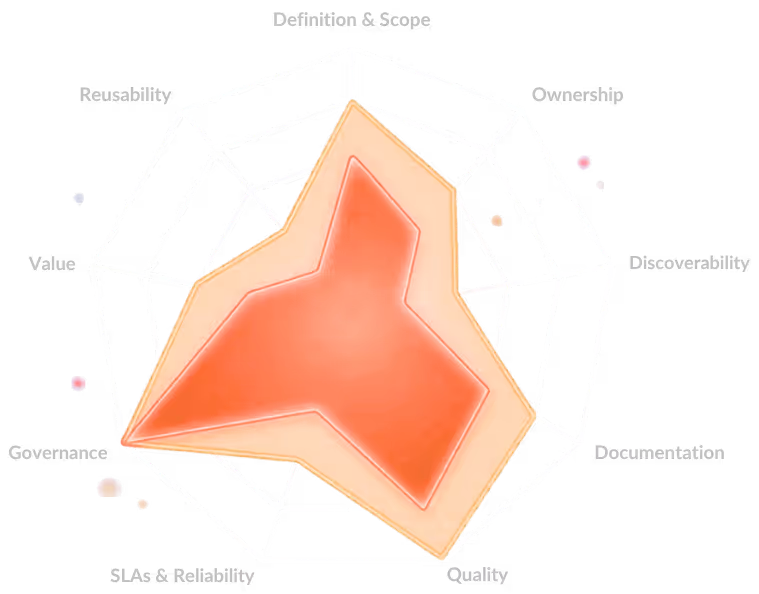
A 9-dimension self-assessment used by 100+ data teams to benchmark strategy, ownership, and platform readiness.


Najate BOUAD
Najate is an Engineering Manager at Decathlon Digital, leading Sport Product Data Platform & Product Referential initiatives. She focuses on scalable data ecosystems, product data strategy, platform engineering, and enabling connected digital experiences across retail and sport products.
Read the ideas here. Build them with The Modern Data Company.
Modern Data 101 is where the data community thinks out loud. When you're ready to move from articles to architecture, data products, governed AI pipelines, or a full Data Operating System; the team behind this community can help you build it.
Continue reading