
60% of AI Projects Fail: 7 Ways to Fix Data Quality Before It Kills Your Models
Discover 7 trends in how AI is transforming data quality management, from automated cleansing and anomaly detection to observability, NLP, and agentic AI for improving trust, governance, and AI readiness.

TL;DR
- The Stakes: Through 2026, Gartner warns that 60% of enterprise AI projects will be abandoned due to poor data quality, costing businesses millions.
- The Shift: Data quality is moving from a reactive, manual downstream cleanup to an autonomous, real-time upstream pipeline function.
- The 7 AI Catalysts: Modern teams are leveraging machine learning to scale automated cleansing, contextual entity resolution, real-time anomaly detection, proactive ingestion assurance, NLP for unstructured text, predictive observability, and autonomous Agentic AI frameworks.
- The Bottom Line: High-quality data is no longer an operational checklist; it is the defining architectural foundation that determines whether enterprise AI succeeds or fails.
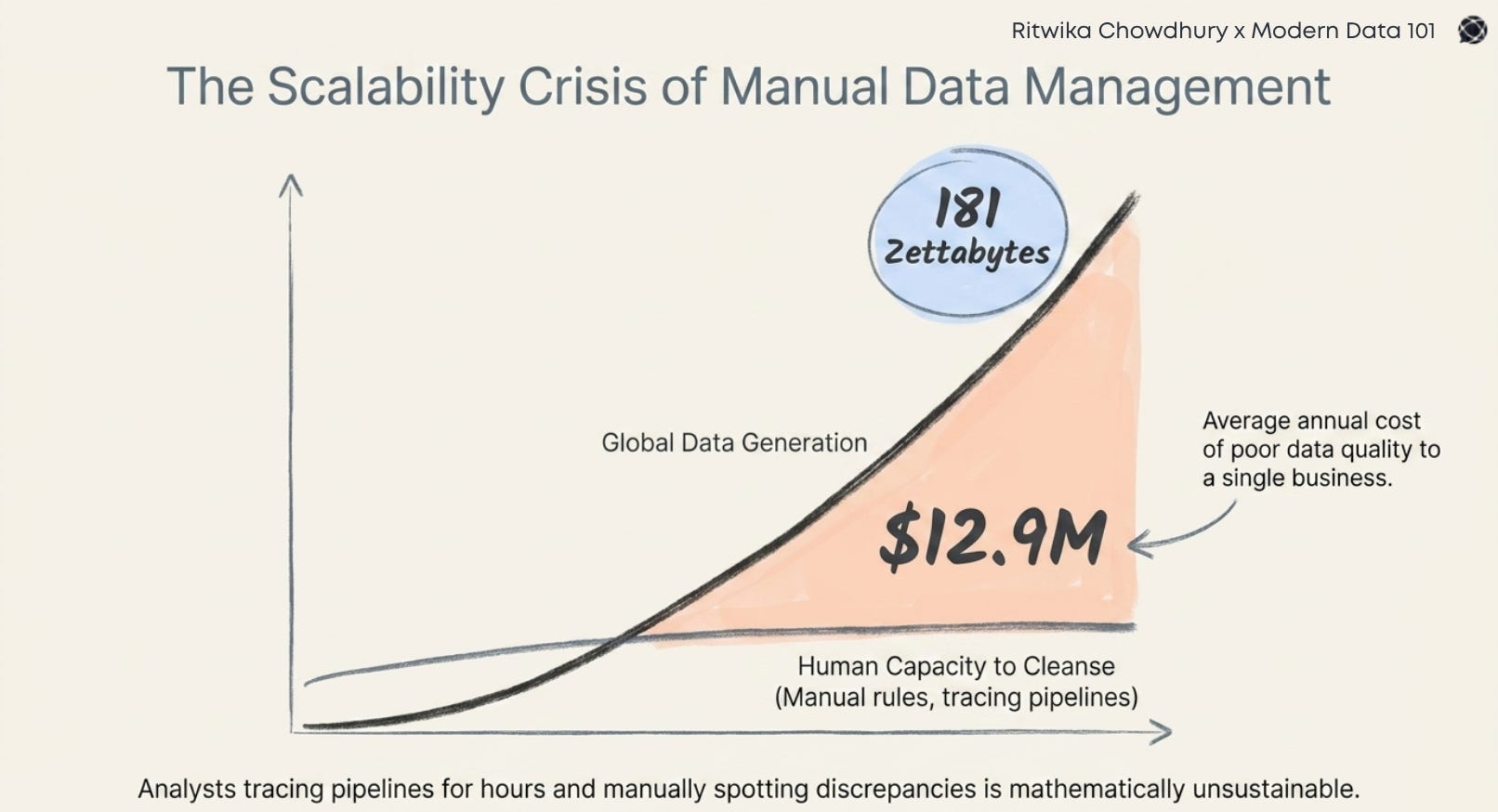
Poor data quality costs businesses an average of $12.9 million per year. And the problem is scaling faster than most data teams can handle; global data generation is on track to hit 181 zettabytes, while Gartner warns that through 2026, organisations will abandon 60% of AI projects due to insufficient data quality.
High-quality data drives actionable insights, faster innovation, and confident decision-making. Poor data quality, meanwhile, leads to flawed analysis, operational inefficiencies, and growing financial and reputational risk at scale.
Here are seven major ways AI is transforming data quality management today.
[playbook]
7 Trends of AI Data Quality Management in 2026
1. Pipeline-Embedded Cleansing: Moving Quality Upstream
In a traditional model, analysts manually spotting discrepancies, engineers tracing pipelines for hours, is well-documented as unsustainable. It treats quality as a downstream fix in most cases. AI changes that by embedding cleansing directly into the pipeline.
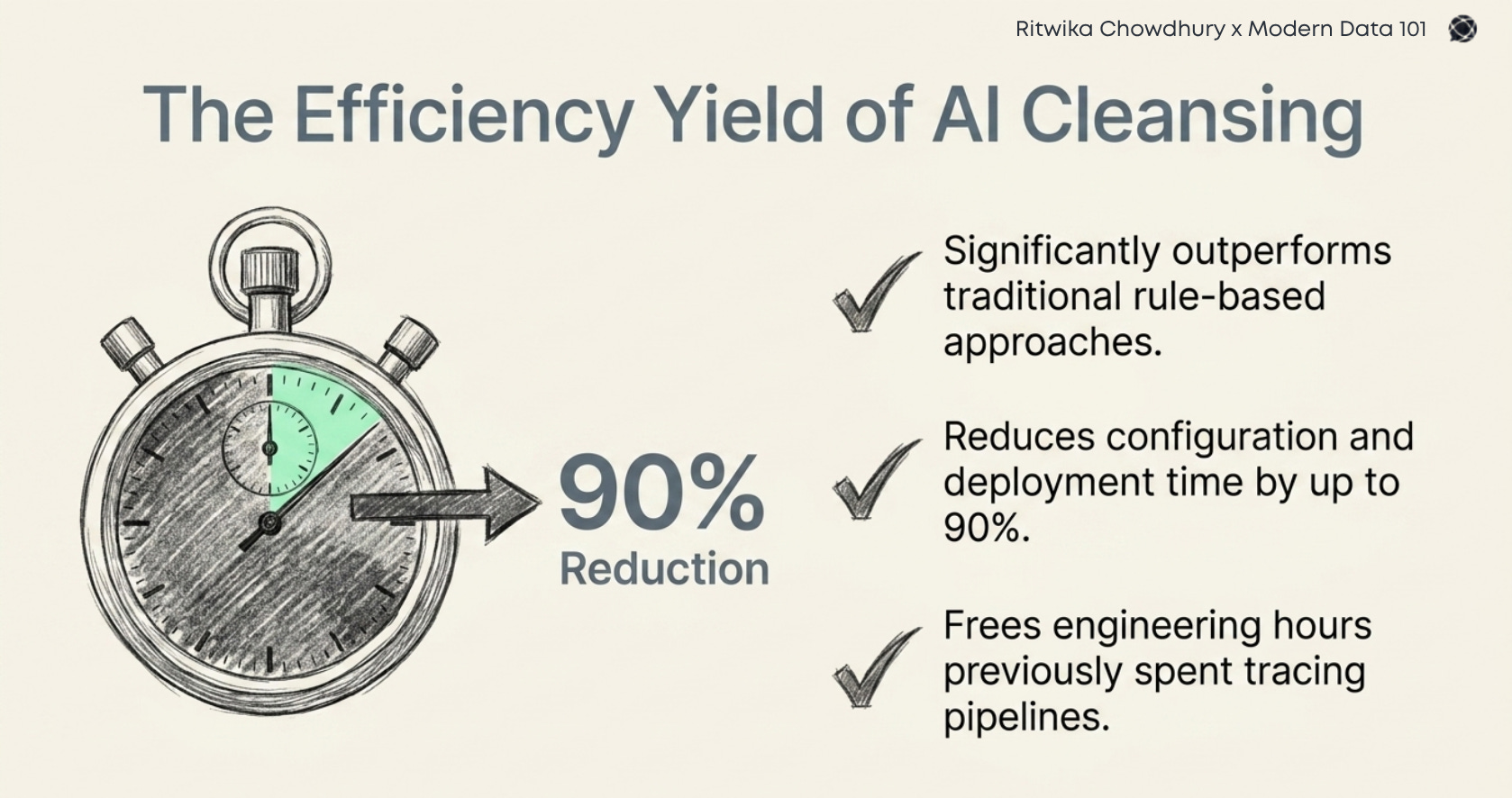
Machine learning algorithms now automatically detect and correct duplicate records, format inconsistencies, and missing values without manual intervention. Natural Language Processing (NLP) standardises free-text fields, resolving spelling variations and naming inconsistencies that rule-based tools miss entirely. According to multiple studies, AI-based approaches significantly outperform traditional rule-based ones and can reduce configuration and deployment time by up to 90%.
[related-1]
2. Contextual Entity Resolution: Unifying Fragmented Identities
Modern enterprises struggle with fragmented customer, product, and operational records spread across multiple systems.
AI-driven entity resolution helps unify these fragmented identities more accurately than traditional deterministic matching approaches. Machine learning models can analyse contextual similarities across attributes, behaviours, metadata, and relationships to identify duplicate or related entities.
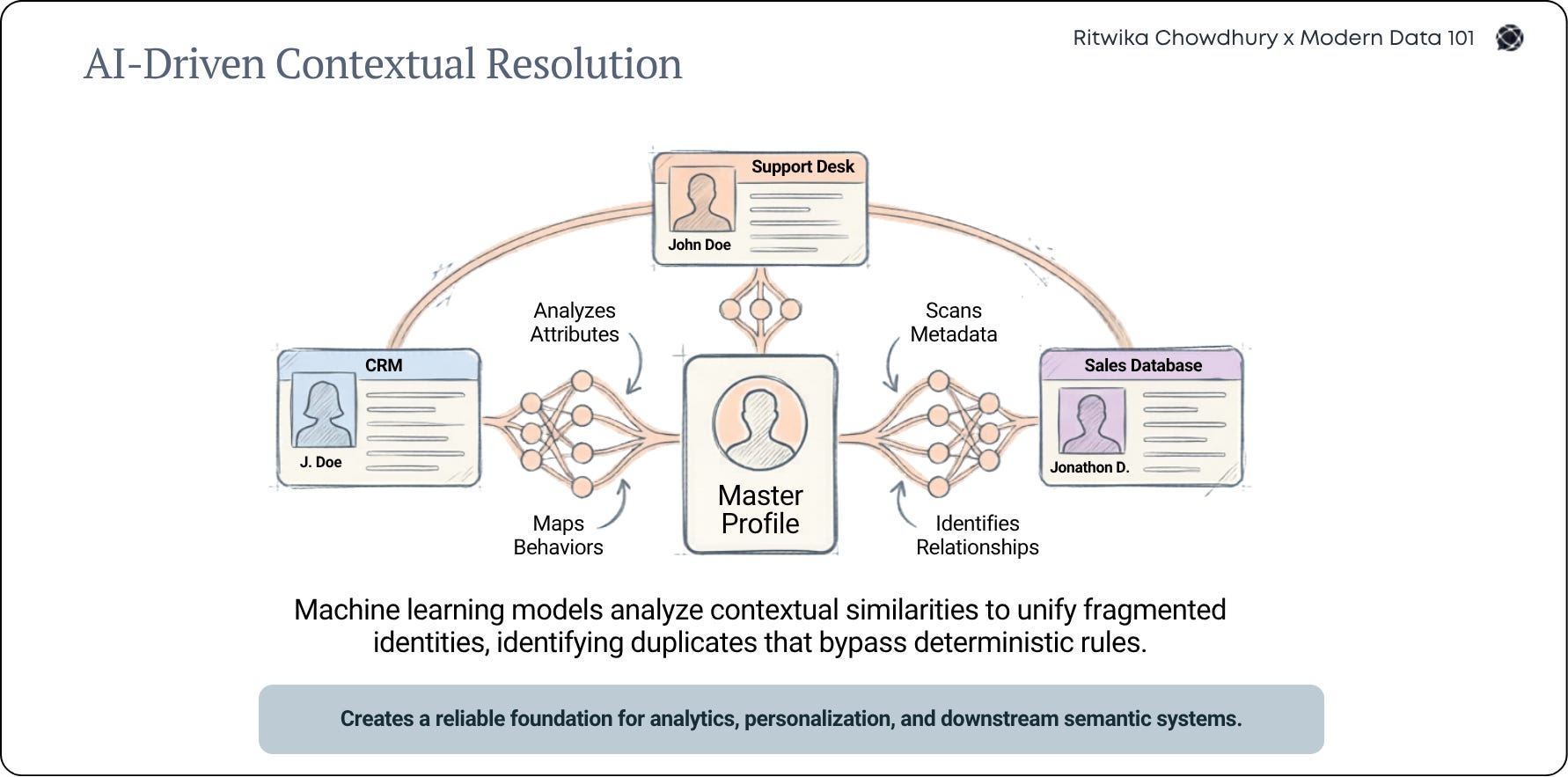
This improves master data quality and creates a stronger foundation for analytics, personalisation, and AI applications. It also strengthens the reliability of downstream data products and semantic systems.
3. Real-Time Anomaly Detection
A data team without AI anomaly detection is, as one analogy puts it, like a security guard trying to monitor thousands of CCTV feeds simultaneously. Most threats go unnoticed due to sheer volume.
AI models, particularly unsupervised algorithms like clustering and one-class SVMs, scan entire datasets continuously in real time, flagging outliers, schema drift, and distributional shifts as they emerge. Platforms deploying multi-agent detection architectures report accuracy improvements of up to 60% and error correction rates reaching 95%. In financial services alone, AI-based anomaly detection has driven a 67% reduction in undetected fraudulent transactions, a figure that speaks to the operational stakes of getting this right.
The academic foundation for this is strong: a 2024 arXiv theoretical framework on AI-driven monitoring in high-volume environments demonstrates why traditional batch-oriented checks fundamentally cannot keep pace with modern data velocity.
[related-2]
4. Detecting Bad Data at the Source
When a data issue is caught at the reporting layer, the damage is already done. Decisions have been made. Trust has eroded. The meeting has gone sideways.
AI enables continuous, real-time monitoring of data flows, identifying inconsistencies at the point of ingestion rather than discovery. This shift from reactive detection to proactive assurance is one of the defining characteristics of how AI is reshaping modern governance frameworks. Enterprises that have made this transition report not just fewer data incidents, but a measurable restoration of stakeholder confidence in their numbers, the kind of trust that converts data quality from a cultural liability into a cultural device.
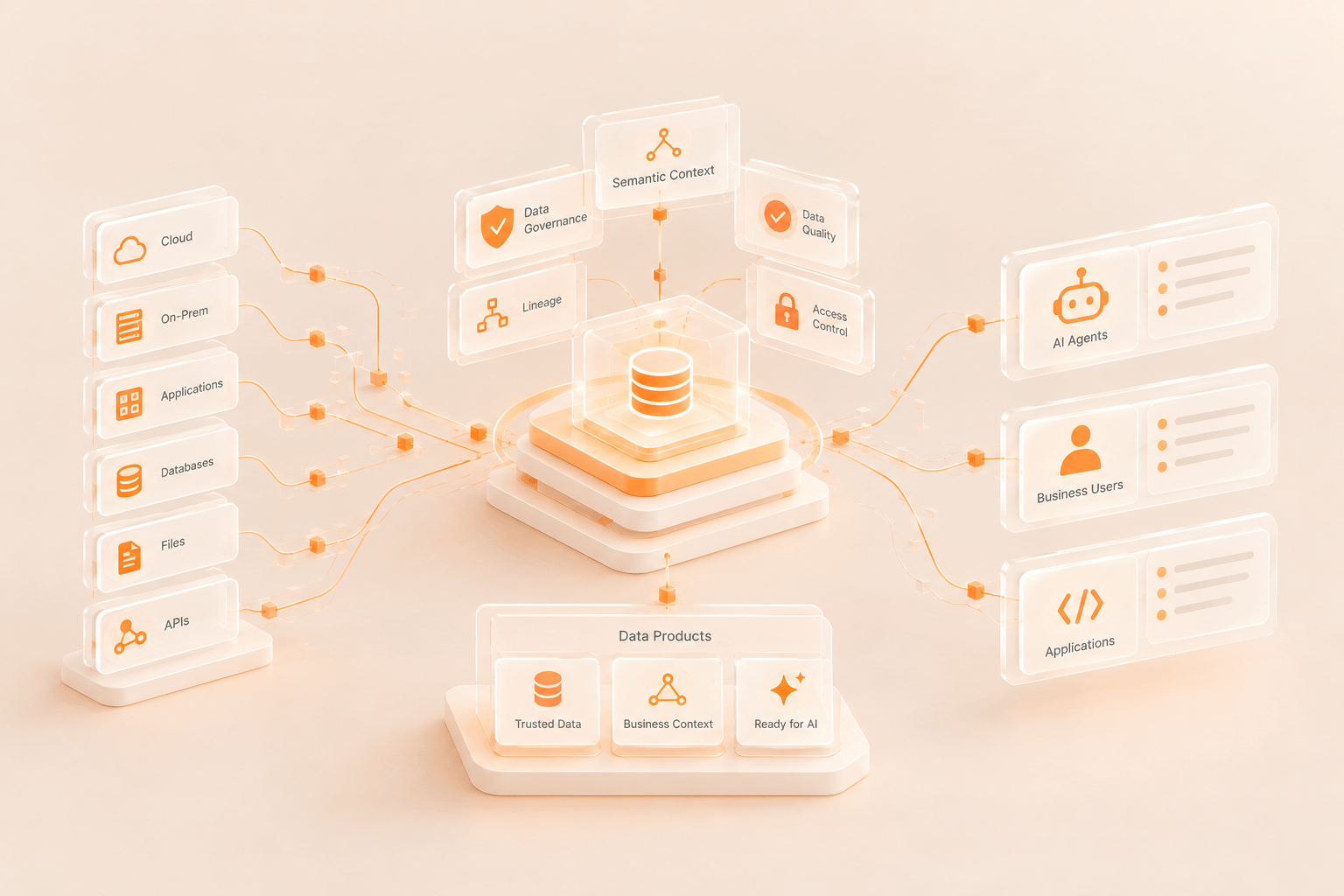
For data leaders building self-serve infrastructure, the Data Developer Platform offers a useful reference for how real-time monitoring integrates into modern data product architectures.
5. NLP for Unstructured Data Standardisation
Roughly 80% of enterprise data is unstructured: emails, documents, logs, support tickets, clinical notes. Most traditional data quality tools weren’t built for any of it.
NLP bridges this gap. It allows AI systems to clean and standardise free-form text at scale: resolving naming variations, correcting field-level errors, detecting “soft” duplicates where records share meaning but not exact wording. A significant research demonstrates this in practice, showing how updatable extracted views over unstructured medical records can systematically identify and correct data quality problems that structured validation entirely misses.
For teams managing data products end-to-end, understanding NLP’s role in quality is increasingly non-negotiable.
[state-of-data-products]
6. AI Strengthens Data Observability
Data observability platforms increasingly use AI to move beyond simple monitoring into predictive intelligence.
Rather than only identifying pipeline failures after they occur, AI can predict potential breakdowns based on historical lineage patterns, workload behavior, schema evolution, and operational anomalies.This enables teams to resolve issues before business users or AI systems are impacted.
Modern observability is becoming less about dashboards and more about operational resilience.
[related-3]
7. Agentic AI: Autonomous End-to-End Quality Management
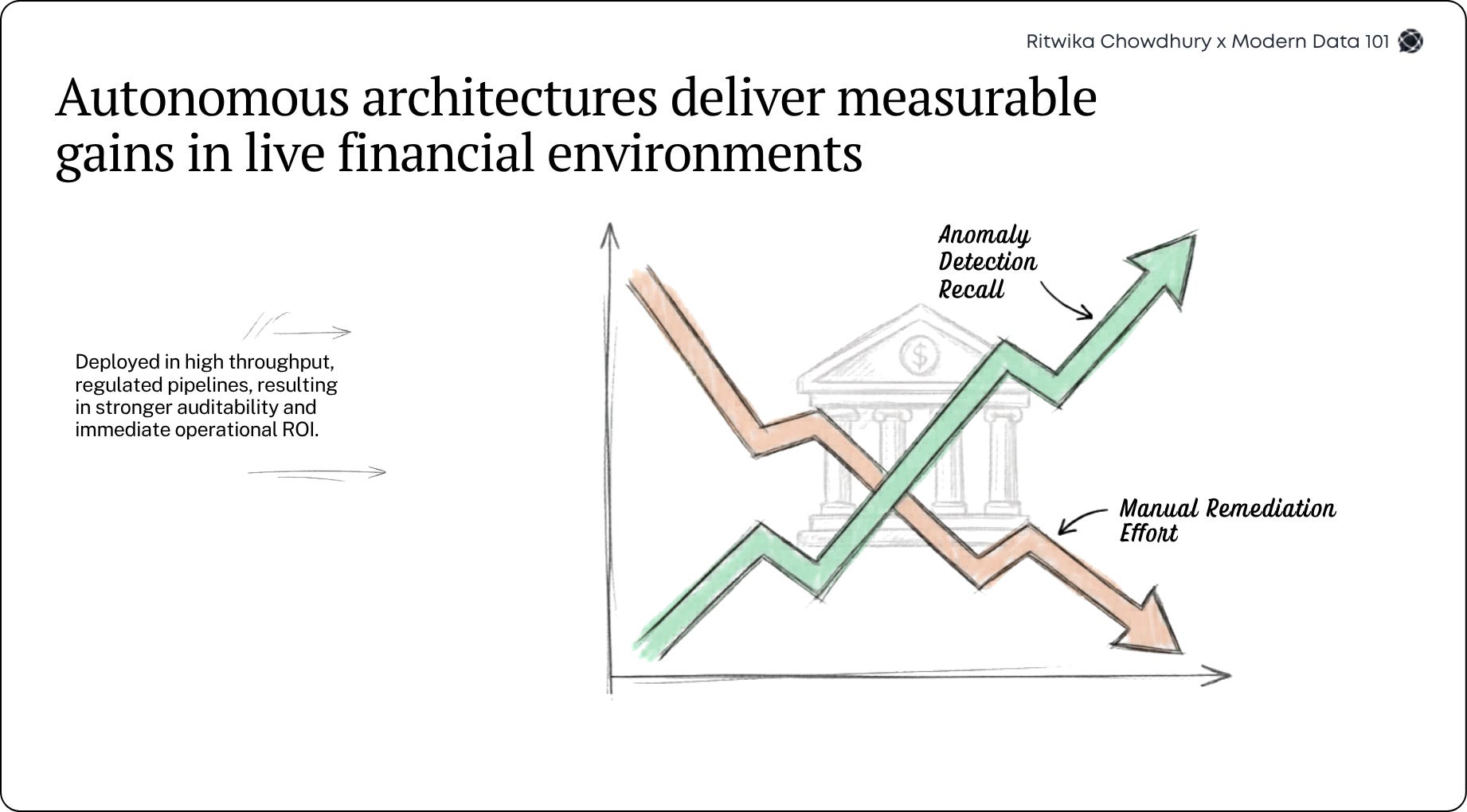
If the previous six shifts represent AI assisting data quality, agentic AI represents AI owning it. Multi-agent architectures deploy specialised AI agents across the entire data ecosystem: profiling agents establish quality baselines, anomaly agents detect deviations in real time, remediation agents execute corrective actions, and learning agents improve system intelligence through feedback loops, all without human initiation.
A prominent research demonstrates measurable gains from this approach in live financial environments: improved anomaly detection recall, significant reduction in manual remediation effort, and stronger auditability in high-throughput regulated pipelines.
This is the direction the field is moving. Agentic systems are the next frontier in enterprise GenAI, and data quality is one of the most tractable, high-ROI starting points for deployment.
What This Means for Data Leaders
The pattern across all seven shifts is the same: AI moves data quality from a cost center to a strategic function. It replaces the reactive, fragmented model that data teams have long normalised, the one built around patch-fixing, with an intelligent, self-improving system designed around prevention, trust, and speed.
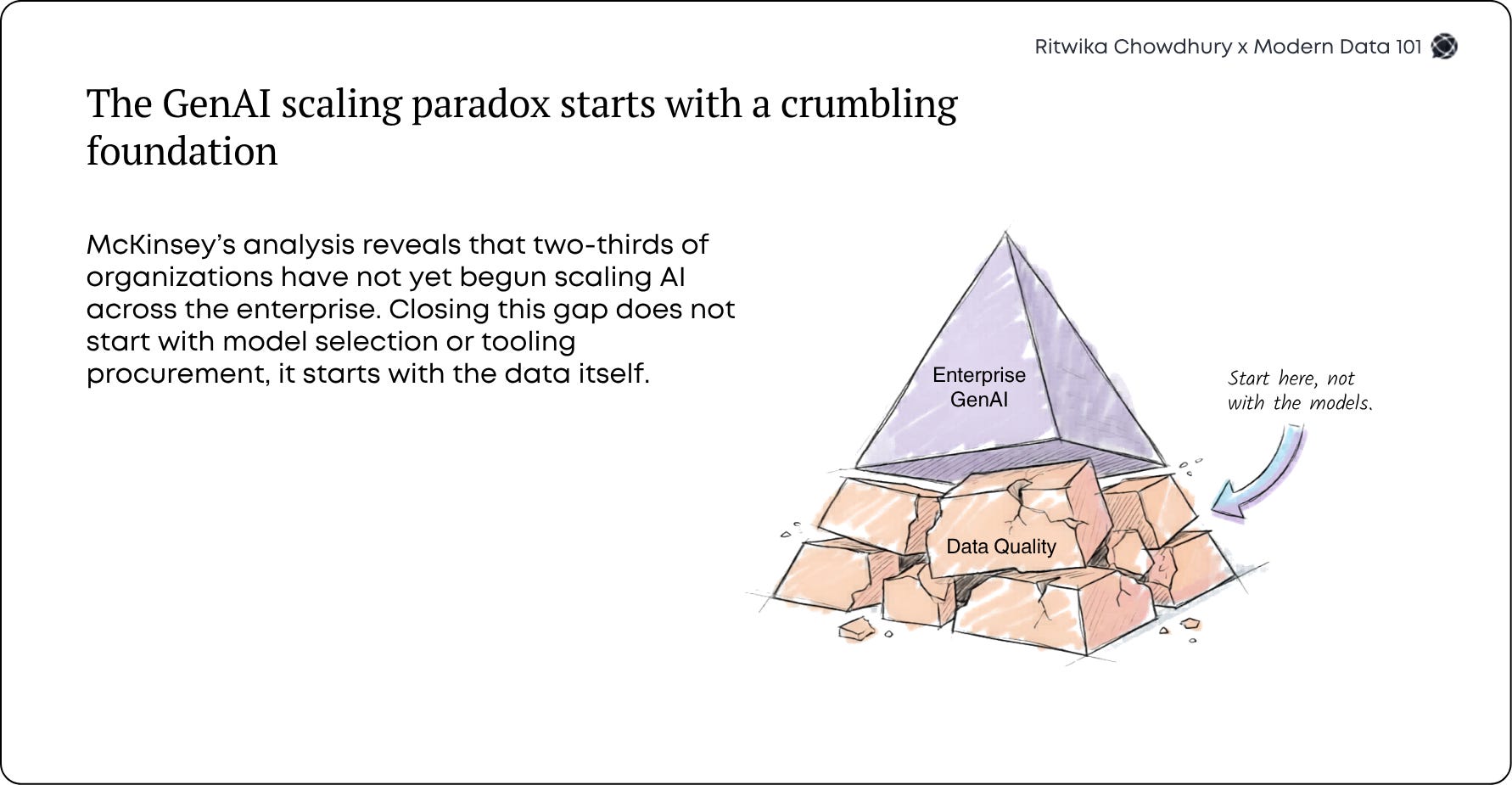
McKinsey’s analysis is clear that two-thirds of organisations have not yet begun scaling AI across the enterprise. Data quality is often why. Closing that gap starts not with model selection or tooling procurement, it starts with the data itself.
The organisations that will lead the next decade of AI value creation are already treating data quality as a culture, not a checklist.
FAQs
Q1. How can AI be used in data quality?
AI improves data quality by automating data cleansing, detecting anomalies, identifying duplicates, validating data in real time, enriching metadata, and predicting quality issues before they impact analytics or AI systems. It helps organizations maintain accurate, consistent, timely, and trustworthy data at scale.
Q2. How is AI improving data management?
AI improves data management by automating data discovery, cleansing, classification, integration, governance, and quality monitoring. It helps detect anomalies in real time, enrich metadata, optimize pipelines, improve semantic understanding, and enable self-service access, making data ecosystems faster, more reliable, scalable, and AI-ready.
Q3. Why AI data quality is the key to AI success?
AI systems are only as reliable as the data they learn from and operate on. Poor data quality leads to inaccurate predictions, biased outputs, hallucinations, weak automation, and failed decision-making. High-quality data ensures AI models are accurate, contextual, trustworthy, and scalable, making data quality the foundation of successful AI adoption.
Connect with a community data expert
A no-cost session with a practitioner who's been where you are.
About Modern Data 101
Modern Data 101 is a movement redefining how the world thinks about data. A community built by the same team behind the world’s first data operating system, Modern Data 101 sits at the intersection of data, product thinking, and AI. Spread across 150+ countries, the community brings together a global network of practitioners, architects, and leaders who are actively building the next generation of data systems.
At its core, Modern Data 101 exists to simplify the journey from raw data to tangible and observable impact. It advocates high-potential data systems and next-gen architectures to unify and activate insights and automation across analytics, applications, and operational workflows at the edge.
In a world shifting from data stacks to AI ecosystems, Modern Data 101 helps teams not just navigate the change but lead it.


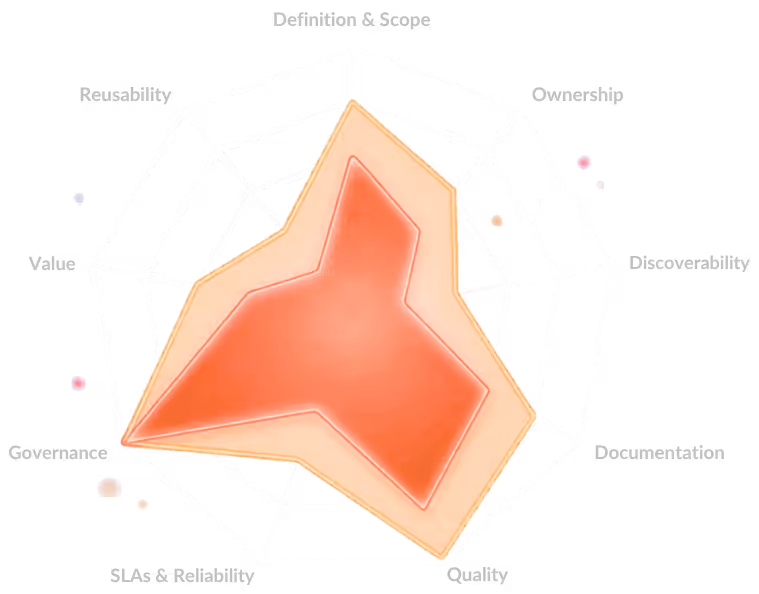
Where does your org stand on data product maturity?
A 9-dimension self-assessment used by 100+ data teams to benchmark strategy, ownership, and platform readiness.


Ritwika Chowdhury
Ritwika Chowdhury is a data and technology professional focused on data products, AI, and modern data architecture. Her work sits at the intersection of data strategy, product thinking, and emerging AI technologies, with a focus on helping organisations turn enterprise data into trusted, usable, and scalable assets.
Read the ideas here. Build them with The Modern Data Company.
Modern Data 101 is where the data community thinks out loud. When you're ready to move from articles to architecture, data products, governed AI pipelines, or a full Data Operating System; the team behind this community can help you build it.
Continue reading

.jpg)
