How AI Observability Improves Decision Quality
Moving beyond pipeline health to master decision-level intelligence through end-to-end lineage and shared accountability.

Why Is the Gap Between Data Quality and AI Decision Quality Growing
Mature organisations run data warehouses, lakes, streaming pipelines, and feature stores in parallel, with significant investment in data quality, cataloguing, and observability. On paper, they are data-ready.
According to McKinsey, only about one-third of organisations have scaled AI from pilot to production, highlighting a clear gap: strong data foundations are not translating into reliable AI outcomes.
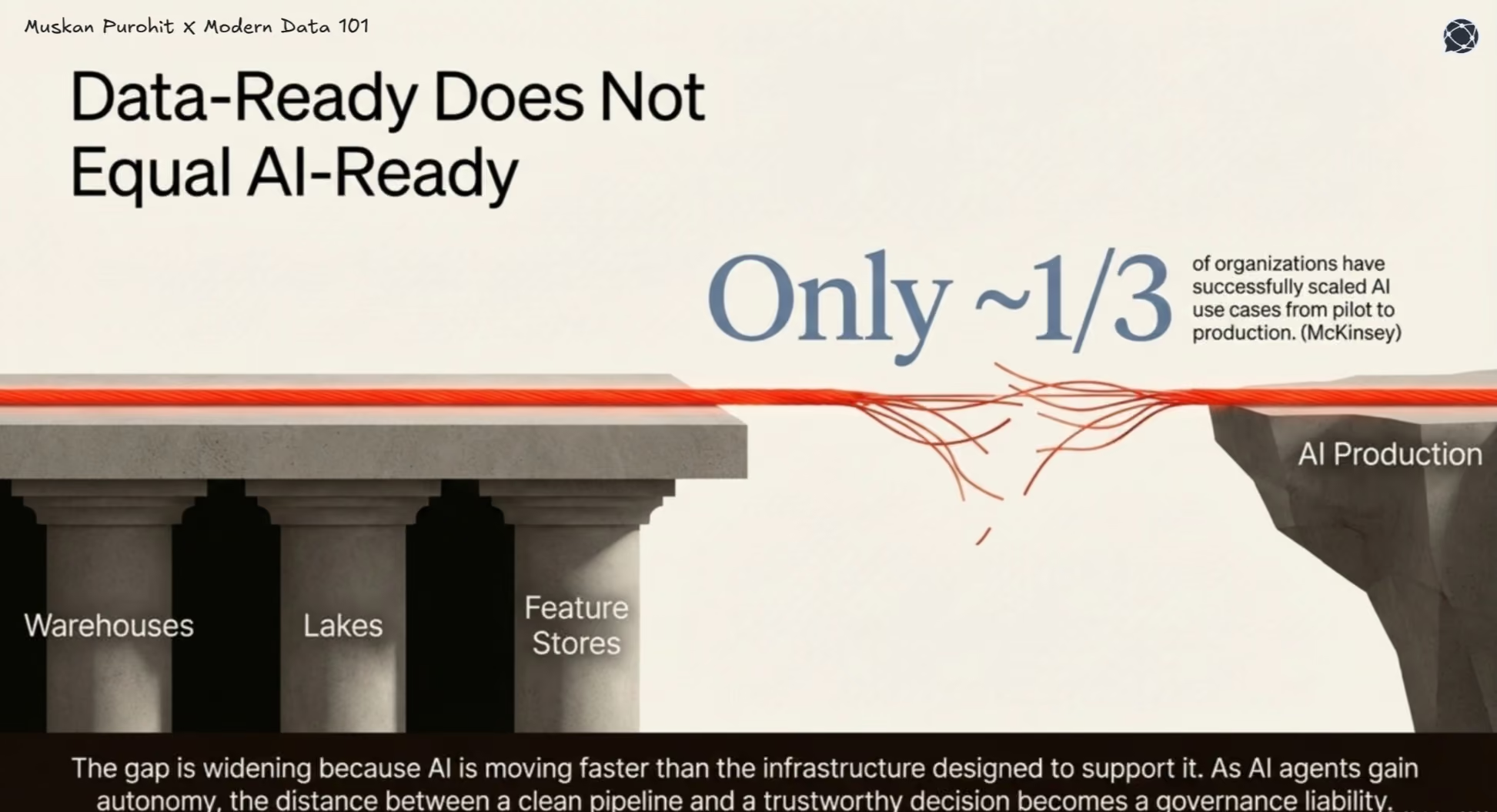
The reason is structural. Data infrastructure ensures accuracy, consistency, and freshness, but AI introduces decision-making, which traditional data quality frameworks are not designed to validate.
This gap exists because:
- AI systems operate on inference, introducing failure modes like bias, drift, context loss, and misalignment.
- AI is becoming more autonomous and distributed, where the same data feeds multiple models without consistent definitions.
- The gap widens at inference time, where small inconsistencies create silent degradation.
- Most organisations still operate with fragmented observability, limiting end-to-end tracing of decisions.
[related-1]
What is AI Observability?
AI observability is the ability to monitor, understand, and explain how AI systems behave in production.
While data observability focuses on the health of pipelines, including freshness, schema, and completeness, AI observability focuses on outcomes. It tracks how models perform, how inputs are interpreted, and how decisions evolve.
This includes signals such as model performance and drift, input and feature distribution changes, output quality, bias, and anomalies and real-world feedback loops.
Therefore, enterprises need AI observability to address the gap between data quality and decisions, or precisely the capability of turning data into decisions with AI models.
[playbook]
Why Do Organisations Confuse Data Observability with AI Observability
Data observability validates whether the data is correct, and not whether decisions made from it are correct. A perfectly healthy pipeline can feed a drifting, biased, or misaligned model, and traditional monitoring won't catch it.
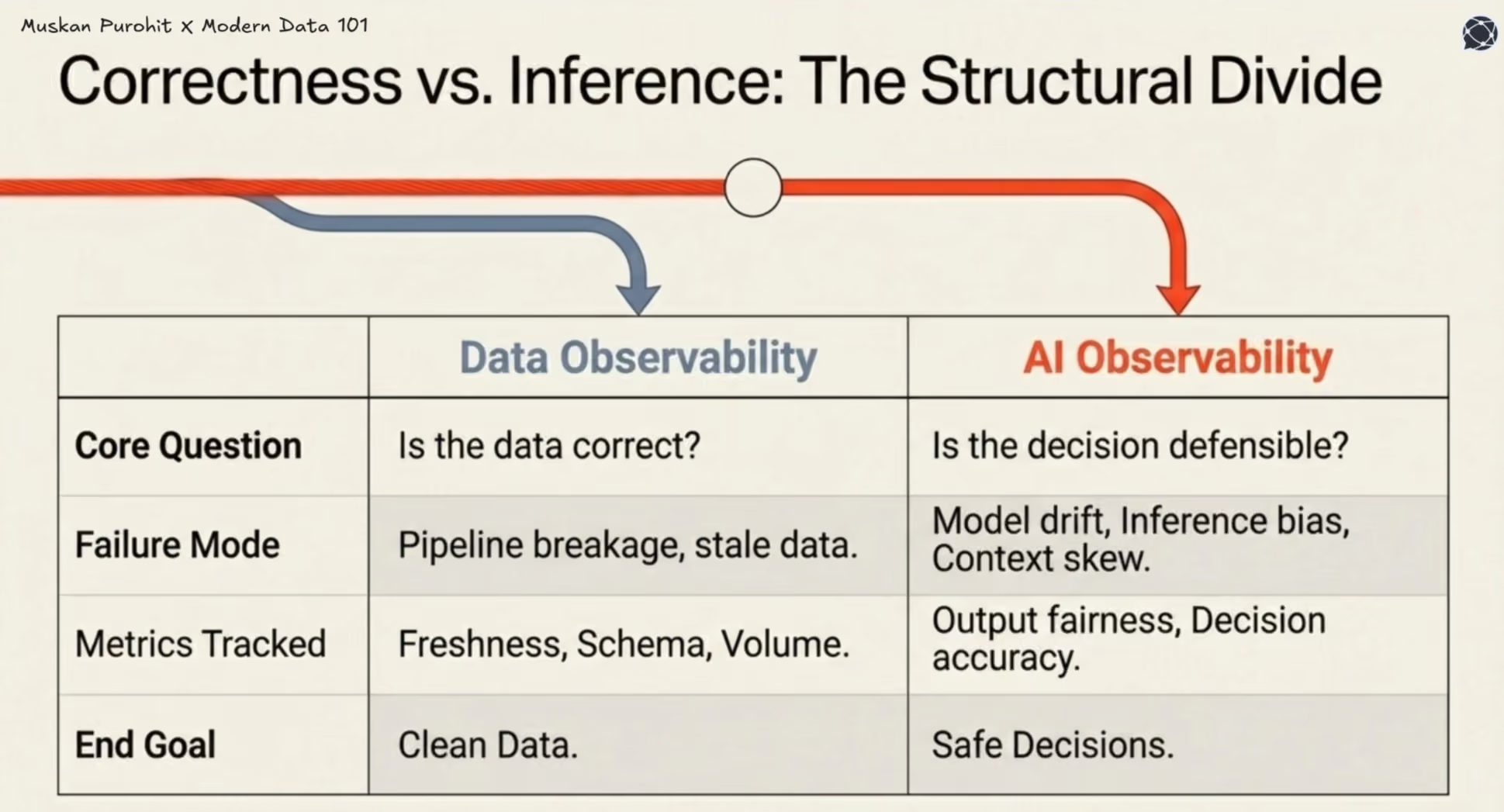
The assumption that this same layer can guarantee AI reliability is where the problem begins.
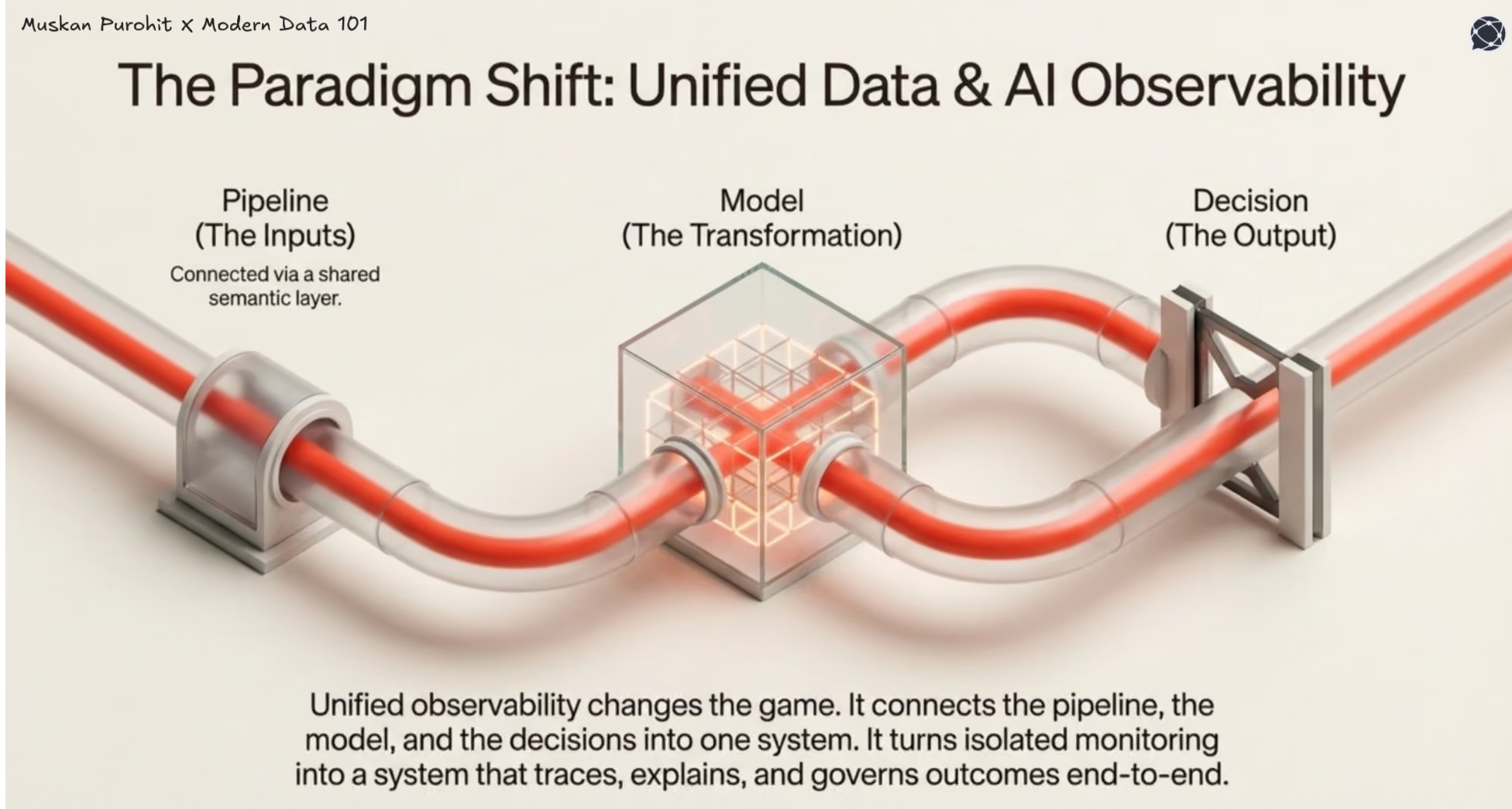
AI observability detects that a model is failing, but without upstream data context, it can't explain why. Unified data and AI observability closes this gap by connecting data, models, and decisions through shared lineage, turning isolated monitoring into a system that can trace, explain, and govern outcomes end to end.
[related-2]
AI Observability Strategies for Enterprises
AI observability often doesn’t scale on a single capability but needs a set of coordinated strategies to ensure decisions remain reliable, explainable, and controllable in production.
The most effective strategies share a common shift from monitoring components to understanding decisions as system outcomes. How should the strategies look for AI observability?
- Having decision-level visibility, or making decisions observable and tracing every decision across data, transformations, and model context.
- Ensuring data is defined and used consistently across models and environments.
- Tracking real-time inputs, drift, and context shifts in production.
- Linking data changes, model behaviour, and decision outcomes.
- Continuously validating decisions against business and policy expectations.
These structural challenges present the best case for data platforms to eliminate fragmented observability where signals cannot be unified into decision-level intelligence.
The Case for Unified Data Platforms
How Do Unified Data Platforms Enable Observability at Scale
Most unified data platform strategies focus on workload consolidation: bringing analytics, data engineering, and ML onto a single platform to reduce duplication and simplify operations. While valuable, this is insufficient for AI at scale.
AI introduces requirements that traditional platforms were not designed to meet:
Inference-time data consistency
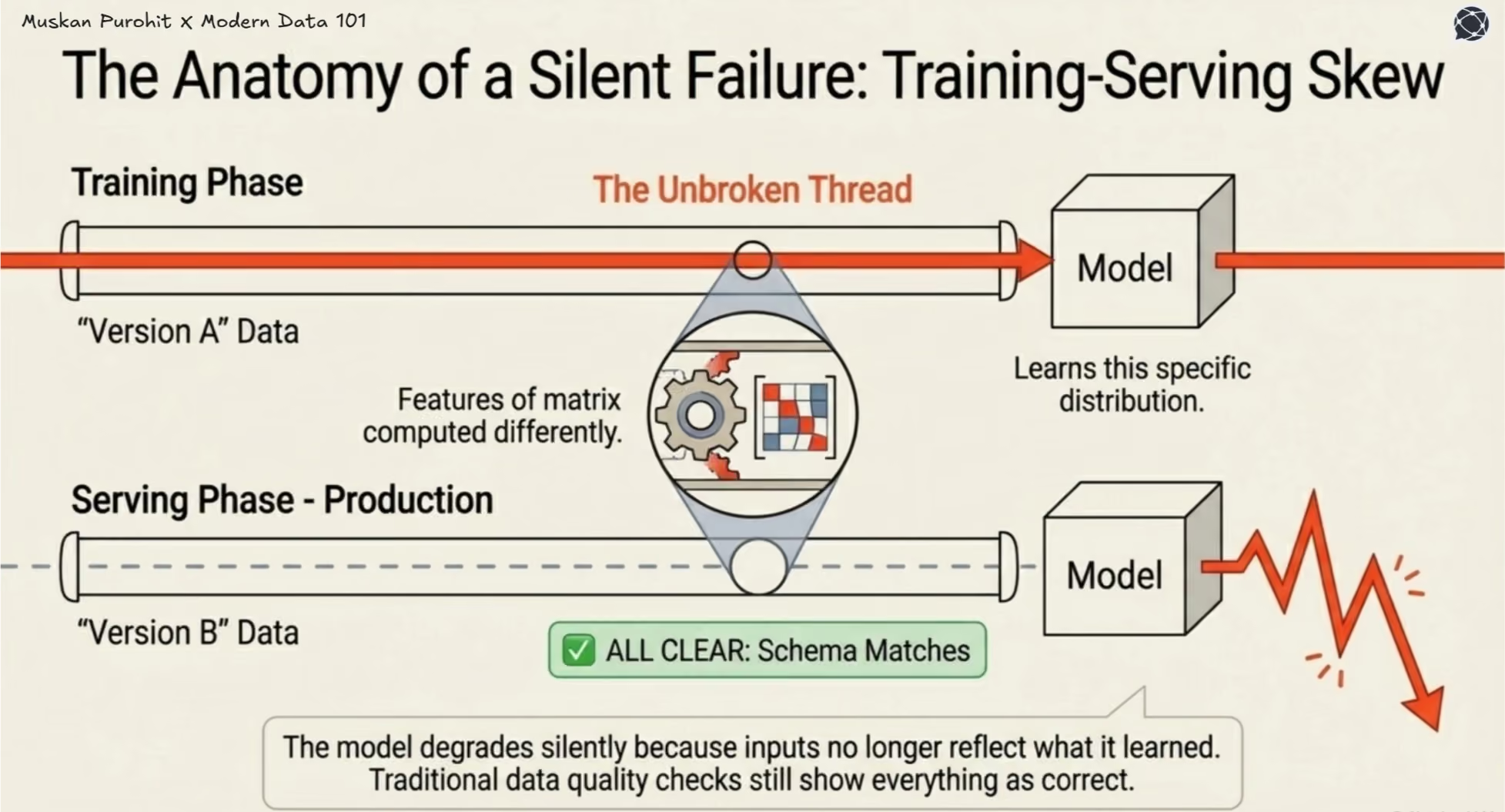
AI models rely on features computed from specific data versions during training. In production, these must match exactly. Even small differences create training-serving skew, where inputs no longer reflect what the model learned, causing silent degradation while data quality checks remain healthy.
Cross-domain data contracts
As AI scales, the same data feeds multiple models across domains. Without versioned contracts, identical raw data produces inconsistent features, leading to conflicting decisions with no clear way to detect or resolve them.
[related-3]
Enabling end-to-end lineage
Unified platforms turn lineage into a real-time, queryable system, extending from raw data to transformations, features, models, and decisions. This ensures every decision is traceable to the data, logic, and model version behind it, enabling explainability, root cause analysis, and auditability at scale.
[data-expert]
Temporal traceability for AI decisions
Every AI decision must be tied to the exact data, form, and time it was generated. This goes beyond debugging and is increasingly a regulatory requirement. Lineage must be real-time and linked to each inference to ensure decisions are explainable and auditable.
Enable decentralised data ownership
Unified platforms standardise ownership while keeping data with domain teams. Shared definitions, contracts, and lineage ensure data remains consistent, traceable, and usable across models. This is critical as multi-domain inconsistencies can silently impact decisions.
These requirements cannot be solved by adding more monitoring to a fragmented stack. They require the data platform to be redesigned with AI as the primary consumer, not analytics.
[related-4]
Transitioning to Unified Observability
Implementing unified observability requires a shift from fragmented monitoring to system-level design. As a result, enterprises need to redefine the scope of the data platform by optimising the data-to-decision lifecycle.
This requires unifying data through not mere consolidation of everything into one store, but creating a consistent layer of context across systems, where data definitions are standardised, transformations are traceable, and the same inputs mean the same thing across models.
[related-5]
Achieving unified observability thus needs end-to-end AI observability and data observability plus unification, in order to deliver reliable AI results.
What Is the Real Cost of Operating Without Unified AI Observability
The cost builds quietly as silent decision debt, where decisions are made on drifting data and degrading models, with no system to validate outcomes. Rather than surfacing as alerts, failures crop up later as business anomalies, customer impact, or regulatory risk, making them slow and expensive to trace.
Reports suggest that by 2027, 60% of organisations are expected to fail to realise expected AI value due to weak governance and data issues, highlighting that the problem is not experimentation but the inability to operate AI reliably at scale.
Most organisations underestimate this. The real issue is the inability to operate AI reliably at scale. In regulated environments, the risk is sharper. Without unified observability, there is no end-to-end trace from data to decision, only fragmented logs and manual reconstruction.
The real cost: AI systems that accumulate risk faster than the organisation can detect or control it.
Where Does Your Organisation Sit on the AI Observability Maturity Curve
Before investing in unified data and AI observability infrastructure, leadership teams need an honest diagnosis of where current capability actually sits. The following four-stage maturity model maps the most common organisational patterns across enterprises deploying AI on unified data platforms today.
Stage 1: Isolated monitoring
Data pipelines and AI models are monitored separately, with no shared context. Data quality checks exist, but model issues require manual, cross-team debugging.
Stage 2: Connected alerting
Teams share alerts across systems, but only at the surface level. There is awareness of dependencies, but no shared lineage or automated root cause analysis.
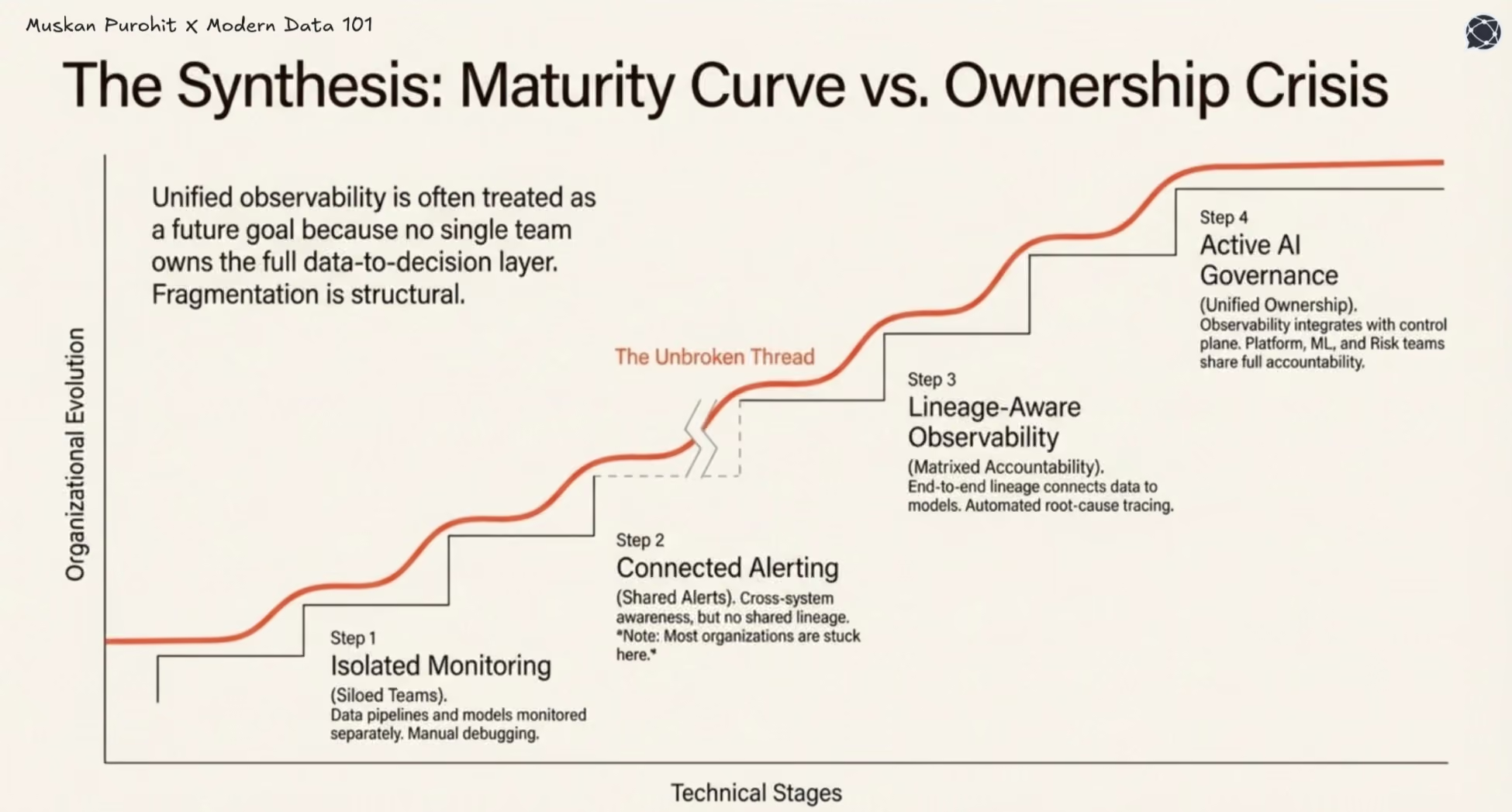
Stage 3: Lineage-aware observability
End-to-end lineage connects data to models, enabling automated tracing from model issues back to data causes. This is where decision trust becomes achievable.
Stage 4: Active AI governance
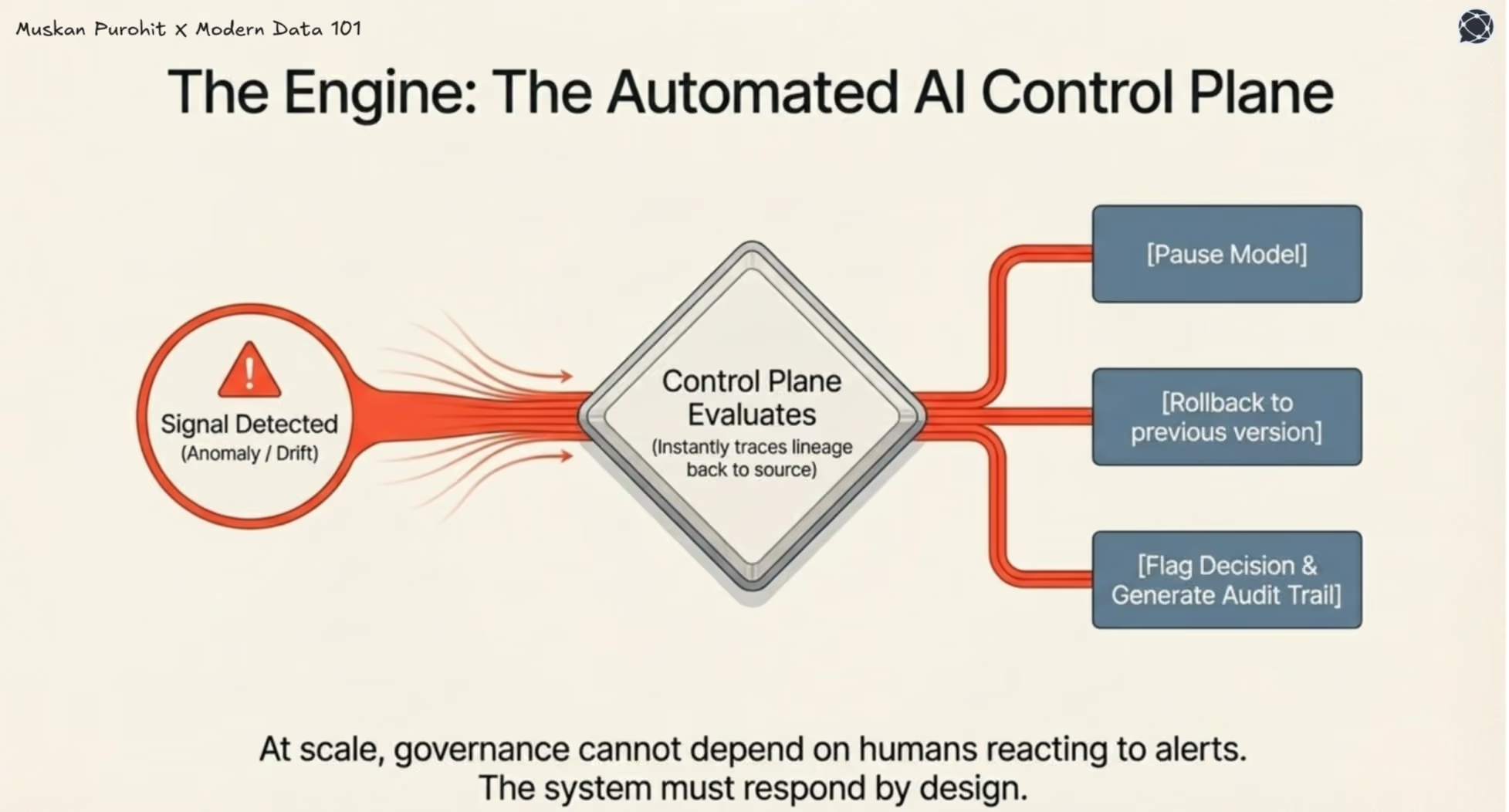
Observability integrates with the AI control plane. Issues trigger automated responses such as rollback, containment, and audit logging. Governance becomes built into the system.
Most organisations are stuck between Stage 2 and Stage 3, and closing this gap is what unlocks scalable, trustworthy AI.
Who Owns Unified AI Observability and Where It Creates Value
In most enterprises, no single team owns unified observability. Data engineers manage pipelines, ML teams monitor models, and risk teams define policy, leaving the data-to-decision layer fragmented. This is structural; AI was introduced incrementally, so ownership remained siloed, and unified observability is often treated as a future goal rather than core infrastructure.
Closing this gap requires a clear ownership shift. Data platform leaders must extend into AI consumption, ML teams must take responsibility for upstream data dependencies, and risk teams need direct access to lineage. Organisations that succeed treat the data-to-decision stack as one system, with shared accountability across teams.
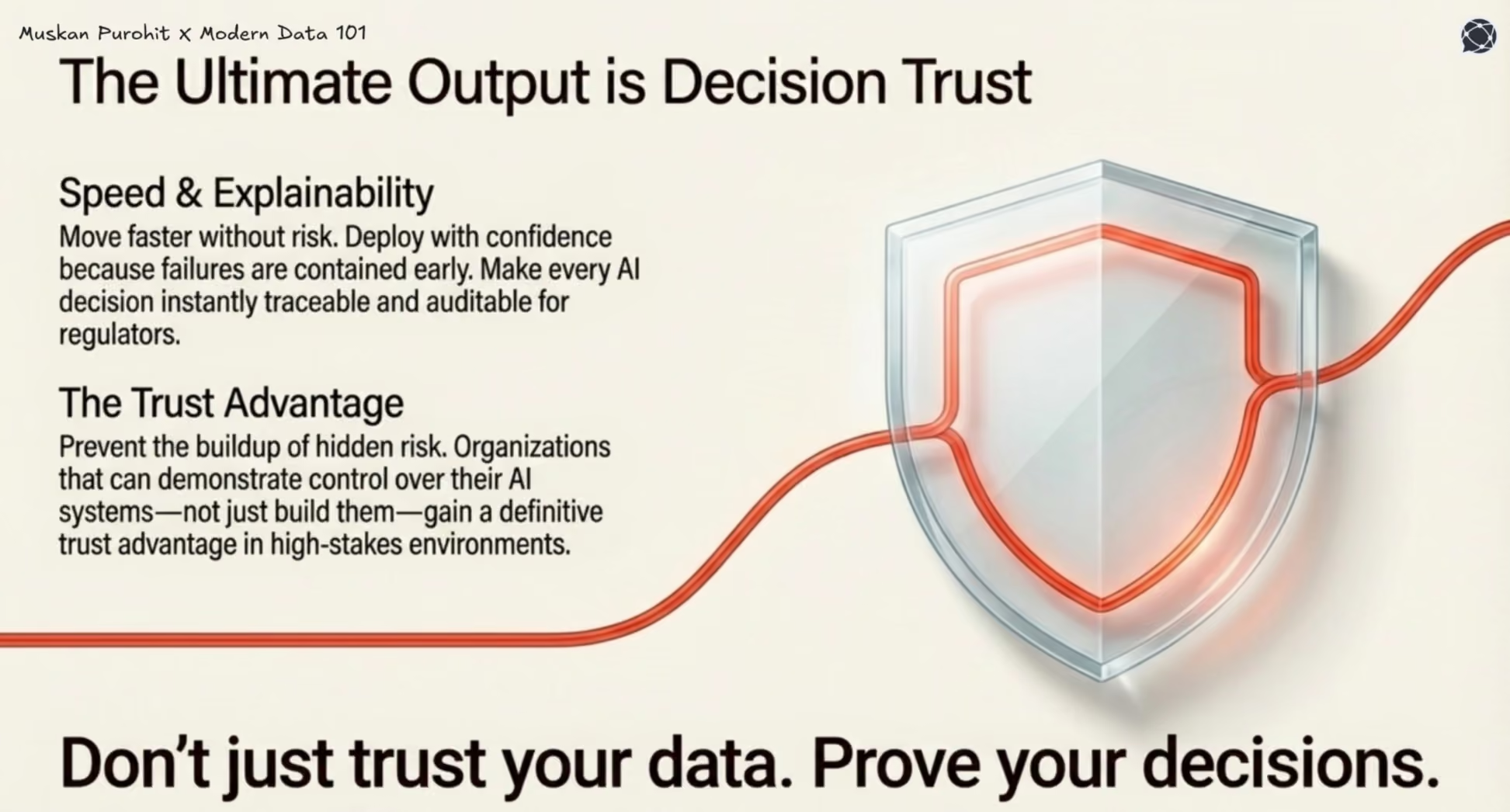
This shift is where unified observability creates real value. With a connected view across data, models, and decisions, teams can deploy faster, detect and contain failures early, and make decisions explainable and auditable by design.
Instead of reacting to business impact, issues are identified earlier, reducing hidden risk and remediation costs. Over time, this builds a trust advantage, where organisations can not only build AI systems, but also operate them reliably at scale.
FAQs
Q1. Why is AI observability important beyond data observability?
Data observability ensures pipeline health, but not decision quality. AI observability tracks model behaviour and outcomes to catch drift, bias, and misalignment in production.
Q2. Why do AI models fail in production despite good data quality?
Failures often occur at inference due to drift, training-serving skew, or changing inputs. These issues silently degrade decisions without triggering data pipeline alerts.
Q3. How can organisations monitor AI models effectively in production?
They need a unified view across data, models, and decisions, not isolated metrics. This connects input changes to model behaviour and business impact in real time.
Q4. How does unified observability support AI governance and explainability?
It creates an end-to-end trace from data to decisions, making outcomes auditable. This enables real-time validation, accountability, and regulatory compliance.
Connect with a community data expert
A no-cost session with a practitioner who's been where you are.
About Modern Data 101
Modern Data 101 is a movement redefining how the world thinks about data. A community built by the same team behind the world’s first data operating system, Modern Data 101 sits at the intersection of data, product thinking, and AI. Spread across 150+ countries, the community brings together a global network of practitioners, architects, and leaders who are actively building the next generation of data systems.
At its core, Modern Data 101 exists to simplify the journey from raw data to tangible and observable impact. It advocates high-potential data systems and next-gen architectures to unify and activate insights and automation across analytics, applications, and operational workflows at the edge.
In a world shifting from data stacks to AI ecosystems, Modern Data 101 helps teams not just navigate the change but lead it.


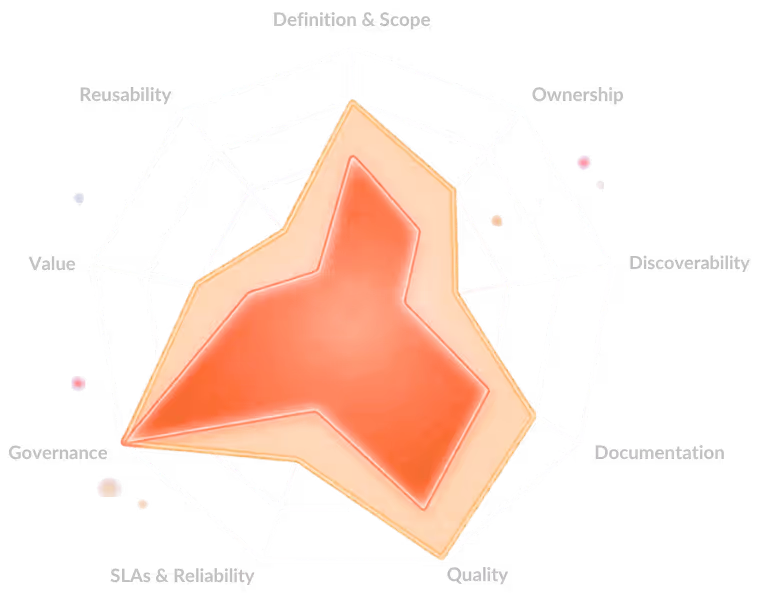
A 9-dimension self-assessment used by 100+ data teams to benchmark strategy, ownership, and platform readiness.


Muskan Purohit
Muskan Purohit is a Technical Writer contributing to community projects and tech journalism initiatives on Modern Data 101. She focuses on articulating modern data systems, platforms, and AI-driven architectures. Formerly, she worked with Amazon, training AI models and LLMs in collaboration with data developers. In addition, she has also led projects as a Content Manager @Lead with Tech, driving advocacy across data and technology domains.
Read the ideas here. Build them with The Modern Data Company.
Modern Data 101 is where the data community thinks out loud. When you're ready to move from articles to architecture, data products, governed AI pipelines, or a full Data Operating System; the team behind this community can help you build it.
Continue reading