
How to Structure the Consumption Layer of Your Data Platform
Four components that separate a governed, product-driven consumption layer from a warehouse with role-based access bolted on.

TL;DR
Data architecture is the set of layers, standards, and interfaces that determine how enterprise data is stored, governed, and delivered to the people and systems that use it. Most of it breaks down at the consumption layer, where analysts, applications, and AI agents access that data.
Structuring it well means governing four components: the semantic layer, access patterns, point-of-consumption governance, and observability.
Data architecture is the set of layers, standards, and interfaces that decide how enterprise data gets stored, governed, and delivered. Most of it breaks down at the consumption layer: the edge where analysts run queries, applications call APIs, and AI agents retrieve context to act.
Most organisations invest heavily in storage, transformation, and pipelines. The weak point is almost always what sits closest to the consumer: how data is exposed and made discoverable at the point of use.
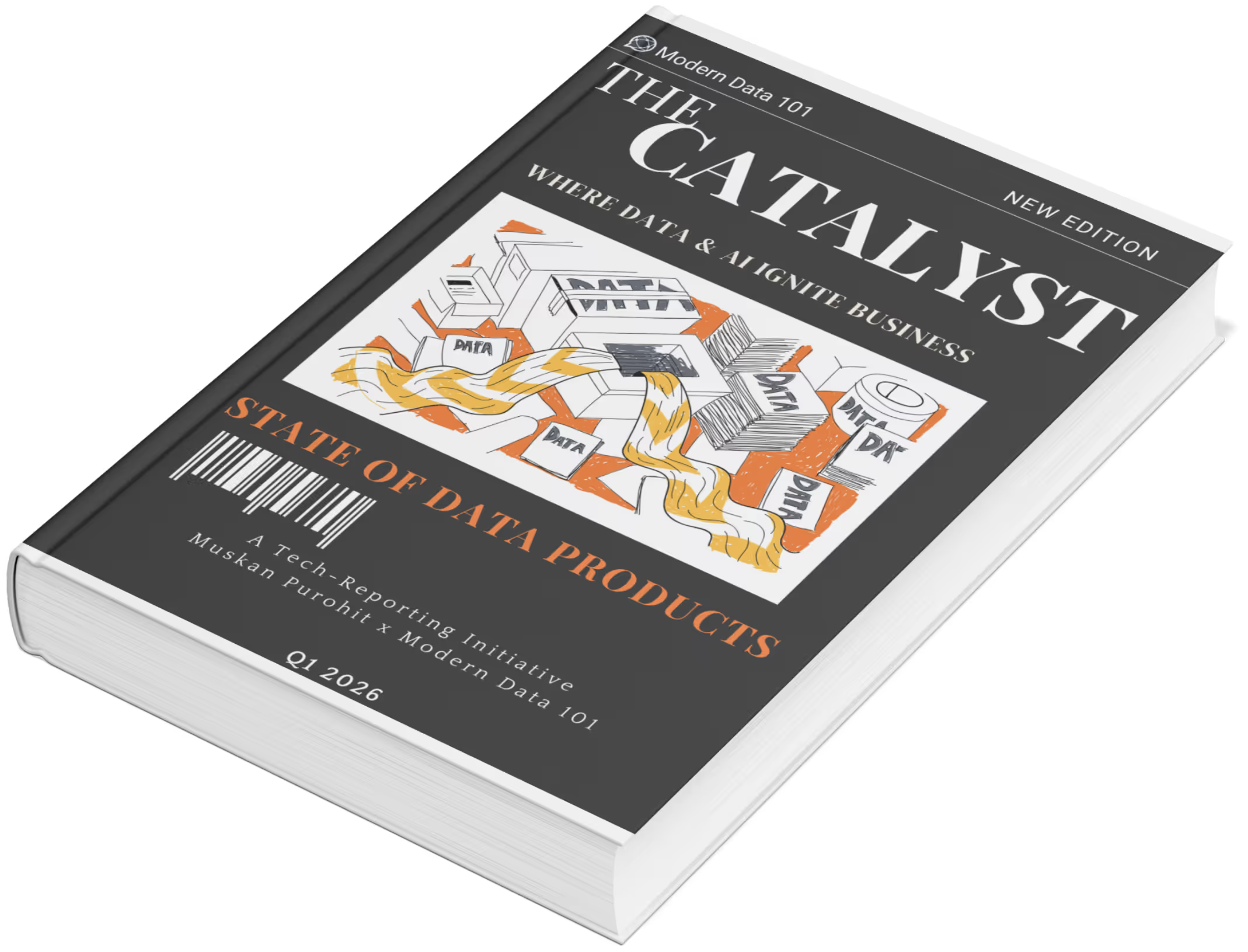
[state-of-data-products]
What Is the Consumption Layer
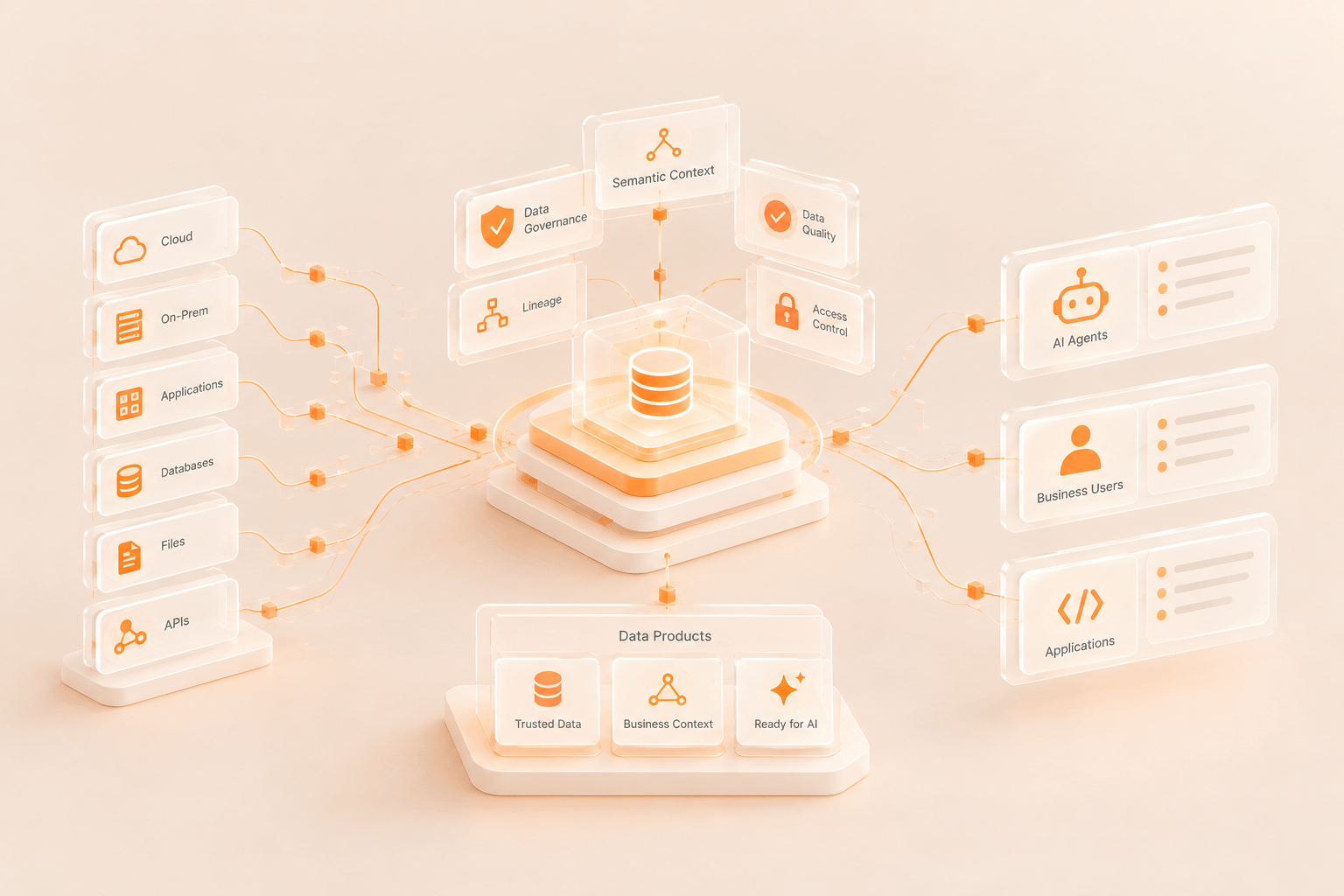
The consumption layer sits at the output end of enterprise data architecture, serving dashboards, data scientists, applications, and AI systems, along with "BI tools and SQL endpoints." A well-structured consumption layer needs to serve materially different consumers:
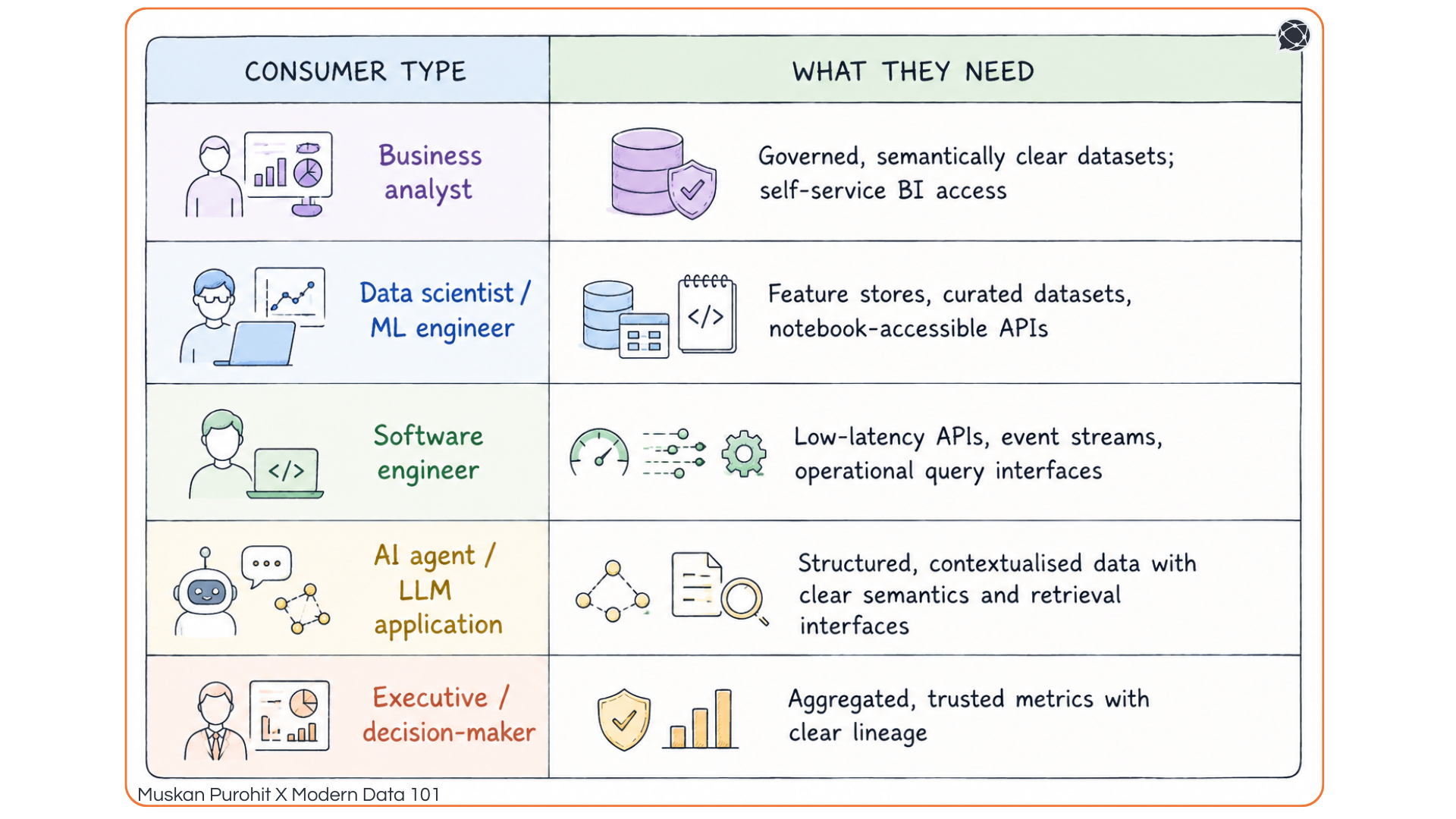
Serving all five through the same interface, say, a warehouse with role-based access, is one of the most common and costly mistakes in enterprise data architecture.
[related-1]
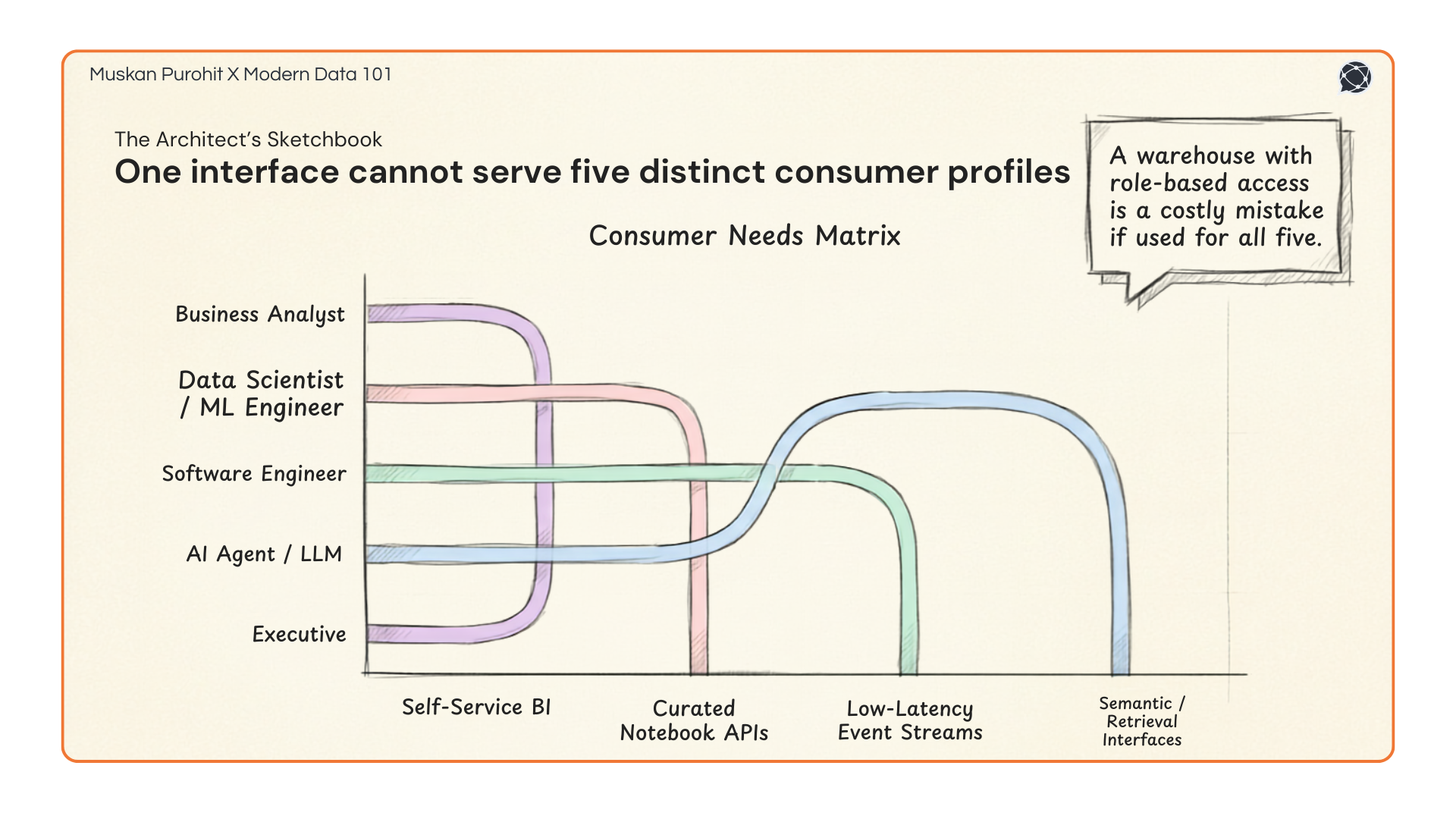
Four Components Worth Getting Right
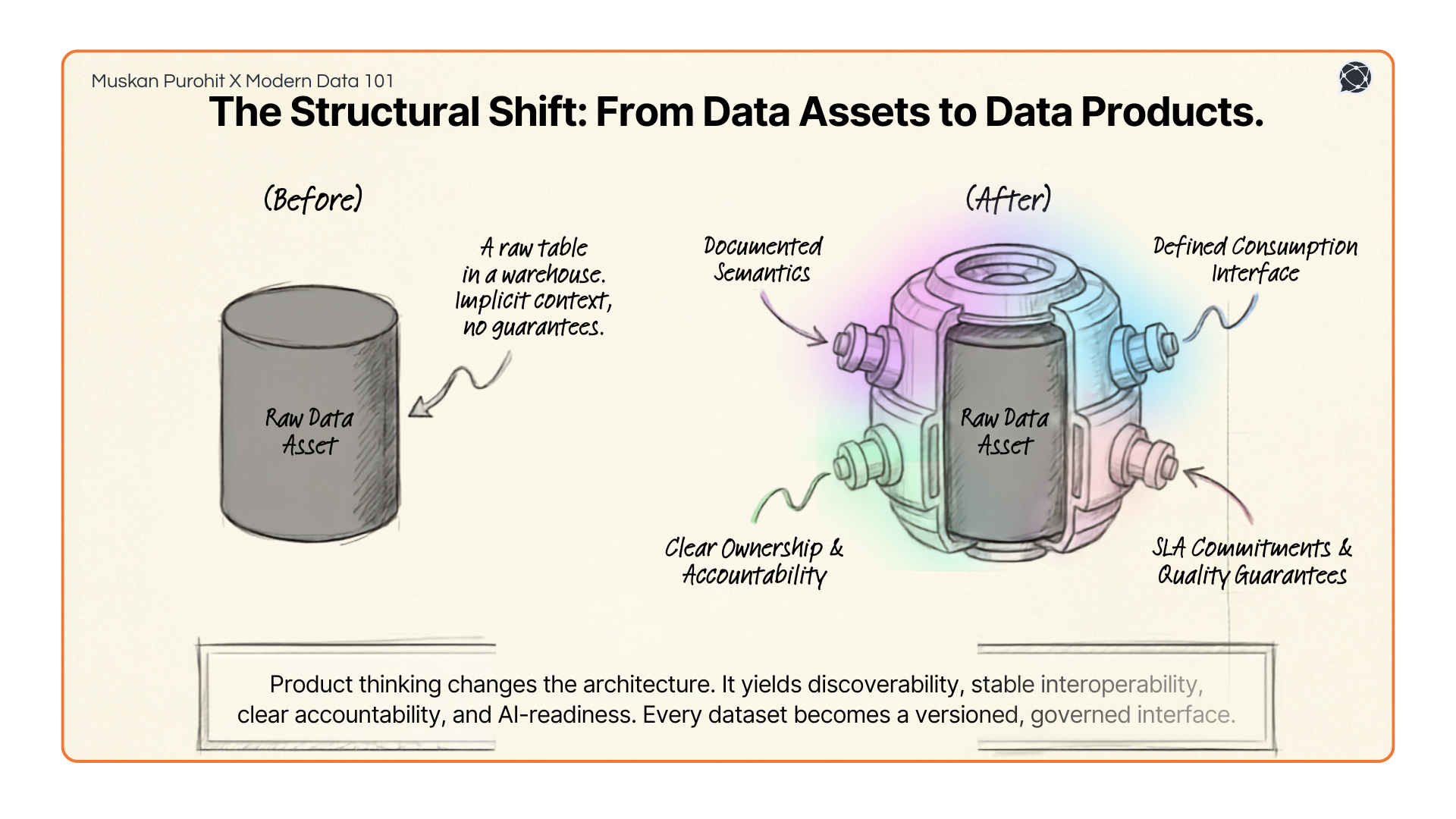
The distinction between a data asset and a data product matters most here. A raw table is just storage. A data product is the same data with defined ownership, a stable interface, SLA commitments, and documented semantics, structured around four components.
1. The Semantic Layer
The semantic layer translates technical data models into business-meaningful concepts, defining what "revenue" means and how metrics are calculated consistently. Without it, every team maintains its own version of core figures, usually why the CFO's dashboard shows a different ARR than the CRO's.
Centralise metric definitions (dbt Semantic Layer, Cube, or LookML), version semantic models alongside pipelines, and expose semantic interfaces.
[related-2]
2. Access Patterns and Interface Design
Not every consumer should query data the same way. The consumption layer needs to support:
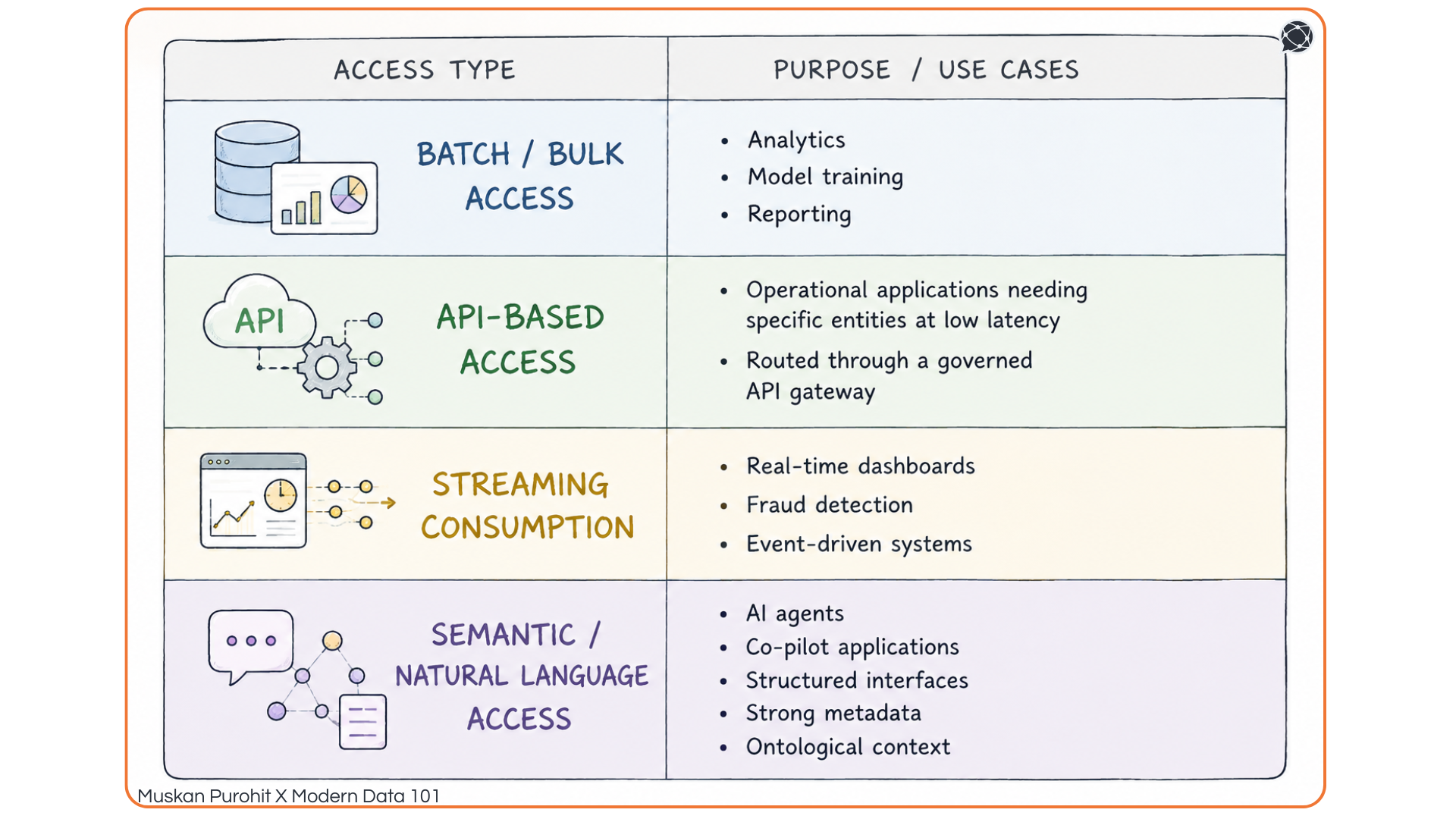
One of the clearest data architecture trends right now is the pressure to support multiple access patterns simultaneously, without building separate silos for each. The answer is a governed multi-modal access layer with consistent identity, lineage, and policy controls underneath.
3. Governance at the Point of Consumption
Most governance focuses on storage and ingestion, and is assumed to be handled by the time data reaches consumption. In practice, this is where it breaks down: a correctly access-controlled dataset in the warehouse can be re-shared via a dashboard or API endpoint that bypasses those controls entirely.
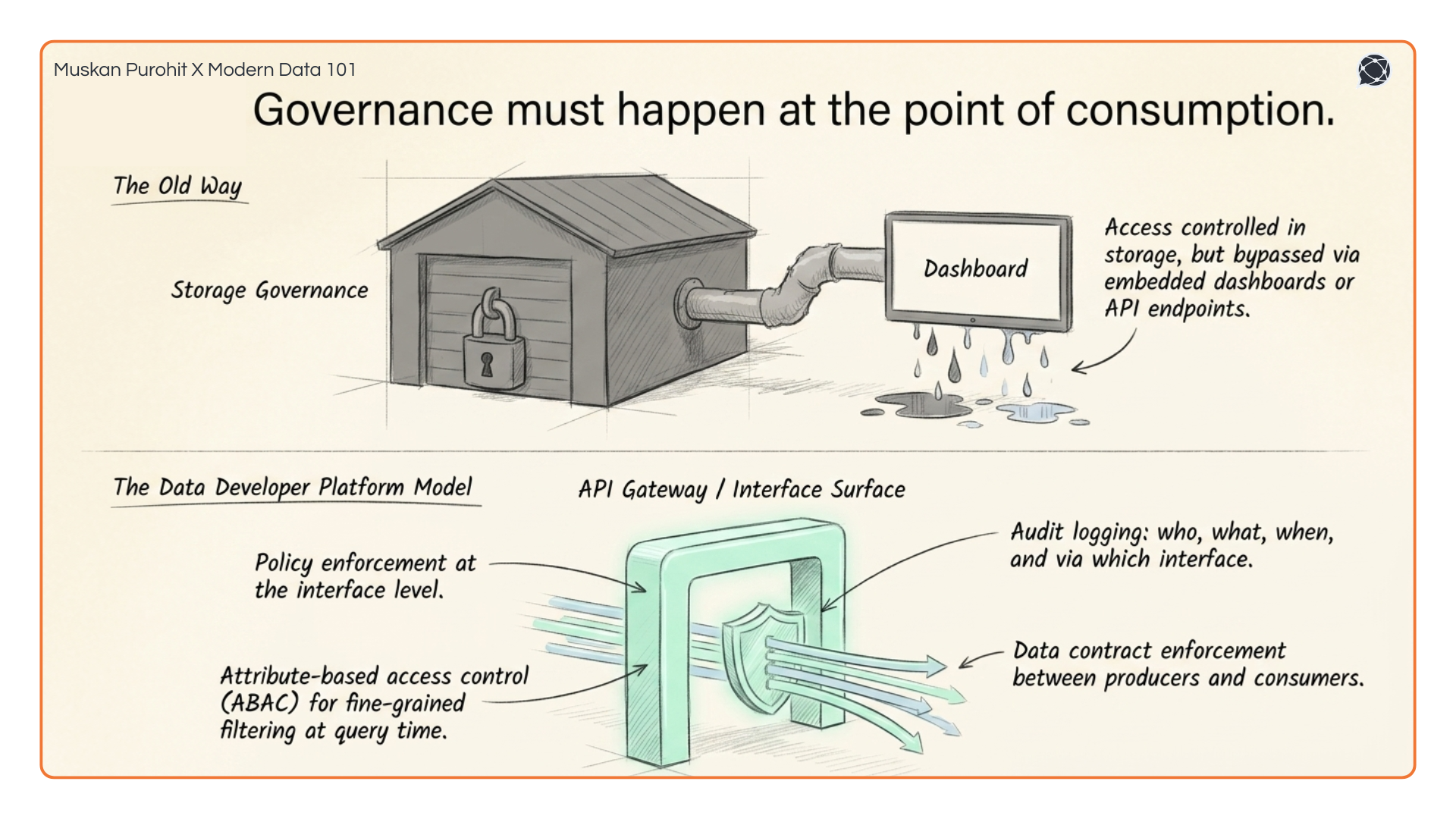
Governance here means policy enforcement at the interface level, attribute-based access control for row/column filtering, with audit logging. It also means data contract enforcement, so schema changes don't silently break downstream products.
4. Observability and SLA Management
Consumption-layer observability includes query performance monitoring, freshness checks, usage analytics, and alerting that closes the loop between producers and consumers. When a data product has a defined owner and a published SLA, observability gives that owner the signal to act. Without it, quality issues surface only when an analyst files a ticket, by which point trust has already eroded.
The AI Inflexion Point
AI agents are becoming real, demanding consumers of enterprise data. They need data that's semantically coherent, contextualised, and accompanied by quality signals they can reason about. A consumption layer built for human analysts and ad hoc SQL isn't ready for this, and the organisations investing in consumption-layer rigour now are the ones whose AI-ready data infrastructure will hold up as these systems scale.
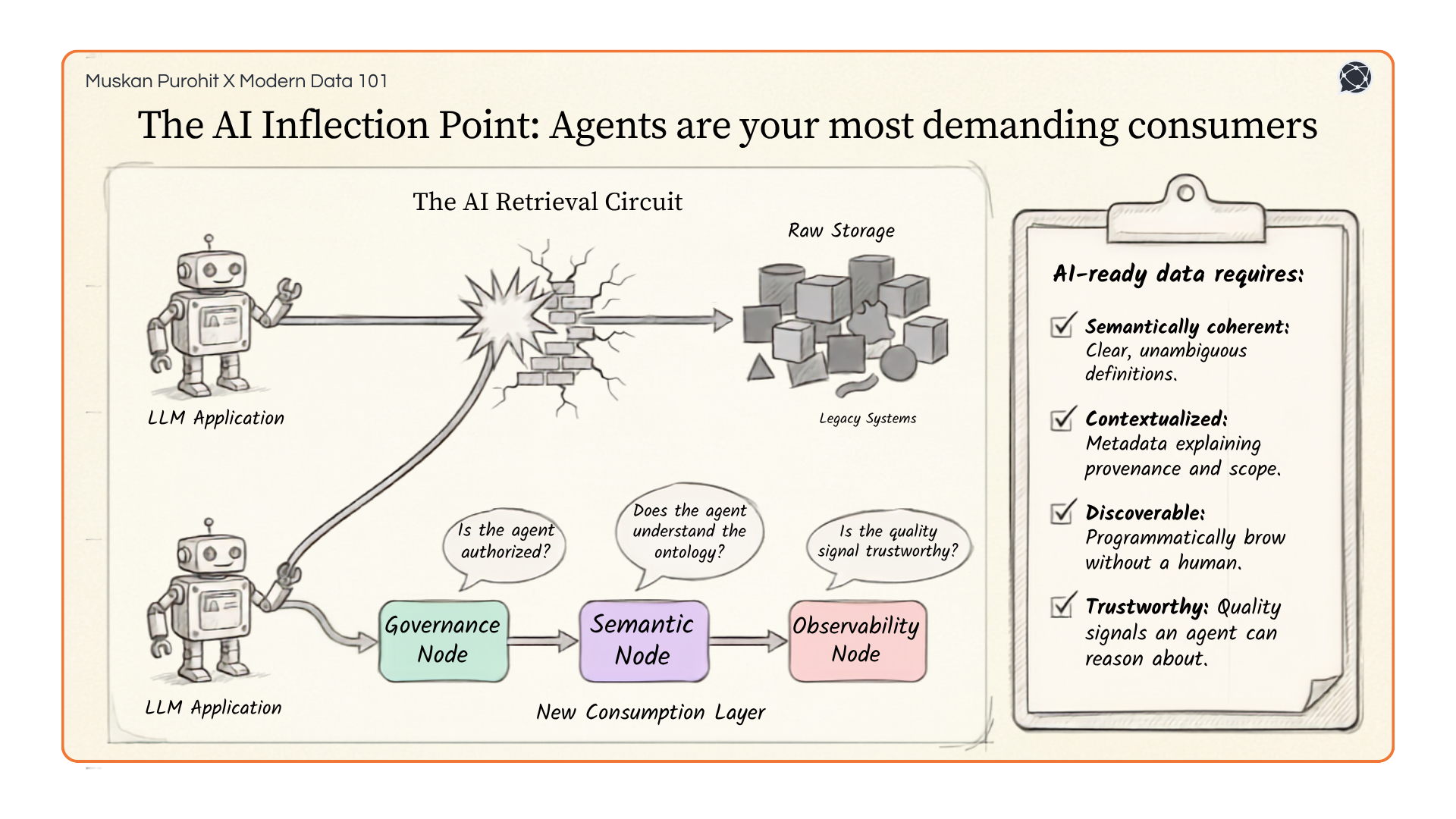
A few questions surface where the gaps actually are:
- Can a new analyst find a trusted dataset without asking anyone?
- Do AI/ML pipelines consume from the same governed interfaces as analysts?
- When a data product breaks, who is alerted and how fast?
If the answers are unclear, the structural work belongs at the consumption layer instead of more pipelines or a bigger warehouse. Enterprise data architecture is usually evaluated from the inside out, but the consumption layer inverts that frame, and getting it right is what makes everything upstream matter.
Getting the consumption layer wrong looks exactly like getting everything upstream right and still not being trusted. If you treat data as a product, this is how the change shows up: Complete guide to data products
FAQs
What is data architecture?
Data architecture is the set of layers, standards, and interfaces that determine how data is stored, governed, and delivered across an enterprise. It spans ingestion, storage, and governance, but the consumption layer, where people and AI systems actually access data, is usually where it succeeds or fails.
What is the difference between a data asset and a data product?
A data asset is raw, unrefined data sitting in a warehouse or lake with no defined owner or interface. A data product is the same data, packaged with documented ownership, a stable consumption interface, and quality guarantees, so downstream teams can build on it without re-verifying it first.
What does "Data as a Product (DaaP)" mean?
Data as a Product treats each dataset like a product, with a named owner, defined consumers, and a quality bar it has to meet before anyone downstream depends on it, shifting data management from a shared resource to something a team deliberately maintains.
Connect with a community data expert
A no-cost session with a practitioner who's been where you are.
About Modern Data 101
Modern Data 101 is a movement redefining how the world thinks about data. A community built by the same team behind the world’s first data operating system, Modern Data 101 sits at the intersection of data, product thinking, and AI. Spread across 150+ countries, the community brings together a global network of practitioners, architects, and leaders who are actively building the next generation of data systems.
At its core, Modern Data 101 exists to simplify the journey from raw data to tangible and observable impact. It advocates high-potential data systems and next-gen architectures to unify and activate insights and automation across analytics, applications, and operational workflows at the edge.
In a world shifting from data stacks to AI ecosystems, Modern Data 101 helps teams not just navigate the change but lead it.


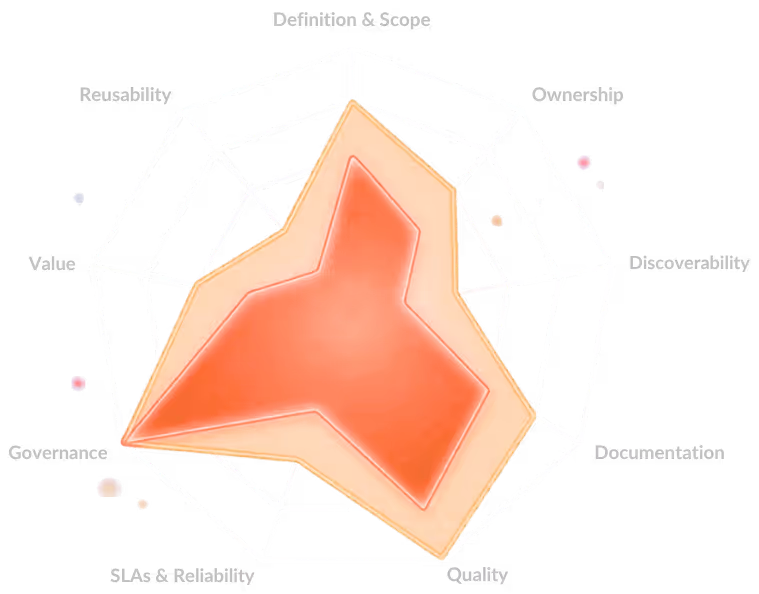
Where does your org stand on data product maturity?
A 9-dimension self-assessment used by 100+ data teams to benchmark strategy, ownership, and platform readiness.


Muskan Purohit
Muskan Purohit is a Technical Writer contributing to community projects and tech journalism initiatives on Modern Data 101. She focuses on articulating modern data systems, platforms, and AI-driven architectures. Formerly, she worked with Amazon, training AI models and LLMs in collaboration with data developers. In addition, she has also led projects as a Content Manager @Lead with Tech, driving advocacy across data and technology domains.
Read the ideas here. Build them with The Modern Data Company.
Modern Data 101 is where the data community thinks out loud. When you're ready to move from articles to architecture, data products, governed AI pipelines, or a full Data Operating System; the team behind this community can help you build it.
Continue reading


.jpg)
