30 Best AI Tools and Agents for Credit Unions in 2026
Why 59% of credit unions deploy generative AI faster than banks, and how to evaluate AI tools for data readiness and core integration.

Credit unions are adopting AI faster than community banks. Cornerstone Advisors’ 2026 survey of 416 bank and credit union executives found that 59% of credit unions have deployed generative AI, up from 36% a year earlier, compared with 49% of banks. The same report shows 17% of credit unions have invested in or deployed agentic AI, against 7% of banks.
This guide lists 30 AI tools and agents that credit unions use for member service, lending, fraud, growth, and operations, with what each one does, how it works, and where it fits.
How credit unions are using AI in 2026
Member service. Conversational AI is the most common starting point. Cornerstone found 46% of credit unions have invested in or deployed chatbots or conversational AI, compared with 26% of banks. American Heritage Credit Union runs a virtual associate named Gigi as the front door of its contact centre, handling password resets, balance checks, account opening, and loan products by voice and chat, as Forbes reported.
Lending. A Filene Research Institute survey found that 66% plan to use AI for credit decisioning. Commonwealth Credit Union uses Zest AI to predict credit risk and automate some loan decisions.
Fraud and compliance. Alloy’s research, cited by PYMNTS, shows a 92% net increase in AI fraud prevention investment among credit unions in 2025. Credit unions use AI for identity checks at account opening, transaction monitoring, and sanctions screening.
Operations and agents. AI agents handle multi-step work such as collecting loan documents, checking them against underwriting conditions, and routing exceptions to a loan officer. KPMG’s Q2 2026 banking survey puts AI agent deployment among banks at 39%, and credit unions are following the same path from pilots to production.
[dpma]
What to check before choosing AI tools for a credit union
- Data foundation: KPMG’s Q3 2026 banking survey lists data readiness and access as the top challenge for AI. Backbase argues that AI operationalises fragmented member data, so a model trained on records spread across four disconnected systems learns the contradictions along with the signal. The Modern Data Company’s survey found that fewer than 1 in 10 organisations say the data feeding their AI is production-ready. Modern Data 101’s guide to data products explains how to package member data so AI can use it.
[related-1]
- Core and system integration: Confirm the tool connects to your core, such as Symitar, Corelation KeyStone, or Fiserv, and to your lending and digital banking platforms.
- Vendor audit: Backbase describes a credit union CEO who audited more than 100 suppliers and found over 50 AI systems already running in production inside vendor products, with no governance framework. Audit what is live before adding more.
- Governance and audit trails: Deloitte’s analysis of agentic AI in banking expects regulators to demand audit trails and traceability for agent actions. The NCUA has published an AI compliance plan and hired three AI officers for 2025 and 2026, according to America’s Credit Unions.
[playbook]
Best AI tools for credit unions in 2026
Entries are grouped by use case, and the numbering carries no ranking.
Member service and conversational AI agents
1. Posh
Posh is a conversational AI platform built for banks and credit unions. It covers voice assistants for the contact centre, digital assistants for web and mobile, Posh Answers for website questions, and a knowledge assistant that connects to internal documents for staff. Agents hand off to live staff when a request needs a person, and the platform integrates with existing core and contact centre systems. It leads the list because it is purpose-built for credit unions and supports more than 100 institutions by Posh’s count.
2. Interface.ai
Interface.ai provides agentic AI for banks and credit unions, with voice and chat agents for members and assistants for employees. The agents resolve routine member requests and pass complex ones to staff. It is on the list because it targets the same segment as Posh with a different product design, which makes the two worth comparing in a vendor review.
3. Eltropy
Eltropy is an AI-powered conversations platform for community financial institutions. It brings messaging and voice into one platform and integrates with more than 50 core and fintech systems, including Alkami, Lumin Digital, Apiture, and CU*Answers. It also offers an AI voice digital assistant that ABNB Federal Credit Union has deployed. It earns its place for the breadth of its integrations with credit union core and digital banking vendors.
4. Kasisto
Kasisto builds conversational AI trained on banking language and tasks, used to power digital assistants inside banking apps. It answers account questions, explains transactions, and guides members through common tasks. It is on the list as one of the longest-running banking-specific conversational AI vendors.
5. Glia
Glia is a digital customer service platform that combines AI with live agents across chat, voice, and screen sharing in one interface. Credit unions use it to start a conversation with AI and move to a person without losing context. It has partnered with Posh to pair conversational AI with live service at credit unions. It fits teams that want a single service layer for both AI and staff.
Lending and credit decisioning
6. Zest AI
Zest AI builds machine learning underwriting models trained on a credit union’s own borrower data. The models predict credit risk, automate part of the loan decision, and help identify creditworthy borrowers that traditional scores miss. Commonwealth Credit Union says Zest AI helps it underwrite deeper, approve more members, and control delinquencies and charge-offs. It is on the list for its focus on credit unions and its measured results in risk control.
7. Scienaptic AI
Scienaptic AI is a credit decisioning and underwriting platform that uses machine learning to automate underwriting, run fraud detection, and score applicants. It integrates with MeridianLink, Origence, Symitar, and Fiserv. CoVantage Credit Union reports up to a 22% increase in approvals and up to a 48% increase in automation. It earns its place on the integration list, which lets credit unions add it without replacing their loan origination system.
8. Upstart
Upstart is an AI lending platform where credit unions originate loans using Upstart’s machine learning model, which weighs variables beyond a traditional credit score. Credit unions use it to extend personal lending to more members while keeping loans on their own balance sheets. It is on the list as one of the most widely known AI underwriting models in the credit union market.
9. MeridianLink
MeridianLink provides digital lending, account opening, and data-driven decisioning for credit unions, and states that it serves more than half of U.S. credit union members. MeridianLink Intelligence places role-based AI agents inside the platform. The first, Doc Agent for mortgage, turns underwriting conditions into borrower-ready document requests. It is on the list because its agents run where loan officers already work.
10. Origence
Origence is a credit union-owned lending technology provider, and its arc DX platform handles omnichannel loan origination for credit unions. AI decisioning tools such as Scienaptic integrate with it. It is on the list as the origination layer that many credit union AI tools plug into.
11. nCino
nCino is a cloud banking platform that automates lending, account opening, customer onboarding, and risk management for banks and credit unions. Its workflows replace repeated manual data entry, and Luana Savings Bank moved off entering loan data as many as four times per loan. It is on the list for end-to-end lending automation on one platform.
12. Fuse
Fuse is an AI-native platform for loan origination and account opening. It combines an applicant portal, decision engine, document automation, and an agent workspace in one system, and Fuse says it powers more than 100 financial institutions. Fuse reports that Vibrant Credit Union cut funding time from three days to 1.2 minutes through the Dravada CUSO, which is a vendor-reported figure. It is on the list for credit unions replacing a legacy origination system.
Data foundation and AI context layer
13. DataOS (The Modern Data Company)
DataOS is a data operating system that sits on top of existing cores, warehouses, and databases and packages member and transaction data into governed, reusable data products with shared definitions, lineage, and access policies. It works with systems such as Jack Henry, Fiserv, FIS, Snowflake, and Databricks without a migration or core replacement, and it classifies and masks PII automatically. Every model input traces back to its source, and automated lineage supports audit readiness for NCUA exams. It leads the list because the AI tools in every other category depend on the data layer it supplies. The Modern Data Company says the first data product is typically live within 4 to 6 weeks, which is a company-reported figure. Visit DataOS for financial services
[related-2]
Fraud, identity, and compliance
14. Alloy
Alloy is an identity and fraud prevention platform that connects institutions to more than 85 data sources to verify applicants, automate account opening decisions, and detect suspicious activity. Alloy’s research found a 92% net increase in AI fraud prevention investment among credit unions in 2025. It is on the list for onboarding and identity use cases, where fraud starts.
15. Verafin
Verafin, owned by Nasdaq, is a cloud-based fraud detection and anti-money laundering platform widely used by community financial institutions. It applies machine learning to transaction and account data to flag fraud and money laundering and supports investigation and regulatory filing workflows. It is on the list for its depth in financial crime detection for smaller institutions.
16. Quantifind
Quantifind provides AI-powered sanctions screening and financial crime risk intelligence. Its Graphyte platform combines an institution’s internal data with unstructured public information to produce real-time risk assessments, which cuts false matches in payments screening. It is on the list for credit unions that need more precise sanctions and adverse media screening.
Digital banking platforms and cores with AI
17. Alkami
Alkami is a digital sales and service platform with more than 270 integrations. It added MANTL for digital account opening and offers data and marketing tools that use transaction data to personalise member engagement. It is on the list because it places AI-driven personalisation inside the digital banking experience members use every day.
18. Backbase
Backbase offers an AI-native Banking OS with an agentic banking layer that covers conversational banking, relationship intelligence, and customer operations. It unifies digital banking, onboarding, and employee workspaces on one platform. It is on the list for its argument that credit unions should start with a connected member view before deploying models.
19. Q2
Q2 is a publicly traded digital banking platform provider for banks and credit unions, with online and mobile banking, account opening, and analytics for personalisation. It is on the list because many credit unions already run Q2, which makes its AI features the shortest path to adoption for those institutions.
20. Lumin Digital
Lumin Digital is a cloud-native digital banking platform built mainly for credit unions and backed by Velera. It offers a modern digital experience layer that integrates with credit union cores. It is on the list as a credit union-specific digital banking option, which matters because AI features reach members through this channel.
21. Jack Henry
Jack Henry’s cloud-native platform runs on Google Cloud and brings core processing and digital services into one environment. It connects to an institution’s existing core or replaces it, migrating data and configuring workflows and integrations. It is on the list because it supports credit unions through its Symitar core and ties AI tools to cloud infrastructure.
22. Corelation KeyStone
Corelation provides KeyStone, a core system for credit unions with an open API. Third-party AI agents plug into the KeyStone API, and Corelation has more than 240 credit union clients. Cotribute’s growth agents integrate with it, and Posh has a referral partnership with Corelation. It is on the list as a core with an open API that third-party agents can use.
Growth and analytics agents
23. Cotribute
Cotribute is a digital growth platform for credit unions with AI Growth Agents layered on top of existing onboarding and origination systems. The AI Acquisition Agent identifies target personas and messaging for member acquisition. The AI Relationship Growth Agent re-engages indirect or single-product members using credit and income data. It is on the list for agents focused on member growth.
24. Trellance (Rise Analytics Finn)
Trellance, through its subsidiary Rise Analytics, offers Finn, an AI-powered analytics agent designed to simplify data access for credit unions. Staff ask questions of their data in plain language instead of waiting for an analyst report. It is on the list as a credit union-focused analytics agent.
Enterprise AI platforms
25. Cognizant Neuro AI Enterprise Core
Cognizant Neuro AI Enterprise Core is an enterprise AI orchestration platform that unifies people, processes, systems, and agents into one connected fabric. Cognizant reports over 40% efficiency gains for credit union operations. Its offerings include operations transformation for lending, deposits, payments, and compliance, plus data and AI services and a disputes management service built on ServiceNow. It is on the list for credit unions that want a services partner alongside the platform.
26. Salesforce Agentforce
Agentforce is Salesforce’s platform for building AI agents that work on CRM data, and Financial Services Cloud adds a banking data model built around member relationships. Credit unions use this stack to build agents for onboarding, service requests, and advisor preparation from a shared member record. It is on the list for credit unions already running Salesforce.
27. Creatio
Creatio is a no-code CRM and workflow automation platform with built-in AI. Credit unions use it to run onboarding, lending workflows, and member service from a shared member record, with AI handling classification, summaries, and routing. It is on the list for teams that want to build AI workflows without custom code.
28. ServiceNow
ServiceNow is a workflow platform with AI agents for IT, service, and operations. Credit unions use it to automate internal requests and case handling, and Cognizant’s disputes management service for financial institutions runs on it. It is on the list for operations and back-office automation.
29. Microsoft Copilot
Microsoft 365 Copilot is an AI assistant built into Word, Excel, Outlook, and Teams, and Copilot Studio lets teams build custom agents on top of internal data. Credit unions use it for drafting member communications, summarising meetings, and analysing spreadsheets. It is on the list because most credit unions already hold Microsoft 365 licenses, which lowers the barrier to a first deployment.
30. Google Cloud
Google Cloud’s Gemini Enterprise Agent Platform provides the models, agent runtime, and tooling to build and deploy AI agents, and it is the cloud under the Jack Henry platform. Credit unions use it directly or through vendors built on it. It is on the list for credit unions building their own agents on a managed cloud.
FAQ
What AI tools do credit unions use?
Credit unions use conversational AI such as Posh and Eltropy for member service, underwriting platforms such as Zest AI and Scienaptic AI for lending, fraud tools such as Alloy and Verafin, and AI features inside digital banking and core systems such as Alkami, Backbase, Jack Henry, and Corelation.
How are credit unions using AI?
They use it for member service, credit decisions, fraud detection, account opening, member growth campaigns, and internal operations. Cornerstone found 59% of credit unions have deployed generative AI and 46% have invested in or deployed chatbots.
What are AI agents in credit unions?
An AI agent completes a multi-step task using tools and member data. Examples include an agent that collects loan documents and checks them against underwriting conditions, or one that finds single-product members and prepares outreach based on credit and income data.
Are credit unions ahead of banks on AI?
On current deployment, yes. Cornerstone’s 2026 report shows 59% of credit unions have deployed generative AI against 49% of banks, and 17% have invested in or deployed agentic AI against 7% of banks.
What should a credit union do before buying AI tools?
Audit the AI already running in vendor products, connect member data into one governed view, confirm the tool integrates with your core and lending systems, and set audit trails for agent actions.
Connect with a community data expert
A no-cost session with a practitioner who's been where you are.
About Modern Data 101
Modern Data 101 is a global movement redefining how the world thinks about data. Built by the team behind The Modern Data Company, the company pioneering DataOS, the data operating system, Modern Data 101 brings together a global community of practitioners, architects, and leaders across 150+ countries at the intersection of data, product thinking, and AI.
While DataOS advances the technology and infrastructure on-ground to help enterprises operationalize data as products, Modern Data 101 advances the ideas, practices, and conversations that shape how the industry approaches data and AI. Together, they connect technological innovation with the broader movement to rethink how organizations build, govern, and activate data.
At its core, Modern Data 101 exists to simplify the journey from raw data to tangible, measurable impact. It champions data product thinking and next-generation architectures that unify and activate insights and automation across analytics, applications, and operational workflows.
In a world shifting from data stacks to AI ecosystems, Modern Data 101 helps the industry rethink what's possible.


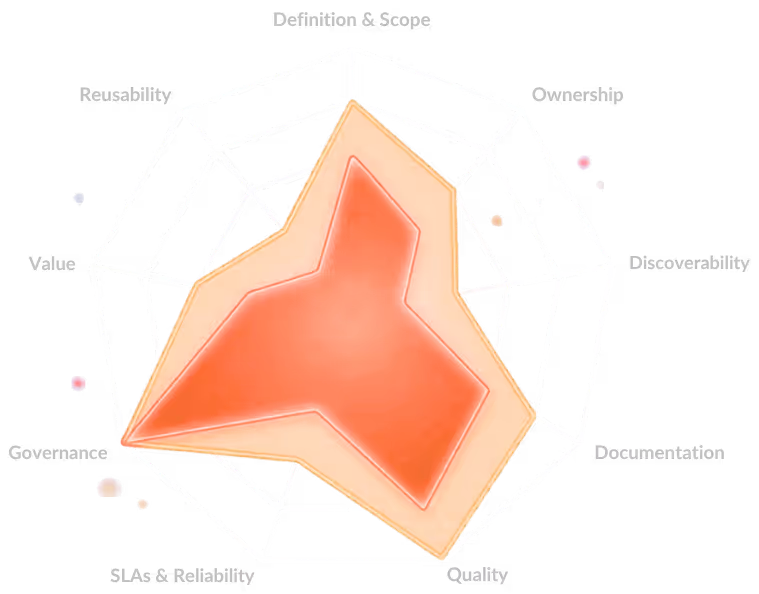
A 9-dimension self-assessment used by 100+ data teams to benchmark strategy, ownership, and platform readiness.


Ritwika Chowdhury
Ritwika Chowdhury is a data and technology professional focused on data products, AI, and modern data architecture. Her work sits at the intersection of data strategy, product thinking, and emerging AI technologies, with a focus on helping organisations turn enterprise data into trusted, usable, and scalable assets.
Read the ideas here. Build them with The Modern Data Company.
Modern Data 101 is where the data community thinks out loud. When you're ready to move from articles to architecture, data products, governed AI pipelines, or a full Data Operating System; the team behind this community can help you build it.