What is a Data Platform? A Complete Introduction
A data platform promises great things and so much more when clubbed with the developer platform concept.

A solid data foundation has become key for organisations in this new era of AI-driven processes and technologies. At the core of this new prioritisation lies the data platform, a completely unified environment that empowers teams to collect, manage, and operationalise data for AI and analytics.
A data platform is a technology solution that enables the collection, storage, cleaning, transformation, analysis and governance of data. Data platforms can include both hardware and software components. They make it easier for organizations to use their data to improve decision making and operations. - IBM
🎢Numbers to Know: The number of Customer Data Platforms is projected to grow by 3 times by 2028.
In this post, you will find a detailed introduction to modern data platforms, while also covering their capabilities, features, strategy, and tools. It also sheds light on how data products and data developer platforms are revolutionising the next generation of these platforms.
What is a Data Platform
A data platform is a unified environment that is designed to ingest, store, process, manage, and analyse data across an organisation’s ecosystem. It extends throughout the complete data lifecycle, from raw input to actionable insights.
While a traditional data warehouse or database focuses on reporting and storage, a data platform helps in the orchestration of ingestion, transformation, analytics, modelling, and delivery, all of which are done in a scalable and governed framework.
If you are looking for a single platform that caters to your data analytics platform ambitions, ensures the enablement of trusted data products, and integrates various data platform tools, then a modern data platform is definitely the answer.
[playbook]
Why Organisations Need Modern Data Platforms
The actual value of a data platform is in its ability to transform siloed, fragmented data into accessible, governed, and reusable assets. We give a few reasons why they are essential for modern enterprises:
- Breaking Down Siloes: Centralised access to all enterprise data.
- Supporting Variety and Scale: Handling semi-structured, structured, and unstructured data.
- Improving Trust and Governance: Embed lineage, observability, and access controls.
- Enabling AI and Advanced Analytics: Offers a foundation for AI agents, predictive models, and automation.
- Empowering Self-Service: Allow data and business teams to explore data independently.
📙If you’re looking to avoid a few common, and some not that common mistakes while building a data platform, you can learn more here.
For CDOs, data leaders, and other decision makers, choosing a modern data platform is not just choosing a technology; it’s a strategic enabler to transform data into an operational asset.
Core Capabilities and Features of a Data Platform
To fulfil true potential, a data platform needs to offer the following capabilities and features:
- Data Integration and Ingestion: Ingest data from databases, APIs, logs, and streams.
- Data Management and Storage: Combine data lakes, warehouses, and lakehouses for flexibility.
- Data Transformation and Modelling: Standardise and prepare data for AI and analytics.
- Scalability and Elasticity: Scale horizontally across hybrid and cloud environments.
- Visualisation and Analytics: Provide BI tools, dashboards, as well as machine learning interfaces.
- Governance, Lineage, and Observability: Embed accountability and trust from the beginning.
- Openness and Interoperability: Ensuring seamless connectivity across various clouds and tools.
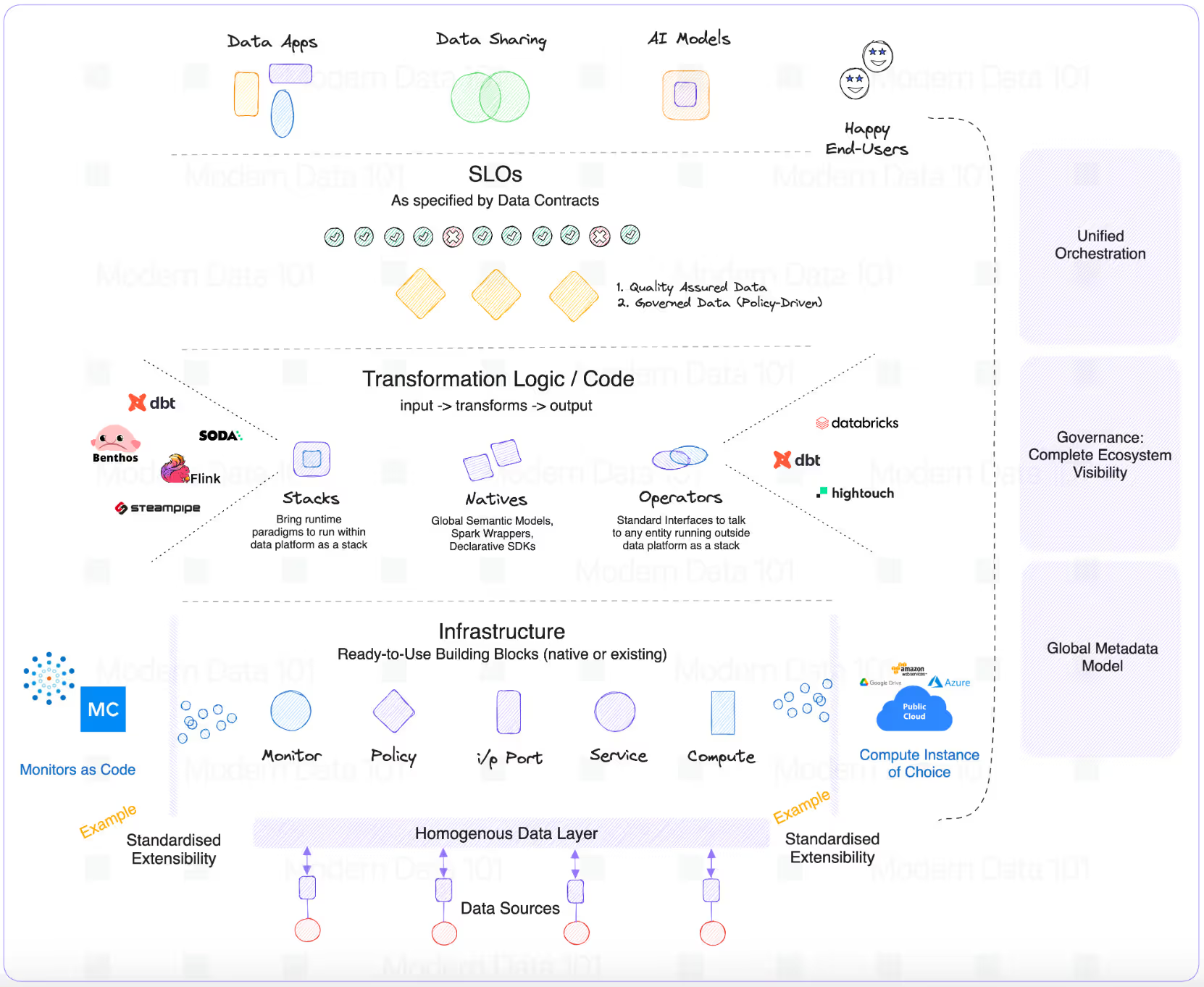
These platforms go a long way in defining how modern data platforms support innovation at scale and operational efficiency.
Modern Data Platforms vs. Traditional Approaches
There are quite a few differences when it comes to choosing between a modern data platform and traditional approaches. They are presented in the table below:
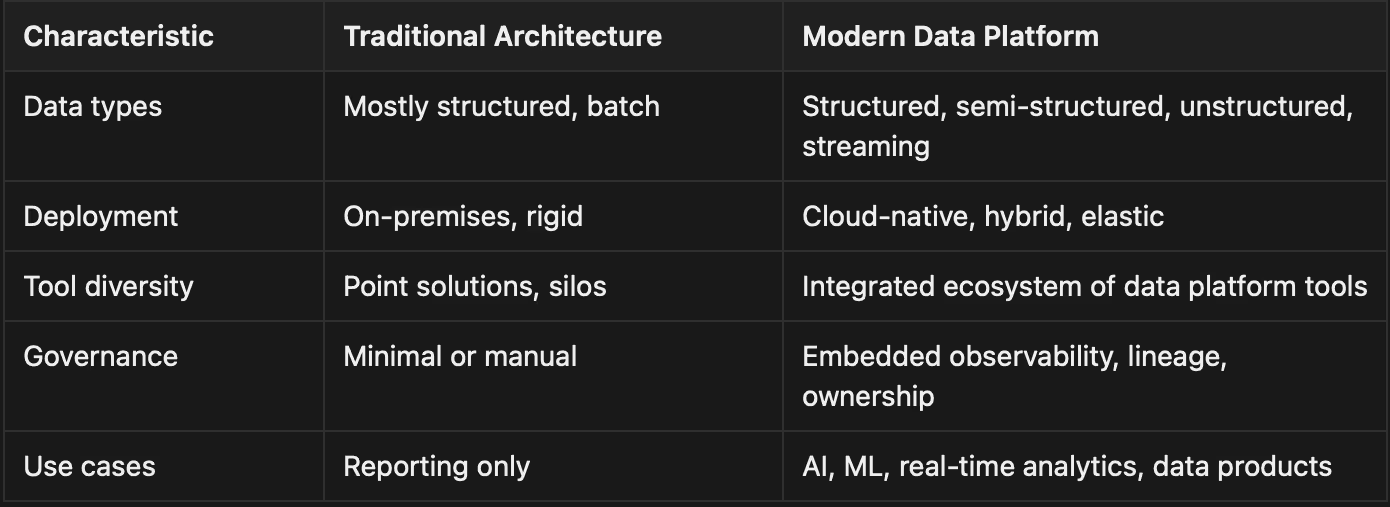
Data platforms are built not only with the intention to just manage data, but making it usable, capable of powering analytics, AI-powered systems, and automated decision-making.
[data-expert]
Crafting a Data Platform Strategy
Creating a data platform is a long-term and strategic investment. A successful data platform strategy can be created with the following steps:
- Define Business Objectives: Clearly define business metrics and objectives to ensure success.
- Develop the Platform: Choose the right tools for activities such as ingestion, analytics, and storage.
- Embed Governance: Make it a point to include metadata, lineage, and quality controls early in the process.
- Enable Developer Productivity: Offer self-service automation and access.
- Adopt a Product Thinking Approach: Treat data assets as data products with SLAs and ownership.
- Iterate and Evolve: Monitor performance and adoption continuously.
When done in the proper manner, your data platform becomes fundamental to ensure an AI-ready, self-servicing, and innovation-driven organisation.
From Platforms to Products: How a Data Developer Platform Enhance the Value of Data Platforms
While it’s true that data platforms offer a solid foundation for further processes, a significant shift in data strategy is ensured with a Data Developer Platform, which is an environment to empower teams in building, shipping, and managing products at scale.
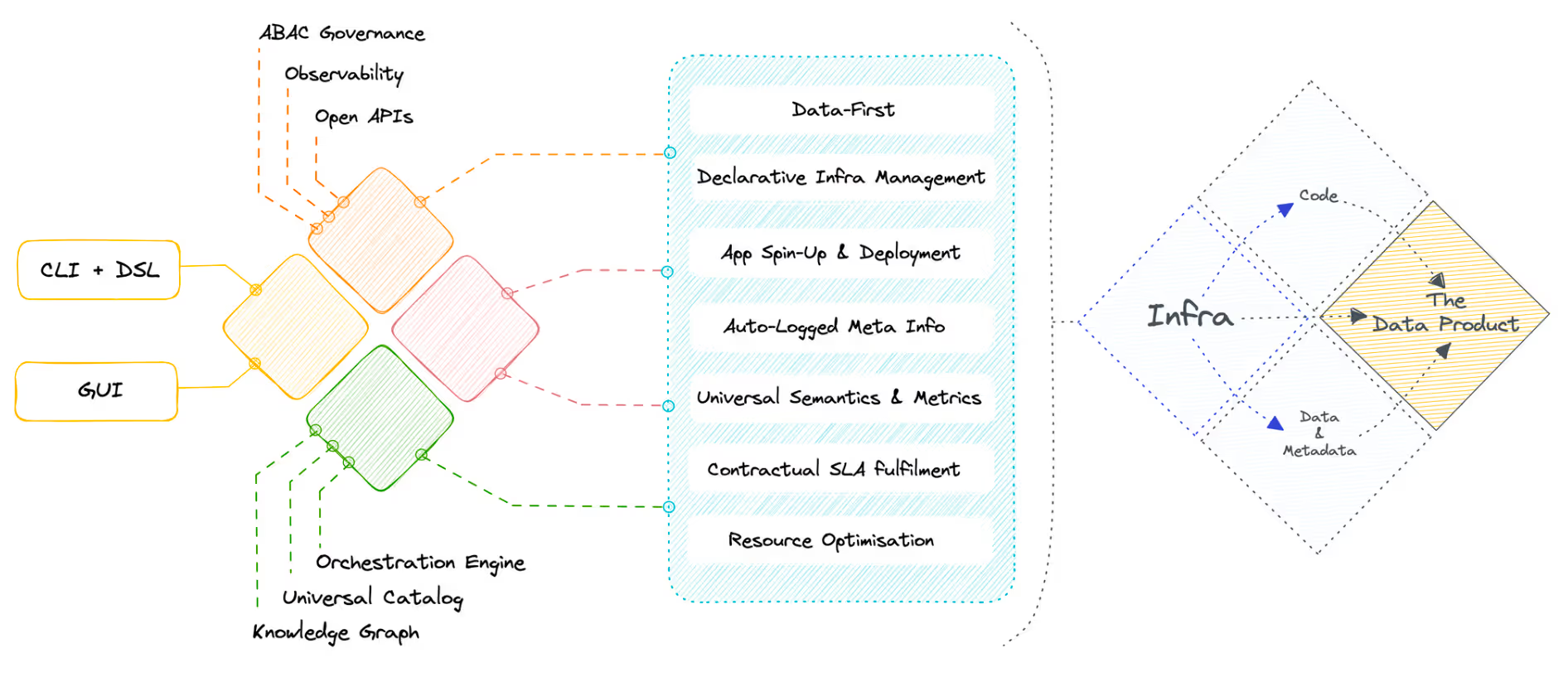
Here’s how a Data Developer Platform changes things:
Infrastructure to Enablement
A traditional data platform revolved around a centralised infrastructure, often making teams reliant on specialised operations. Data Developer Platforms shift that by eliminating complexity through APIs, self-service capabilities, and automation, which allow development teams and analysts to focus more on elevating value and not chase pipelines.
Data Products as the New Unit of Value
Instead of reports and ad-hoc datasets, enterprises now design data products that are governed, discoverable, and reusable assets with clear contracts, ownership, and feedback loops. They also act as the operational interface for automation, analytics, and AI.
The Platform Layer Becomes Composable
The underlying data platform still handles ingestion, storage, transformation, and governance, but the DDP converts those capabilities into reusable frameworks, lifecycle management, observability, and product scaffolding. Every use case stops being a one-off project.
Data Productisation and Agentic AI
As the agentic AI ecosystem becomes the new standard nomenclature and practice, data products serve as an interface between business data and AI agents. A well-architected Data Developer Platform ensures that these products are secure, high-quality, and iterative in nature, which is subject to continuous improvement.
Strategic Takeaways
A modern data platform gets your data in one place. A Data Developer Platform ensures it is usable everywhere, through governed, high-quality, interoperable data products. That’s what turns your data foundation into a scalable engine for governance, innovation, and AI-driven value.
[related-1]
Conclusion
When done right, a data platform becomes more than a repository, becoming the operating system of a modern enterprise. It enables scalable, trusted, and actionable data by unifying ingestion, storage, transformation, analytics, and governance.
This AI-driven era will be a substantial positive for organisations that treat their data platforms as dynamic ecosystems, and not static ones, aided to a great degree by data productisation.
FAQs
Q1. What are the ideal elements in a data platform strategy?
Ans. An effective data platform strategy includes scalable architecture, clear business objectives, observability, and data product thinking. All of this aligns people, tools, and processes to ensure the delivery of discoverable, trusted, and reusable data analytics, innovation, and AI.
Q2. What are some of the popular data platform tools?
Some of the most popular data platform tools are Databricks, Snowflake, AWS Redshift, Fivetran, and Tableau, among others. These tools assist with data ingestion, storage, transformation, analytics, and governance.
Q3. How do enterprises manage their challenges when it comes to building a scalable platform?
These days, enterprises pay a lot of focus on alignment with tools, clearly-defined requirements, use case priority, and governance frameworks to reduce complexity. Properly understanding workflow requirements, data source goals, and questions related to design early on play a key role in ensuring a reliable and scalable data platform.
Connect with a community data expert
A no-cost session with a practitioner who's been where you are.
About Modern Data 101
Modern Data 101 is a movement redefining how the world thinks about data. A community built by the same team behind the world’s first data operating system, Modern Data 101 sits at the intersection of data, product thinking, and AI. Spread across 150+ countries, the community brings together a global network of practitioners, architects, and leaders who are actively building the next generation of data systems.
At its core, Modern Data 101 exists to simplify the journey from raw data to tangible and observable impact. It advocates high-potential data systems and next-gen architectures to unify and activate insights and automation across analytics, applications, and operational workflows at the edge.
In a world shifting from data stacks to AI ecosystems, Modern Data 101 helps teams not just navigate the change but lead it.


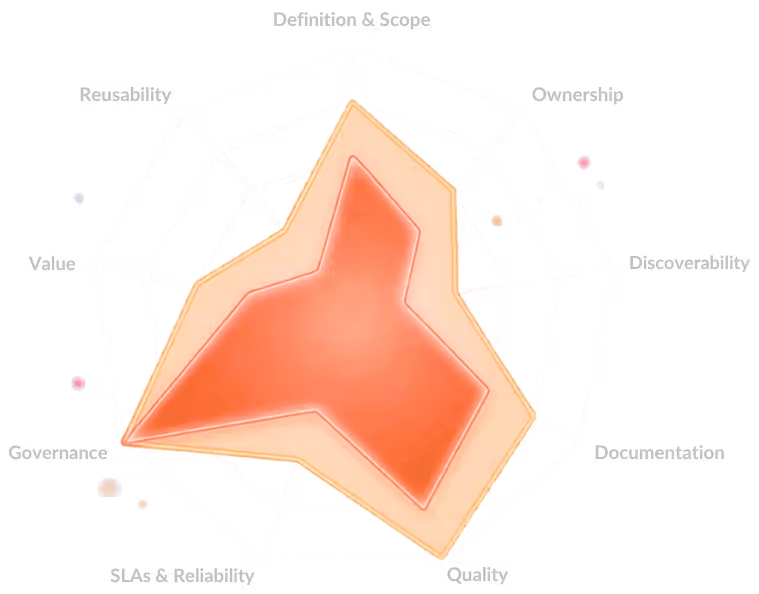
Where does your org stand on data product maturity?
A 9-dimension self-assessment used by 100+ data teams to benchmark strategy, ownership, and platform readiness.


Rakesh Vishvakarma
Rakesh is a data engineer who transforms raw data into fine wine. When he's not using AI to tag tables or make spot-on recommendations, he's deep into philosophical books or ones with more twists than his latest ETL pipeline, pondering existence and data governance.
Read the ideas here. Build them with The Modern Data Company.
Modern Data 101 is where the data community thinks out loud. When you're ready to move from articles to architecture, data products, governed AI pipelines, or a full Data Operating System; the team behind this community can help you build it.
Continue reading
.jpg)

.png)

.png)