Top Data Management Practices Your Team Should Follow
Data management best practices to ensure that your enterprise is future-proof and ready for AI.

Introduction: Why Data Management Matters More Than Ever
Modern organisations are producing and consuming data at a pace nobody would have expected a few years ago. From everyday reporting to driving innovation with AI, teams depend on trustworthy, accessible, and timely data. In fact, 2.5 billion quintillion bytes are generated each day.
Statista recently reported that the total volume of data worldwide will reach 182 zettabytes in 2025, and 394 zettabytes by just 2028.
But the reality has been a contrast, and one that no enterprise would like. They struggle with fragmented systems, limited visibility, and poor data quality, leading to lethargic decision-making and increased operational risk.
Mature data management, therefore, is no longer an optional activity. It’s a strategic capability to shape AI-readiness and business performance directly. In this post, we will look at some of the data management best practices that teams should definitely follow.
But first, just a brief refresher.
[state-of-data-products]
What is Data Management?
Data management is a set of processes, activities, and technologies enterprises use to collect, organise, store, secure, and use data effectively. The goal is to ensure reliability, accuracy, usability, and accessibility of data from everyday operations to analytics and AI.
Now, let’s cut to the chase!
Top Data Management Best Practices
Let’s explore some of the most impactful data management practices below:
1. Define Clear Goals and Align Data Strategy with Objectives
Before investing in platforms and tools, teams need to set a clear context about why they are looking for enhancements in data management. For a solid strategy, there needs to be clear, measurable goals linked with business outcomes. It could be the reduction of operational inefficiencies, enhanced compliance, or driving quicker development of AI models.
Formally assessing the maturity of current data helps in identifying where the gaps are, so that teams can create dynamic roadmaps that can evolve.
2. Build a Robust Data Governance Framework
Strong data governance is fundamental to effective data management. It sets policies, standards, accountability, and role structures to keep data high quality, consistent, and trustworthy across the entire organisation. Good governance also drives smoother collaboration between engineering, business, and analytics groups.
A security framework aligned with governance will include the following elements:
- Role-based access controls, anonymisation, and masking to ensure that data visibility is always to the correct stakeholders.
- Encryption in transit and at rest for safeguarding sensitive information from unauthorised access.
- Privacy-by-design principles that guide processes about data and its transformation into actionable intelligence throughout the entire data lifecycle.
- Well-defined compliance processes that are aligned with various regulations like the GDPR, ISO standards, and other industry-specific mandates.
- Continuous auditing and monitoring, which is supported by automated alerts in the case of unusual patterns, policy violations, or data exfiltration attempts.
💡This is the place if you wish to see how the right governance strategies prepare you for the AI-era!
3. Implement Data Observability and Prioritise Data Quality
As far as reporting, analytics, and AI adoption are concerned, poor data quality is one of the biggest blockers. Ensuring that the data is still complete, accurate, consistent, and timely is one of the most fundamental requisites for any data-focused organisation.
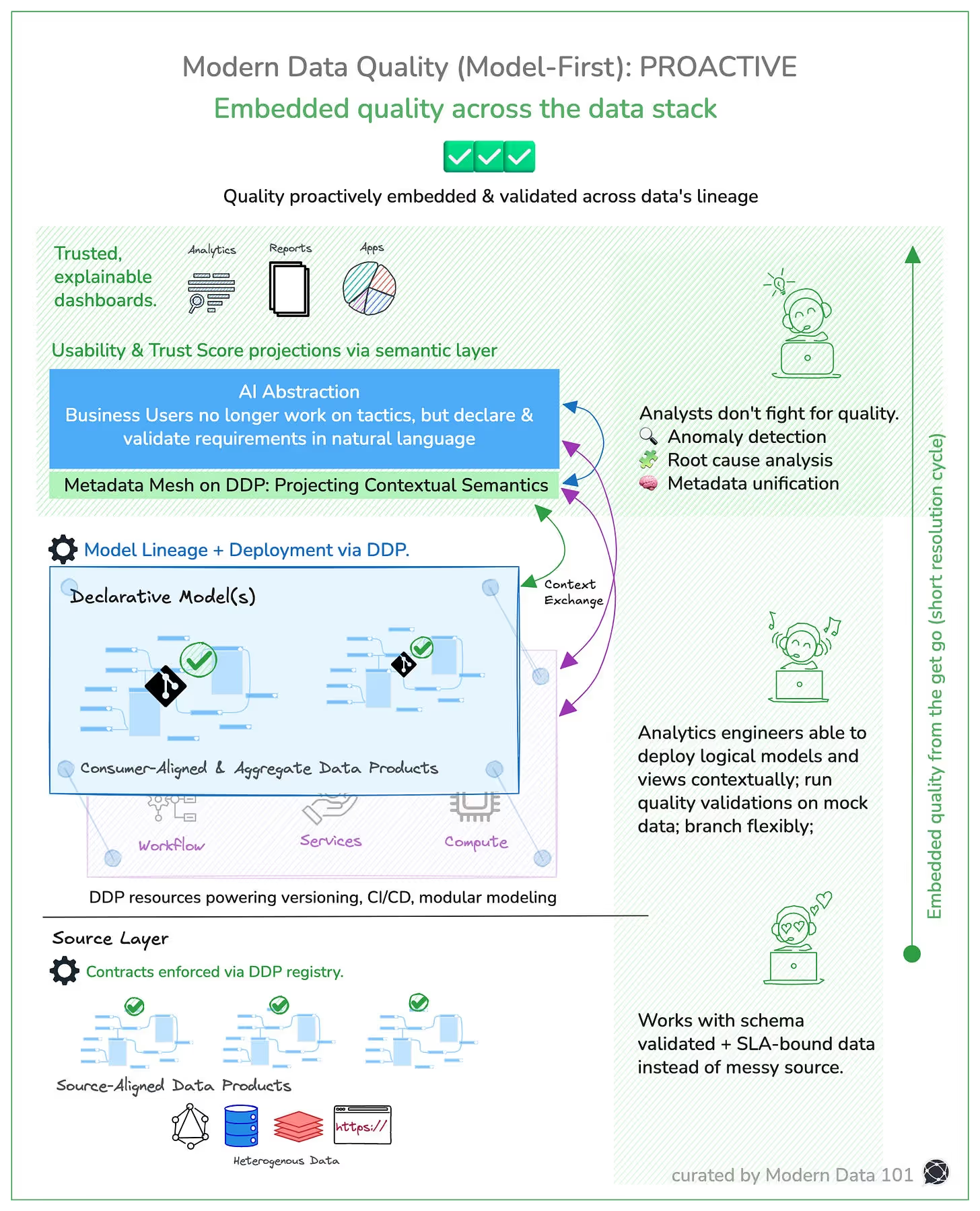
A few essential steps to ensure this are:
- Setting up quality standards for crucial datasets.
- Tracking metrics such as schema consistency, null percentages, or freshness.
- Automating quality checks at different stages, like ingestion and transformation.
- Triaging issues through centralised workflows.
Observability in data management takes all of the steps mentioned above further by providing real-time visibility into the overall data health. Through this visibility, teams can easily detect and react to anomalies even before they appear in dashboards, enable schema changes, or even pipeline failures, for that matter. It reduces data downtime and allows businesses to maintain trust.
4. Bolster Metadata Management and Data Lineage
It’s the context layer of metadata that makes information meaningful and discoverable. In its absence, teams find it challenging to make sense of where the data comes from, how it should be used, or even what it represents.
Solid metadata practices include:
- Maintaining data catalogs where definitions, datasets, classifications, and owners can be easily discoverable.
- Documenting data lineage to clearly describe how data moves, transforms, and gets consumed along systems and pipelines.
- Capturing business, technical, and operational metadata to support auditing, analysis, and troubleshooting.
With enriched lineage and metadata, teams can boost the onboarding pace, cut down ambiguity, and also support compliance and governance effectively.
[related-1]
5. Automate Data Lifecycle and Enable Self-Service
Data lifecycle management ensures that information is responsibly managed from creation to deletion. Domain teams should exhibit clarity by defining lifecycle stages and enforcing policies consistently across the enterprise.
This clarity will include:
- Automated rules for archival, retention, and deletion.
- Well-defined guidelines for data masking and handling.
- Access controls and approval workflows for effective data sharing.
- Versioning and change management processes.
Also playing a crucial role is the self-service access. Rather than relying on central teams for each dataset request or query, users need to be able to explore governed datasets with independent, role-based access. This reduces bottlenecks and boosts decision-making pace while also maintaining compliance.
6. Strengthen Your Data Analysis Capabilities
Data management is only valuable if it can deliver meaningful insights, and this is where strong data analysis plays a crucial role. Data analysis transforms well-managed, raw data into trends, patterns, and predictions to support operational and strategic decisions.
Here are a few things that can boost analysis capabilities:
- Set consistent processes to explore, clean, interpret, and validate data. This reduces any inconsistency in insights and also ensures that all analyses can be reproduced across multiple teams.
- High-quality and well-governed data should flow smoothly into dashboards, BI tools, AI models, and notebooks. This reduced friction enhances productivity and improves decision-making speed.
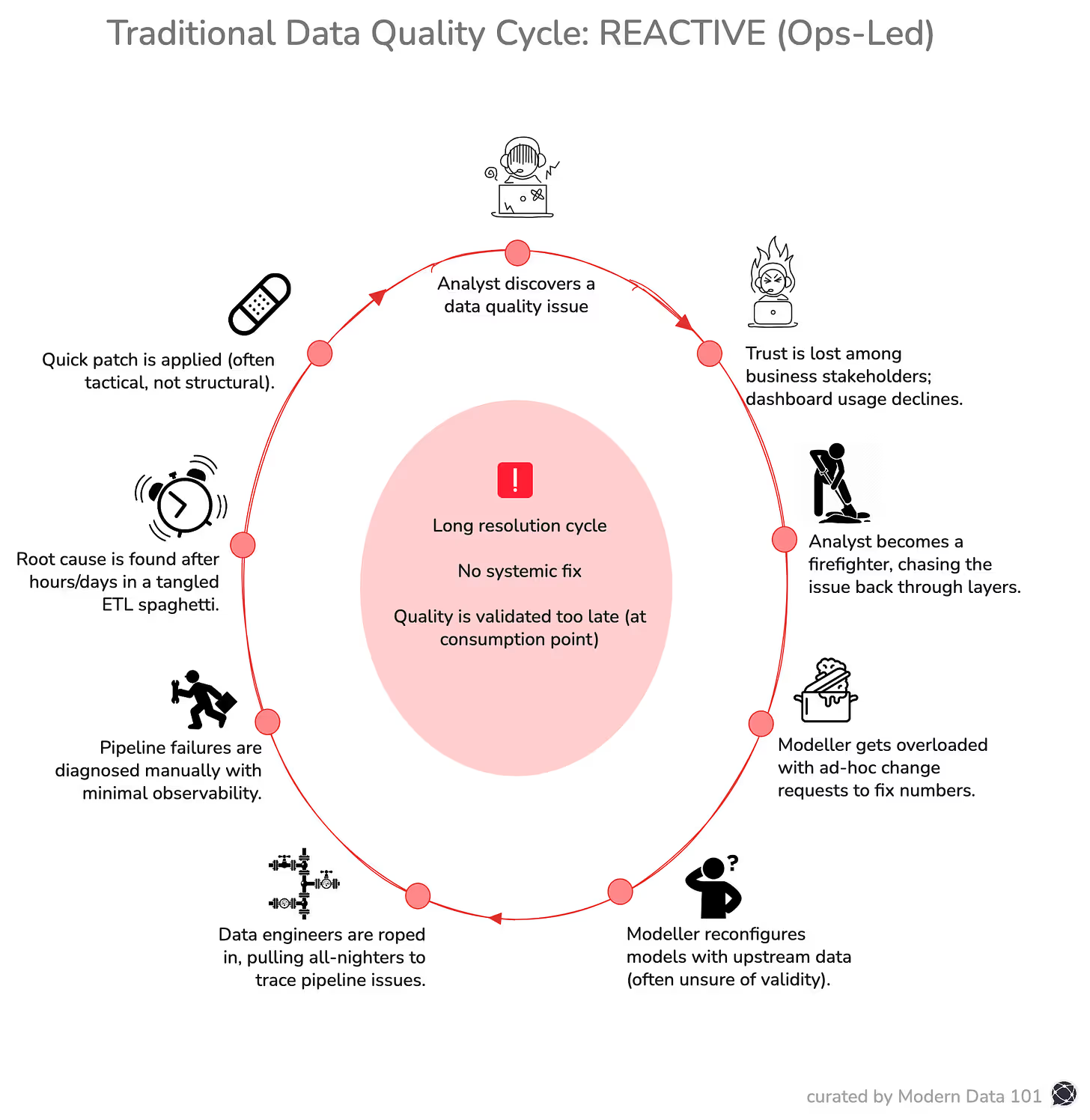
- Utilise the proper analytical techniques such as descriptive analytics, predictive analytics, diagnostic analytics, and prescriptive analytics. A robust combination of all these techniques allows enterprises to move to proactive decision-making from a reactive one.
- Drive cross-domain collaboration to assist analysts in contextualising results and understanding requirements.
- Prioritise data visualisation through charts and dashboards to make complex insights easier to understand, even for non-technical stakeholders.
7. Foster Accountability and a Data-Driven Culture
Technology and processes alone are not enough, which is where data culture plays an important role in data management. Teams need to work collectively to treat data as a strategic asset in itself.
Some of the ways to enhance the data culture include:
- Setting up clear accountability and ownership for crucial datasets.
- Training employees on responsible data use and literacy.
- Creating visibility into data quality and metrics.
- Rewarding teams adopting data-solving problem techniques.
When everyone across the board is responsible for data reliability and quality, organisational maturity and trust witness a significant improvement.
[data-expert]
How Data Products and Data Developer Platforms Enhance Data Management
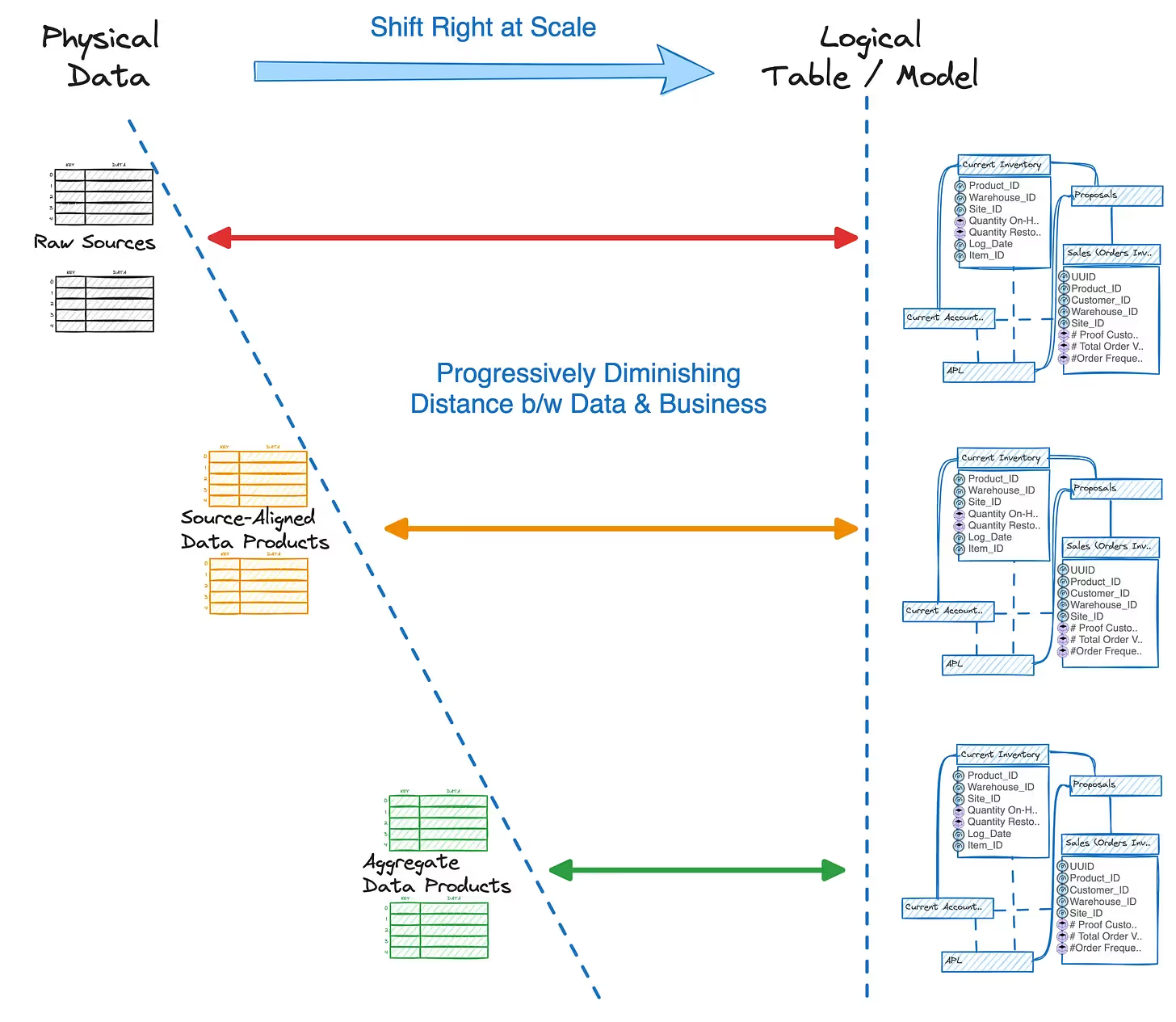
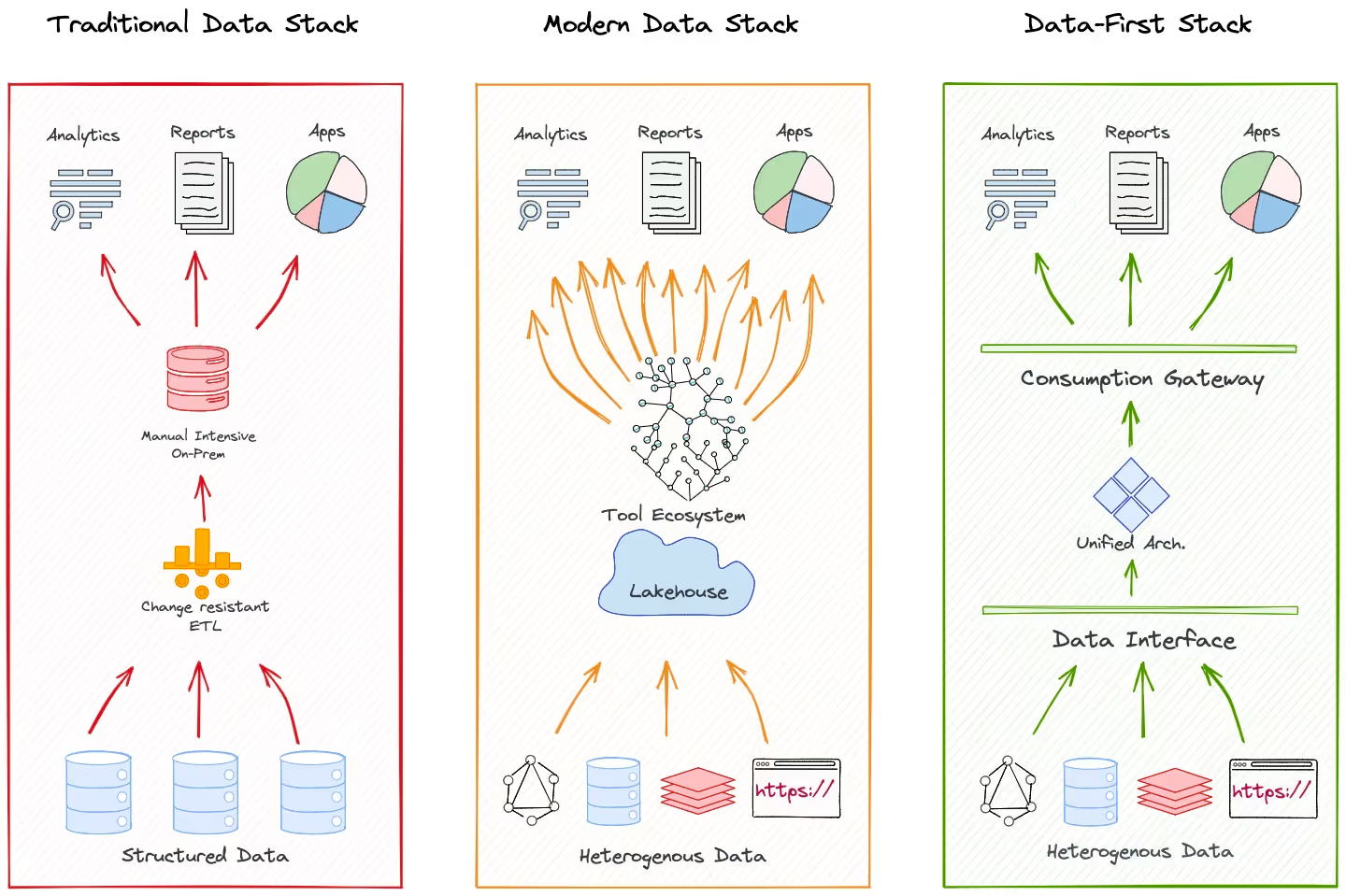
Legacy data management approaches often depend on monolithic systems and central teams, leading to unclear ownership, long lead times, and unpredictable data quality. Today, organisations are transitioning towards Data Developer Platforms and data products, bringing a new structure, accountability, and agility.
- Data as a Product
Data products are more than just datasets, and include clear documentation, ownership, observability, SLAs, and built-in feedback loops. This mindset ensures that data is always treated as an asset that serves a measurable purpose.
- Data Developer Platforms
Data Developer Platforms provide standardised tooling, automation, as well as self-service infrastructure to manage data products at scale, from their deployment to their monitoring.
How does this help data management?
Platforms like a Data Developer Platform improve data management by standardising quality and observability across domains while embedding governance through predefined templates, policies, and access controls.
Federated ownership keeps teams accountable without the bottlenecks of centralised systems, and streamlined lineage, metadata, and catalog integrations make data easier to track and use. Automated workflows and reusable components further reduce operational overhead and keep the platform scalable.
How does this help the overall business impact?
Enterprises adopting a well-rounded data product strategy and a Data Developer Platform get benefits by:
- Better quality data
- Faster time-to-value
- Lower compliance and operational risk
- Stronger trust across teams
- Mature alignment with analytics and modern AI needs.
[related-2]
Final Thoughts
Data management is no longer limited to storing or moving information, but also about ensuring that data is secure, accurate, discoverable, and prepared to support AI-driven innovation. With strengthened quality, governance, security, architecture, and culture, enterprises can drastically improve how they use their data.
As data ecosystems become more complex, treating data as a product and adopting a Data Developer Platform offers a future-proof and scalable approach. These practices empower teams to move with increased confidence.
FAQs
Q1. What skills do teams need to perform high-quality data analysis?
For a proper, high-quality data analysis, team members will benefit from developing skills in data storytelling, statistical thinking, domain knowledge, and tool proficiency. These skills will allow them to evaluate results with accuracy and connect insights to business objectives.
Q2. How to manage data?
The right data management ensures that it is handled properly throughout its lifecycle, which involves its capture and storage within the organisation, security, and use. It entails defining clear ownership, developing clear processes, and ensuring proper accessibility. There is also an emphasis on fostering collaboration between business and IT teams to ensure that the data stays governed, accurate, and useful for decision-making.
Q3. What are the 5 C’s of data management?
The 5C’s of data management encompass some of the most fundamental principles for ensuring the usability and trust parameters of data. The 5 C’s are Completeness, Consistency, Conformity, Currency, and Correctness.
Connect with a community data expert
A no-cost session with a practitioner who's been where you are.
About Modern Data 101
Modern Data 101 is a movement redefining how the world thinks about data. A community built by the same team behind the world’s first data operating system, Modern Data 101 sits at the intersection of data, product thinking, and AI. Spread across 150+ countries, the community brings together a global network of practitioners, architects, and leaders who are actively building the next generation of data systems.
At its core, Modern Data 101 exists to simplify the journey from raw data to tangible and observable impact. It advocates high-potential data systems and next-gen architectures to unify and activate insights and automation across analytics, applications, and operational workflows at the edge.
In a world shifting from data stacks to AI ecosystems, Modern Data 101 helps teams not just navigate the change but lead it.


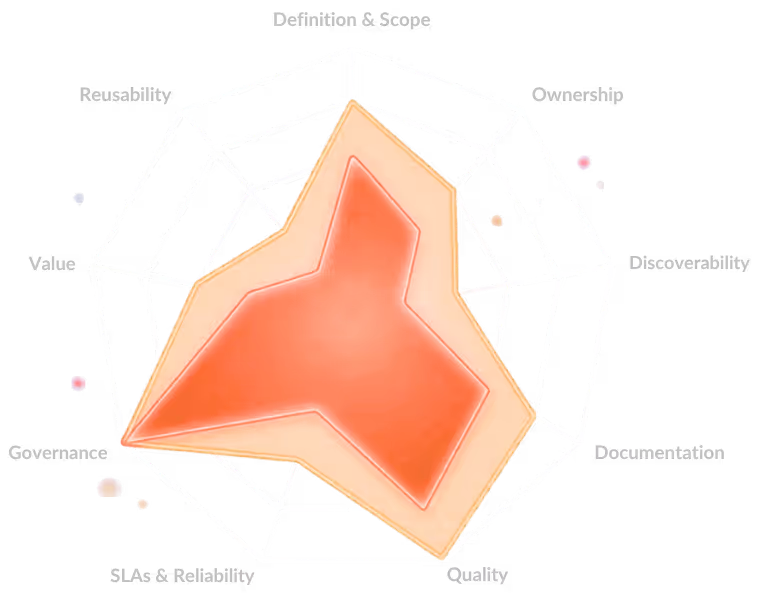
Where does your org stand on data product maturity?
A 9-dimension self-assessment used by 100+ data teams to benchmark strategy, ownership, and platform readiness.


Rachana Medishetti
Rachana is a data engineer with 5+ years of experience with a deep passion for how businesses leverage data, focusing on building end-to-end data systems, from ingestion and pipelines to analytics. She is skilled in PySpark, SQL, Python, and Snowflake, focused on turning data into reliable, real-world business value.
Read the ideas here. Build them with The Modern Data Company.
Modern Data 101 is where the data community thinks out loud. When you're ready to move from articles to architecture, data products, governed AI pipelines, or a full Data Operating System; the team behind this community can help you build it.
.png)

.png)
.png)