7 Data Trends That Will Transform Businesses in 2026
Predictions on key innovations and shifts in data and AI landscape for 2026.

Last updated: 17th August 2026
Introduction
Do you remember Cooper’s journey in Interstellar- A journey into the unknown world full of speculations and promises to hold humanity’s future beyond Earth? The scope of data seems to be on a trajectory that pushes the boundaries of known possibilities.
Stepping into 2026, the data and AI world is evolving faster than ever. The focus is shifting from isolated innovations to scalable, real-world solutions that redefine how businesses operate.
With the advent of 2026, Google is flooded with numerous articles about predictions, the future, what lies ahead, when it comes to data. So, we are here with this fiery article on some of the top data trends we think would be the mortar for a solid 2026.
What Are the Latest Data Analytics Trends in 2026?
The data analytics trends 2026 leaders are watching most closely are rising data maturity, platform engineering, semantic layers powering RAG and KAG, durable data contracts, governance built into every pipeline, business-ready AI agents, and AI-integrated data products; each explored below.
2025 at a Glance
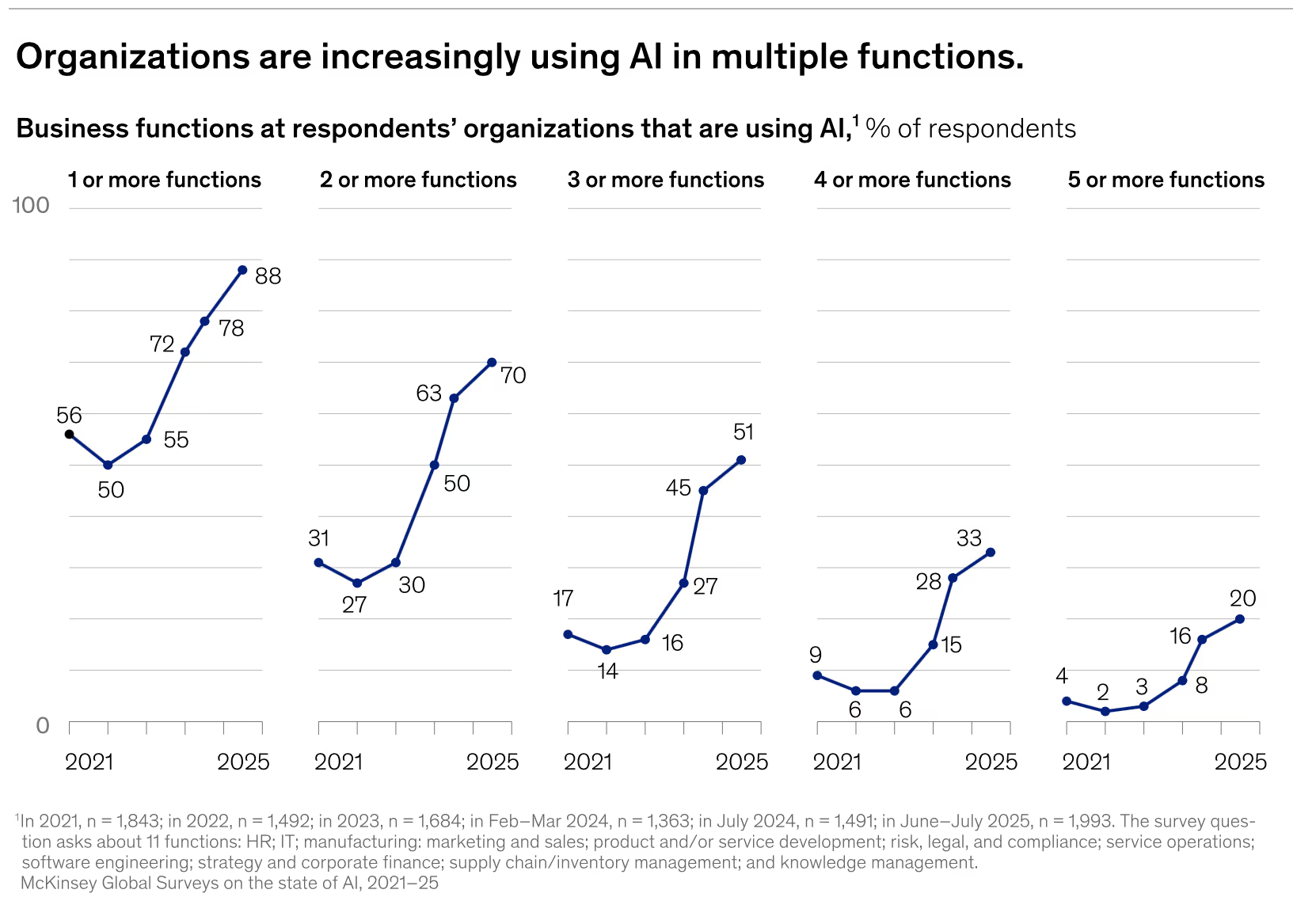
The last year was jam-packed with groundbreaking innovations across the data space, where industry experts shifted their perspectives around leveraging data. Data productisation became fundamental with the optimism to align data assets more effectively with the business goals.
Concepts around data contracts, marketplaces, governance, and AI-driven data analytics and workflows redefined the way businesses interact with and leverage data. With new debuts in the commercial market like Agentic AI and a renewed need for real-time data and analytics across the industry, the year laid the foundation for a strong future of data & business partnerships.
In 2026, the game will be bigger, faster, and smarter. Data won't be just the "new oil" anymore, it’s the engine, fuel, and GPS guiding everything, from business decisions to full-blown automation.
[related-1]
[report-2025]
In this article, let's cut through the noise and bring you a sharp, thought-provoking take on the most pivotal data trends defining 2026.
7 Top Data Trends for 2026
Prediction 1: Increased Data Maturity Across Organisations
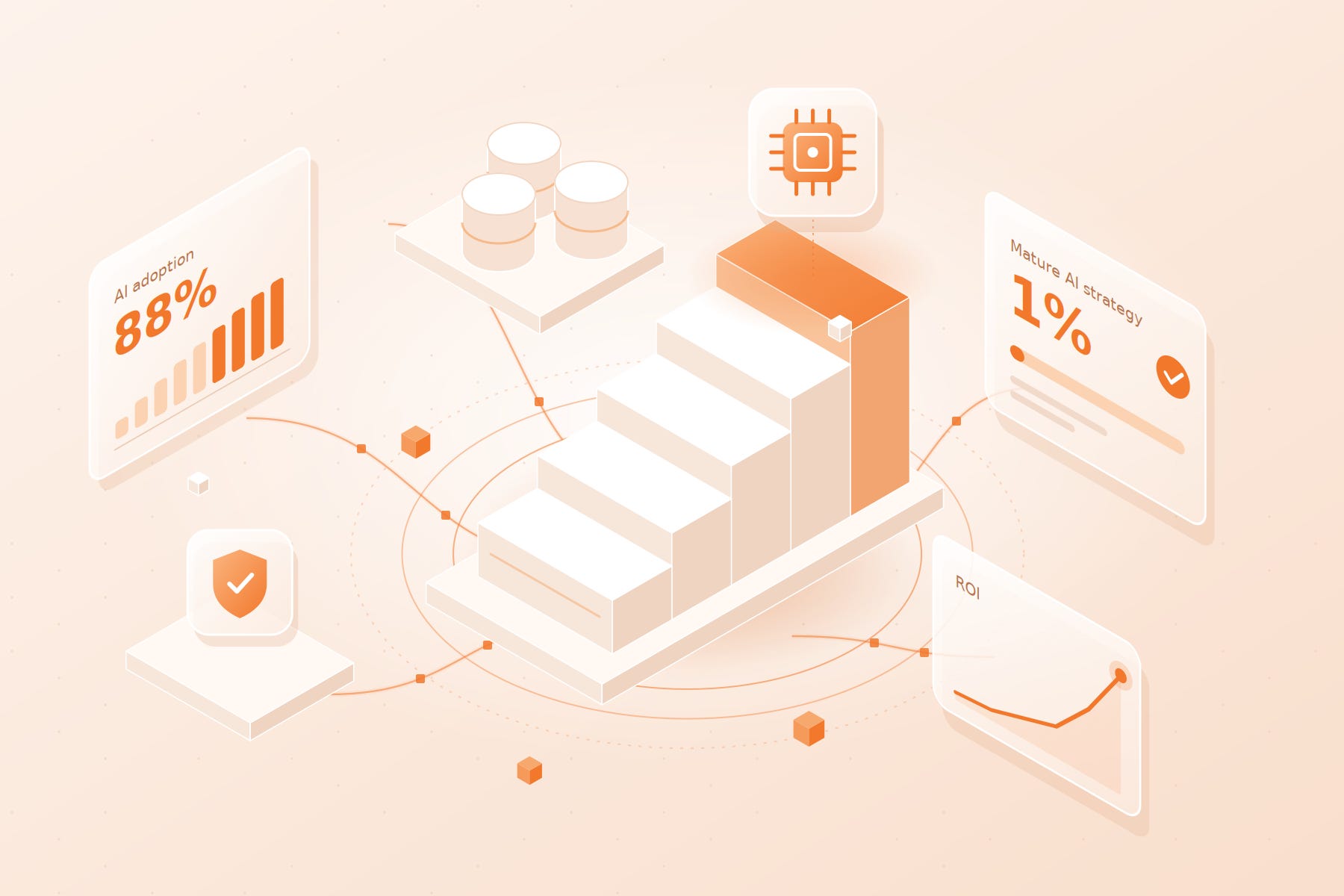
Data maturity measures how effectively the companies can use their data. With increasing competition and the need to match up with emerging tech in the market, organisations are attempting to measure their climb across the data maturity pyramid.

Organisations feel they are behind competition and need to level up their game. Most organisations are lagging behind on their data maturity plans. 2026 will see a surge in conversations around it and will also increase the data quotient on an organisational level, taking taking the top honours as among the data trends to look for in 2026.
How are we sure you ask? The integration of AI and data-driven decision-making is the foundation for this shift. Executive investments also play a vital role.
As organisations move forward in their maturity journey, adhering to advanced technology, a data-driven culture, and a focus on data quality will allow them to embrace the change, harnessing the true potential of their data. Focusing on increasing data maturity will also improve operational efficiency, enhance customer experience, and respond more agilely to changing market dynamics.

Prediction 2: The Rise of Platform Engineering and Beyond
Following significant developments in data engineering, the industry is now making way for platform engineering to bloom. Gartner's inclusion of Platform Engineering in their hype cycle for 2023 and 2024 underscores its crucial role in advanced application delivery (including the data applications).
By 2026, about 80% of software engineering organisations will establish platform teams - Gartner. When evaluating modern platform constructs, assessing the top data platforms for 2026 provides an essential framework. With the analogy of an IDP, a DDP provides resources (a set of tools and services) to enable data professionals to manage data more effectively
As organisations rise up in the maturity models, they begin to manage cloud-native and distributed applications. Along with this, there is more data, complex processes, and the increasing pace of AI and analytics, where pipelines can quickly become unmanageable, leading to issues like delays, poor data quality, and inefficiencies in data processing.
To address this, platform engineering focuses on streamlining pipeline management through automation, modular design, and better integration between systems. By optimising pipelines, organisations can ensure more reliable, faster, and scalable data flows, driving more value from their data.

But does it mean that we are on the verge of reaching the prime? Not yet! A quiet revolution is slowly materialising, and we are hinting towards more advanced solutions to the likes of IDP and DDP.
The concept of IDP isn’t new, but its principle of translating into the data stack is a new focus across the industry.
A Data Developer Platform is a Unified Infrastructure Specification to abstract complex and distributed subsystems and offer a consistent outcome-first experience to non-expert end users. A Data Developer Platform (DDP) can be thought of as an internal developer platform (IDP) for data engineers and data scientists. (Source)
With the analogy of an IDP, a DDP provides resources (a set of tools and services) to enable data professionals to manage data more effectively.
A DDP is a more developer-oriented framework empowering developers to build, deploy, and manage data-intensive applications. These platform constructs are comparatively new and focus on giving greater control to the users. Platform engineering is surely going to get a boost, which is why it's one of the major data trends to look forward to.
Prediction 3: Wider Enterprise Adoption of Semantics, RAG and KAG
2026 is all set to witness Retrieval-Augmented Generation (RAG) and Knowledge-Augmented Generation (KAG) dominating the data space with a shared reliance on semantics to boost accuracy and context in AI responses. But why are we predicting them to be among popular data trends?
RAG pulls relevant information from external knowledge sources before generating responses, ensuring outputs are rooted in real-time, relevant data. KAG, on the other hand, enhances this by integrating structured knowledge directly into the AI responses, creating a more grounded and context-aware output.
The common denominator here remains semantics, as it adds contextual value to allow the AI systems to pull the most relevant and meaningful information into their outputs. With enterprise AI growing, semantic layers are rapidly being customised or catered to specific organisational needs, making them essential for delivering accurate, context-rich AI solutions.
So, alongside the rise of these graph technologies, we might see an industry-wide shift of semantics from a theoretical concept to a critical component of an enterprise’s AI and data strategies to amplify their efforts to build or adopt robust semantic layers to enhance both RAG and KAG applications.
Prediction 4: Long Live Data Contracts

Looking at the ever-increasing demand for real-time data to support AI initiatives with confidence, data contracts will indeed feature in our popular data trends for 2026.
How are we sure about it?
With enterprises increasingly leaning on compliance and protection regulations such as GDPR and CCPA, data contracts will surely play the protagonist in the near future. As businesses scale, the need for clear agreements on how data is accessed, used, shared and protected becomes critical. Data contracts help define the rules and expectations between data providers and consumers, ensuring compliance and reducing friction.
Why do they matter?
- Support efforts in streamlining the quality of datasets, driving insights that derive tangible outputs
- Crucial for data management and customer privacy
- Pivotal to maintaining modern data ecosystems' integrity, efficiency, and scalability, reducing friction
Moreover, as the focus is more on addressing complexities in data sharing, governance and interoperability, standardising data contacts in 2026 might see a new upsurge. The emerging frameworks will aim to standardise how data is shared across organisations, improving trust and reducing ambiguity.
By 2026, they will become essential in data engineering, ensuring clean, reliable data for building dependable solutions.
Implementing data contracts provides a standardised and efficient method for software engineers to facilitate data exchange with other systems utilising platforms such as Pub/Sun or BigQuery. Here is an article to help you understand it in detail.
Prediction 5: Data Governance Gains Importance
When talking about the top data trends, it is essential to discuss the state of data governance in 2026.
As the industry predicts a rise in Integrated Development Environments (IDEs) for democratising data access, this will accelerate the trend, helping organisations manage data governance seamlessly.
Built-in data governance will become the norm, with features such as:
- Data quality checks integrated into CI/CD pipelines
- Integration testing before pushing data into production
- Access controls and lineage tracking built into development environments
In 2026, data governance won’t just protect organisations, but it will enable innovation while ensuring that data remains trusted and reliable.
[state-of-data-products]
Prediction 6: Growth in Business-Ready AI Agents

2026 and the years ahead are predicted to see a stark rise in advanced AI systems and workflows moving beyond content and code generation to actually execute complex tasks. AI agents are evolving to break down and complete open-ended tasks autonomously, a trend known as "agentic workflows.”
Agentic workflows will execute tasks like writing and debugging code, conducting market research, and resolving customer inquiries end-to-end. These models are gaining more capabilities through tools like internet access, external APIs, and reasoning techniques, making them more effective at executing user requests.
AI has been dominating almost every conversation in data engineering and platform engineering for the greater part of 2024. With the recent developments in the space, an industry-wide inclination for its adoption has further intensified.
Currently, organisations have stepped into autonomous multi-agent architecture as well. In this scenario, AI agents act as a coordinating team of assistants, driving organizations toward an AI-powered transformation. They are goal-driven and autonomous and make decisions based on their environment and objectives.
Based on the trajectory of AI, 2026 is also going to make room for Edge AI as a major trend, enabling faster, more secure, and highly responsive local data processing. From self-driving cars to smart appliances, edge AI is already in action, and its demand will grow with real-time, secure applications.
One of the most exciting data trends for next year!
[related-2]
Prediction 7: AI 🤝 Data Products
In 2025, we witnessed numerous mature conversations about data products. By formalizing data assets into governed DataOS data products, organisations are successfully serving high-quality, trusted, and compliant data directly to real-time AI apps and agentic workflows
The tech spec left no stone unturned to make waves and was shortly seen on the list of trending topics. AI agents and agentic AI confused the industry briefly with their individuality [same-same but different 😃]. However, with the realisation of capabilities and differences in the use cases these serve, the domain took a sigh of relief.
.avif)
With these massive developments backed by keen enterprise interest, the field will surely surge in 2026 and we will see more of these adoptions. However, the difference in opinions still lingers around it.
Conclusion
2026 is brimming with new opportunities, entailing greater specialisation in AI for industries, deeper integration of autonomous systems, and a surge in demand for real-time, privacy-conscious solutions. This year won’t just be about smarter AI, but about AI that acts, adapts, and delivers tangible value across every domain.
2026 will surely see some awesome updates in data engineering, with new tech updations knocking on our door almost daily, mergers, acquisitions, and funds in the space hint towards a brighter future.
FAQs
Q1. Why should businesses pay attention to data trends in 2026?
That's because these trends will shape the way how companies collect, manage, and use their data. The attention will help facilitate faster decisions, increased operational efficiency, and better customer understanding. The quicker their adoption, the better the competitive edge.
Q2. Are these top data trends only limited to large enterprises?
These top data trends are meant for all organisations, as they mostly tend to reduce the kind of technical barriers. As a result, small and medium-sized businesses also get to use data-powered insights to grow and respond quickly to dynamic market changes.
Connect with a community data expert
A no-cost session with a practitioner who's been where you are.
About Modern Data 101
Modern Data 101 is a movement redefining how the world thinks about data. A community built by the same team behind the world’s first data operating system, Modern Data 101 sits at the intersection of data, product thinking, and AI. Spread across 150+ countries, the community brings together a global network of practitioners, architects, and leaders who are actively building the next generation of data systems.
At its core, Modern Data 101 exists to simplify the journey from raw data to tangible and observable impact. It advocates high-potential data systems and next-gen architectures to unify and activate insights and automation across analytics, applications, and operational workflows at the edge.
In a world shifting from data stacks to AI ecosystems, Modern Data 101 helps teams not just navigate the change but lead it.


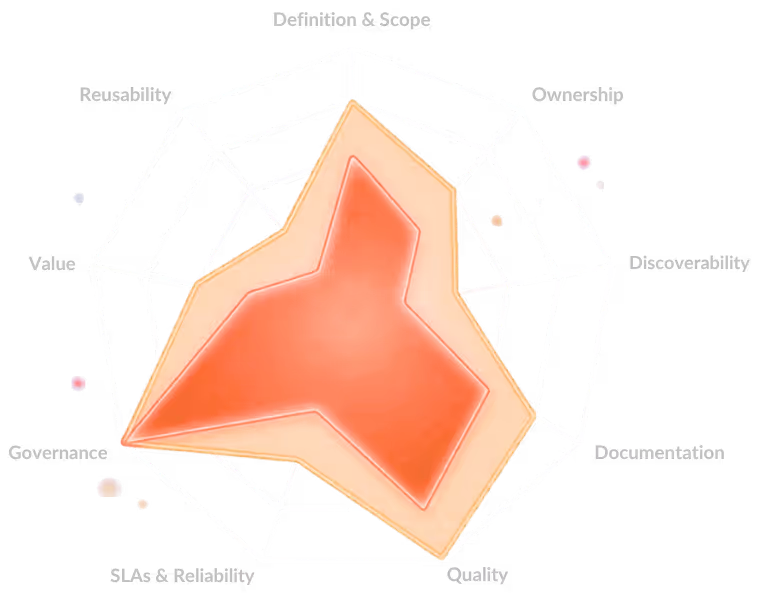
A 9-dimension self-assessment used by 100+ data teams to benchmark strategy, ownership, and platform readiness.


Swami Achari
Swami Achari is a Lead Tech Correspondent and Content Strategist who loves translating complex Data, Engineering, and AI concepts into compelling, high-impact stories. Grounded in a strong background in mainstream journalism, he seamlessly bridges traditional investigative reporting with cutting-edge technology communication. Currently exploring editorial strategy and content marketing for data-focused platforms, he works closely with industry thought leaders to build engaged tech communities and foster strategic growth through scannable, audience-first storytelling.
Read the ideas here. Build them with The Modern Data Company.
Modern Data 101 is where the data community thinks out loud. When you're ready to move from articles to architecture, data products, governed AI pipelines, or a full Data Operating System; the team behind this community can help you build it.
Continue reading