What is AI-Readiness and How to Be AI-Ready
Laying the Groundwork for Trusted, High-Impact AI

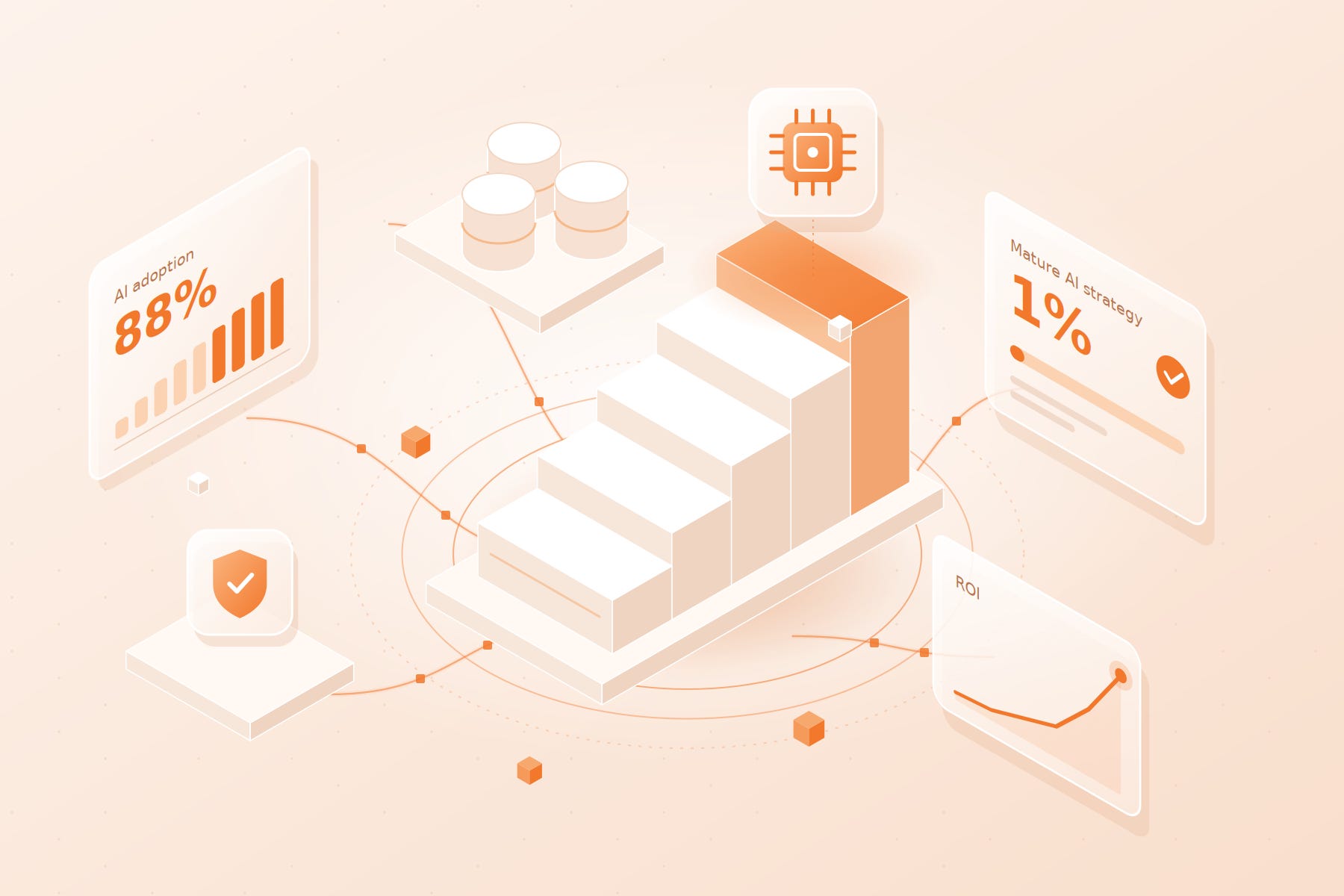
Did you know that a massive 80% of AI efforts are failing? Well, if you are here, you might know already. But do you know why? Poor Data? Short Answer: Yes, but allow us to break it down for you.
Organisations today are treating AI more like a household appliance, plug-and-play. This intensifies as they move beyond and assume they are ready to flip a switch on GenAI or Predictive Modelling, just because they have a data warehouse and a few dashboards. This is a high-stakes delusion. True AI-readiness is not about how many GPUs you can rent or which LLM you license; it is about whether your data infrastructure is capable of providing the context and reliability that AI requires to function without hallucinating.
If your data is messy, fragmented, or lacks clear business logic, the AI you plug-and-play will only put an accelerator on your existing mistakes. To be AI-ready, you must stop focusing on the “intelligence” and start focusing on the “infrastructure.”
Put things in perspective: It is the difference between having a library of books and having a librarian who actually understands the content.
[state-of-data-products]
What Is AI-Readiness and Why Does it Matter
In layman's terms, AI-readiness is an organisation’s ability to successfully deploy, manage, and scale artificial intelligence to drive business outcomes. Unlike traditional analytics, AI-readiness requires data that is dynamic, contextual, and accessible to machines in real-time. According to recent industry benchmarks, the reason is not poor algorithms, but poor data foundations.
Being AI-ready is not about the tools you have in your bouquet. It is a state of maturity where your data, your people, and your platforms are aligned to support automated reasoning. While analytics tells you what happened in the past, an AI-ready system empowers you with raw material for a model to predict what will happen in the future.
[data-expert]
The Core Pillars of AI-Readiness
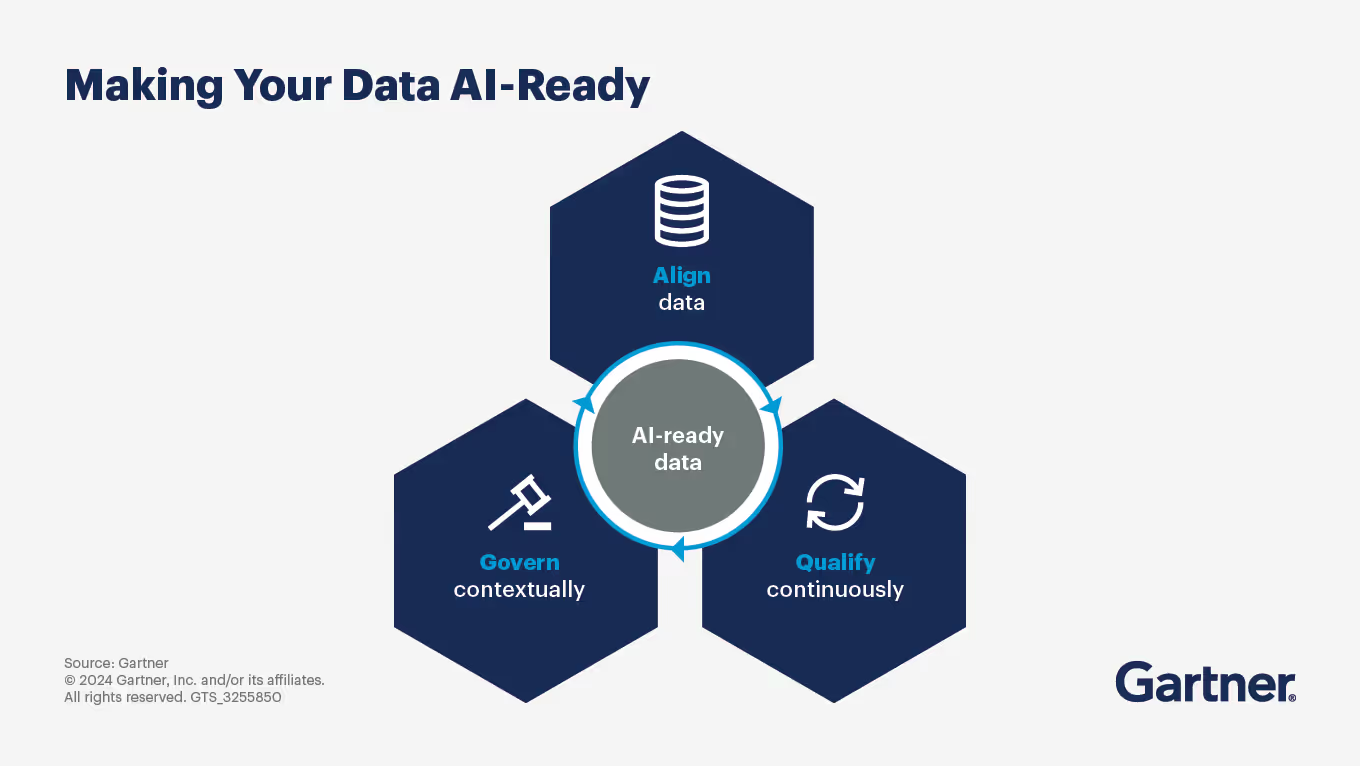
Becoming AI-ready requires more than just a “data-first” mindset; it requires a “context-first” architecture. There are three non-negotiable pillars that define whether an organisation is prepared for the shift.
Read More:
Rise of the Context Architecture: Where Meta is More Vital Than Information
- Data Foundations: To be AI-ready, data must be high-quality, structured for consumption, and rich in metadata. AI needs to understand the “why” behind the numbers, which requires a solid semantic layer.
- Platforms and Infrastructure: AI workloads are compute-heavy, requiring different storage patterns than regular BI. A Data Platform for AI must support both structured and unstructured data, often utilising a lakehouse architecture under the hood, providing the necessary speed and flexibility.
- People and Processes: AI-readiness is not only about technological improvement, but it is a major cultural shift as well. These heavy-lifting efforts require people who deeply understand the nuances of validating AI outputs, managing feedback loops, and taking ownership of data products. Without human-in-the-loop governance, AI becomes a liability rather than an asset.
Common Gaps That Prevent AI-Readiness
One of the most dangerous mistakes a leader can make is assuming that “analytics-ready = AI-ready data.” Analytics data is often aggregated and cleaned for human eyes. AI, however, thrives on fine granularity. When you feed aggregated data to a model, you strip away the nuances the AI needs to find patterns, which leads to shallow or incorrect insights, and you end up blaming the AI .
😉Heard about “Devil is in the details”?
Another common gap is the presence of fragmented data platforms. If your customer data is in one silo and your product data is in another, your AI will never be empowered to give you a holistic view of the business. This lack of a unified “Source of Truth” results in models that contradict each other. Furthermore, many organisations lack the feedback loops necessary to retrain models, meaning their AI begins to decay the moment it is deployed.
[related-1]
How Organisations Become AI-Ready
Moving toward AI-readiness is a deliberate transition from centralised, static data to agile, AI-capable data platforms. It starts by measuring readiness beyond simple dashboards. Instead of asking “How much data do we have?”, ask “How much of our data is discoverable and trustworthy for a machine?”
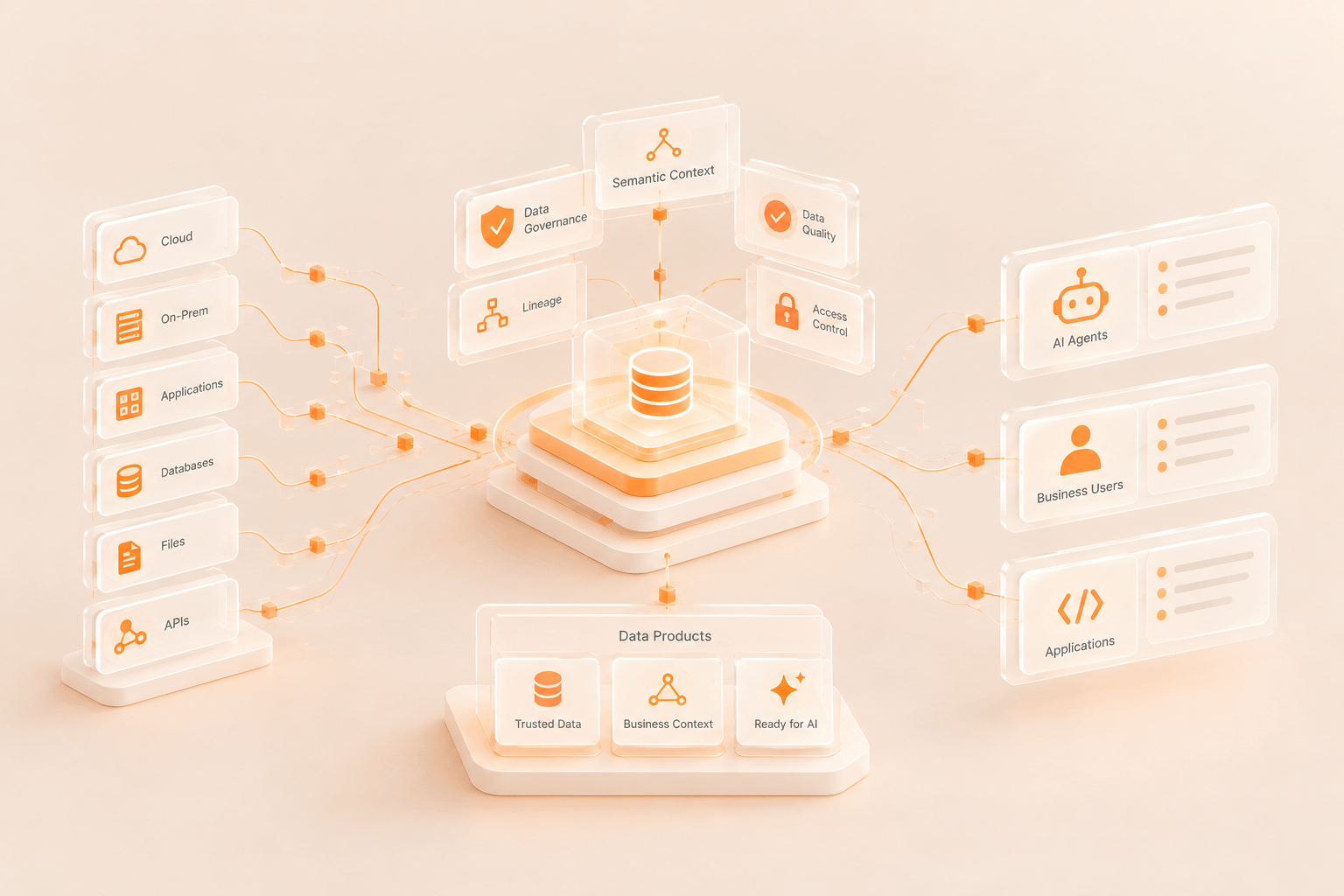
Building sustainable Data Platforms for AI involves creating a semantic layer that acts as a translator between your raw data and your AI agents. This ensures that every model uses the same business logic, reducing hallucinations and increasing trust. By treating data as a product rather than a byproduct, you ensure that your AI has a continuous supply of high-quality “fuel” to drive measurable business value.
FAQs
Q1. How can I assess my company’s AI readiness?
Start by evaluating your data quality, infrastructure flexibility, and team literacy. Popular evaluation tools and frameworks from major consulting firms often look at “Data Maturity Models” to determine if their foundations can support automated workloads.
Q2. What are the top AI readiness platforms?
The best platforms for medium-sized enterprises are those that offer unified storage and governance, such as modern lakehouse architectures. These platforms allow you to manage the entire AI lifecycle in one place.
Q3. How can I prepare my workforce for AI adoption?
Think beyond technical training. One must establish clear governance processes and feedback loops. Training services should focus on “AI Literacy,” helping employees understand how to interpret, challenge, and improve AI-driven decisions.
Q4. Where can I find AI readiness certification programs for professionals?
Some important AI readiness certification programs offered by reputable providers include:
- AWS Certified AI Practitioner
- AI Academy: GenAI training & learning programs by EY
- Google AI Professional Certificate
- Role-based and industry-focused providers like AI CERTs® and AI Fundamentals Certification by DataCamp
- Advanced technical programs from organisations such as TalentSprint and Jetson AI Courses & Certifications – NVIDIA Developer
- University programs such as those from the and Artificial Intelligence Graduate Certificate by Stanford University
Connect with a community data expert
A no-cost session with a practitioner who's been where you are.
About Modern Data 101
Modern Data 101 is a movement redefining how the world thinks about data. A community built by the same team behind the world’s first data operating system, Modern Data 101 sits at the intersection of data, product thinking, and AI. Spread across 150+ countries, the community brings together a global network of practitioners, architects, and leaders who are actively building the next generation of data systems.
At its core, Modern Data 101 exists to simplify the journey from raw data to tangible and observable impact. It advocates high-potential data systems and next-gen architectures to unify and activate insights and automation across analytics, applications, and operational workflows at the edge.
In a world shifting from data stacks to AI ecosystems, Modern Data 101 helps teams not just navigate the change but lead it.


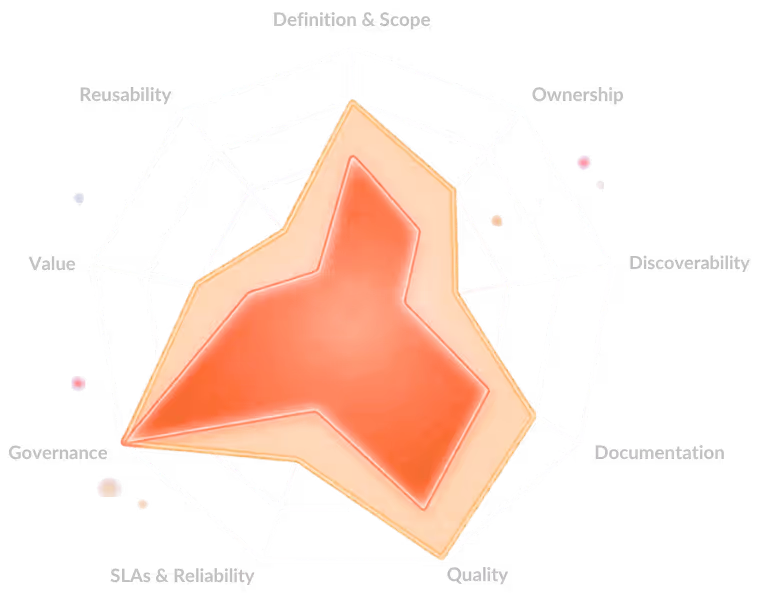
Where does your org stand on data product maturity?
A 9-dimension self-assessment used by 100+ data teams to benchmark strategy, ownership, and platform readiness.


Swami Achari
Swami Achari is a Lead Tech Correspondent and Content Strategist who loves translating complex Data, Engineering, and AI concepts into compelling, high-impact stories. Grounded in a strong background in mainstream journalism, he seamlessly bridges traditional investigative reporting with cutting-edge technology communication. Currently exploring editorial strategy and content marketing for data-focused platforms, he works closely with industry thought leaders to build engaged tech communities and foster strategic growth through scannable, audience-first storytelling.
Read the ideas here. Build them with The Modern Data Company.
Modern Data 101 is where the data community thinks out loud. When you're ready to move from articles to architecture, data products, governed AI pipelines, or a full Data Operating System; the team behind this community can help you build it.
Continue reading