
How Enterprises Are Actually Using AI Agents in 2026: ROI vs. Agent Debt
From $4.5B productivity gains to the dangers of untraced agent debt: What IBM, Deloitte, and BCG data reveals about scaling autonomous workflows.



of inquiries are resolved using IBM-built tool
of organisations expect to be running AI agents at least moderately by 2027
of organisations currently have a mature governance model
reduction in contract review time through used contract-analysis agents

- Enterprise Adoption & Impact: AI agents have moved beyond the pilot phase. Deployments across customer service, supply chain, and legal are delivering proven ROI, such as IBM’s $4.5B productivity boost across 270,000 employees and a 50% cut in contract review times.
- The 53% Governance Gap: While 74% of organisations expect to run AI agents moderately by 2027, only 21% have a mature governance model in place. Most enterprises lack real-time monitoring, clear accountability, or complete audit trails for autonomous decisions.
- The Rise of "Agent Debt": Unmonitored scaling creates hidden operational risks across three vectors:
- Accountability Debt: No clear ownership when an agent makes an incorrect decision.
- Context Debt: Fragmented or ungoverned data leading to confident, wrong outputs.
- Coordination Debt: Exponentially growing interaction paths between autonomous agents (e.g., 130 agents create >8,000 potential interaction paths
- Key Takeaway for Leaders: Agent capability is now a commodity. The real competitive differentiator is debt management, applying strict fit-tests, building governance from agent one, and actively tracking agent-to-agent dependencies before scaling.
Enterprise AI agents have moved past the pilot stage. Deployment is no longer the hard part. Governance is. A new Modern Data 101 research brief, based on evidence from BCG, IBM, Deloitte, and other sources, maps where agents are creating measurable value inside enterprises today, and where the risk is accumulating fastest.
What Enterprises Are Deploying Right Now
The clearest evidence sits in six functions. IBM deployed agentic AI across 270,000 employees for an estimated $4.5 billion productivity impact. In customer service, a global bank cut costs 10x using AI virtual agents, and an IBM-built tool resolved 70% of inquiries and cut resolution time by 26%.
In supply chain, IBM Consulting applied agentic AI across 2,000+ suppliers in 170+ countries, generating over $360 million in savings over three years. Legal teams at insurer Wakam used contract-analysis agents to cut contract review time by 50%.
The pattern across every case: agents deliver the strongest ROI in work that is high-volume, well-bounded, and currently done by people reading and re-keying information across systems. Open-ended judgment calls remain a weaker fit. Appian’s framework puts it simply: agents work best on messy inputs, distributed context, and a decision that needs reasoning rather than a rule lookup.
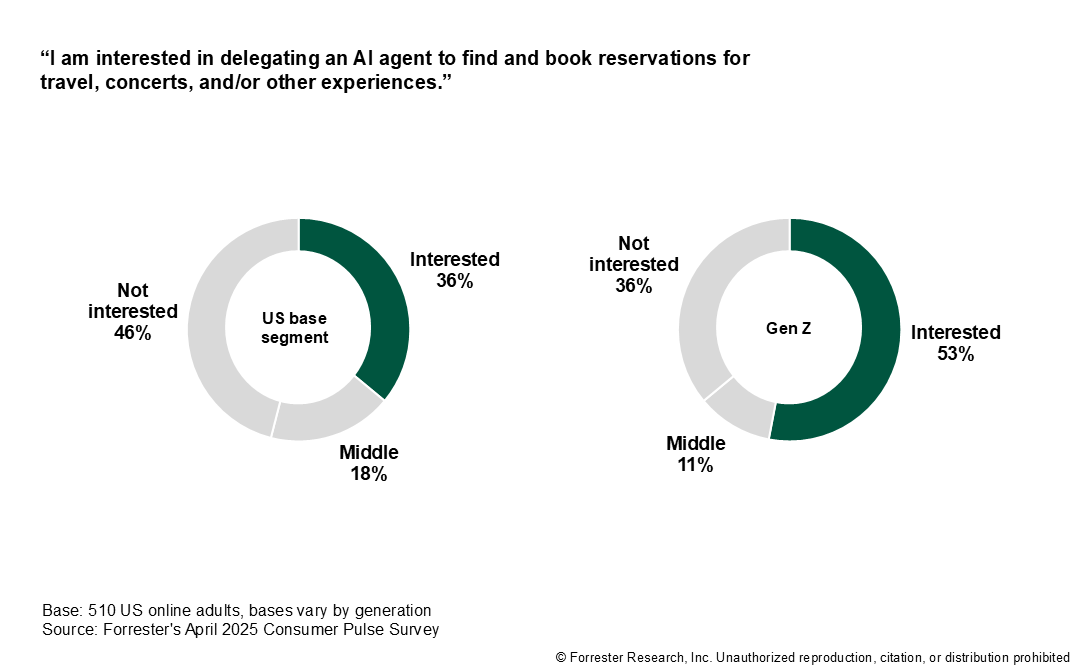
The Governance Gap Nobody Is Pricing In
Here is the number that matters most. A 2026 Deloitte survey of 3,235 leaders across 24 countries found that 74% of organisations expect to be running AI agents at least moderately by 2027. Only 21% currently have a mature governance model for them.
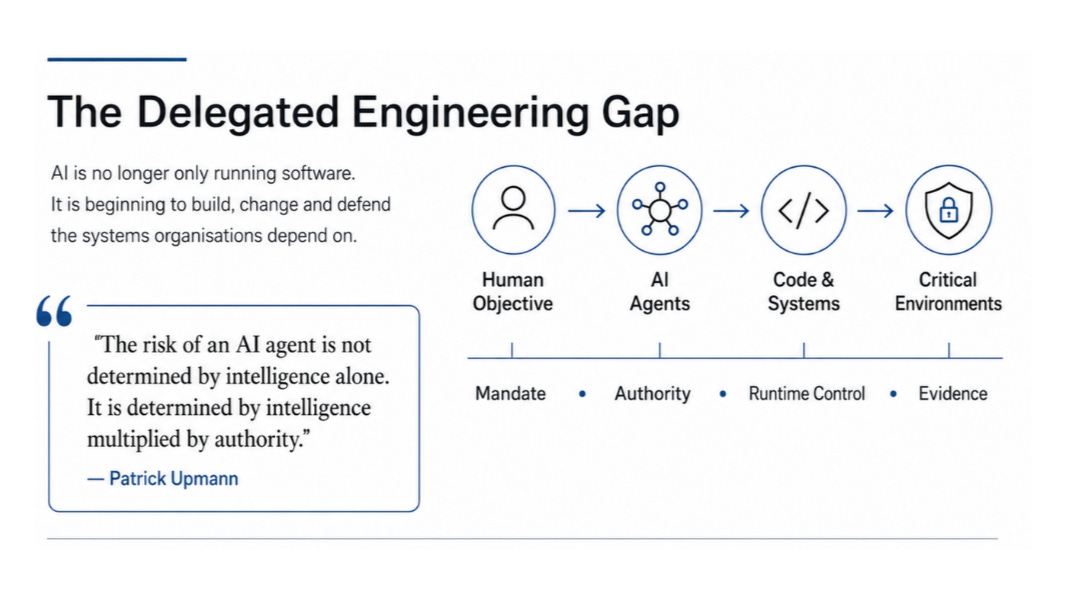
That 53-point gap is the real story. Most enterprises can’t say who is accountable when an agent makes a bad call, can’t monitor for anomalous agent behaviour in real time, and don’t have a complete audit trail of agent actions. Further studies also show what happens as deployments scale: organisations lose track of who built what, and duplicate or conflicting agents start to pile up.
[report-card]
Agent Debt: The Cost Curve Nobody Is Watching
Agent debt refers to the gap between how many autonomous decisions a system is authorised to make and how many of those decisions anyone can actually trace, own, or reverse.
Agent debt has three components. Accountability debt means no defined owner for a class of decision and no escalation path when an agent is uncertain. Context debt means an agent inherits whatever data foundation already exists, so fragmented or ungoverned data produces confident, wrong answers. Coordination debt means every new agent can interact with every agent already deployed, so the number of possible interaction paths grows with the square of agent count, not in a straight line.
The math gets uncomfortable fast. Wakam’s 130-agent deployment implies over 8,000 possible pairwise interaction paths. Most were never exercised, but each one is a place a conflict or a duplicated action can hide.
What This Means for Enterprise Leaders
Capability is now a commodity. Every major vendor has agents that plan, reason, and act through tool integrations. The differentiator left on the table is debt management: pricing accountability, context, and coordination risk into a rollout plan before scale, rather than discovering the cost after an incident.
Practical starting points: apply a fit test before building (agents belong where inputs are messy and judgment is required, not where a rule lookup already works). Start in functions with a proven evidence base, like customer service, IT operations, and document-heavy finance or legal work. Build governance in from agent one instead of retrofitting it onto agent one hundred. Track agent-to-agent dependencies explicitly as deployment scales, since a policy of reviewing every tenth new agent falls further behind every quarter.
The next 18 months will likely produce the first visible wave of agent-debt failures: not model errors, but accountability failures, where an agent acted within its technical permissions and outside anything a human had actually reasoned through. The enterprises that avoid becoming that case study will be the ones that treated agent debt as a real balance sheet item from the start.
This article summarises findings from Modern Data 101’s full research brief, How Enterprises are Using AI Agents.
[report-card]
Get the full report
- A complete 19-page report
- Insights from industry leaders like IBM, BCG, Deloitte, and others
- 7 practical implementation strategies for leveraging AI agents optimally
Get the full report
- A complete 19-page report
- Insights from industry leaders like IBM, BCG, Deloitte, and others
- 7 practical implementation strategies for leveraging AI agents optimally


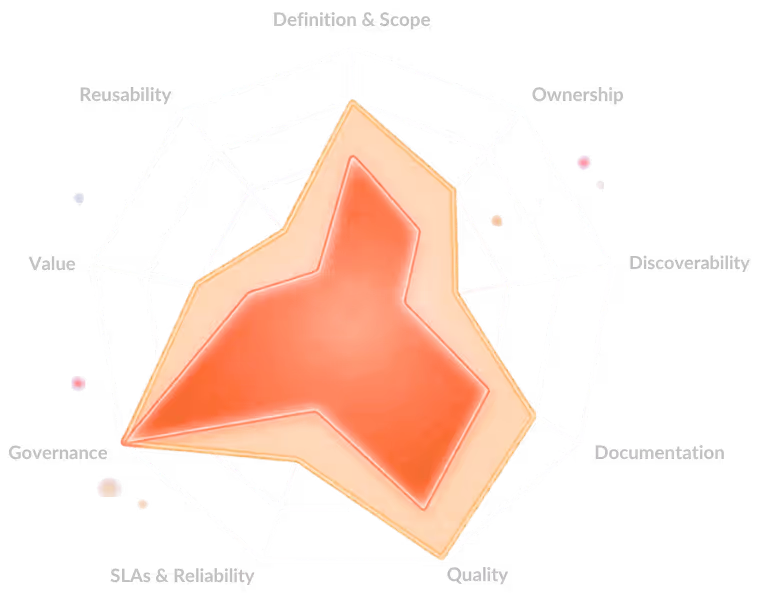
Where does your org stand on data product maturity?
A 9-dimension self-assessment used by 100+ data teams to benchmark strategy, ownership, and platform readiness.

You're all set
Your report is opening in a new tab
Tab didn't open? Open it manually
Animesh Kumar
Animesh Kumar is the Co-Founder and Chief Technology Officer at The Modern Data Company, where he leads the design and development of DataOS, the company’s flagship data operating system. With over two decades in data engineering and platform development, he is also the founding curator of Modern Data 101, an independent community for data leaders and practitioners, and a contributor to the Data Developer Platform (DDP) specification, shaping how the industry approaches data products and platforms.
Travis Thompson
Travis is the Chief Architect of DataOS, building full-stack Data Product solutions, and a founding contributor to the Data Developer Platform Standard that enables flexible implementation of disparate data design architectures such as data products, meshes, or fabrics. Over 30 years in all things data engineering, Travis has designed state-of-the-art architectures and solutions for top organisations, including GAP, Iterative, MuleSoft, HP, and many more. He is also an active advocate for polymorphic data architectures and contributes extensively to community archives.
Ritwika Chowdhury
Ritwika Chowdhury is a data and technology professional focused on data products, AI, and modern data architecture. Her work sits at the intersection of data strategy, product thinking, and emerging AI technologies, with a focus on helping organisations turn enterprise data into trusted, usable, and scalable assets.
Leveraging AI Agents for Enterprises
- A complete 19-page report
- Insights from industry leaders like IBM, BCG, Deloitte, and others
- 7 practical implementation strategies for leveraging AI agents optimally
You're all set
Your report is opening in a new tab
Tab didn't open? Open it manually
You're subscribed
You'll get every new Modern Data Report in your inbox — check your email to confirm.
Done
.jpg)
