
Top 50 AI Adoption Stats for 2026: Key Data on Governance, Readiness, and ROI
88% of enterprises use AI, but only 1% consider their strategy mature. Discover 50 statistics from McKinsey, Gartner, and Deloitte that reveal why pilots stall and how top performers scale.

What Are AI Maturity Statistics, and Why Do They Matter Right Now?
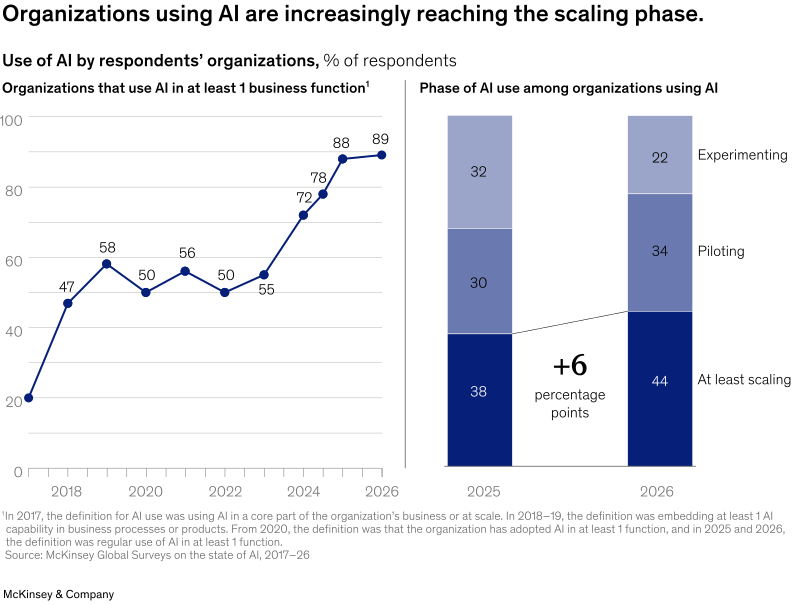
AI maturity statistics measure something narrower and more useful than plain adoption numbers. Adoption asks whether a company uses AI anywhere. Maturity asks whether that use is governed, scaled, trusted, and actually producing business outcomes, which is why McKinsey can report that 88% of organisations use AI in at least one business function while also finding that only 1 per cent consider their AI strategy mature. That gap is the search intent behind “AI maturity statistics”: people looking this up are almost always trying to benchmark their own organisation against real peers, not just confirm that AI adoption is happening somewhere in the world.
Below are 50 statistics pulled from primary research, McKinsey, Gartner, Deloitte, BCG, PwC, Stanford, MIT, and the Modern Data 101 community survey, organised around the dimensions that actually define maturity: data readiness, governance, scaling execution, workforce skill, and ROI.
If you’re benchmarking your own organisation, the DataOS AI-readiness overview is a useful place to see what “data maturity” looks like as a concrete architecture rather than a survey score.
[survey-2025]
AI Market & Investment Snapshot
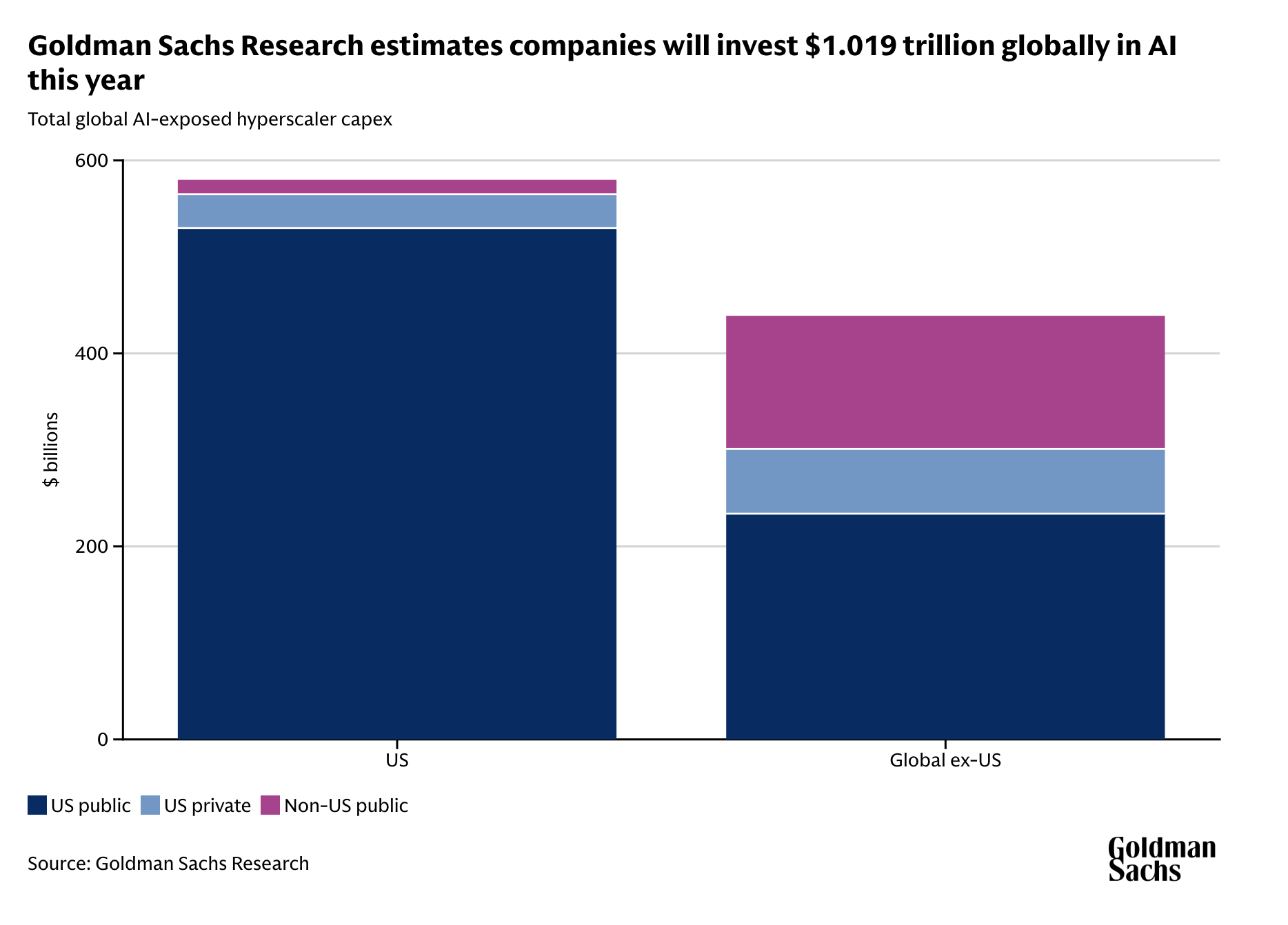
1. According to Goldman Sachs Research, globally, companies will invest $1.019 trillion in 2026.
2. While 82% of respondents use AI features to some extent, only 19% say they use them a lot or a great deal. Modern Data 101 Survey
3. U.S. companies invested $109.1 billion in AI in 2024, nearly 12 times China’s $9.3 billion and 24 times the U.K.’s $4.5 billion. Stanford HAI, AI Index Report 2025
4. Generative AI alone drew $33.9 billion in private investment worldwide in 2024, up almost 19 percent from 2023. Stanford HAI, AI Index Report 2025
5. A strong 67% agree or strongly agree that their organisation’s CEO actively own AI as a top priority for the business. KPMG, AI Quarterly, Pulse Survey Q2 2026
6. Despite that spending, roughly two-thirds of organisations say they have not yet begun scaling AI across the enterprise. McKinsey, The State of AI
The Adoption-vs-Maturity Gap
7. 88 per cent of organisations report using AI in at least one business function, up from 78 per cent a year earlier, yet McKinsey found only 1 per cent of those same organisations consider their AI strategy mature. McKinsey, The State of AI
8. AI-exposed roles are evolving more than twice as fast as the least-exposed roles, with the gap widening 75% from last year. PwC, AI Jobs Barometer
9. Companies most exposed to AI see 40% higher productivity growth than the least exposed. PwC, AI Jobs Barometer
10. Companies with $500 million or more in annual revenue are leveraging GenAI and adopting AI meaningfully faster than smaller firms, widening the maturity gap by company size rather than closing it. McKinsey, via Economic Times
11. Among large organisations, 40% are scaling AI agents, up from 27% last year. McKinsey, The State of AI
12. Adoption curves like these are exactly why Modern Data 101’s research keeps returning to the same theme: data products are not the destination; they’re what actually gets an organisation from pilot to production.
[related-1]
Data Readiness: The Real Maturity Gate
13. Only about 7 per cent of companies have fully scaled AI across their organisation, and McKinsey traces most of that stall to one bottleneck: data that isn’t actually ready for AI to use. McKinsey, AI Data Readiness
14. More than two-thirds of high-performing companies name data as the primary obstacle to scaling AI. McKinsey, AI Data Readiness
15. Gartner research finds that 85 percent of AI projects fail due to poor underlying data quality, and that projects lacking AI-ready data are at serious risk of abandonment. Gartner research, cited in Astrafy analysis
16. Stanford’s Digital Economy Lab, studying 51 successful enterprise AI deployments, found data readiness to be the single biggest determinant of success, ranking above model selection and framework choice. Stanford Digital Economy Lab, cited in AgentMarketCap analysis
17. In Modern Data 101’s own technical research, 65 percent of respondents said their data lacks the clarity and business context AI needs to be useful, and almost 70 percent said their data isn’t clean or trustworthy enough for AI in the first place. Modern Data 101, Data Product Maturity Assessment
18. 18% of enterprises are in stage 4 of AI maturity, up from 7% in 2022. Grow Enterprise AI Maturity for Bottom-Line Impact
19. Forty-five percent of leaders in organizations with high AI maturity said their AI initiatives remain in production for three years or more to ensure sustained impact and value, according to a survey by Gartner, Inc. This compares to only 20% in low-maturity organisations. This is the layer where DataOS’s data-products approach is built to intervene directly, treating context, quality, and governance as properties of the data itself rather than downstream cleanup work.
[playbook]
Governance & Risk Maturity
20. Organisations with mature AI governance frameworks report a 28 per cent increase in staff actively using AI, and deploy it across more than three additional business areas compared with peers lacking that governance maturity. Deloitte, APAC Trustworthy AI Report
21. Deloitte’s 2026 State of AI in the Enterprise puts technical infrastructure readiness at 43 percent, data management readiness at 40 percent, governance readiness at just 30 percent, and talent readiness at only 20 percent. Deloitte, State of AI in the Enterprise 2026
22. Only 25% have moved 40%+ of AI experiments into production, but 54% expect to reach that level within 3–6 months. Deloitte, State of AI in the Enterprise 2026
23. Nearly three-quarters (74 percent) of organisations plan to adopt agentic AI within two years, but only 21 percent currently have a mature governance model in place for autonomous agents. Evolvance Market Research
24. 66 percent of corporate boards still report limited-to-no working knowledge of AI, an improvement from 79 percent in the prior survey but still a clear majority. Deloitte, cited in AI Governance Statistics 2026
25. 90% of companies lack the maturity to defend against today’s AI-enabled threats. Accenture, AI Compliance Research
[related-2]
Pilot-to-Production: Scaling Maturity
26. Only 4% of companies are AI leaders, with another 22% building advanced capabilities and beginning to see substantial gains. Meanwhile, 74% have yet to realise tangible value from AI. BCG, AI Adoption Research
27. BCG frames AI success with a “10-20-70” rule: only 10 percent of outcome depends on algorithms, 20 percent on data and technology, and a full 70 percent on people, process, and cultural change, which is why technically sound pilots still stall. BCG publication
28. Independent analysis synthesising Gartner and BCG data puts the real pilot-to-production conversion rate at roughly 33 percent, meaning about two in three enterprise AI pilots never make it to production at all. Astrafy analysis of Gartner/BCG data
29. Gartner estimates it takes an average of eight months to move an AI prototype from proof-of-concept into production. Gartner, cited in Covasant analysis
30. Gartner predicts that 30 percent of generative AI projects will be abandoned entirely after the proof-of-concept phase. Gartner, Newsroom
31. MIT Sloan’s Project NANDA found that 95 percent of organisations saw zero measurable return from their generative AI pilots in 2025, a stark contrast to the ROI numbers vendors typically advertise. MIT Sloan, Project NANDA, cited in Covasant analysis
32. The same MIT research found that purchased or vendor-partnered AI tools succeed in production roughly 67 percent of the time, versus about 33 percent for internally built systems, build-versus-buy is itself a maturity signal. MIT NANDA, cited in DigitalApplied analysis
Technical & MLOps Maturity
33. Gartner’s AI Maturity Model survey found that 45 percent of leaders at high-maturity organisations keep their AI initiatives operational for three years or more, compared with only 20 percent at low-maturity organisations. Gartner, Newsroom
34. 91 per cent of high-maturity organisations have a dedicated AI leader in place, and 63 per cent run formal financial and ROI analysis on their AI initiatives, versus far lower rates among low-maturity peers. Gartner
35. 57 per cent of business units inside high-maturity organisations say they trust AI solutions enough to actually use them, compared with just 14 per cent in low-maturity organisations. Gartner
36. 88 percent of leaders in a State of Enterprise AI survey said that AI measurement is what will determine which companies win, underscoring why monitoring maturity matters as much as model quality. Larridin, State of Enterprise AI Report
Teams are trying consistently to close this exact gap between “we have AI” and “our AI is trustworthy.”
Workforce & Skills Maturity
37. 62 percent of employees aged 35–44 report feeling highly skilled with AI, compared with only 50 percent of Gen Z workers aged 18–24; maturity gaps show up in people, and not just platforms. McKinsey, Superagency in the Workplace
38. 27 percent of white-collar employees now use AI regularly at work, up from just 15 percent in 2024; workforce adoption is accelerating, even where governance maturity is not. Gallup
39. By 2030, an estimated 70 percent of the skills used in most jobs today are expected to change as AI reshapes work, according to the World Economic Forum. World Economic Forum, Future of Jobs
40. Employees who actively use AI see wages rise roughly twice as fast, skills evolve about 66 percent faster, and AI-skilled workers command a 56 percent wage premium over peers. PwC, AI Jobs Barometer
41. The World Economic Forum estimates AI could displace roughly 85 million jobs while creating about 97 million new ones, reshaping the workforce rather than simply shrinking it. World Economic Forum
ROI and Business Impact by Maturity Level
42. Companies using generative AI report an average ROI of 3.7x per dollar invested, with top adopters reaching an average ROI of 10.3$. IDC, 2024 AI Opportunity Study, via Microsoft
43. Top AI adopters expect revenue growth 60 percent higher and cost reductions nearly 50 percent greater than their peers by 2027. BCG
44. “Future-built” firms, those that have moved AI fully into production, already show 1.7x higher revenue growth and 3.6x greater total shareholder return than peers still stuck in pilots. BCG, 2026 research
45. Almost 65 per cent of organisations say AI technologies are already helping them stay ahead of competitors, even though a much smaller share report scaled, governed deployments. Deloitte
46. Among the roughly 11 percent of AI agent pilots that do reach production, average reported ROI runs around 171 percent, compared with near-zero return for those still stuck in pilot purgatory. Gartner data, cited in industry analysis
The gap between rows 41–43 and row 45 is essentially a maturity curve in miniature, which is why there could be debate that context, and not just compute, is what anchors enterprise AI success keeps resurfacing across this research.
Agentic AI Maturity
47. Gartner predicts more than 40 percent of agentic AI projects will be cancelled by the end of 2027. Gartner, cited in DigitalApplied analysis
48. An estimated 31 percent of enterprises now run at least one AI agent in production, led by banking and insurance at roughly 47 percent, well ahead of the average. S&P Global Market Intelligence / McKinsey, cited in Paul Okhrem analysis
49. One industry survey found only 8.6 percent of companies have AI agents actually deployed in production, versus 14 percent still in pilot form, a reminder that “agentic AI adoption” headlines often describe experimentation, not maturity. Composio, cited in AgentMarketCap analysis
[related-3]
Industry, Regional & Future Outlook
50. Only about 13.48 percent of enterprises across the EU were actively applying AI to their major departments in 2024, and the European Parliament has warned that underuse of AI could cost the EU its competitive edge. Eurostat / European Parliament
51. McKinsey’s most recent global survey found that approximately one-third of organisations report having begun scaling their AI programs, still a minority, but a clear signal of where the maturity curve is heading next. McKinsey, The State of AI
The Pattern Across All 50 umbers
Read together, these statistics tell a consistent story: adoption is nearly universal, and maturity is rare, and the gap between the two is almost always a data problem wearing a strategy costume. Enterprises don’t stall at the pilot stage because they picked the wrong model; they stall because the data underneath the model was never built to be trusted, governed, or reused at scale. Platforms like DataOS is built to close, turning “AI readiness” from a survey score into a governed, reusable data-product layer that both people and AI agents can actually trust.
FAQs
Q1. What is AI maturity?
AI maturity is the degree to which an organization’s AI use is governed, scaled, and reliably producing business outcomes, as opposed to AI adoption, which just measures whether AI is being used anywhere at all. A mature organisation has AI-ready data, defined governance for agents and models, measurable ROI, and AI running in production for years rather than stuck in pilot.
Q2. Why does AI maturity matter today?
Because adoption without maturity is where most enterprise AI budgets are quietly being lost: 88 percent of organisations use AI somewhere, but only about 1 per cent call their AI strategy mature, and roughly two in three pilots never reach production. Closing that gap, starting with AI-ready data, is what turns AI spend into AI value.
Connect with a community data expert
A no-cost session with a practitioner who's been where you are.
About Modern Data 101
Modern Data 101 is a movement redefining how the world thinks about data. A community built by the same team behind the world’s first data operating system, Modern Data 101 sits at the intersection of data, product thinking, and AI. Spread across 150+ countries, the community brings together a global network of practitioners, architects, and leaders who are actively building the next generation of data systems.
At its core, Modern Data 101 exists to simplify the journey from raw data to tangible and observable impact. It advocates high-potential data systems and next-gen architectures to unify and activate insights and automation across analytics, applications, and operational workflows at the edge.
In a world shifting from data stacks to AI ecosystems, Modern Data 101 helps teams not just navigate the change but lead it.


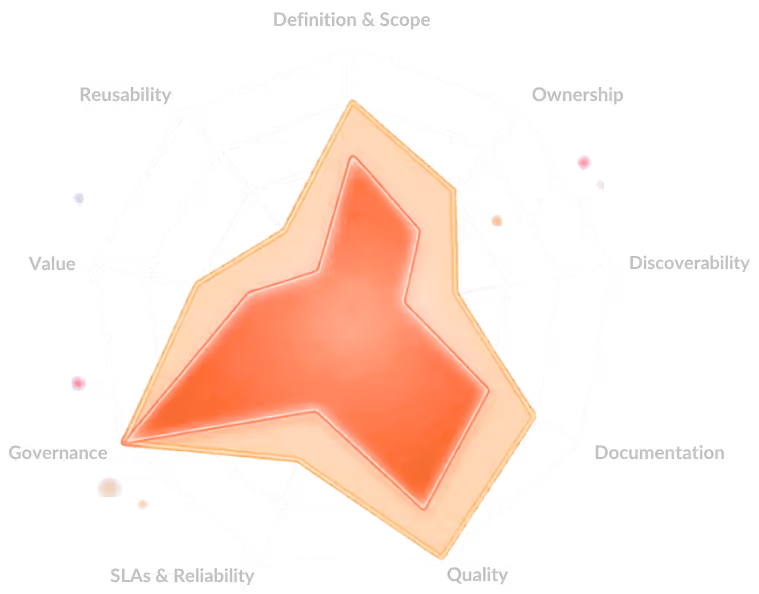
Where does your org stand on data product maturity?
A 9-dimension self-assessment used by 100+ data teams to benchmark strategy, ownership, and platform readiness.


Ritwika Chowdhury
Ritwika Chowdhury is a data and technology professional focused on data products, AI, and modern data architecture. Her work sits at the intersection of data strategy, product thinking, and emerging AI technologies, with a focus on helping organisations turn enterprise data into trusted, usable, and scalable assets.
Read the ideas here. Build them with The Modern Data Company.
Modern Data 101 is where the data community thinks out loud. When you're ready to move from articles to architecture, data products, governed AI pipelines, or a full Data Operating System; the team behind this community can help you build it.
Continue reading

.jpg)
