What Is AI Observability? How Enterprises Build Safe & Trustworthy AI in 2026
Enterprise AI fails quietly while dashboards stay green. Discover how industry leaders build real-time tracing, shorten trust latency, and govern agentic sprawl.


of practitioners say that the data behind a decision was wrong or outdated
of organisations deploying AI to run dedicated AI observability tools by 2028
of AI use cases meet all of their business objectives
say that bad or stale data was the most-cited cause of AI interventions

- 73% of enterprise practitioners discover after the fact that AI decisions were powered by bad or stale data. Standard latency dashboards fail to detect ungrounded or hallucinated outputs.
- Traditional monitoring asks if the system is running; AI observability asks if the output is grounded and correct; control determines whether you can halt the action in real time.
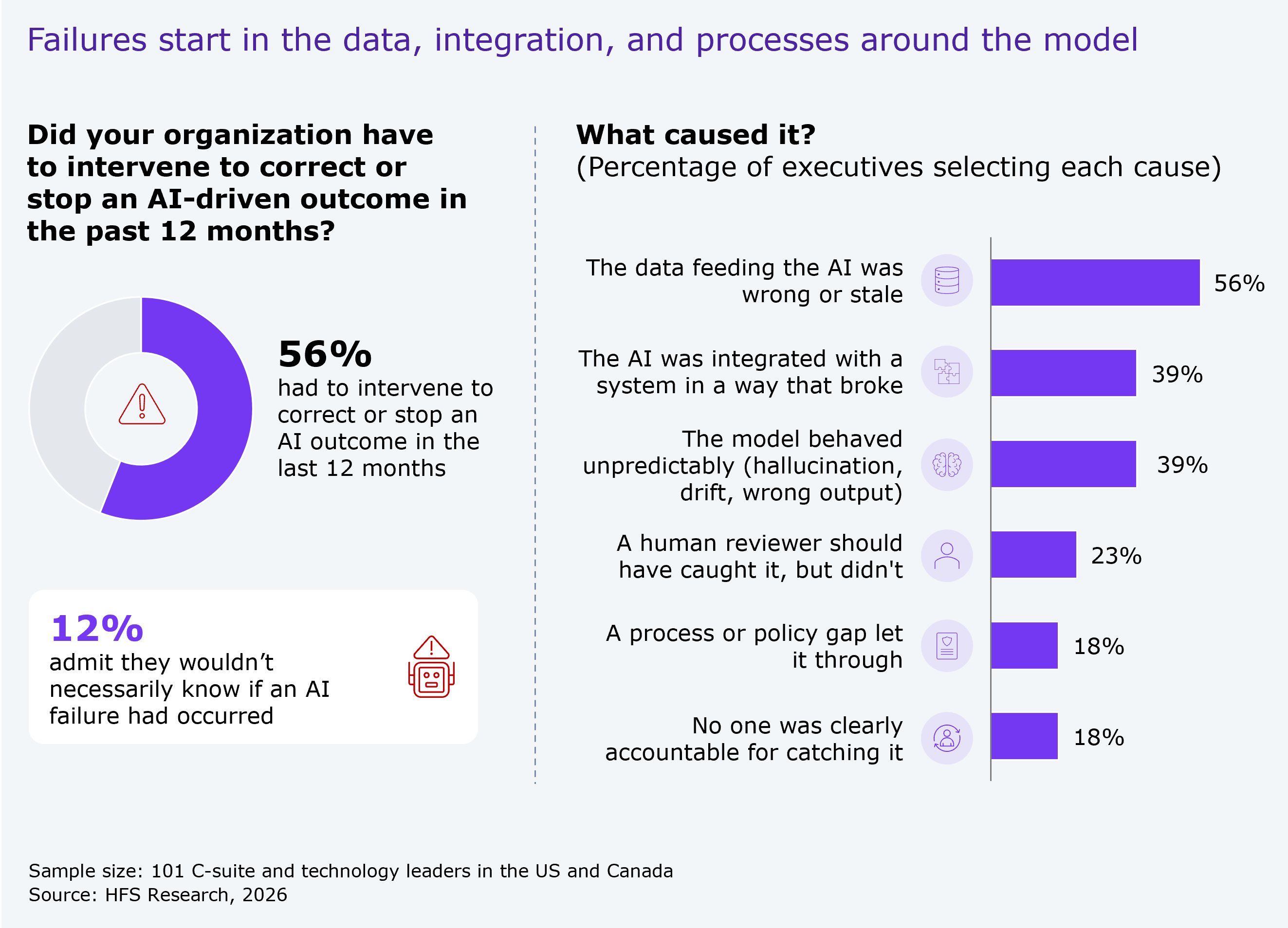
- 56% of manual AI interventions stem from stale indices or broken schemas. Effective AI observability must link model inference traces directly back to underlying dataset versions and prompts.
- Agentic workflows eliminate pre-approval human checkpoints. With enterprise agent deployments surging, observability must shift to tracking entire multi-step decision paths rather than static outputs.
- Safe AI relies on keeping an organisation’s trust latency (the time required to detect, explain, and contain a rogue model) shorter than the time it takes for error damage to spread. 59% of executives can detect failures quickly, but only 23% have automated containment mechanisms to stop wrong actions.
Enterprise AI fails quietly. Models keep answering, dashboards stay green, and the first sign of trouble arrives from a customer, an auditor or a regulator. AI observability exists to close that gap, and a new Modern Data 101 research brief shows most organisations are still far from closing it. In our survey of 540+ practitioners, 73% say they discover after the fact, sometimes, usually or always, that the data behind a decision was wrong or outdated.
What Is AI Observability?
AI observability refers to the ability to understand what an AI system is doing, why it is doing it and whether the result can be trusted, using evidence the system produces while it runs. Monitoring asks whether the system is up. AI observability asks whether the output was right and why. A third question, whether you can stop it, belongs to control. Most tooling in place today answers only the first, which is why a latency dashboard and an output evaluation engine can both be sold as AI observability.
Why AI Observability Is Becoming Infrastructure
Gartner expects LLM observability investment to reach 50% of GenAI deployments by 2028, up from 15% today, and 40% of organisations deploying AI to run dedicated AI observability tools by the same year. Infosys research indicates only 19% of AI use cases meet all of their business objectives, and Gartner warns that without observability and explainability foundations, GenAI stays confined to low-risk internal tasks. The real cost of weak AI observability is the work leadership refuses to automate because nobody can evidence control.
LLM Monitoring and Observability: What to Measure
LLM monitoring and observability should be designed around how language models fail, since infrastructure signals say little about it. Latency and error rates show the plumbing works, not whether an answer was grounded. Useful LLM monitoring and observability adds three things: tracing of each request through retrieval, tools and generation; output-quality signals such as groundedness, hallucination rate and drift; and evaluation that turns telemetry into a verdict. A number without a threshold and an escalation path is a statistic. A number with both is a control.
[report-card]
Start AI Observability at the Data Layer
Many AI failures begin before the model sees a prompt. A stale retrieval index or a quietly broken schema produces fluent answers built on a false premise. Bad or stale data was the most-cited cause of AI interventions, at 56%. Our survey points the same way: 53% of practitioners have no easy way to trace data lineage, and 82% say their analytics tools are mostly not well connected to governance systems. Practical AI observability joins model traces to data state through lineage keyed to each inference, so a bad answer can be walked back to the dataset, index and prompt version behind it.
Agents Remove the Review Checkpoint
A single agent request can pass through several model calls, tools and sub-agents, so the thing to observe is the decision path, and the final answer is only its last line. Gartner predicts the average global Fortune 500 enterprise will run over 150,000 agents by 2028, up from fewer than 15 in 2025, yet only 13% of organisations believe they have the right agent governance.
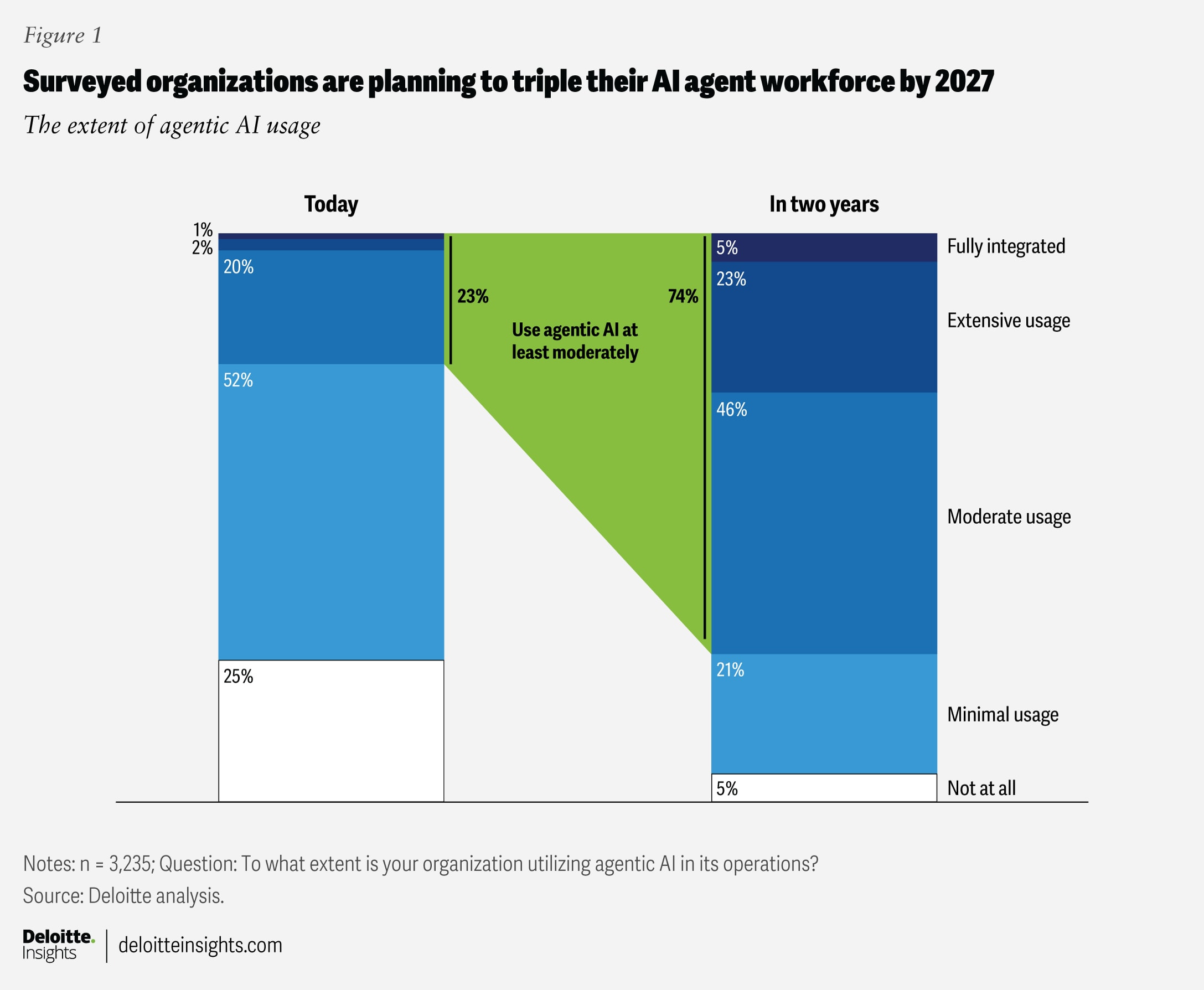
Deloitte found 74% of leaders expect to use agents at least moderately within two years, while only 21% report a mature governance model. An agent nobody has inventoried cannot be traced, scoped or retired, so sprawl is an AI observability problem before it is a governance problem.
[report-card]
Trust Latency: The Measure Behind Safe AI
Safe AI is easiest to reason about as a race between how fast harm spreads and how fast an organisation responds. We call the organisation’s side of that race trust latency: the time between an AI system going wrong and the organisation stopping it. It has three clocks: detect, explain and contain.
In a survey of 101 executives in the US and Canada, 59% can quickly detect AI failures, while only 23% can routinely stop AI from taking the wrong action. Containment needs a named owner with the authority to pause a system at 2 a.m. without convening a committee. A safe AI system is one whose trust latency stays shorter than the time its errors need to reach a customer, a regulator or another system.
Where to Start
The build runs in three phases. In Phase 1, inventory every model, agent and assistant and tier each by blast radius so AI observability depth tracks exposure. In Phase 2, instrument the data layer, then move evaluation into production with thresholds and escalation paths set before launch. In Phase 3, measure detect, explain and contain times, name one owner of the contain clock, and keep complete, tamper-evident records of prompts, responses and agent decision paths.
The next twelve months will turn those records into something customers and regulators ask enterprises to produce. Teams with short trust latency and complete evidence will sell AI into workflows that others are locked out of.
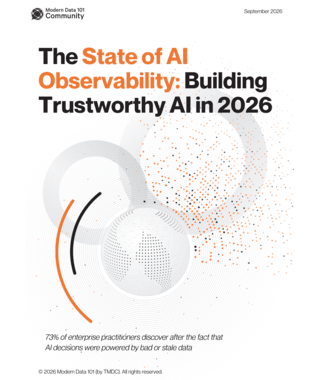
This article summarises findings from Modern Data 101’s full research brief, The State of AI Observability: How Enterprises Are Building Trustworthy AI in 2026.
[report-card]
FAQs
Q1. What is AI observability?
AI observability is the ability to understand what an AI system is doing, why it is doing it, and whether the result can be trusted, using evidence the system produces while it runs. Monitoring asks whether the system is up. AI observability asks whether the output was right and why.
Q2. How to build trustworthy AI?
Treat trust as an operating capability. Inventory every AI system and tier it by risk, instrument the data layer first, evaluate outputs continuously in production, and name one owner with the authority to pause a system. Keep complete records so you can show what the AI did and how fast you would have stopped it.
Q3. How does AI observability work?
It collects three kinds of signal: infrastructure metrics, model telemetry such as prompts, responses, token use and versions, and output-quality scores such as groundedness and drift. Traces and lineage link each answer back to its model, prompt and data. Evaluation turns that telemetry into a verdict, and alerts route to named owners who can act.
Q4. How are enterprises building AI agents in 2026?
Most start with bounded, high-volume work such as customer service, IT operations and document-heavy finance or legal tasks. Intent is ahead of control: 74% of leaders expect to use agents at least moderately within two years, while only 21% report a mature governance model. Teams that scale well inventory their agents, trace each decision path, and set permissions before deployment.
Q5. What are the key AI trends for 2026?
- Agents at scale: Gartner predicts the average global Fortune 500 enterprise will run over 150,000 agents by 2028.
- Observability as infrastructure: Gartner expects LLM observability investment to reach 50% of GenAI deployments by 2028, up from 15% today.
- Governance moving into runtime controls: policies are being backed by monitoring and enforcement that act while systems run.
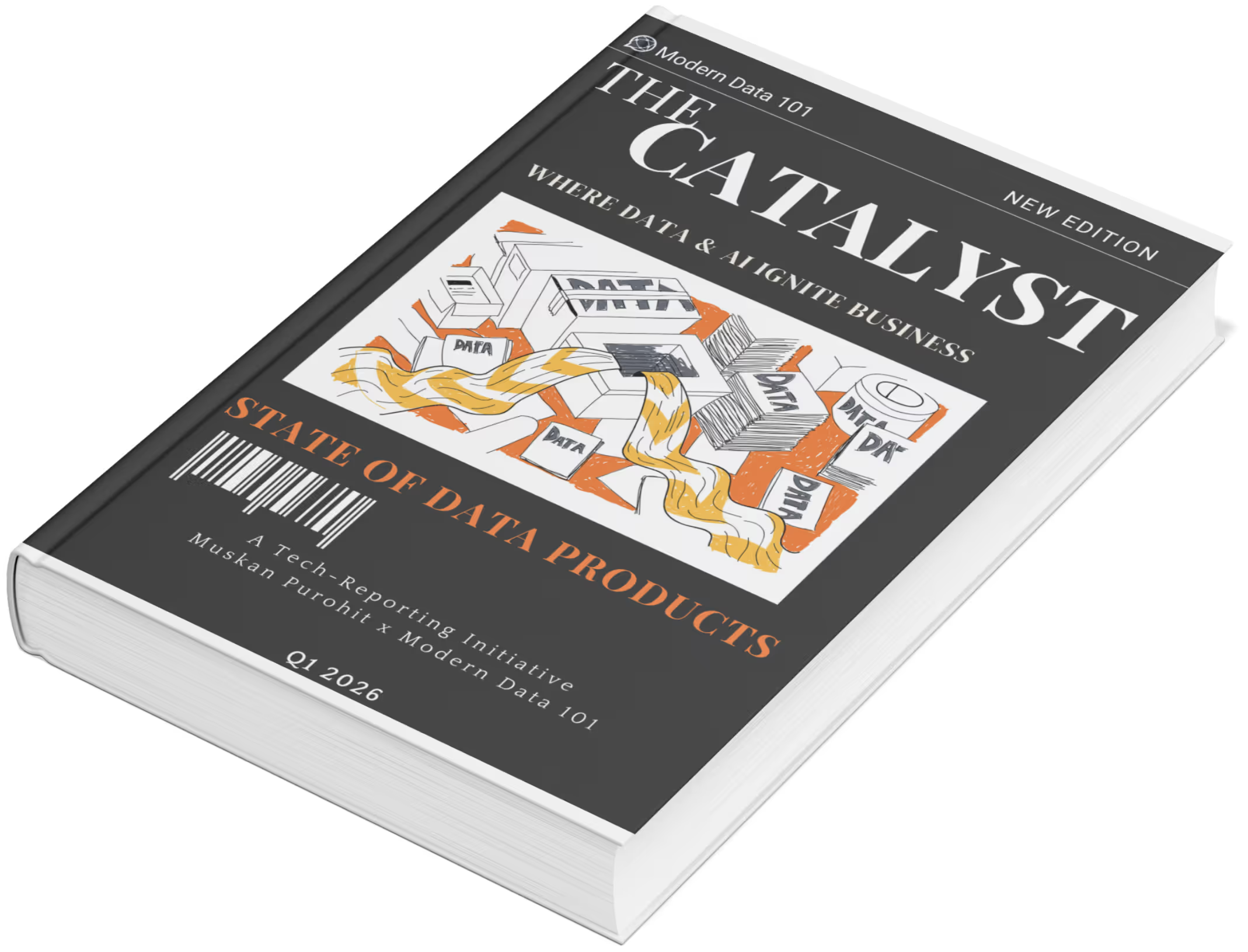
- Data readiness as the bottleneck: almost 70% of practitioners say their data isn’t clean or trustworthy enough for AI, per our survey.
- Audit-grade evidence: customers and regulators increasingly expect traces of specific AI decisions.
Get the full report
- Complete 18-page downloadable report
- Insights from industry leaders
- Phased plan for improving AI observability
Get the full report
- Complete 18-page downloadable report
- Insights from industry leaders
- Phased plan for improving AI observability


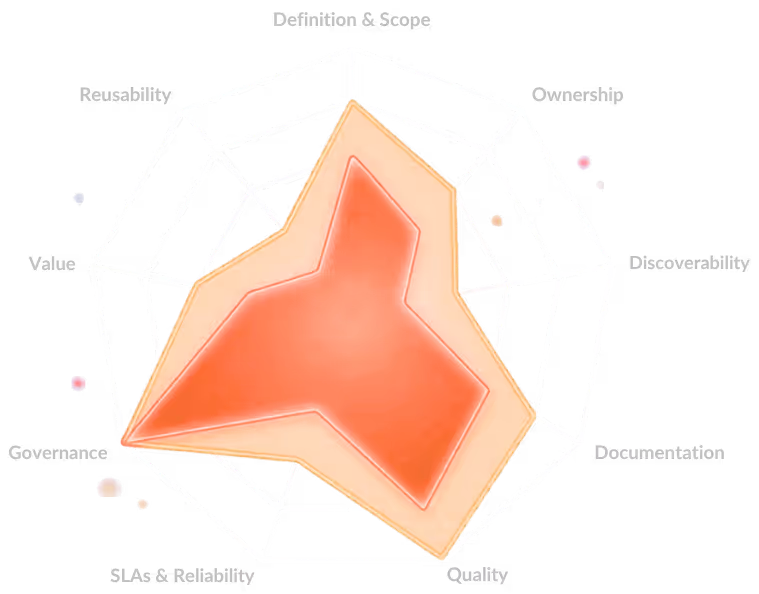
Where does your org stand on data product maturity?
A 9-dimension self-assessment used by 100+ data teams to benchmark strategy, ownership, and platform readiness.

You're all set
Your report is opening in a new tab
Tab didn't open? Open it manually
Akshay Chame
Akshay is a GenAI/ML engineer building production-grade AI systems, including RAG pipelines, AI agents, MCP servers, and LLM fine-tuning. An IEEE-published researcher and Smart India Hackathon 2023 winner, he is focused on scalable, reliable AI systems that move intelligent solutions from experimentation to production.
Ritwika Chowdhury
Ritwika Chowdhury is a data and technology professional focused on data products, AI, and modern data architecture. Her work sits at the intersection of data strategy, product thinking, and emerging AI technologies, with a focus on helping organisations turn enterprise data into trusted, usable, and scalable assets.
How Enterprises navigate observability to build safe & trustworthy AI in 2026
- Complete 18-page downloadable report
- Insights from industry leaders
- Phased plan for improving AI observability
You're all set
Your report is opening in a new tab
Tab didn't open? Open it manually
You're subscribed
You'll get every new Modern Data Report in your inbox — check your email to confirm.
Done