Top 5 Data Platforms for 2026
Check out this list to close in on the best data platforms in 2026 to align and scale workflows like never before

Last Updated: August 17th, 2026
Today, AI seems to be scaling with all the nuts and bolts, yet most organisations struggle with fragmented, untrustworthy, or siloed data, making it impossible to operationalise AI at scale. Data volumes were expected to reach an exploding volume of 402.74 million TB generated daily, 181 zettabytes, in 2025, and 90% of the world’s data was created in just the last two years (source)
Combine that with regulatory pressures, and the stakes are higher than ever!
The right AI-ready data platform turns chaos into clarity. It not only stores and processes data but also ensures trust, accessibility, and actionability, the foundation for analytics, predictive modelling, and enterprise AI.
In this article, we explore the top five data platforms of 2026, highlighting how each equips organisations to thrive in the AI era with modern data management, governance, and activation.
[state-of-data-products]
What is a Data Platform?
A data platform refers to a unified ecosystem that processes, governs, integrates, and delivers data for enterprise use. It enables organisations to move away from fragmented tools so that they can consolidate storage, metadata, pipelines, governance, and access controls in a single foundation.
Key Capabilities of a Data Platform
A modern data platform is the engine that powers insights, AI, and business action. At its core, it needs to collect, organise, and deliver data reliably, while giving teams control, visibility, and speed.
The following are its core capabilities:
Data Storage & Management
Modern platforms leverage scalable architectures such as data lakes, warehouses, or lakehouses. They provide versioning, metadata management, and cataloguing to maintain an organised, discoverable, and durable repository of data. This ensures that data is not only stored safely but is also ready for consumption by analytics, ML, or operational systems.
Data Processing & Transformation Capabilities
This capability is what enables raw data to become usable. A strong platform should let teams clean, enrich, normalise, and transform data into business-ready formats with minimal friction. Built-in support for ETL/ELT pipelines, real-time streaming, and even feature engineering is key, so analytics teams and AI/ML models can work with consistent, high-quality inputs every time.
Data Governance & Security
Governance is the trust layer of the platform. The best platforms embed fine-grained access controls (role-based or attribute-based), observability, lineage, and auditing by default. Compliance with regulations like GDPR and CCPA must be automatic, reducing risk while giving stakeholders confidence that data is safe, reliable, and ready for use.
Learn more about an overall data governance framework here.
Data Discovery & Cataloging
These make data usable. A robust platform offers searchable catalogues, semantic layers, and contextual tagging that allow business users and data teams to find and understand datasets without deep technical expertise.
Data Activation & Consumption
It is critical that insights reach the right channels. Platforms should provide APIs, SDKs, BI tool connectors, and streaming outputs to support analytics, operational applications, and AI/ML workflows. Monitoring, alerting, and performance tracking complete the ecosystem, helping organisations maintain reliability, optimise costs, and continuously improve data quality.
[related-1]
Best Data Platforms in 2026
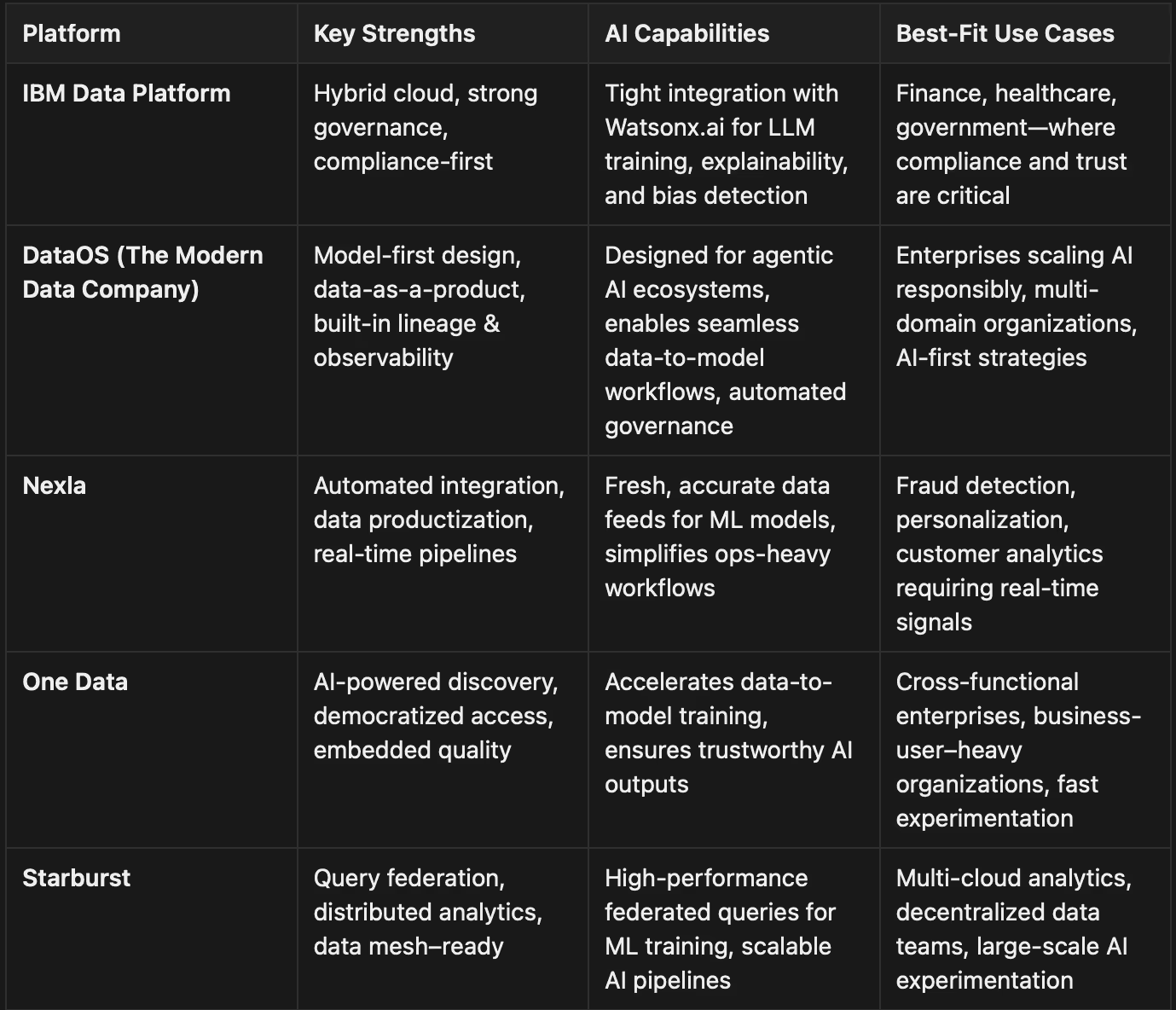
Now, let’s have a look at the top 5 data platforms in 2026. We have also compiled a table that offers a quick overview of these platforms as well.
1. IBM Data Platform
IBM remains a well-reputed name in the data platform space with Watsonx and Cloud Pak, providing enterprises with a close-knit ecosystem for AI and analytics. The platform is solid in compliance, governance, and hybrid cloud flexibility, making it an up-and-coming option for regulated industries like healthcare and finance.
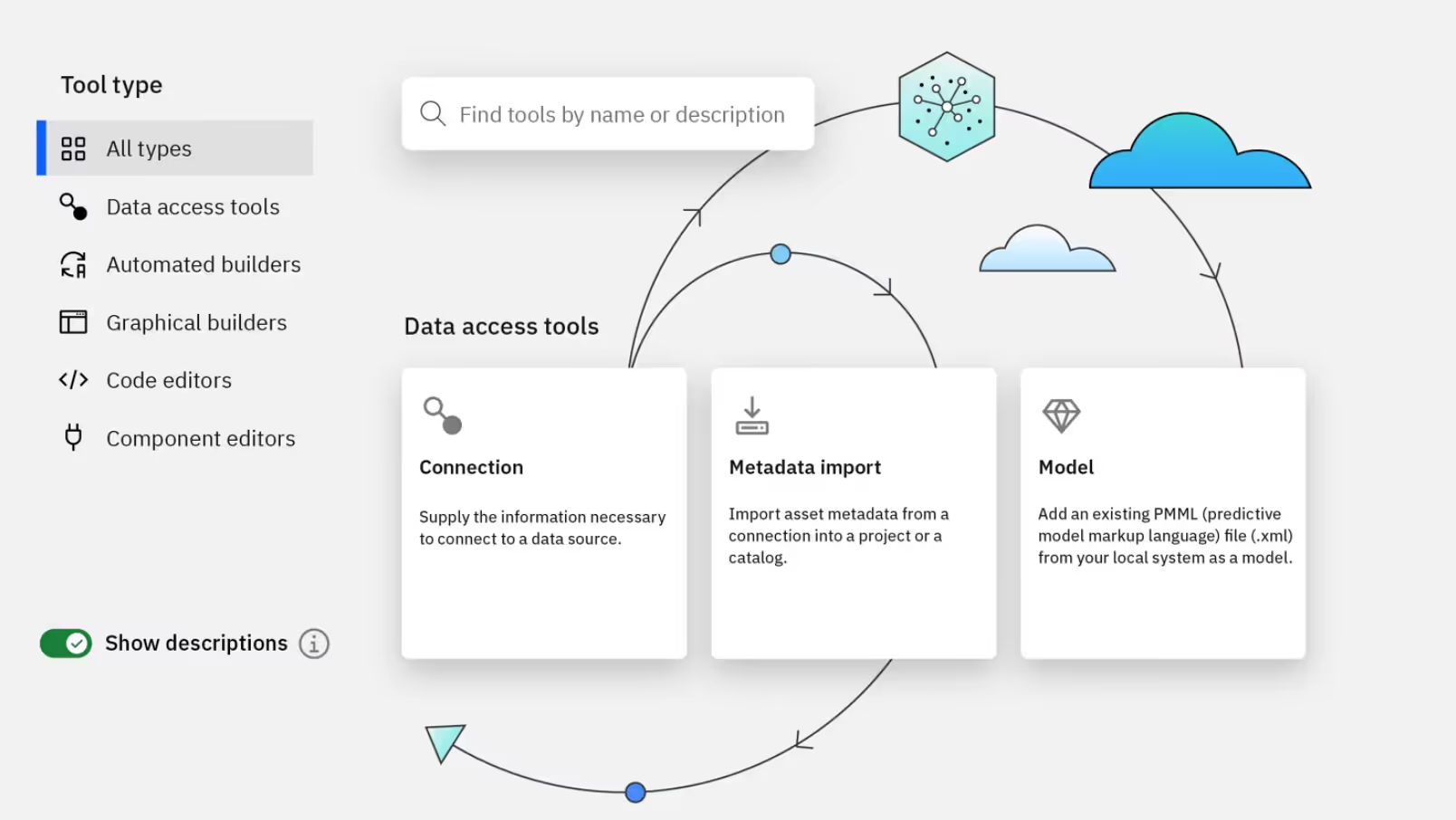
To keep abreast with the AI proceedings, IBM tightly weaves itself with Watsonx.ai, powering organisations to deploy, train, and manage LLMs while also ensuring transparency and fairness across the board. Enterprises on the lookout for a robust bundle of governance and AI-related capabilities find IBM to be a good option.
2. DataOS by The Modern Data Company
DataOS is an enterprise-grade data product platform designed to simplify, accelerate, and secure how organisations build, manage, and consume data products. Leveraging a self-serve architecture, it brings together data owners, developers, analysts, and operators under one roof to deliver business insights more rapidly.
It’s consumption-ready layer enables context-aware discovery, seamless data exploration, reliable data quality, and activation across interfaces like BI tools, APIs, and SDKs. This data platform’s rich connectivity, and processing: Supports batch and streaming pipelines; works with numerous source systems and formats (data lakes, warehouses, streaming systems) plus lakehouse storage and query tooling.
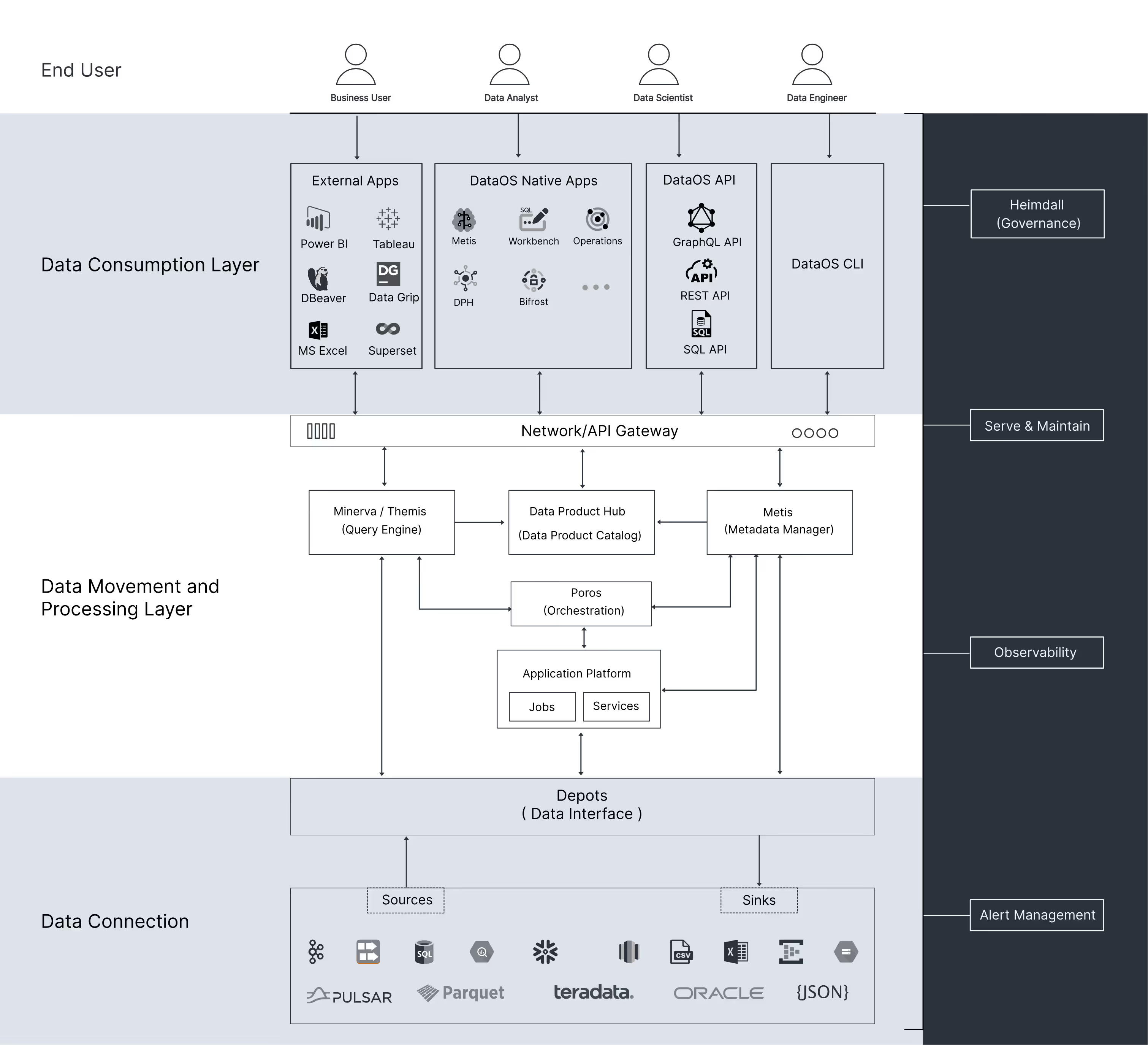
DataOS is especially strong in combining flexibility with governance. Many platforms do one or the other; DataOS aims for both. Its ability to let business teams self-serve while retaining oversight makes it ideal for organisations scaling their data operations. Also, its architecture supports modern demands like real-time data, multi-interface activation, and lakehouse style storage.
DataOS is built for the AI era that takes messy, fragmented data and turns it into trusted, context-rich data products with built-in governance, quality checks, and semantic clarity, so they’re ready for AI/ML and GenAI from day one.
The APIs and multi-interface activation enable models and agents to access the right data without endless engineering work.
Additionally, observability, lineage, and compliance remain embedded into the design, offering teams full trust and traceability. The result? Faster AI scaling, less operational drag, and a data ecosystem that’s always ready to deliver insights and decisions.
3. Nexla
Nexla has carved out a niche for itself as a data operations and integration platform par excellence, aimed at distributed and modern data environments. Similar to DataOS, it also adopts a data as a product approach, a crucial element for organisations looking for agility in their workflows. Nexla transforms raw data sources into governed and reusable products, streamlining the pipelines for AI and analytics.
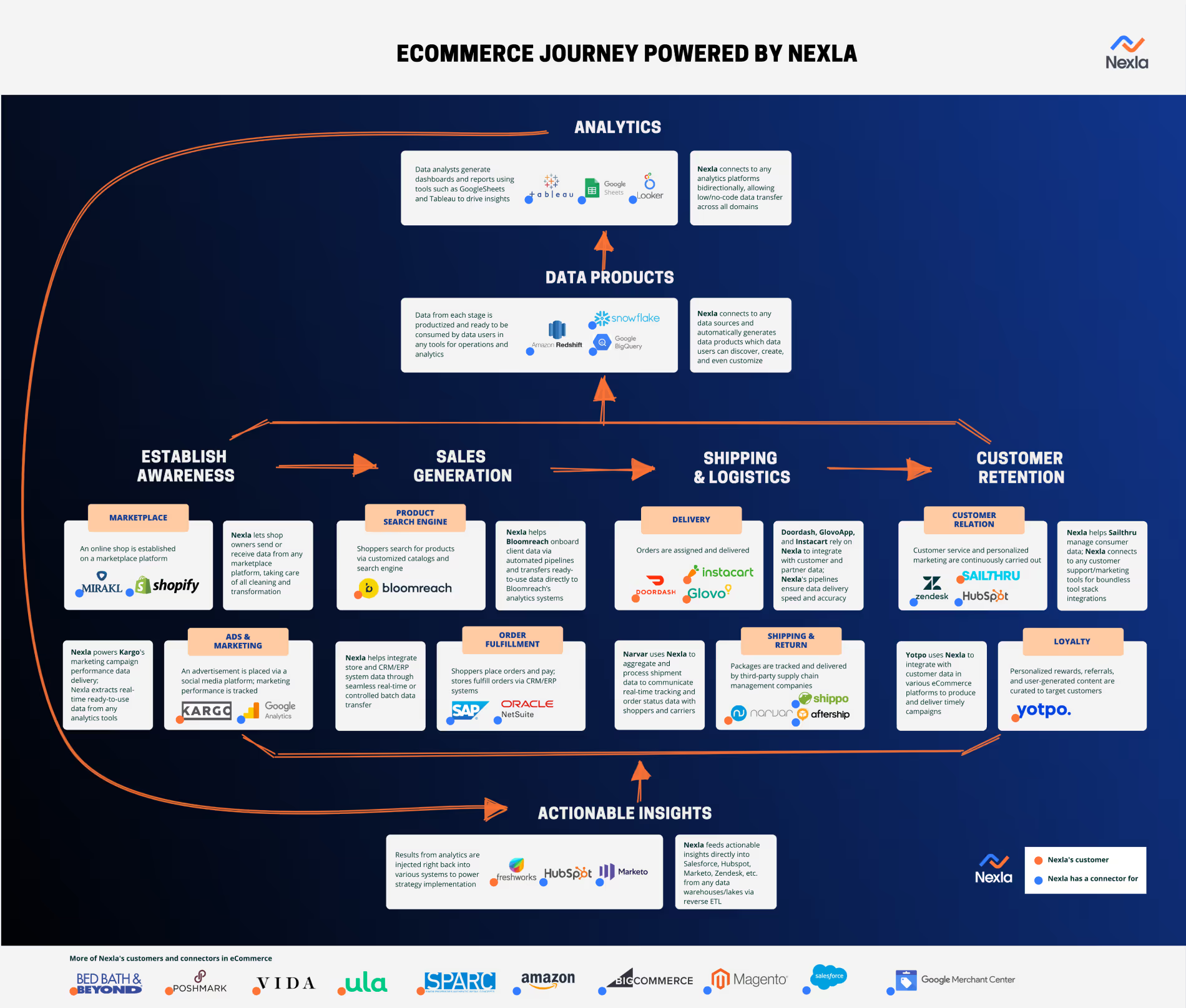
Nexla’s core is its AI capability set focused on real-time integration. AI models, majorly in areas such as fraud detection and personalisation, need fresh and accurate data. This is where Nexla offers the right scalability to power these systems without loading engineering teams with too much.
4. One Data
One Data has positioned itself as a data democratisation platform to empower both business and technical teams. Its differentiator is its AI-driven discovery layer that automatically maps, catalogues, and then contextualises enterprise data. All of this reduces friction in the data discovery process for accelerated decision-making.
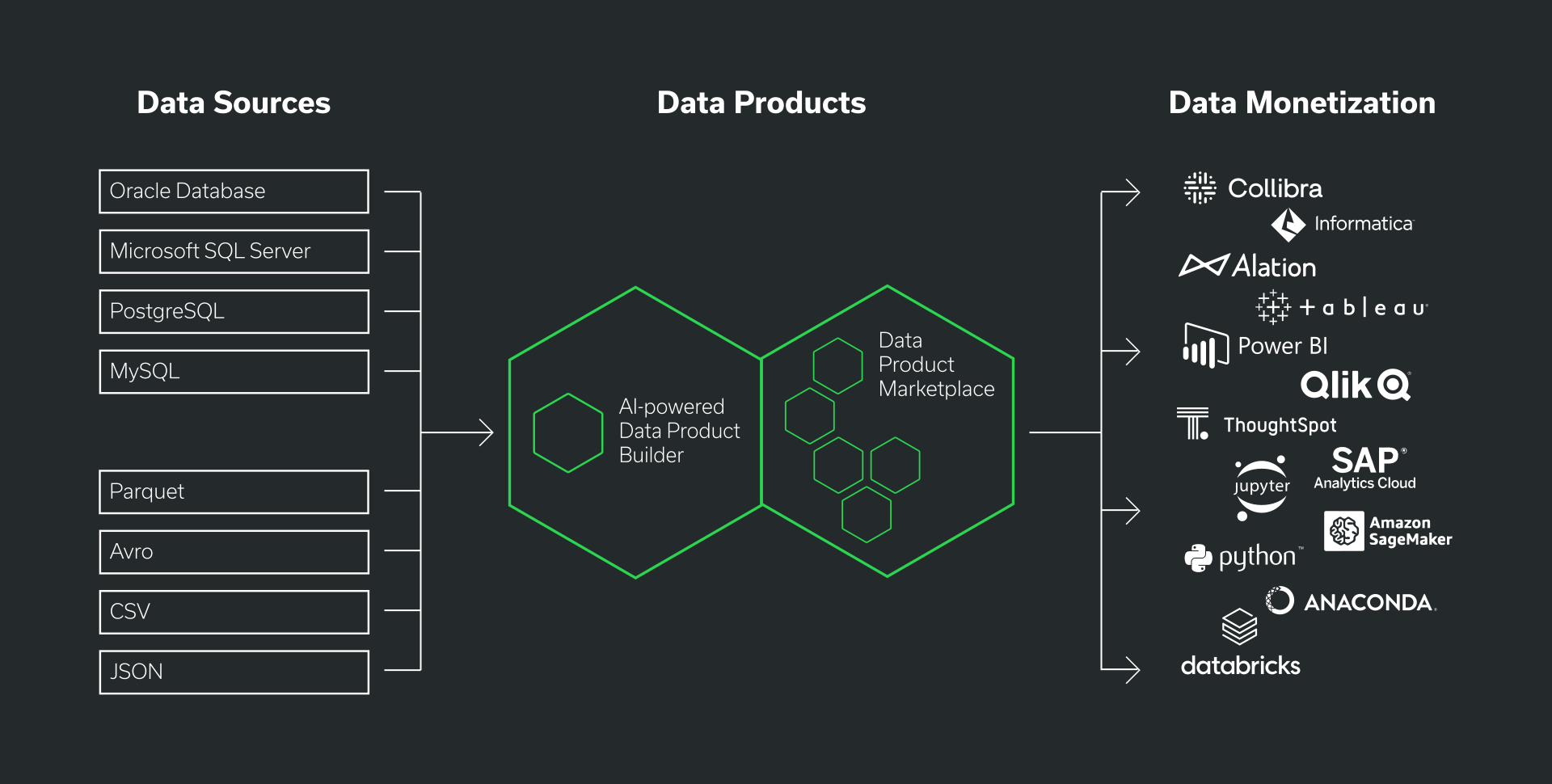
From an AI viewpoint, One Data powers enterprises to reduce the path from raw data to model training by embedding quality checks and governance into every stage, so that AI models are explainable and trustworthy while being powerful at the same time.
5. Starburst
Starburst is a leader in query federation as well as distributed analytics. It allows organisations to query data across multiple cloud sources without centralising it. Its data mesh architecture is consistent with modern strategies for data decentralisation.
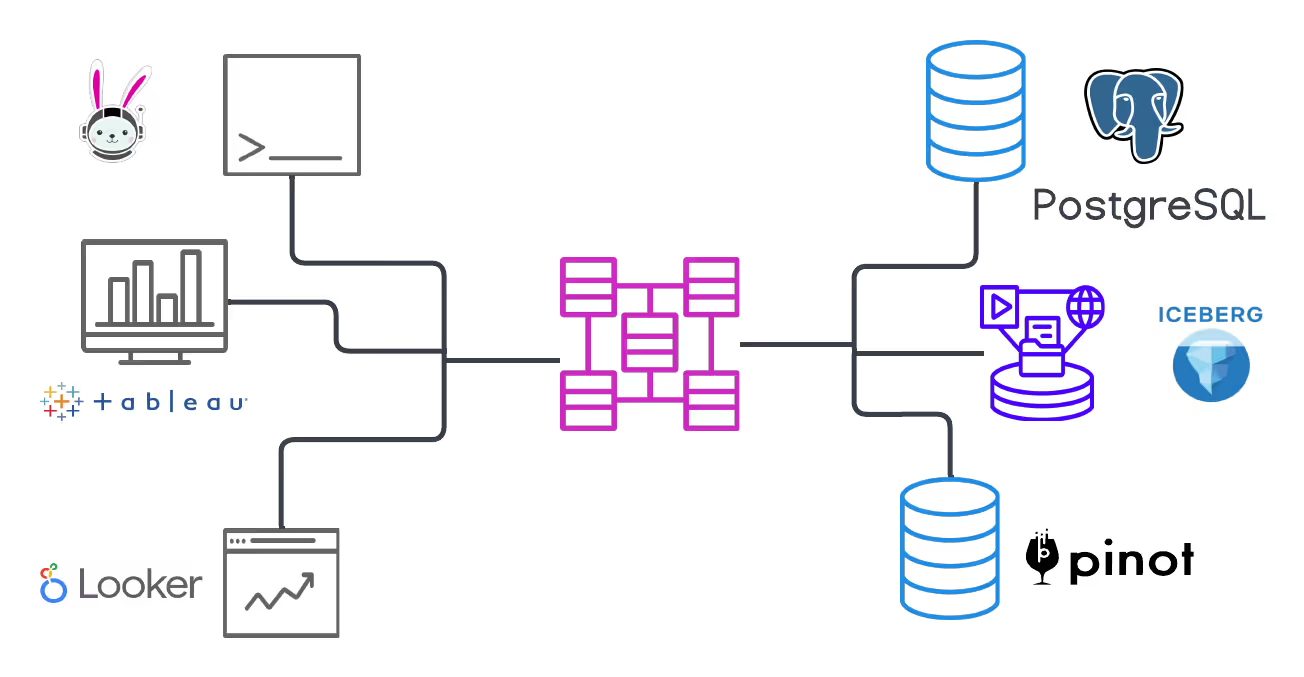
Additionally, their platform also acts as an effective enterprise data platform for AI integration and enablement, by offering the speed as well as scalability needed for large-scale model training.
The federated query enables AI teams to access diverse data assets with no complex engineering overhead, thereby making it an appropriate option for an enterprise’s predictive analytics and machine learning needs.
Final Thoughts
The best data platforms in 2026 are not just defined by how they store and process data, but by how well they adapt to enable AI ecosystems. While each data platform offers something unique in its own right, AI enablement is the common link between all of them. If enterprises are aiming for success in the AI era, choosing the right platform is going to be a strategic decision that will determine how quickly they can scale AI with responsibility.
FAQs
Q1. What is a customer data platform?
A Customer Data Platform (CDP) is a software system that collects and unifies customer data spanning multiple sources, like websites, apps, CRM systems, and transactions, into a single & persistent profile.
This unified view allows businesses to analyse, segment, and activate customer insights across marketing, sales, and analytics tools while ensuring privacy and compliance. In short, a CDP turns scattered customer data into actionable insights, enabling personalised experiences and smarter engagement at scale.
Q2. What makes a modern data management platform AI-ready?
An AI-ready data management platform combines lineage, governance, and quality by design. It ensures that organisations can trust their data while also enabling ML models to operate without risk at scale.
Q3. What are the top AI-enabled data platforms to consider in 2026?
Leading AI-enabled platforms in 2026 include Nexla, DataOS, IBM, One Data and Starburst. Each of them enables AI workflows with scalability, governance, and self-service capabilities tailored for enterprise needs.
Q4. What capabilities should a modern data platform provide?
A modern data platform should provide: scalable storage and cataloguing, ETL/ELT and real-time processing, embedded governance and security, searchable discovery with semantic layers, and multi-channel activation through APIs and BI connectors. Together these five capabilities turn raw data into a reliable, AI-ready foundation.
Q5. What infrastructure does a data platform need?
At minimum, a data platform needs separated compute and storage for independent scaling, an open table format like Apache Iceberg or Delta Lake to avoid vendor lock-in, and a metadata/catalog layer to track schema and lineage across both. Networking and security controls sit around all three to keep access governed.
Connect with a community data expert
A no-cost session with a practitioner who's been where you are.
About Modern Data 101
Modern Data 101 is a movement redefining how the world thinks about data. A community built by the same team behind the world’s first data operating system, Modern Data 101 sits at the intersection of data, product thinking, and AI. Spread across 150+ countries, the community brings together a global network of practitioners, architects, and leaders who are actively building the next generation of data systems.
At its core, Modern Data 101 exists to simplify the journey from raw data to tangible and observable impact. It advocates high-potential data systems and next-gen architectures to unify and activate insights and automation across analytics, applications, and operational workflows at the edge.
In a world shifting from data stacks to AI ecosystems, Modern Data 101 helps teams not just navigate the change but lead it.


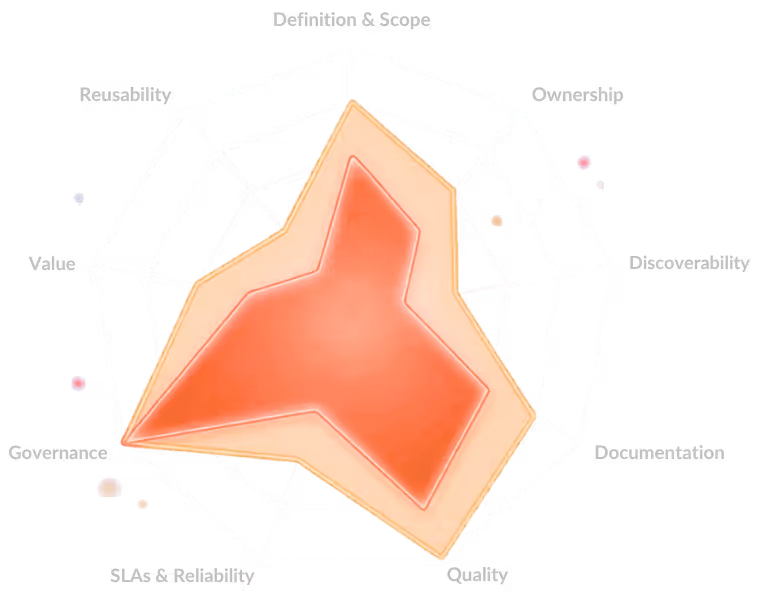
Where does your org stand on data product maturity?
A 9-dimension self-assessment used by 100+ data teams to benchmark strategy, ownership, and platform readiness.


Rakesh Vishvakarma
Rakesh is a data engineer who transforms raw data into fine wine. When he's not using AI to tag tables or make spot-on recommendations, he's deep into philosophical books or ones with more twists than his latest ETL pipeline, pondering existence and data governance.
Read the ideas here. Build them with The Modern Data Company.
Modern Data 101 is where the data community thinks out loud. When you're ready to move from articles to architecture, data products, governed AI pipelines, or a full Data Operating System; the team behind this community can help you build it.
Continue reading
.jpg)

.png)

.png)