AI Data Governance: Shift from Policy Documents to Machine-Readable Data Products
Traditional governance breaks down when non-human agents make real-time decisions. Here is how data products embed lineage, quality, and access control directly into the data layer.

Why Enterprise AI Fails at the Data Layer
Despite modelling being a core of AI success, the primary reason for massive disruptions is the lack of governance of the data being fed into AI models. This gap is exactly what data governance for AI is meant to close, and increasingly, the mechanism closing it is not much about a new policy document, but a new unit of data itself: the data product.
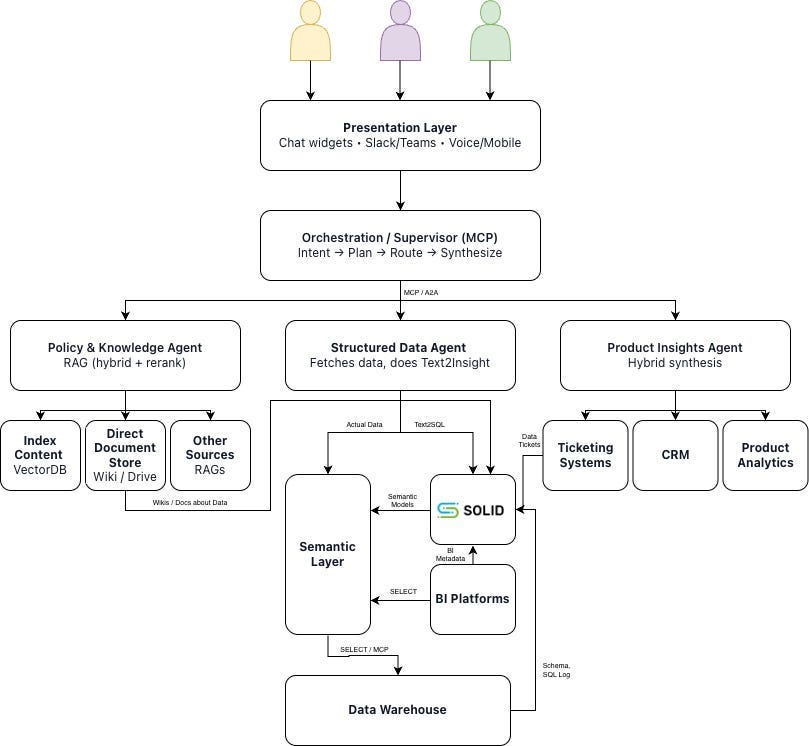
AI data governance differs from classic data governance in one structural way, it has to hold up against non-human consumers making decisions in real time. When governance is treated as documentation instead of infrastructure, AI systems inherit every gap underneath them: stale lineage, undocumented sensitivity, and access rules nobody enforced.
[related-1]
What is Data Governance for AI
Data governance for AI use cases covers how data is classified, secured, documented, and monitored across the full model lifecycle; training, fine-tuning, retrieval, and inference, not just storage and reporting. While traditional governance focused on reporting and compliance, AI-era governance has to account for real-time streams, derived features, and model outputs too.
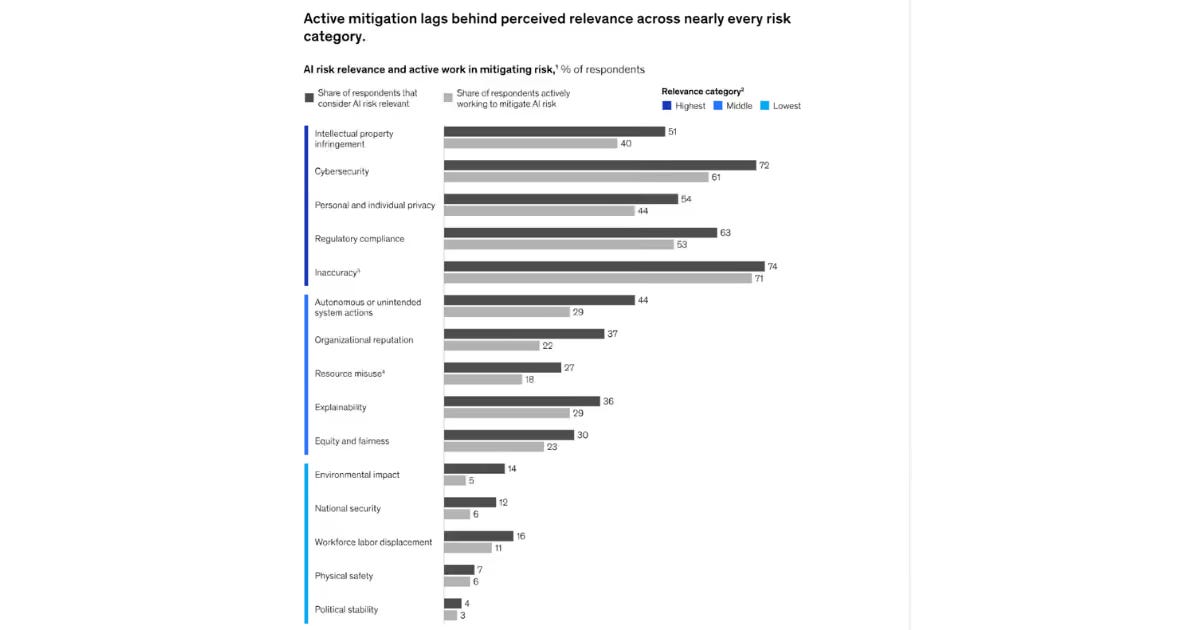
This is where most governance programs strain. A KPMG analysis of data governance in the age of AI notes that governance must be embedded into every data interaction- tagging, classifying, and enforcing policy as data is created. So organisations can turn raw data into trustworthy products instead of retrofitting controls after deployment. That’s a governance architecture shift, not a policy update.
[report-2025]
Why Traditional Governance Breaks Down for AI
Legacy governance was built around centralised catalogues and manual stewardship, workable when a handful of BI teams touched the data. AI multiplies consumers: agents, copilots, RAG pipelines, and fine-tuning jobs all pull from the same sources simultaneously, often without a human reviewing each request.
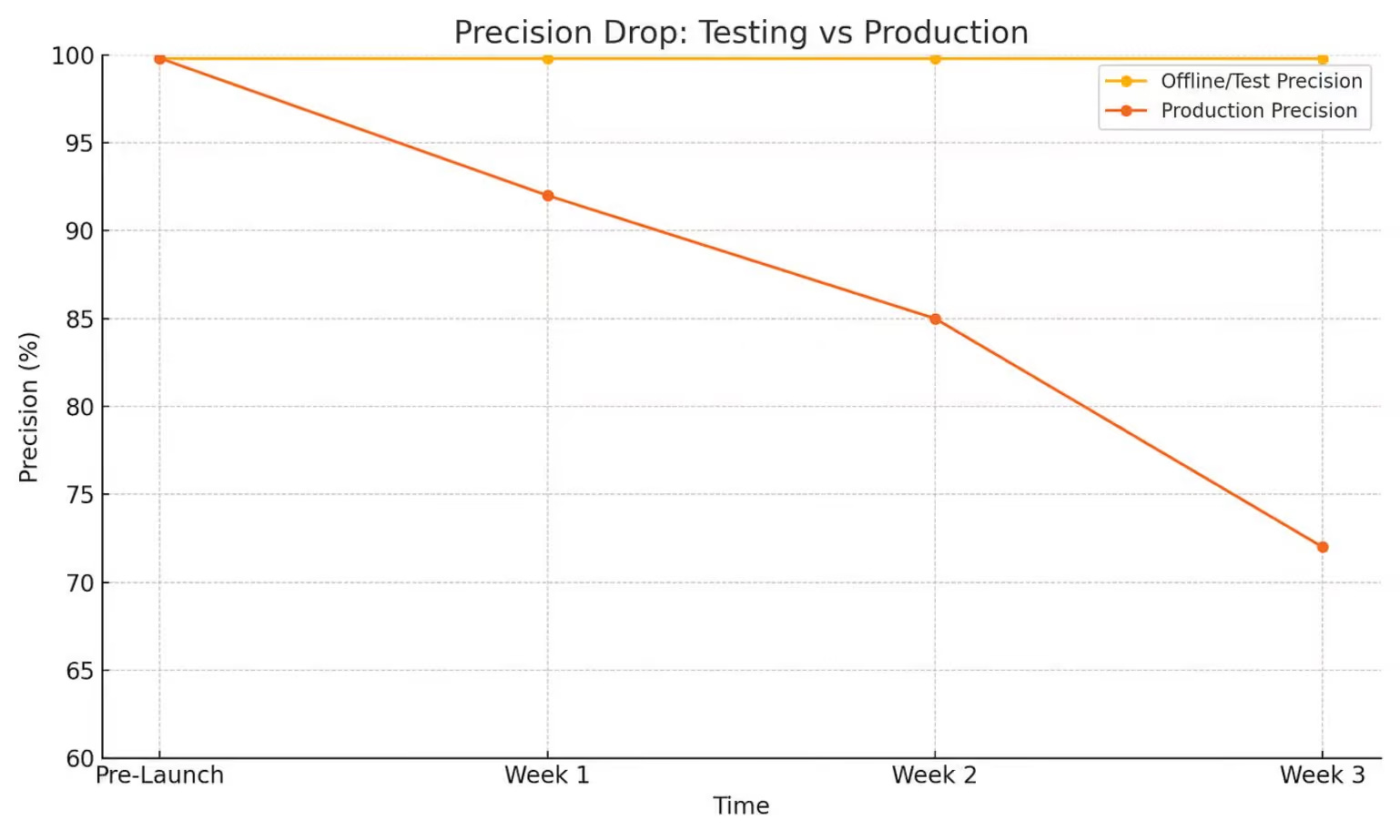
Modern Data 101’s 2026 practitioner survey found that 81% of data leaders now rank “strong and consistent governance” among their top three requirements for AI readiness, just behind unified data access. The same research ties AI stalling directly to fragmented data foundations, not model quality.
Focusing on data platforms and products for AI are the response practitioners are converging on: instead of governing a sprawling catalog, teams govern discrete, reusable units that carry their own rules.
[playbook]
How Data Products Solve the AI Data Governance Problem
A data product bundles data with its metadatahttps://hubs.li/Q04sCXYB0, lineage, ownership, quality checks, and access policy into one versioned, reusable asset, so governance travels with the data instead of living in a separate system that AI pipelines have to remember to check. When an AI agent queries a data product, it gets the business definition, the freshness guarantee, and the policy that determines whether it’s allowed to act on what it finds.
This is the core mechanism behind why agentic AI needs data products in particular: autonomous systems can’t pause to ask a human whether a field is safe to use. The governance decision has to already be embedded in the asset the agent is calling. Modern Data 101’s piece on solving governance debt with data products makes a similar case from the audit side: AI agents can only reliably monitor policy compliance when consumption points are standardised data products rather than ad hoc queries against raw tables.
[related-2]
Data Contracts: The Enforcement Layer
Data products need an enforcement mechanism, and that’s what data contracts provide. A recent study on governance AI in data product marketplaces describes how contract-checking systems evaluate access requests against declared policies before granting AI systems entry to a product, flagging PII exposure or purpose mismatches automatically rather than relying on a human reviewer for every request.
Modern Data 101’s deep dive on the most powerful data governance mechanism argues that consequences need to be pre-announced in the contract itself, not discovered after a breach, turning governance from something enforced by human vigilance into something enforced by design. That distinction between compliance (doing it because someone’s watching) and conformance (doing it because the system requires it) is exactly what AI-scale governance depends on.
Building an AI Data Governance Framework Around Data Products
A workable AI data governance framework built on data products generally includes:
- Ownership at the product level; every product has a named steward accountable for its quality and policy.
- Embedded lineage and semantics; definitions and transformation history travel with the data, not in a separate wiki.
- Machine-readable contracts; policy-as-code that pipelines and agents can check programmatically.
- Continuous monitoring, not point-in-time audits; governance checked at every access, not once a quarter.
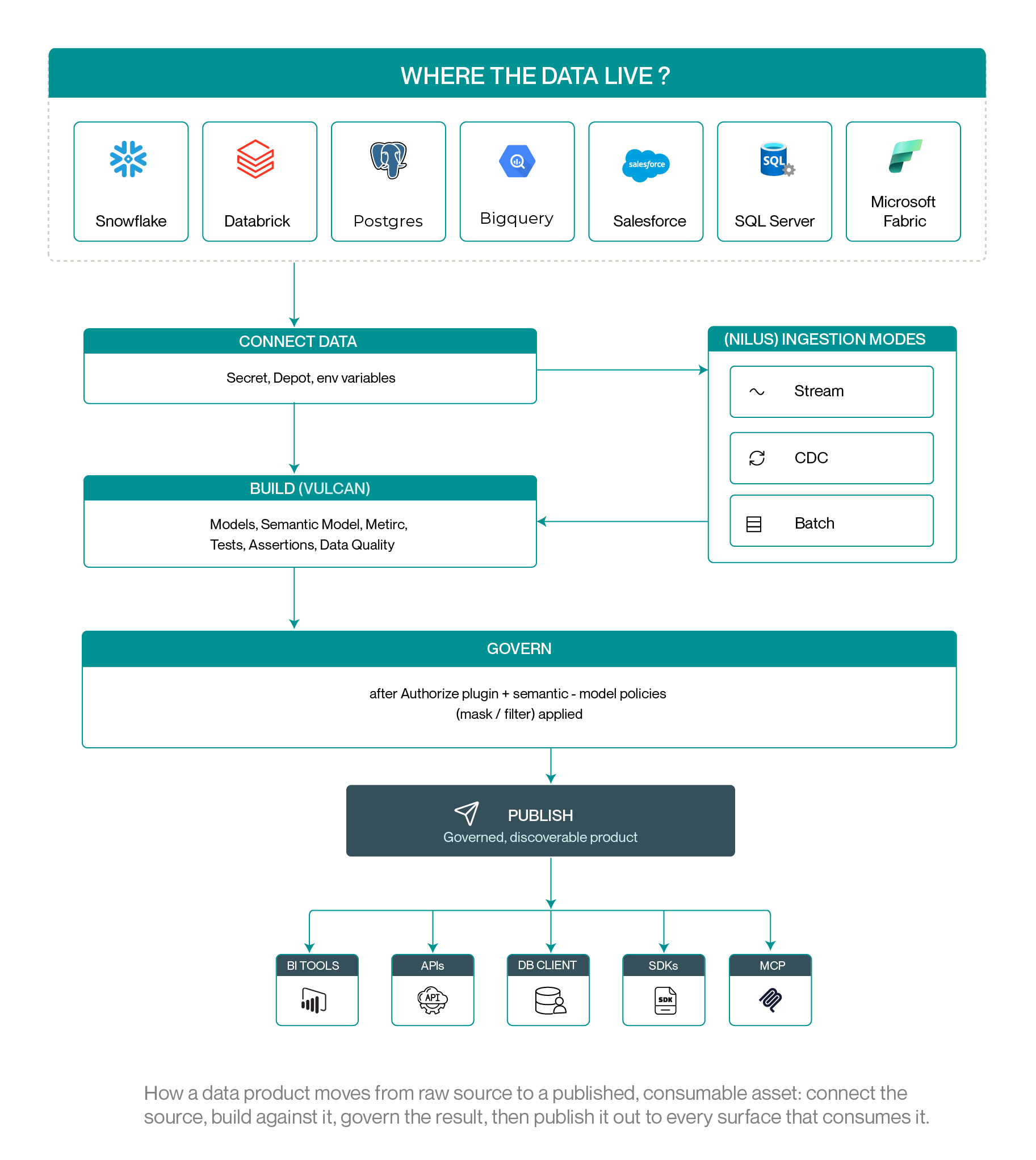
Platforms like DataOS apply this pattern directly, turning fragmented sources into governed, AI-ready data products with policy, lineage, and quality controls built in rather than layered on top.
[related-3]
Transitioning from Policy Documents to Data Contracts
Governance built for dashboards won’t hold up against AI agents making decisions in production. The organisations moving fastest are restructuring how data is packaged so governance is inseparable from the asset itself. Start with the data products feeding your highest-stakes AI use case, and build the contract before you build the pipeline.
FAQs
Q1. How is AI used in data governance?
AI helps automate and scale governance by classifying sensitive data, detecting quality anomalies, discovering relationships, generating metadata, monitoring policy violations, and surfacing lineage or compliance risks. It shifts governance from largely manual oversight to continuous, proactive governance.
Q2. What are the five pillars of data governance?
A practical five-pillar framework is:
- People – ownership, stewardship, accountability
- Policies – rules, standards, and controls
- Processes – workflows for managing and governing data
- Data Quality – accuracy, completeness, consistency, and timeliness
- Technology – catalogs, lineage, security, quality, and governance tooling
Q3. What are the top data governance tools?
A strong 2026 shortlist includes:
- Collibra – Enterprise governance & compliance
- DataOS – Data product, access, policy, and governance layer
- Alation – Data catalog & discovery
- Informatica – Data quality & governance
- Microsoft Purview – Microsoft/Azure-centric governance
- BigID – Data discovery, privacy & security
- IBM Knowledge Catalog – Enterprise data intelligence
- Snowflake Horizon – Governance within Snowflake
- OpenMetadata – Open-source metadata & governance
Q4. What is the difference between AI governance and data governance?
Data governance governs the data; AI governance governs how AI systems use and act on that data.
- Data governance: quality, ownership, security, privacy, lineage, access, and lifecycle.
- AI governance: model/agent risk, fairness, explainability, safety, accountability, monitoring, and regulatory compliance.
Connect with a community data expert
A no-cost session with a practitioner who's been where you are.
About Modern Data 101
Modern Data 101 is a movement redefining how the world thinks about data. A community built by the same team behind the world’s first data operating system, Modern Data 101 sits at the intersection of data, product thinking, and AI. Spread across 150+ countries, the community brings together a global network of practitioners, architects, and leaders who are actively building the next generation of data systems.
At its core, Modern Data 101 exists to simplify the journey from raw data to tangible and observable impact. It advocates high-potential data systems and next-gen architectures to unify and activate insights and automation across analytics, applications, and operational workflows at the edge.
In a world shifting from data stacks to AI ecosystems, Modern Data 101 helps teams not just navigate the change but lead it.


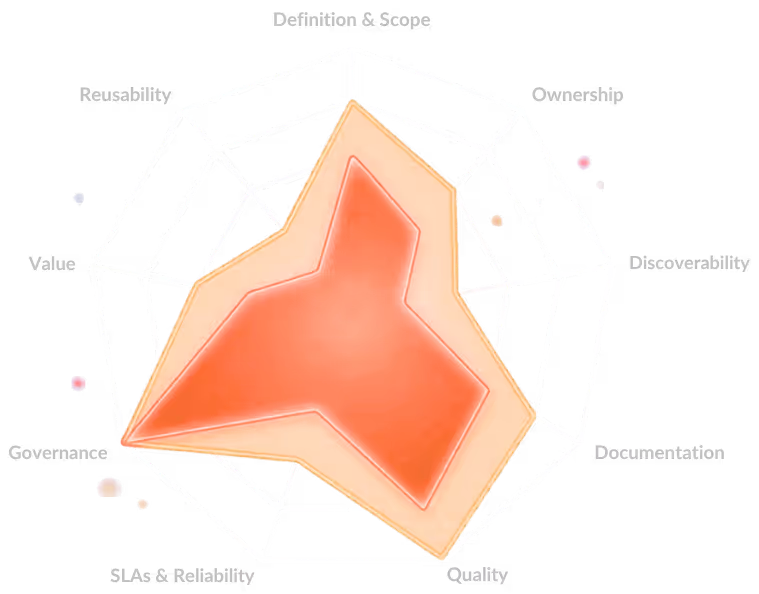
A 9-dimension self-assessment used by 100+ data teams to benchmark strategy, ownership, and platform readiness.


Ritwika Chowdhury
Ritwika Chowdhury is a data and technology professional focused on data products, AI, and modern data architecture. Her work sits at the intersection of data strategy, product thinking, and emerging AI technologies, with a focus on helping organisations turn enterprise data into trusted, usable, and scalable assets.
Read the ideas here. Build them with The Modern Data Company.
Modern Data 101 is where the data community thinks out loud. When you're ready to move from articles to architecture, data products, governed AI pipelines, or a full Data Operating System; the team behind this community can help you build it.
Continue reading