9 Best Customer Data Platforms (CDPs) in 2026: In-depth Look
Why the '360° View' is Still a Lie, and How a Composable Architecture Offers a Solution for Real-Time, Governed Data in 2026.

Last updated on 19th August, 2026
- The "360-Degree View" Myth: Traditional packaged CDPs often act as digital duct tape, copying data into a new proprietary silo that increases costs, governance risk, and operational latency.
- What a CDP Actually Does: A modern CDP executes three non-negotiable functions: high-throughput Unification, real-time sub-300ms Identity Resolution (IDR), and bi-directional Activation into downstream channels.
- The Composable Coup: The enterprise market is pivoting away from packaged, closed CDPs to Composable/Warehouse-Native CDPs. Data stays in your cloud warehouse while the CDP layer supplies IDR, segmentation, and activation logic on top.
- 5 Critical Selection Criteria: Evaluate CDPs on IDR accuracy, sub-300ms real-time latency, zero-copy composable architecture, native GDPR/CCPA governance, and custom AI/ML model execution.
- Top Market Contenders Reviewed: Covers leaders and architectural disruptors across developer pipelines (Twilio Segment), enterprise platforms (Salesforce, Adobe), warehouse-native layers (DataOS, ActionIQ), identity specialists (Amperity), scale engines (Treasure Data, Tealium), and e-commerce platforms (Insider).
The false promise of the 360-Degree Data View said, “see the entire life and activities of your customer on one single pane”. This ideal 360-degree view swiftly became “the obsession” of marketing and data teams.
But the truth? Most "solutions" being sold today are nothing more than digital duct tape. They simply patch over legacy data failures and create a new, proprietary silo that is just as rigid and expensive as the ones you dared to escape from.
[state-of-data-products]
What is a Customer Data Platform or CDP?
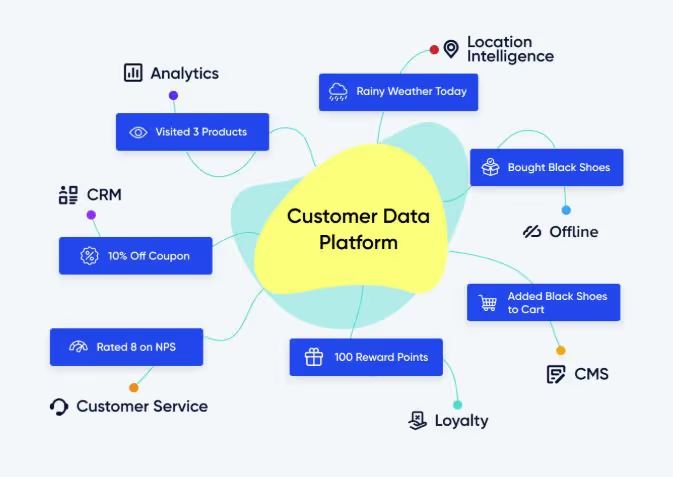
A Customer Data Platform (CDP) is a data platform that specifically unifies a business’s customer data across all business touchpoints. CDP is the location where every customer interaction, intent, and behaviour is attached to a coherent identity. A CDP turns scattered data signals into a dynamic or flexible model of the customer, so teams aren’t reacting to data but designing experiences with it.
The CDP becomes a product that knows who the customer is, what they care about, and what should happen next. Essentially it enables the shift from “collect everything” to “understand deeply and act deliberately.” It is the backbone of modern growth: governed, real-time, and built to transform insight into action before the moment passes.
In practical, non-buzzword terms, a CDP is a managed database that does three crucial, non-negotiable things:
- Unification: It relentlessly inhales data from every touchpoint be it web, mobile, CRM, email, POS, or offline and mashes it all into one persistent, central database.
- Identity Resolution (IDR): This is the magic trick. It stitches together all those anonymous cookies, device IDs, email addresses, and loyalty numbers into a single, cohesive Customer Profile. Get this wrong, and your entire personalisation strategy is based on a fictional person.
- Activation: It takes those unified profiles and highly specific, dynamic segments (e.g., "High-Value Customers in San Francisco with High Churn Risk") and blasts them out in real-time to downstream marketing systems for immediate, targeted action.
[related-1]
Why CDPs Gain New Relevance in 2026: The Uncomfortable Truth
Customer Data Platforms can no longer be thought of as only a "nice-to-have," they are now essential plumbing, and if you're not following along, you are irrelevant already. They serve as the mandate for real-time personalisation, crushing the weight of regulatory compliance that demands rigour over every single data point.
CDP vs CRM vs DMP: Navigating the Acronym Minefield
The business landscape is slowly becoming a graveyard of confusing acronyms designed to make you think your problem is unique.
- CDP (Customer Data Platform): This is the "Personal Genius." It focuses on 1st-Party Behavioural Data(what they did) and acts as the System of Intelligence, meaning it figures out who the customer is and what they are likely to do next.
- CRM (Customer Relationship Management): This is the "Personal Assistant." It focuses on 1st-Party Known Contact Data (PII, names, phone numbers) and serves as the System of Record. It tracks direct sales interactions and service tickets.
- DMP (Data Management Platform): This is the "Expired Scout." It focused on 3rd-Party Anonymous Datato help you target strangers. It is rapidly losing relevance with the cookie death and is being euthanised by privacy regulations.
Packaged CDPs vs Warehouse-Native Architecture
The most critical distinction today is between the old and the new. Traditional "packaged" CDPs are an expensive, separate system that often creates a new data silo. The market is pivoting to Composable CDPs that leverage your existing Cloud Data Warehouse. This means your data stays where it is (and governed, so), and the CDP simply provides the IDR, segmentation, and activation logic on top. This allows you to pay for the intelligence instead of storage.
📝 Related Reads:
The Widening AI Value Gap: How a Data Platform Fixes It ↗️
How to Choose a CDP in 2026: The Only Criteria That Matter
A successful Customer Data Platform implementation is an architectural decision. If your vendor does not ace these five areas, they are selling you yesterday's solution:
- Identity Resolution (IDR) Strength: This isn't just a feature of Customer Data Platform; it's the product. If your IDR is sloppy, your personalisation is just spam with a first name attached.
- Real-Time Capability: If your personalisation loop takes longer than 300 milliseconds, it is not "real-time," it is "batch."
- Architecture (The Silo Test): Does it insist on moving and copying all your data into its proprietary storage? The future is warehouse-native and composable.
- Governance & Compliance: If you need to bolt on a separate tool for GDPR/CCPA consent and lineage, your compliance is brittle, and your legal team should be concerned. Governance must be native, period.
- The AI Readiness Test: Ask if it can actually host and run custom machine learning models directly on the unified customer profiles?
[related-2]
Deep Dive: 9 Top Customer Data Platforms Compared
We reviewed the market leaders, specialists, and the emerging architectural disruptors. Our evaluation of customer data platform tools focused on their ability to solve modern-day data problems. Beyond simple data aggregation and creating production-grade, reusable customer assets. We attempted to line up the traditional giants against the composable upstarts.
Our fabulous list features: Twilio Segment, Data Operating System for X360s (DataOS), Salesforce Data Cloud, Adobe Real-Time CDP, Tealium Customer Data Hub, ActionIQ, Amperity, Treasure Data CDP, and Insider.

Comparative Framework / How We Evaluate Them
We evaluated these platforms not on market hype, but on their ability to create production-grade, reusable customer assets. Our assessment hinges on this consistent set of evaluation parameters:
- Data Ingestion & Connectors: Focuses on the breadth of pre-built connectors and native support for high-volume streaming/event data. Determines if you can actually capture real-time behaviour without complex custom engineering, or if you're stuck in the batch.
- Identity Resolution (IDR): Assesses the accuracy, methodology, and capacity for handling messy, enterprise-scale legacy data. If this fails, every segment and personalisation is fundamentally flawed.
- Segmentation & Modelling: Measures the ease with which business users can create dynamic segments and the platform's support for custom AI/ML model deployment.
- Activation Channels & Real-Time Support: Evaluates the speed and bi-directional sync capabilities across a wide array of destinations. Determines if you can actually influence the customer experience in the moment or if you’re always reacting late.
- Governance & Privacy: Focuses on native capabilities for consent management, data lineage, and policy enforcement. Liability avoidance. A CDP that doesn't natively handle consent is a compliance nightmare.
- Architecture & Flexibility: This is a crucial Silo Test, Packaged vs. Composable/Warehouse-Native architecture and the resulting vendor lock-in risk. Stop paying for storage you already own.
Deep Dive: Diving into the Customer Data Platforms at Hand
CDP #1: Twilio Segment
Twilio Segment is one of the leading Developer-Focused CDPs and an Ecosystem King with its 700+ pre-built connectors. For teams that just need the data pipe to work with minimal engineering friction, Segment works well.
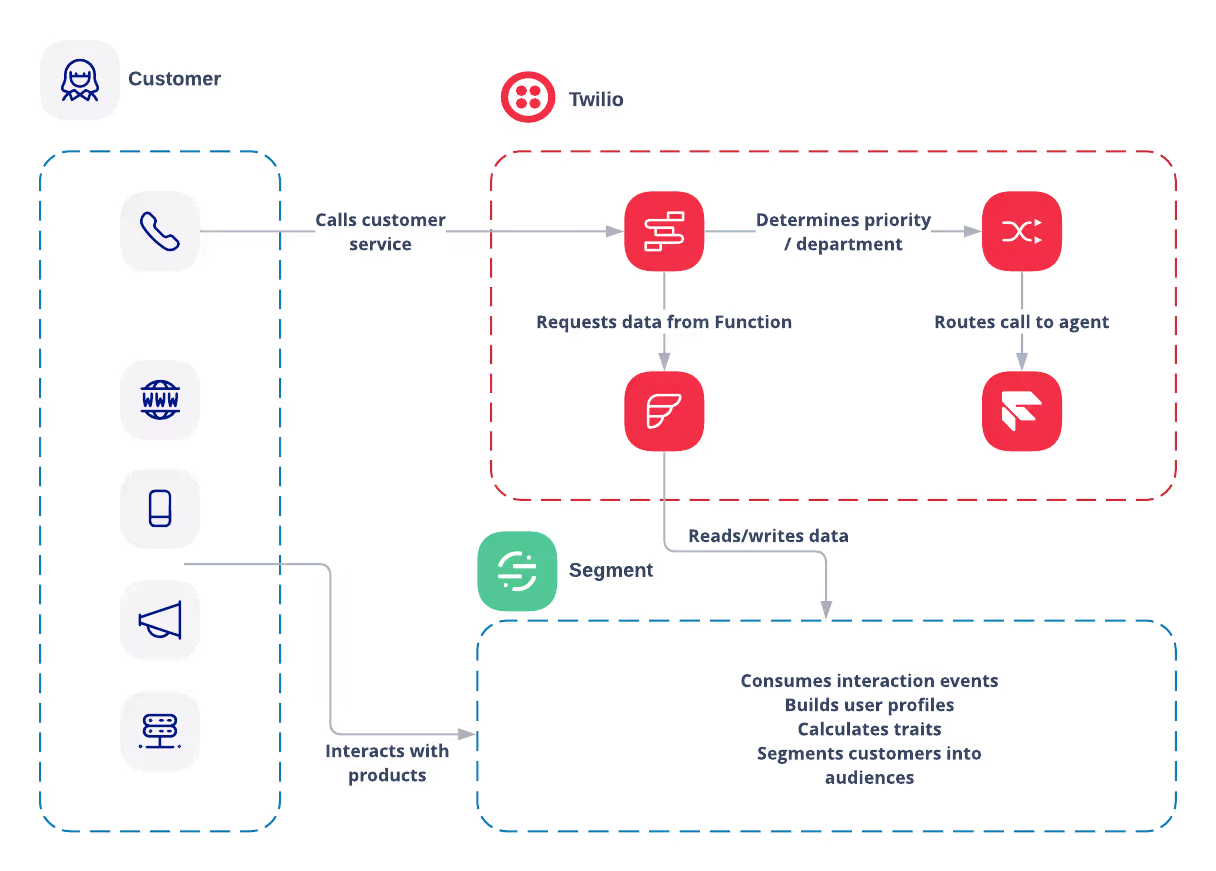
Their core strength is the Event Data Tracking API and Segment Protocols for data governance and schema enforcement. This place is an ideal fit for B2C mobile-first apps and firms needing rapid activation across a broad, best-of-breed MarTech stack.
CDP #2: Data Operating System for X360s (DataOS)
The Data Operating System construct breaks the traditional CDP narrative. DataOS is an architectural challenger as a Composable Data Platform that embeds identity and activation into a unified data fabric. It enables a true platform experience instead of yet another silo.
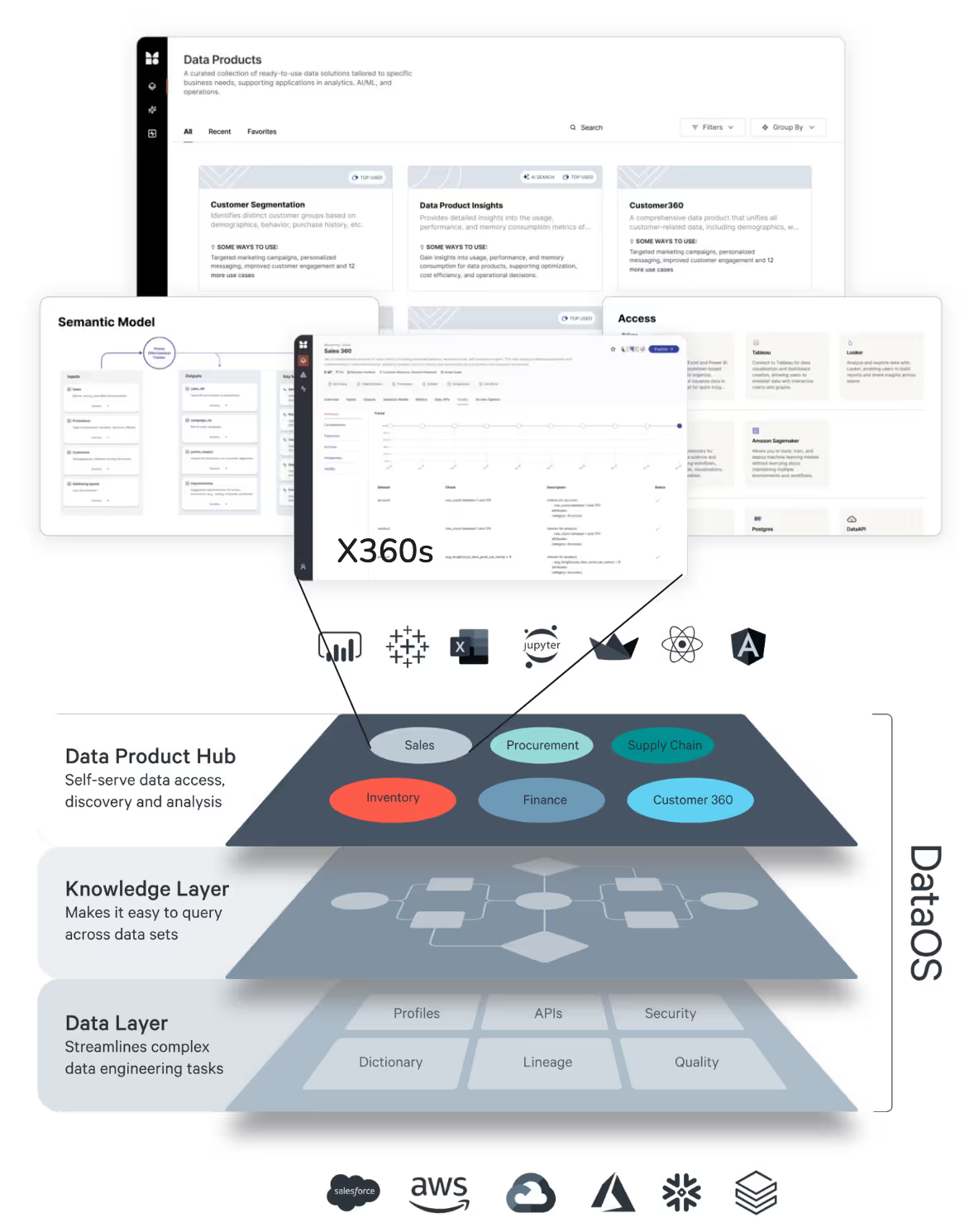
The key strength is the Native Data Product Architecture. It turns messy customer data into reusable, governed Data Products with built-in lineage and access controls, eliminating the technical debt that cripples traditional CDP implementations. DataOS is the choice for highly regulated enterprises needing robust, native PII governance and large organisations committed to a composable data strategy.
CDP #3: Salesforce Data Cloud / Salesforce CDP
Salesforce Data Cloud is the Enterprise Leader for companies deeply invested in the Salesforce ecosystem. Its primary strength is the Platform Advantage (despite the lock-in): it offers a seamless, native integration with Sales Cloud and Service Cloud.
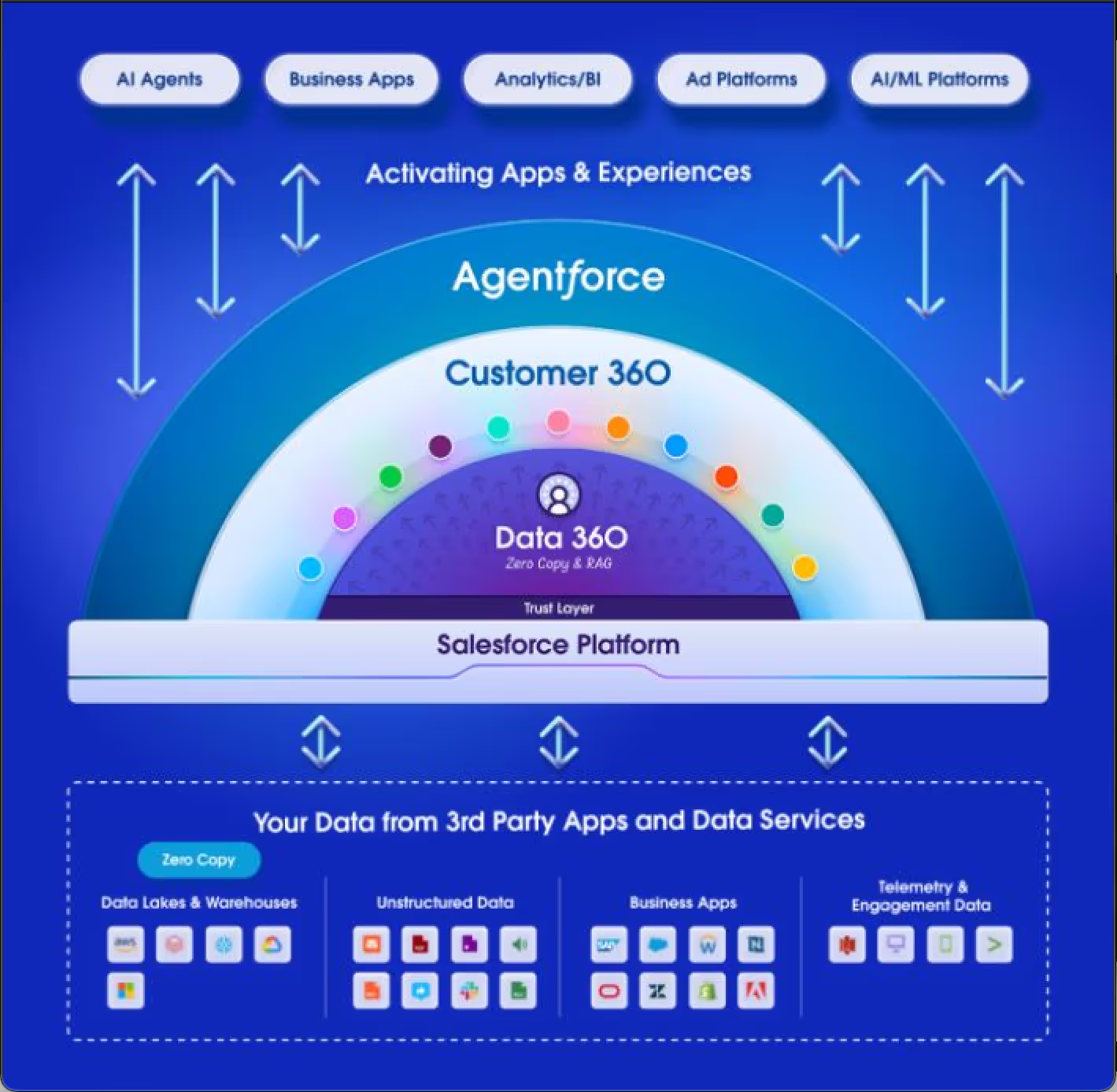
If your sales, marketing, and operations teams live in Salesforce, this provides the best cross-functional coordination. This CDP is for Salesforce-centric enterprises and B2B companies needing tight alignment between marketing and sales/service.
CDP #4: Adobe Real-Time CDP / Adobe Experience Platform
Adobe Real-Time CDP is an Experience Leader for massive B2C brands committed to a comprehensive customer experience suite. Its core strength is Real-Time Mastery & AI Vision, with excellent handling of streaming data for instant, personalised experiences.
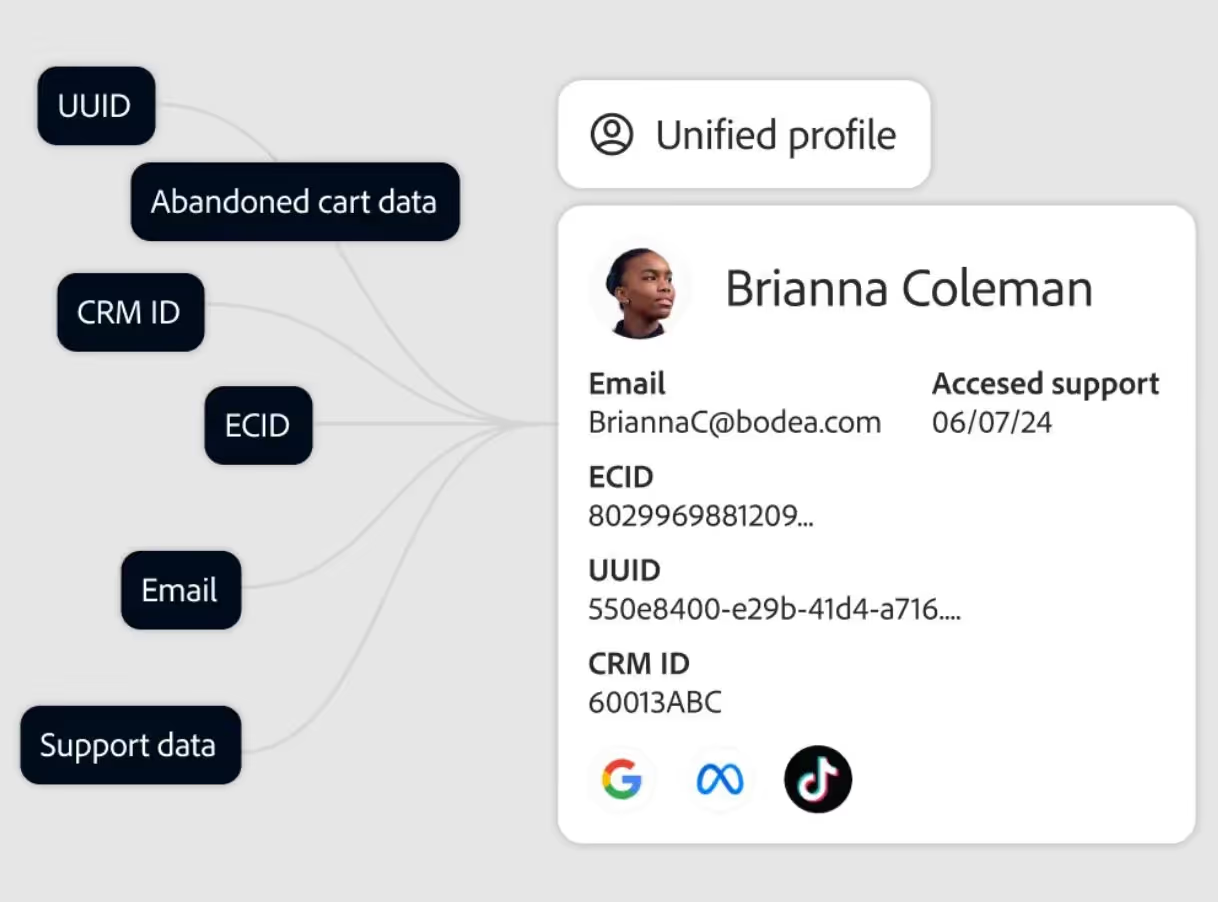
They leverage Adobe Sensei (AI/ML) and have a strong GenAI vision for creating personalised content on the fly. It's built for global brands and media companies focused on dynamic, personalised digital experiences.
CDP #5: Tealium Customer Data Hub
Tealium is a Vendor-Agnostic, Real-Time Orchestration platform.8 Known as the ultimate data traffic cop, its strength lies in its neutrality and focus on Zero-Party Data & Governance.
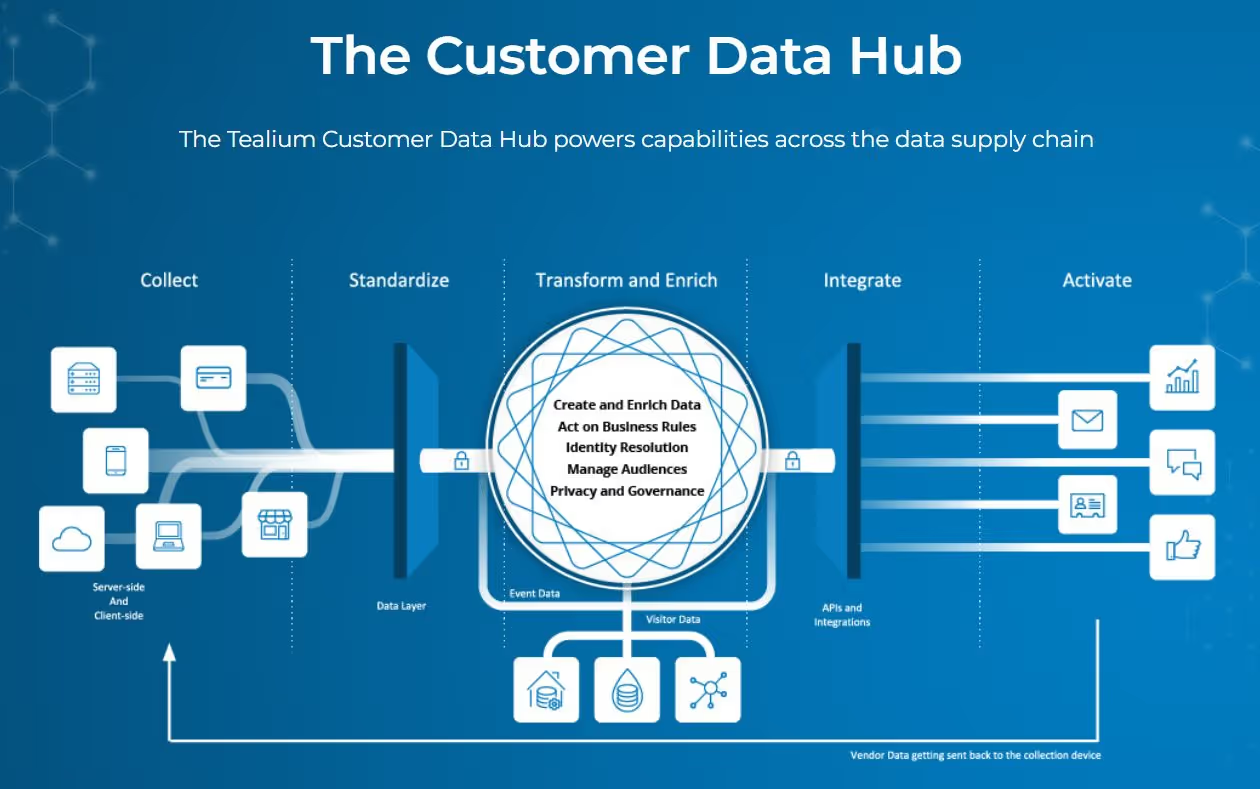
It allows the platform to sit neutrally on top of complex stacks, ensuring real-time data collection and rigorous zero-party consent management. It’s ideal for companies with complex, multi-vendor MarTech stacks who prioritise compliance.
CDP #6: ActionIQ
ActionIQ is a Business-User-Oriented CDP with a strong focus on data warehouse synergy. Its core pitch is Business User Empowerment, engineered to put complex segmentation and orchestration directly into the hands of marketers.
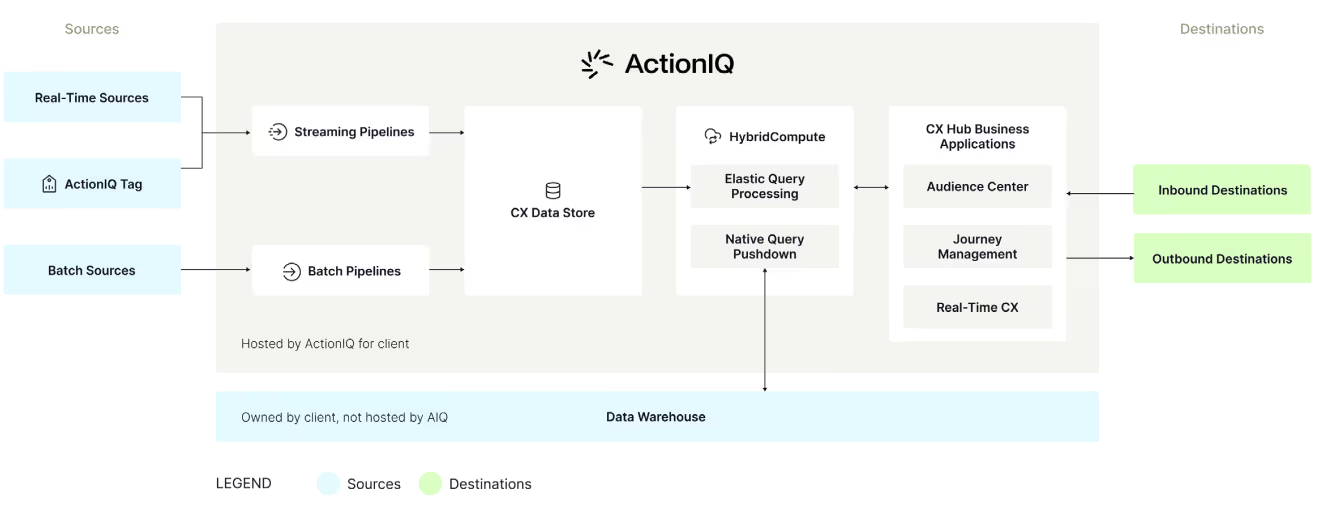
Featuring a HybridCompute architecture, it plays nicely with existing data warehouse investments (Snowflake, Databricks), making it perfect for organisations with large data warehouse investments who want activation without data movement.
CDP #7: Amperity
Amperity is an Identity Resolution Specialist for complex enterprise environments. Its strength is the Patented IDR Technology, a proprietary, machine-learning-powered system that is ideal for companies with notoriously fragmented, messy, or legacy source data that standard CDPs struggle to unify.
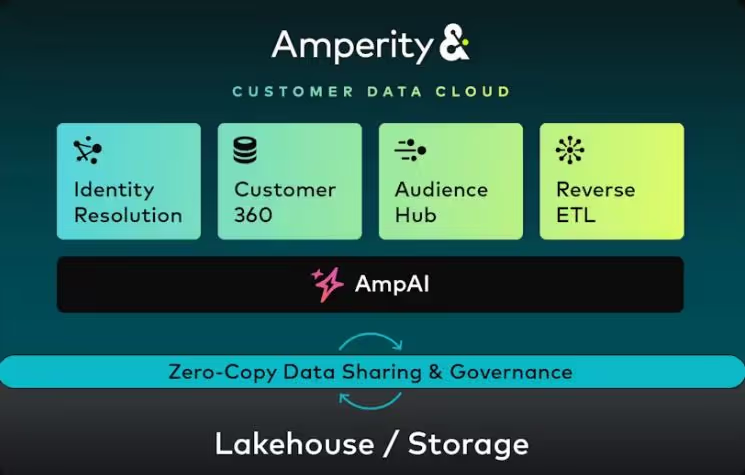
They are the expert custodians for large retail, travel, and hospitality brands where IDR accuracy is the single primary roadblock.
CDP #8: Treasure Data CDP
Treasure Data states itself as an Intelligent CDP built for enterprise scale and powered by AI. Its primary strength is Scalability & AI/ML, built to handle massive data volumes and power predictive analytics.
The platform offers strong features for dynamic segmentation and complex customer journey reporting, making it a good fit in large-scale data environments. It is best for global enterprises demanding high scalability and integration of AI-driven propensity scoring directly into their activation channels.
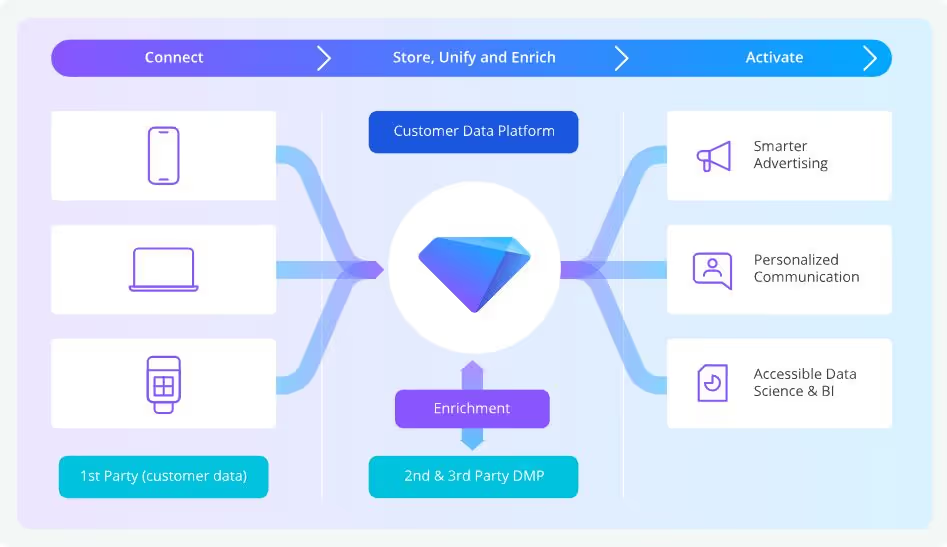
The Treasure Data CDP flow diagram showing the Connect, Store, Unify, Enrich, and Activate stages | Source: Hightouch
CDP #9: Insider
Insider is an integrated CDP + Cross-Channel Campaign Management platform. Its strength is Campaign Automation & E-commerce Focus, making it best for teams prioritising advanced audience segmentation coupled with immediate cross-channel campaign deployment (email, mobile, web).
They reduce the distance from data to insights with a highly visual platform for building personalised campaigns fast. It's the go-to for e-commerce and B2C retail, focusing on rapid, personalised engagement.
Implementation Pitfalls of CDPs: Lock-In, GIGO, and Compliance Risk
Implementing a CDP is not done with a magic wand. It requires a strong architectural commitment. Ignoring these pitfalls is why most projects fail to deliver on the "360-degree view" promise:
Pitfall 1: Vendor Lock-In and New Data Silos
The biggest risk is replacing old silos with a single, expensive new CDP silo. This is why we argue for composableplatforms that leverage your existing data warehouse rather than forcing you to move or duplicate all data.
Pitfall 2: Garbage In, Garbage Out (GIGO)
A CDP cannot fix fundamentally broken data. If the data is a mess, the CDP is just an expensive mirror.
Pitfall 3: Regulatory Compliance
Ignoring consent management and data lineage leads to massive risk. Governance, access control, and the right to be forgotten must be auditable across the entire data flow.
Migration Strategies
Don't attempt a "Big Bang." Start with a phased, high-value use case to prove ROI and refine the IDR model before integrating every source system.
Measuring ROI
Success isn't measured in "profiles created." Measure incremental revenue and the cost reduction from decommissioning redundant tools.
Future Trends of Customer Data Platforms: 2027 and Beyond
The future of the CDP is less about storage and more about intelligence and privacy:
AI and Generative Interfaces: Copilot-style interactions will become standard, allowing marketers to request complex segments and journey flows using plain English, bypassing the segmentation UI entirely.
Embedded Analytics & Activation Loops: CDPs will deeply embed predictive models. They won't just show a churn risk; they will automatically initiate the "save" campaign within 300ms.
Composability & Convergence: The lines between the CDP, the Data Warehouse, and the Data Platform are dissolving. The market is moving toward modular components built around a central, governed data layer, favouring flexibility and hammering the final nail into vendor lock-in.
Privacy-First: Zero-Party Data (data customers willingly share) and Federated Identity models will dominate, ensuring customer trust is the primary currency of personalisation.
📝 Related Read:
Building a scalable enterprise data marketplace to drive business value
FAQs
Q1. What is a customer data platform?
A marketer-managed system that unifies all customer data into a single, persistent 360-degree profile, then uses that profile to power personalised marketing and customer engagement in real time.
Q2. What is the difference between a customer data platform and CRM?
Customer Data Platform vs. CRM is a popular topic given the common confusion points that arise between the two. A CRM is a System of Record focused on sales/service interactions and known contacts. A CDP is a System of Intelligence focused on unifying all behavioural and demographic data to drive automated marketing personalisation.
Q3. What are the types of customer data platforms?
They are generally categorised as Packaged (all-in-one, often creates a new silo) or Composable/Warehouse-Native(modular, highly scalable, uses the existing data warehouse for storage).
Q4. Which CDP is best for my use case (startup, enterprise)?
Startups often begin with integrated tools like Insider or Segment for ease of use. Enterprises with complex data need robust platforms like Salesforce or Adobe, or a composable system like DataOS to handle governance and scale across the entire business.
Connect with a community data expert
A no-cost session with a practitioner who's been where you are.
About Modern Data 101
Modern Data 101 is a movement redefining how the world thinks about data. A community built by the same team behind the world’s first data operating system, Modern Data 101 sits at the intersection of data, product thinking, and AI. Spread across 150+ countries, the community brings together a global network of practitioners, architects, and leaders who are actively building the next generation of data systems.
At its core, Modern Data 101 exists to simplify the journey from raw data to tangible and observable impact. It advocates high-potential data systems and next-gen architectures to unify and activate insights and automation across analytics, applications, and operational workflows at the edge.
In a world shifting from data stacks to AI ecosystems, Modern Data 101 helps teams not just navigate the change but lead it.


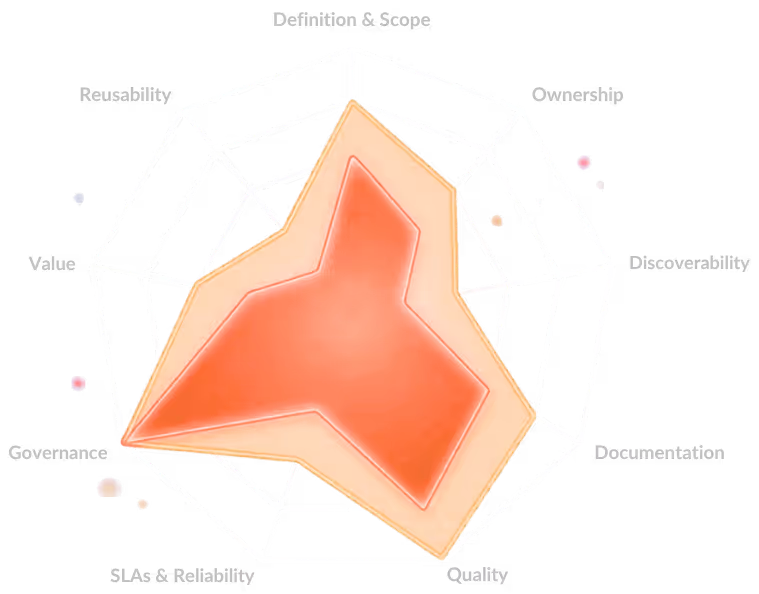
A 9-dimension self-assessment used by 100+ data teams to benchmark strategy, ownership, and platform readiness.


Swami Achari
Swami Achari is a Lead Tech Correspondent and Content Strategist who loves translating complex Data, Engineering, and AI concepts into compelling, high-impact stories. Grounded in a strong background in mainstream journalism, he seamlessly bridges traditional investigative reporting with cutting-edge technology communication. Currently exploring editorial strategy and content marketing for data-focused platforms, he works closely with industry thought leaders to build engaged tech communities and foster strategic growth through scannable, audience-first storytelling.
Read the ideas here. Build them with The Modern Data Company.
Modern Data 101 is where the data community thinks out loud. When you're ready to move from articles to architecture, data products, governed AI pipelines, or a full Data Operating System; the team behind this community can help you build it.
Continue reading