30 Top Big Data Companies in 2026: The Enterprise Tech Stack Guide
Why scale is no longer the hardest engineering problem, and how top big data platforms are evolving to deliver AI-ready data products.

A retailer’s daily point-of-sale log is ordinary data. The same retailer’s combined clickstream, inventory, supply chain, and customer interaction data across millions of events a day is what is considered big data: too large, too fast-moving, and too varied for a spreadsheet or a single-server database to handle. The standard shorthand for that threshold is the 5 Vs (volume, velocity, variety, veracity, value), and it’s the reason “big data” and “regular data” call for different tools entirely.
That threshold is also why this list runs to 30 names instead of 10.
No single company covers what big data is used for end-to-end: forecasting demand, catching fraud in real time, personalising at scale, optimising supply chains, and now training and running AI.
Enterprises stitch together a warehouse, a pipeline tool, a governance layer, and a query engine, often from different vendors, because no one platform owns the full stack. The 30 companies below are the ones enterprises actually shortlist for each piece of that stack, and why each one earns its spot.
This article’s breakdown of what makes data usable for AI is a good next read on where that stack is heading.
What is Big Data
Big data refers to datasets too large, fast, or varied for traditional tools to handle, often described by the "Vs": volume, velocity, variety, and later veracity and value. Storing and processing petabytes is no longer impressive, though.
Cloud object storage, lakehouse platforms like Databricks, Snowflake, and Iceberg-based stacks, and streaming systems have made scale a solved engineering problem for most teams.
What is big data used for?
Demand forecasting, fraud detection, personalisation, risk modelling, supply chain optimisation, and predictive maintenance are the established uses. Why big data matters comes down to completeness and timing: decisions drawn from full, current data carry far less guesswork than decisions drawn from samples and monthly reports.
How Big Data has Evolved in the AI era
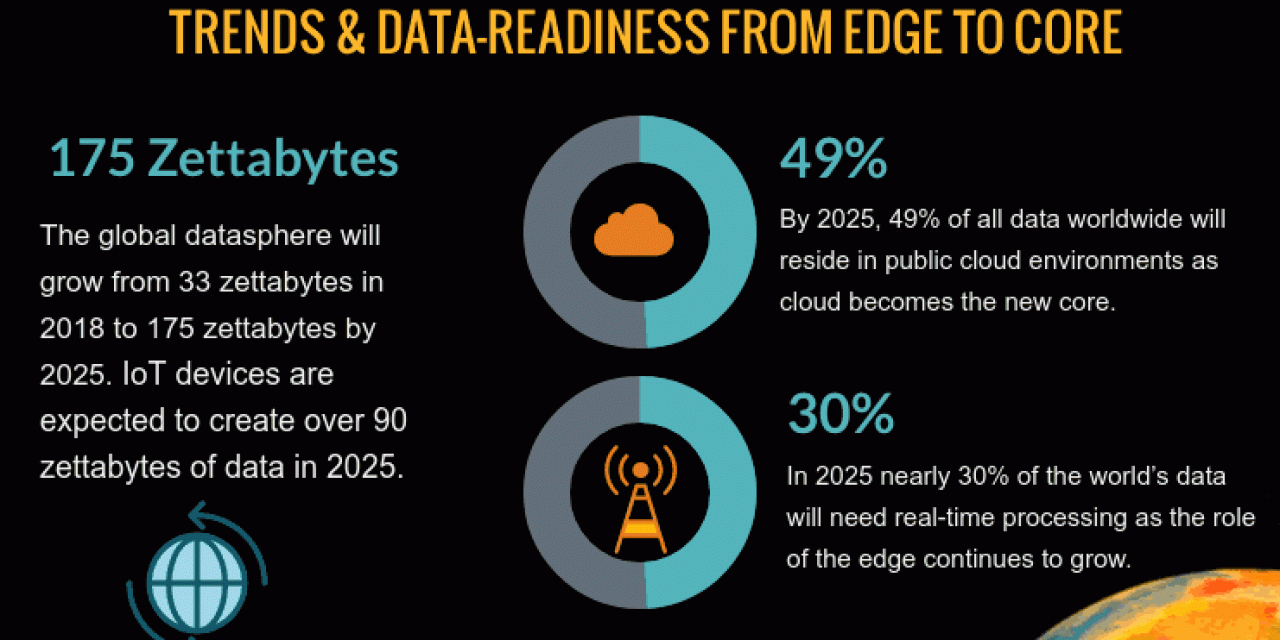
IDC projected the global datasphere to grow from 33 zettabytes in 2018 to 175 zettabytes by 2025, according to its Data Age 2025 report. Hadoop made distributed batch processing on commodity hardware practical. Cloud warehouses and lakehouses then separated storage from compute, and streaming platforms like Kafka made continuous data flows routine.
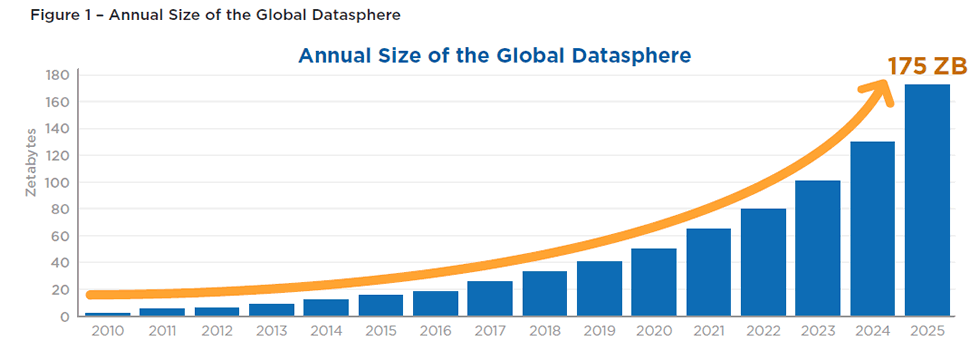
Each stage answered one question: how do we store and process more data?
The AI era changes the question to: can a model or agent interpret and trust this data?
Unstructured data such as documents, emails, images, audio, and video now feeds language models directly, and retrieval systems pull it in at query time. Agents also act on data without a person reviewing every step, so definitions, lineage, quality checks, and access rules have to travel with the data itself. So context decides whether the data is usable.
The numbers show where enterprises are stuck. McKinsey research puts the share of companies that have fully scaled AI at about 7% and ties much of the gap to data that is not ready for AI use. In Modern Data 101’s own research, 65% of respondents said their data lacks the clarity and business context AI needs, as covered in the data product maturity assessment.
That shift explains the shape of this list. Storage and compute vendors still anchor it, and the categories around them have grown: integration, governance, cataloguing, query federation, and the data product layer that packages data for people and AI. The 30 big data companies below are the ones enterprises shortlist across that full stack.
[related-1]
30 Big Data Companies to Know in 2026
1. Palantir Technologies
Palantir builds Foundry and Gotham, platforms that integrate massive, fragmented datasets from across an organisation into a single operational layer. Its ontology-based approach models real business entities such as customers, assets, and transactions, so both analysts and AI agents work from the same definitions. Palantir earns the top spot because it pioneered large-scale data integration for government, defence, and now commercial enterprises handling some of the most complex big data environments in the world. Visit Palantir
2. The Modern Data Company (DataOS)
The Modern Data Company built DataOS, an enterprise operating system that turns raw big data into governed, reusable data products with built-in context, quality checks, and access controls. It layers on top of existing warehouses, lakehouses, and legacy systems without requiring a rebuild, cutting the time it takes to make data usable for analytics and AI. It ranks second because it addresses the exact problem most big data companies on this list create: enterprises collect enormous datasets but struggle to activate them. Visit DataOS
3. Databricks
Databricks runs the Data Intelligence Platform, built on a lakehouse architecture that combines data warehousing, data engineering, and machine learning in one system. It was founded by the original creators of Apache Spark, the open-source engine most large-scale data processing still runs on. Databricks is a fixture on big data lists because it handles both the storage and the processing side of big data at a scale few competitors match. Visit Databricks
4. Snowflake
Snowflake is a cloud data warehouse that separates storage from compute, letting organisations scale each independently and query massive datasets with standard SQL. Its Cortex AI layer now runs machine learning and language models directly against warehouse data. Snowflake belongs here because it made petabyte-scale analytics accessible to teams without deep infrastructure expertise. Visit Snowflake
[related-2]
5. Microsoft
Microsoft’s big data offerings centre on Microsoft Fabric and Azure Synapse Analytics, which combine data integration, warehousing, and business intelligence in one Azure-native suite. Enterprises already standardised on Microsoft infrastructure use it to consolidate big data workloads under one billing and governance model. Microsoft makes this list for its footprint alone; it runs big data infrastructure for a large share of the Fortune 500. Visit Microsoft Fabric
6. Google Cloud
Google Cloud’s BigQuery is a serverless data warehouse built to run SQL queries across petabytes of data in seconds, without provisioning servers. It grew out of Google’s own internal big data infrastructure, built to index and query the web at scale. BigQuery is included because it remains a benchmark for query speed and cost efficiency at extreme scale. Visit Google Cloud BigQuery
7. Amazon Web Services
AWS offers a full big data stack including Redshift for data warehousing, EMR for big data processing frameworks like Spark and Hadoop, and S3 as the underlying storage layer most other tools on this list connect to. AWS makes the list because it remains the default cloud infrastructure provider for enterprise big data workloads globally. Visit AWS Big Data
8. IBM
IBM has sold big data and analytics software since before the term existed, and today its portfolio includes Db2, Netezza, and Watsonx for combining data management with AI. IBM’s strength is depth in regulated industries like banking and insurance, where decades-old data infrastructure still needs to connect to modern analytics. It stays on this list for enterprise trust built over decades. Visit IBM
9. Oracle
Oracle Database remains one of the most widely deployed database engines in large enterprises, and Oracle’s Autonomous Database and Big Data Service extend that base into automated scaling and machine learning workloads. Oracle is included because so much enterprise transactional data, the raw material of big data, still lives inside Oracle systems. Visit Oracle
10. SAP
SAP’s HANA in-memory database and BW/4HANA analytics platform process transactional and analytical workloads together in real time. Because SAP runs core enterprise resource planning for a large share of global manufacturing and logistics companies, its big data tools sit directly on top of the operational data those industries generate. Visit SAP
11. SAS Institute
SAS built its reputation on advanced statistical analysis before big data was a common term, and its platform now handles large-scale analytics, forecasting, and risk modelling for banking, insurance, and government clients. SAS makes this list for its long track record in statistical rigour applied to large, regulated datasets. Visit SAS
12. Teradata
Teradata pioneered enterprise data warehousing in the 1980s, and its Vantage platform still handles some of the largest analytical workloads in retail, telecom, and banking. It is included because many of the largest, oldest big data environments in the world still run on Teradata infrastructure. Visit Teradata
13. Cloudera
Cloudera built its business on Hadoop, the open-source framework that made distributed processing of massive datasets practical for enterprises. It has since expanded into a hybrid data platform spanning on-premises and cloud, serving industries with strict data residency requirements. Cloudera is on this list as the company most responsible for bringing Hadoop-based big data processing into mainstream enterprise use. Visit Cloudera
14. MongoDB
MongoDB is a NoSQL document database built to store and query unstructured and semi-structured data at scale, the kind of data that does not fit neatly into rows and columns. It is widely used for applications generating high volumes of varied data such as user activity logs and IoT telemetry. MongoDB earns its place for popularising document databases as core big data infrastructure. Visit MongoDB
15. Elastic
Elastic’s Elasticsearch engine indexes and searches massive volumes of log, text, and time-series data in near real time. It underpins search functionality and observability platforms across thousands of enterprises dealing with high-velocity data streams. Elastic makes this list because search at big data scale is a distinct technical problem it solved early and still leads in. Visit Elastic
16. Splunk
Splunk indexes and analyses machine-generated data such as logs, metrics, and events, turning raw operational data into searchable, actionable information for IT and security teams. Now part of Cisco, it remains a standard tool for organisations that generate enormous volumes of machine data daily. It is included for its dominance in machine data analytics specifically. Visit Splunk
17. Informatica
Informatica provides data integration, quality, and governance tools used to move and clean data between hundreds of source systems and target platforms. Its CLAIRE AI engine automates metadata discovery and mapping across large, complex data estates. Informatica is on this list because most large enterprises still rely on it to connect legacy systems into modern big data platforms. Visit Informatica
18. Qlik
Qlik combines data visualisation and analytics with data integration, having acquired Talend to add pipeline and data quality capabilities to its platform. It lets business users explore large datasets through associative analytics rather than fixed queries. Qlik makes this list for bridging big data infrastructure with self-service business intelligence. Visit Qlik
19. Confluent
Confluent is the commercial company behind Apache Kafka, the event streaming platform that lets organisations move and process data continuously rather than in scheduled batches. It is essential infrastructure for any company that needs to act on data the moment it is generated, such as fraud detection or real-time recommendations. Confluent is included for defining commercial-grade real-time data streaming. Visit Confluent
20. Starburst
Starburst is built on Trino, a distributed SQL query engine that lets analysts query data across multiple sources, warehouses, and lakes without moving or copying it first. This matters for big data environments where data is scattered across dozens of systems. Starburst makes the list for solving federated big data query performance at enterprise scale. Visit Starburst
21. Dremio
Dremio provides a lakehouse query engine that lets teams run fast SQL analytics directly on data stored in cloud data lakes, without pre-loading it into a separate warehouse. It reduces the cost and complexity of maintaining duplicate copies of big data for analytics. Dremio is on this list for advancing the lakehouse query model specifically. Visit Dremio
22. Collibra
Collibra provides data governance and cataloguing software that helps enterprises track what data they have, who owns it, and whether it can be used for a given purpose. As big data volumes grow, governance becomes the constraint on safe use, which is why Collibra remains a standard tool in regulated industries. It is included for its role in making large data estates auditable. Visit Collibra
23. Alation
Alation combines a data catalog with active metadata management, making it easier for both analysts and AI systems to find and trust data across large, fragmented environments. It is on this list because discoverability becomes a real barrier once an organization’s data spans thousands of tables and sources. Visit Alation
24. dbt Labs
dbt Labs built the tool that turned SQL-based data transformation into a disciplined, version-controlled engineering practice inside the warehouse. It is now the standard way large data teams model and test the data that feeds analytics and AI. dbt Labs makes the list for changing how transformation logic is built and maintained at scale. Visit dbt Labs
25. Fivetran
Fivetran automates data ingestion from hundreds of source systems into a warehouse or lake, removing much of the manual pipeline maintenance that used to consume data engineering time. It is included because getting big data reliably into a usable location is often a bigger obstacle than analysing it once it arrives. Visit Fivetran
26. Alteryx
Alteryx provides a low-code platform for data preparation, blending, and analytics, aimed at business analysts who need to work with large datasets without writing complex code. It is on this list for extending big data analytics capability beyond specialised data engineering teams. Visit Alteryx
27. Salesforce (Tableau)
Tableau, now part of Salesforce, remains one of the most widely used data visualisation tools for exploring large datasets visually and building interactive dashboards. It is included because visualisation is often how big data actually reaches business decision-makers, regardless of what platform stores the underlying data. Visit Tableau
28. Hitachi Vantara
Hitachi Vantara provides big data infrastructure and analytics software, including the Pentaho platform for data integration and business analytics, aimed at manufacturing, energy, and IoT-heavy industries. It makes this list for its focus on industrial-scale data generated by connected equipment and sensors. Visit Hitachi Vantara
29. C3.ai
C3.ai builds enterprise AI applications on top of large-scale industrial and operational datasets, targeting use cases like predictive maintenance, fraud detection, and supply chain optimisation. It is included because it represents a category of company built specifically to apply AI to big data rather than just store or process it. Visit C3.ai
30. Neo4j
Neo4j is a graph database built to store and query highly connected data, such as relationships between customers, transactions, and entities, that relational databases handle poorly at scale. It closes this list because graph-based analysis has become essential for fraud detection, recommendation engines, and knowledge graphs built from big data. Visit Neo4j
Choosing the Right Big Data Company for your Enterprise
Most enterprises do not pick one company from this list; they combine several: a cloud data warehouse for storage, an integration tool to move data in, a governance layer to keep it trustworthy, and increasingly, a data product layer like DataOS to make that combined stack usable by both people and AI.
Modern Data 101’s Data Product Maturity is a useful next step for benchmarking where your own big data stack stands before adding another tool to it.
FAQs
Q1. What are the 30 biggest companies in the world?
The biggest companies worldwide are ranked by revenue or market value in lists like the Fortune Global 500, and those rankings change every year. The 30 companies in this article are the leading big data companies, and several of them (Microsoft, Google, Amazon, Oracle, IBM, SAP, Salesforce) are also among the world’s largest technology firms.
Q2. Is data analytics still in demand in 2026?
Yes. The U.S. Bureau of Labor Statistics projects 34 percent employment growth for data scientists from 2024 to 2034, far above the average for all occupations, with about 23,400 openings a year. BLS attributes the growth to rising demand for data-driven decisions, and AI adoption adds to it.
Q3. Which company is growing the fastest?
Among the 30 on this list, Palantir has the fastest reported growth. It posted $1.94 billion in Q2 2026 revenue, up 93% year over year, with U.S. commercial revenue up 149%. Databricks, which is private, reported more than 80 per cent growth at a $6.9 billion annualised run rate, making it the fastest-growing data platform at that scale.
Q4. What is Big Data?
Big data is data that arrives in such volume, speed, and variety that standard databases and spreadsheets cannot process it in a useful timeframe. It is defined by the 5 Vs: volume, velocity, variety, veracity, and value. Enterprises use it for forecasting, fraud detection, personalisation, risk modelling, and training AI systems.
The growth figures in Q3 come from the latest quarterly reports, so I’d recheck them before publishing. I can also add these four FAQs to the end of the article file if you want.
Connect with a community data expert
A no-cost session with a practitioner who's been where you are.
About Modern Data 101
Modern Data 101 is a movement redefining how the world thinks about data. A community built by the same team behind the world’s first data operating system, Modern Data 101 sits at the intersection of data, product thinking, and AI. Spread across 150+ countries, the community brings together a global network of practitioners, architects, and leaders who are actively building the next generation of data systems.
At its core, Modern Data 101 exists to simplify the journey from raw data to tangible and observable impact. It advocates high-potential data systems and next-gen architectures to unify and activate insights and automation across analytics, applications, and operational workflows at the edge.
In a world shifting from data stacks to AI ecosystems, Modern Data 101 helps teams not just navigate the change but lead it.


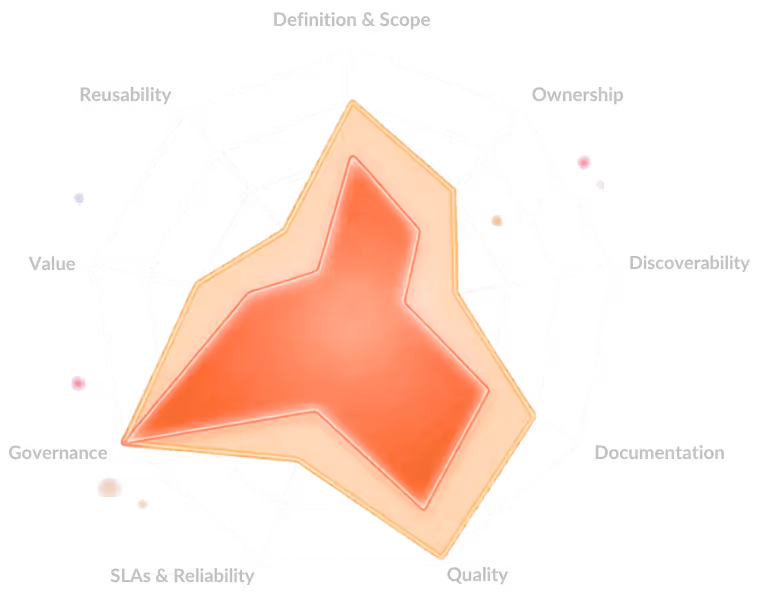
A 9-dimension self-assessment used by 100+ data teams to benchmark strategy, ownership, and platform readiness.


Ritwika Chowdhury
Ritwika Chowdhury is a data and technology professional focused on data products, AI, and modern data architecture. Her work sits at the intersection of data strategy, product thinking, and emerging AI technologies, with a focus on helping organisations turn enterprise data into trusted, usable, and scalable assets.
Read the ideas here. Build them with The Modern Data Company.
Modern Data 101 is where the data community thinks out loud. When you're ready to move from articles to architecture, data products, governed AI pipelines, or a full Data Operating System; the team behind this community can help you build it.
Continue reading