From Tool Bundling to Unified Data Platforms: The Enterprise Architecture Shift
Why human-driven integration no longer works in the agentic era, and how leading enterprises evaluate unified platforms vs. vendor bundles.



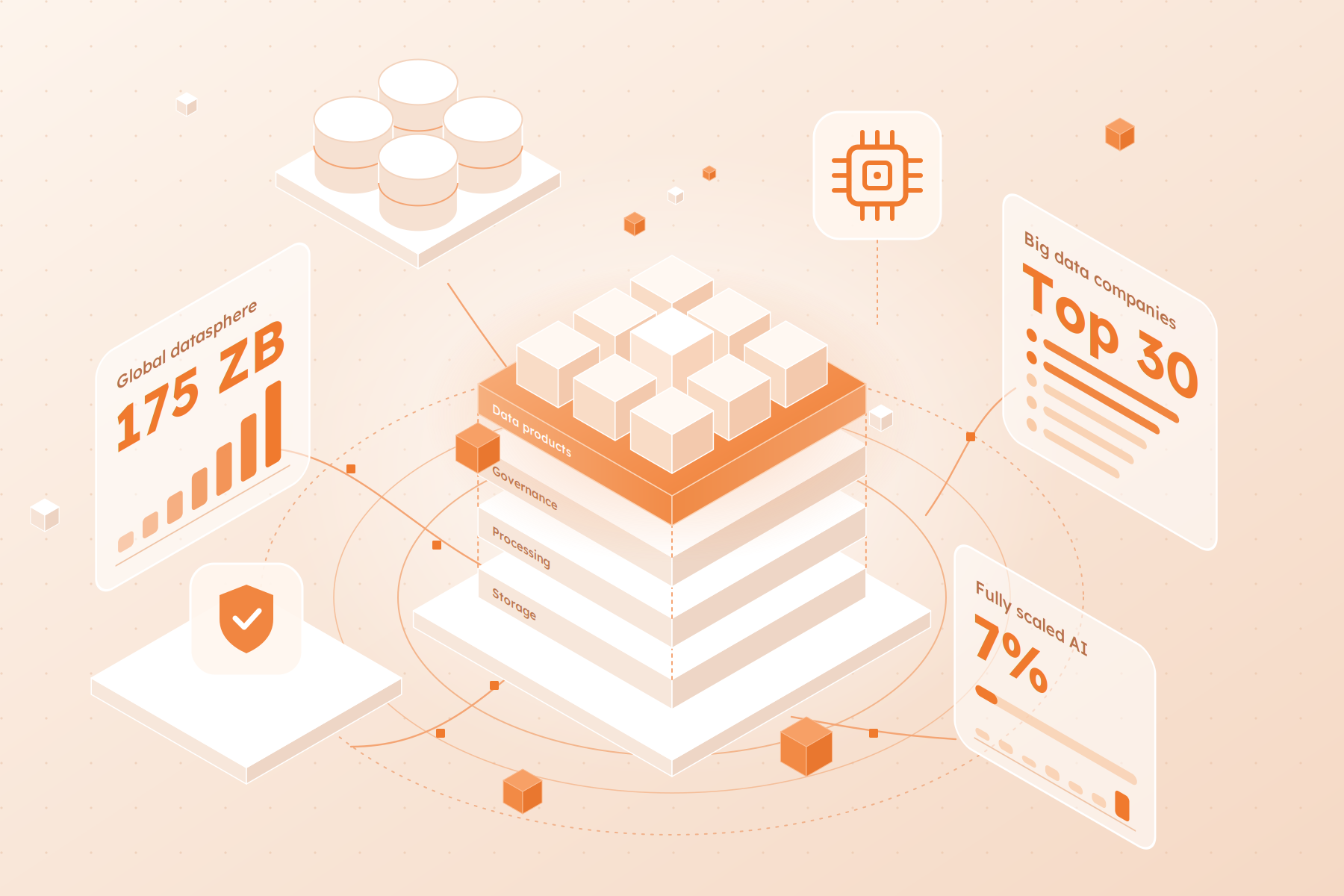
of practitioners spend 30%+ of their time moving between disconnected interfaces
of practitioners call a converged platform valuable
of agentic analytics projects relying on the MCP alone are expected to fail by 2028
of countries are expected to sit on region-specific AI platforms by 2027

- Over 70% of data teams work across 5 to 7 tools, spending 30%+ of their time moving between disconnected interfaces. The modern data stack’s promise of best-of-breed modularity has created prohibitive integration overhead.
- Humans used to resolve conflicting numbers manually. Autonomous AI agents cannot. In the agentic era, fragmented data stacks cause immediate hallucinations and operational failure, making a unified semantic layer critical infrastructure.
- Major vendors are converging on the full stack. M&A and vendor expansion (e.g., Snowflake, Databricks, Fivetran/dbt) sit alongside operating layers like DataOS, which unify metadata, governance, and semantics over existing legacy infrastructure without requiring a rebuild.
- Evaluating True Convergence vs. Bundling:
- Single Substrate: Metadata, policies, and metrics defined once and enforced universally.
- True Integration: Eliminating joins between siloed access controls and schemas.
- Open Portability: Preventing lock-in through open table formats, exportable lineage, and standardised protocols.
Five years ago, Snowflake sold a cloud data warehouse, Databricks sold the lakehouse, and dbt sold a SQL transformation tool. Each stopped where its category stopped, and buyers assembled the rest. In 2026, all three sell platforms that span ingestion, governance, semantics and AI.
This is not one vendor’s strategy. It is a realignment of the whole market, and our new whitepaper, From Point Solutions to Unified AI-Native Data Platforms, maps it. Here is the short version.
The High Cost of Tool Sprawl: Why Human Integration Fails in the AI Era
The modern data stack ran on a bargain: pick the best tool for every layer and accept the work of joining them. The landscape swelled to 2,011 logos in 2024 on the strength of it. The cost is now clear. Over 70% of practitioners work with more than five to seven tools or three to five vendors, and about 40% spend over 30% of their time moving between them.
AI raised the stakes. Humans were the integration layer of the old stack: they reconciled conflicting numbers and held decisions until someone confirmed the data. Agents cannot do that. When the consumer was a person, a join cost minutes of judgement. When the consumer is an agent, a join costs correctness.
[report-card]
The Multi-Front Convergence: Hyperscalers, Lakehouses, and Operating Layers
Vendors with very different origins are moving toward the same destination: hyperscalers, data cloud platforms, application suites, pipeline vendors and observability specialists. Snowflake and Databricks expanded outward from the warehouse and the lakehouse. Salesforce bought Informatica, IBM bought Confluent, and Fivetran merged with dbt Labs. DataOS, built by The Modern Data Company (with which Modern Data 101 is associated), takes a different route as an operating layer over existing stacks.
Capital is following. DevOps and DataOps deal value reached $99.8 billion in the twelve months to mid-2026, 2.1 times the prior year. Demand is just as clear: 77% of practitioners call a converged platform valuable.
The sequence repeats everywhere. Storage converges first, then metadata and policy, then semantics and the agent interface.
Why AI Agents Require Unified Semantic Context
Convergence began as a way to cut integration work. AI nativity makes it a question of whether agents get the right answer. An AI-native platform treats agents as first-class users, with a context layer, an agent interface, governance built for agents, and operational data they can act on.
The contest is over context. An agent cannot reconcile two definitions of revenue, so the platform has to hold one. Gartner expects semantic layers to reach critical-infrastructure status by 2030, and 60% of agentic analytics projects that rely on the Model Context Protocol alone are expected to fail by 2028 without a consistent semantic layer underneath.
[report-card]
The Boundaries of Convergence: Latency, Data Sovereignty, and Open Standards
It is strong but not total. Latency-critical and sovereign workloads keep purpose-built components, and 35% of countries are expected to sit on region-specific AI platforms by 2027. Specialists survive where they own distinctive context and speak open interfaces. The realistic end state is a converged substrate with a short list of specialists plugged in.
Platform Evaluation: Criteria to Distinguish True Platforms from Invoice Bundles
The paper offers five checks that separate a unified platform from a bundle of products behind one invoice: one platform, one source of truth, open, AI-ready and integrated. The main risk is lock-in, and it is easy to underweight. Only 8% of executives list it as a challenge today, because its cost arrives at exit.
FAQs
Q1. What is a unified data platform?
It is a platform with one substrate that every layer reads from and writes to, so a definition, permission or lineage record is created once and applies everywhere.
Q2. How is it different from a bundle of products?
A bundle sells several products on one invoice, often with separate permission models and metadata stores. A unified platform has removed the joins between them.
Q3. Is best-of-breed dead?
No. Specialists that own a distinctive context asset and speak open interfaces keep a durable place. Tools that cannot say what context they own risk becoming features inside someone else’s platform.
Q4. Why does AI make convergence urgent?
Agents cannot reconcile conflicting definitions or judge untrustworthy data. Almost 70% of practitioners say their data is not yet clean or trustworthy enough for AI.
Q4. How do we avoid lock-in?
Treat portability as a design requirement: open table formats, exportable lineage, policies and definitions, and standard protocols, written into the contract.
Read the Full Whitepaper
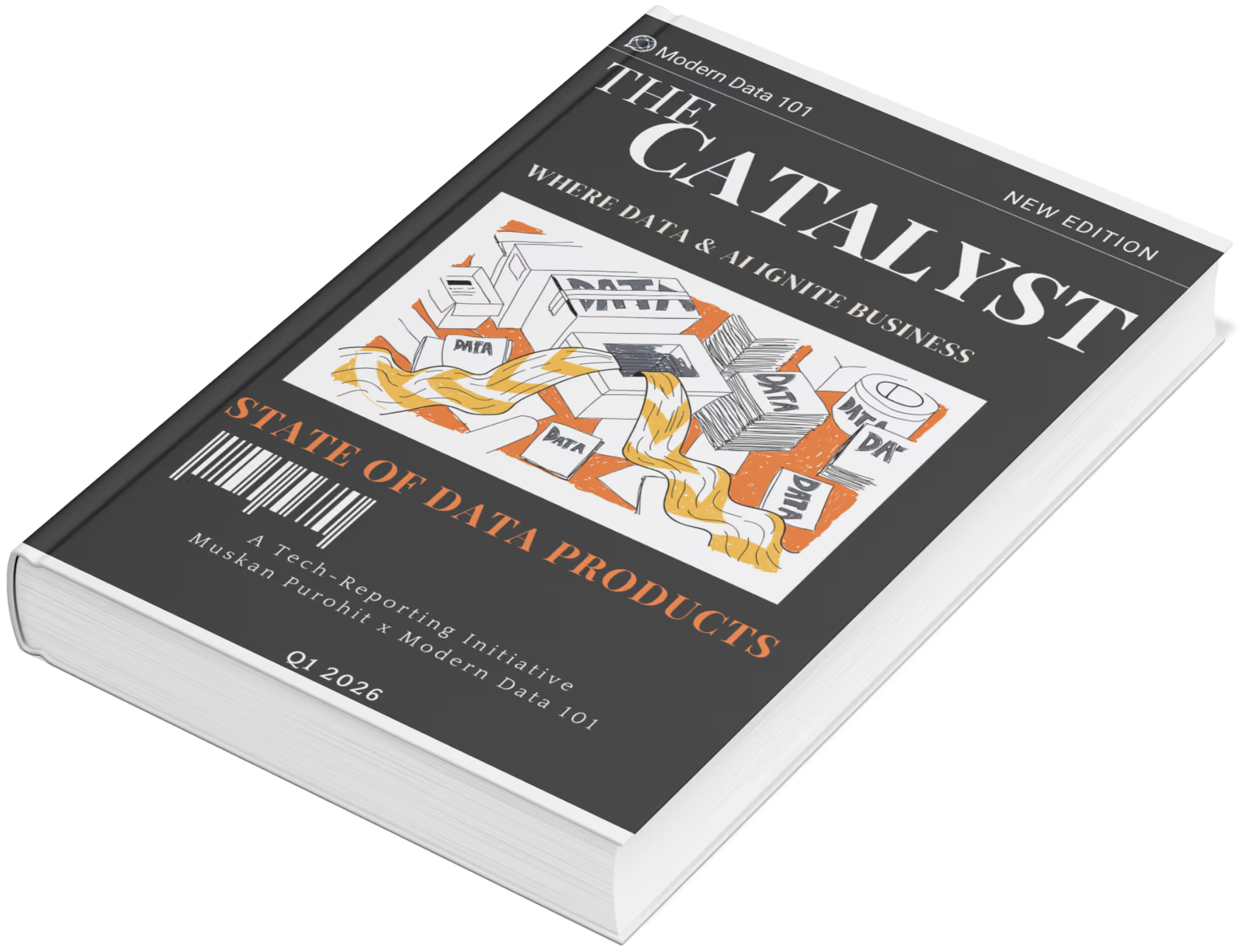
The whitepaper covers the five checks in detail, the layer-by-layer convergence map, and the full source list. [Download 'Shifting from Point Solution Bundling to Unified Data Platforms']
Get the full report
- 19-page downloadable report
- Explores insights from Snowflake to DataOS, are converging on one governed substrate
- 5 checks to converge on your terms, without lock-in
.png)
Get the full report
- 19-page downloadable report
- Explores insights from Snowflake to DataOS, are converging on one governed substrate
- 5 checks to converge on your terms, without lock-in


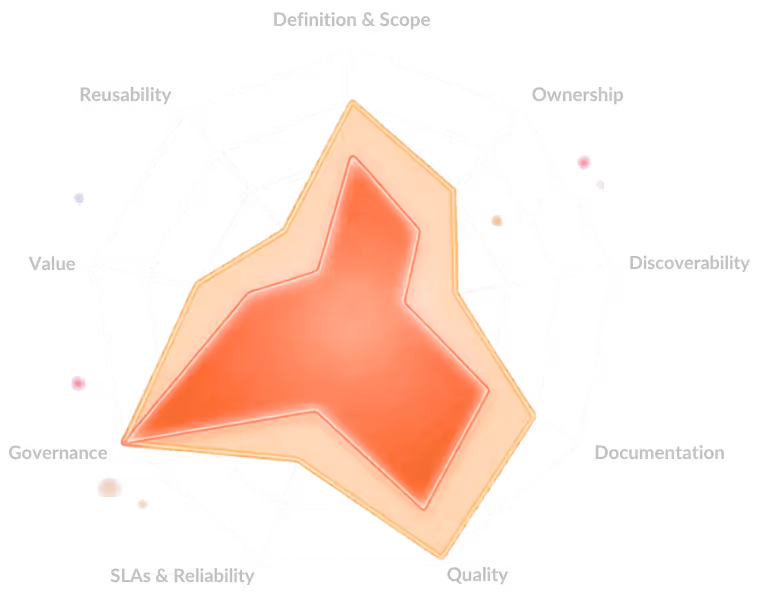
Where does your org stand on data product maturity?
A 9-dimension self-assessment used by 100+ data teams to benchmark strategy, ownership, and platform readiness.

You're all set
Your report is opening in a new tab
Tab didn't open? Open it manually
Animesh Kumar
Animesh Kumar is the Co-Founder and Chief Technology Officer at The Modern Data Company, where he leads the design and development of DataOS, the company’s flagship data operating system. With over two decades in data engineering and platform development, he is also the founding curator of Modern Data 101, an independent community for data leaders and practitioners, and a contributor to the Data Developer Platform (DDP) specification, shaping how the industry approaches data products and platforms.
Travis Thompson
Travis is the Chief Architect of DataOS, building full-stack Data Product solutions, and a founding contributor to the Data Developer Platform Standard that enables flexible implementation of disparate data design architectures such as data products, meshes, or fabrics. Over 30 years in all things data engineering, Travis has designed state-of-the-art architectures and solutions for top organisations, including GAP, Iterative, MuleSoft, HP, and many more. He is also an active advocate for polymorphic data architectures and contributes extensively to community archives.
Ritwika Chowdhury
Ritwika Chowdhury is a data and technology professional focused on data products, AI, and modern data architecture. Her work sits at the intersection of data strategy, product thinking, and emerging AI technologies, with a focus on helping organisations turn enterprise data into trusted, usable, and scalable assets.
Shifting from Point Solutions to Unified AI-Native Data Platforms
- 19-page downloadable report
- Explores insights from Snowflake to DataOS, are converging on one governed substrate
- 5 checks to converge on your terms, without lock-in
You're all set
Your report is opening in a new tab
Tab didn't open? Open it manually
You're subscribed
You'll get every new Modern Data Report in your inbox — check your email to confirm.
Done